Herodotus, Histories 4.13-16: Aristeas of Proconnesus, the Arimaspians and the Hyperboreans
Introduction
Herodotus of Halicarnassus wrote his Histories in the 430s-420s BCE. In book 4, describing Scythia and the lands to its north, he reports what the poet Aristeas of Proconnesus said in his lost epic, the Arimaspea: that beyond the Issedonians lived the one-eyed Arimaspians, beyond them the gold-guarding griffins, and beyond them the Hyperboreans, reaching to the sea (4.13). He then tells how Aristeas died at Proconnesus and vanished, reappeared seven years later, and 240 years afterwards appeared at Metapontum in Italy, where he ordered an altar to Apollo (4.14-15), and adds that no one knows by sight what lies beyond (4.16).
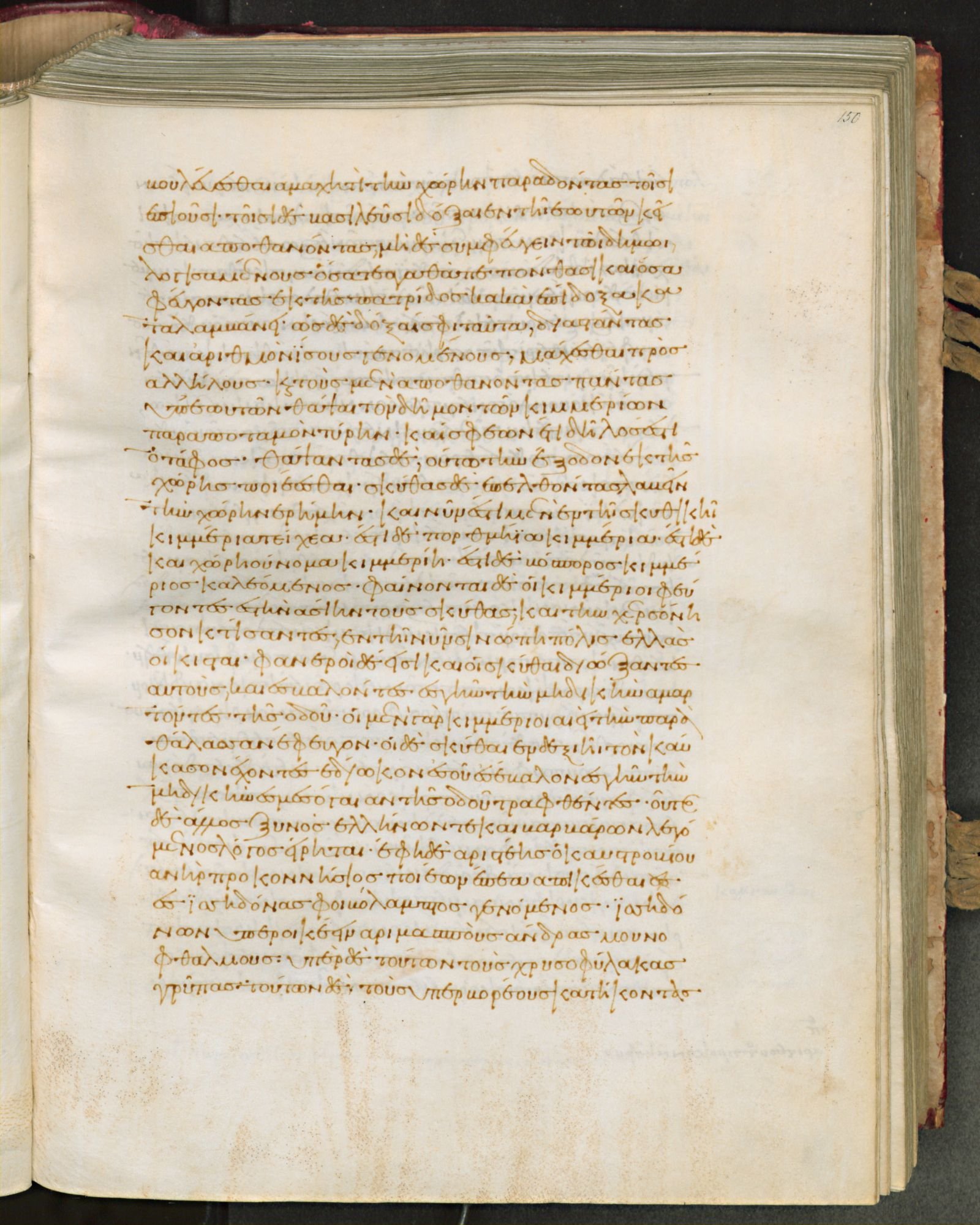
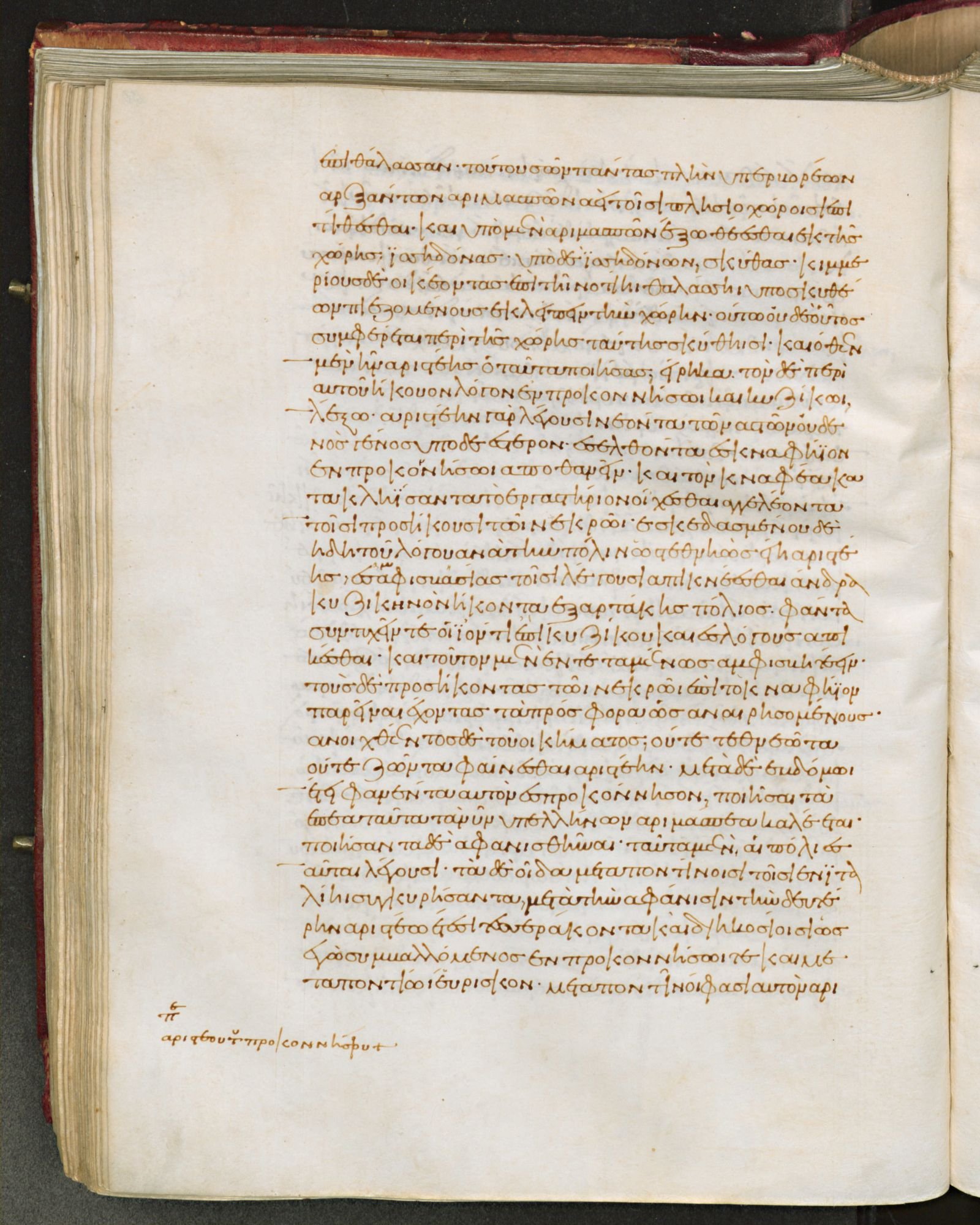
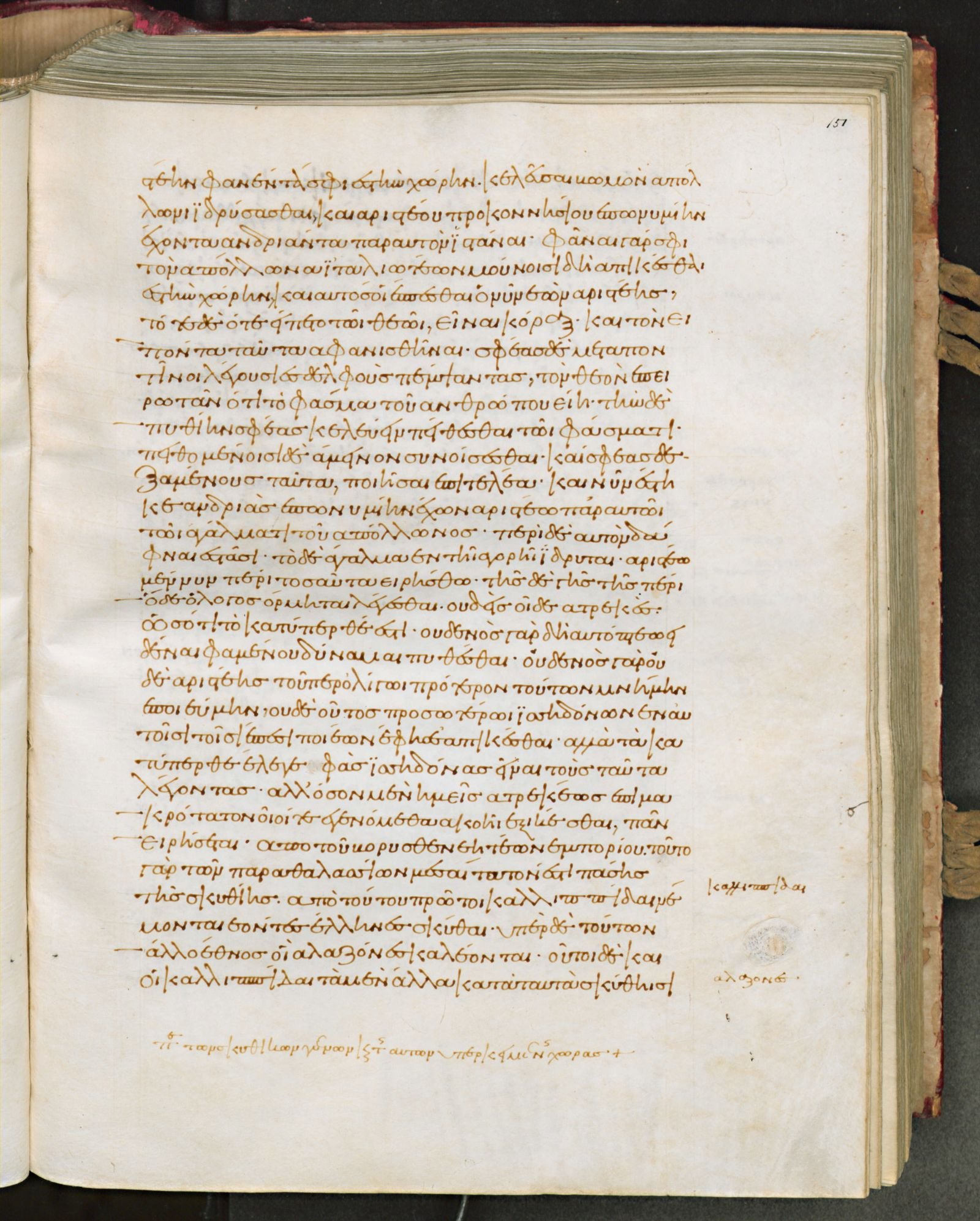
The manuscript is Florence, Biblioteca Medicea Laurenziana, Plut. 70.3, the oldest manuscript of the Histories (siglum A), written in the 10th century, 31 lines to the page. 4.13-16 run from fol. 150r line 26 to fol. 151r line 26.
How was this verified? (Provenance)
Where on the image
4.13 begins at fol. 150r line 26, ‹ἔφη δὲ ἀριστέης ὁ καϊστροβίου›, after ‹λεγόμενος λόγος εἴρηται›; fol. 150v begins ‹ἐπὶ θάλασσαν· τούτους ὦν πάντας πλὴν ὑπερβορέων›; the chapter ends at 150v line 7, ‹περὶ τῆς χώρης ταύτης σκύθῃσι›. Read on the BML images (line-numbered full pages and crops).
13.1ἔφη δὲ Ἀριστέης ὁ Καϋστροβίου ἀνὴρ Προκοννήσιος ποιέων ἔπεα, ἀπικέσθαι ἐς Ἰσσηδόνας φοιβόλαμπτος γενόμενος, Ἰσσηδόνων δὲ ὑπεροικέειν Ἀριμασποὺς ἄνδρας μουνοφθάλμους ὕπερ δὲ τούτων τοὺς χρυσοφύλακας γρῦπας, τούτων δὲ τοὺς Ὑπερβορέους κατήκοντας ἐπὶ θάλασσαν. 13.2τούτους ὦν πάντας πλὴν Ὑπερβορέων, ἀρξάντων Ἀριμασπῶν, αἰεὶ τοῖσι πλησιοχώροισι ἐπιτίθεσθαι, καὶ ὑπὸ μὲν Ἀριμασπῶν ἐξωθέεσθαι ἐκ τῆς χώρης Ἰσσηδόνας, ὑπὸ δὲ Ἰσσηδόνων Σκύθας, Κιμμερίους δὲ οἰκέοντας ἐπὶ τῇ νοτίῃ θαλάσσῃ ὑπὸ Σκυθέων πιεζομένους ἐκλείπειν τὴν χώρην. οὕτω οὐδὲ οὗτος συμφέρεται περὶ τῆς χώρης ταύτης Σκύθῃσι.
Aristeas however the son of Caÿstrobios, a man of Proconnesos, said in the verses which he composed, that he came to the land of the Issedonians being possessed by Phoebus, and that beyond the Issedonians dwelt Arimaspians, a one-eyed race, and beyond these the gold-guarding griffins, and beyond them the Hyperboreans extending as far as the sea: and all these except the Hyperboreans, beginning with the Arimaspians, were continually making war on their neighbours, and the Issedonians were gradually driven out of their country by the Arimaspians and the Scythians by the Issedonians, and so the Kimmerians, who dwelt on the Southern Sea, being pressed by the Scythians left their land. Thus neither does he agree in regard to this land with the report of the Scythians.
Where on the image
4.14 begins at fol. 150v line 7, ‹καὶ ὅθεν μὲν ἦν ἀριστέης ὁ ταῦτα ποιήσας› (the manuscript has ποιήσας where the edition prints εἴπας), and ends at line 26, ‹ἀφανισθῆναι›. Read on the BML images (line-numbered full pages and crops).
14.1καὶ ὅθεν μὲν ἦν Ἀριστέης ὁ ταῦτα εἴπας, εἴρηκα, τὸν δὲ περὶ αὐτοῦ ἤκουον λόγον ἐν Προκοννήσῳ καί Κυζίκῳ, λέξω. Ἀριστέην γὰρ λέγουσι, ἐόντα τῶν ἀστῶν οὐδενὸς γένος ὑποδεέστερον, ἐσελθόντα ἐς κναφήιον ἐν Προκοννήσῳ ἀποθανεῖν, καὶ τόν κναφέα κατακληίσαντα τὸ ἐργαστήριον οἴχεσθαι ἀγγελέοντα τοῖσι προσήκουσι τῷ νεκρῷ. 14.2ἐσκεδασμένου δὲ ἤδη τοῦ λόγου ἀνὰ τὴν πόλιν ὡς τεθνεώς εἴη ὁ Ἀριστέης, ἐς ἀμφισβασίας τοῖσι λέγουσι ἀπικνέεσθαι ἄνδρα Κυζικηνὸν ἥκοντα ἐξ Ἀρτάκης πόλιος, φάντα συντυχεῖν τε οἱ ἰόντι ἐπὶ Κυζίκου καὶ ἐς λόγους ἀπικέσθαι. καὶ τοῦτον μὲν ἐντεταμένως ἀμφισβατέειν, τοὺς δὲ προσήκοντας τῷ νεκρῷ ἐπὶ τὸ κναφήιον παρεῖναι ἔχοντας τὰ πρόσφορα ὡς ἀναιρησομένους· 14.3ἀνοιχθέντος δὲ τοῦ οἰκήματος οὔτε τεθνεῶτα οὔτε ζῶντα φαίνεσθαι Ἀριστέην. μετὰ δὲ ἑβδόμῳ ἔτει φανέντα αὐτὸν ἐς Προκόννησον ποιῆσαι τὰ ἔπεα ταῦτα τὰ νῦν ὑπʼ Ἑλλήνων Ἀριμάσπεα καλέεται, ποιήσαντα δὲ ἀφανισθῆναι τὸ δεύτερον.
As to Aristeas who composed this, I have said already whence he was; and I will tell also the tale which I heard about him in Proconnesos and Kyzicos. They say that Aristeas, who was in birth inferior to none of the citizens, entered into a fuller's shop in Proconnesos and there died; and the fuller closed his workshop and went away to report the matter to those who were related to the dead man. And when the news had been spread abroad about the city that Aristeas was dead, a man of Kyzicos who had come from the town of Artake entered into controversy with those who said so, and declared that he had met him going towards Kyzicos and had spoken with him: and while he was vehement in dispute, those who were related to the dead man came to the fuller's shop with the things proper in order to take up the corpse for burial; and when the house was opened, Aristeas was not found there either dead or alive. In the seventh year after this he appeared at Proconnesos and composed those verses which are now called by the Hellenes the Arimaspeia, and having composed them he disappeared the second time.
Where on the image
4.15 begins at fol. 150v line 26, ‹ταῦτα μὲν αἱ πόλιες αὗται λέγουσι›; fol. 151r begins ‹φανέντα σφι ἐς τὴν χώρην›; the chapter ends at 151r line 16, ‹ἀριστέω μέν νυν πέρι τοσαῦτα εἰρήσθω›. Read on the BML images (line-numbered full pages and crops).
15.1ταῦτα μὲν αἱ πόλιες αὗται λέγουσι, τάδε δὲ οἶδα Μεταποντίνοισι τοῖσι ἐν Ἰταλίῃ συγκυρήσαντα μετὰ τὴν ἀφάνισιν τὴν δευτέρην Ἀριστέω ἔτεσι τεσσεράκοντα καὶ διηκοσίοισι, ὡς ἐγὼ συμβαλλόμενος ἐν Προκοννήσῳ τε καὶ Μεταποντίῳ εὕρισκον. 15.2Μεταποντῖνοι φασὶ αὐτὸν Ἀριστέην φανέντα σφι ἐς τὴν χώρην κελεῦσαι βωμὸν Ἀπόλλωνος ἱδρύσασθαι καὶ Ἀριστέω τοῦ Προκοννησίου ἐπωνυμίην ἔχοντα ἀνδριάντα πὰρʼ αὐτὸν ἱστάναι· φάναι γὰρ σφι τὸν Ἀπόλλωνα Ἰταλιωτέων μούνοισι δὴ ἀπικέσθαι ἐς τὴν χώρην, καὶ αὐτὸς οἱ ἕπεσθαι ὁ νῦν ἐὼν Ἀριστέης· τότε δὲ, ὅτε εἵπετο τῷ θεῷ, εἶναι κόραξ. 15.3καὶ τὸν μὲν εἰπόντα ταῦτα ἀφανισθῆναι, σφέας δὲ Μεταποντῖνοι λέγουσι ἐς Δελφοὺς πέμψαντας τὸν θεὸν ἐπειρωτᾶν ὃ τι τὸ φάσμα τοῦ ἀνθρώπου εἴη. τὴν δὲ Πυθίην σφέας κελεύειν πείθεσθαι τῷ φάσματι, πειθομένοισι δὲ ἄμεινον συνοίσεσθαι. καὶ σφέας δεξαμένους ταῦτα ποιῆσαι ἐπιτελέα. 15.4καὶ νῦν ἔστηκε ἀνδριὰς ἐπωνυμίην ἔχων Ἀριστέω παρʼ αὐτῷ τῷ ἀγάλματι τοῦ Ἀπόλλωνος, πέριξ δὲ αὐτὸν δάφναι ἑστᾶσι· τὸ δὲ ἄγαλμα ἐν τῇ ἀγορῇ ἵδρυται. Ἀριστέω μέν νυν πέρι τοσαῦτα εἰρήσθω.
So much is told by these cities; and what follows I know happened to the people of Metapontion in Italy two hundred and forty years after the second disappearance of Aristeas, as I found by putting together the evidence at Proconnesos and Metapontion. The people of Metapontion say that Aristeas himself appeared in their land and bade them set up an altar of Apollo and place by its side a statue bearing the name of Aristeas of Proconnesos; for he told them that to their land alone of all the Italiotes Apollo had come, and he, who now was Aristeas, was accompanying him, being then a raven when he accompanied the god. Having said this he disappeared; and the Metapontines say that they sent to Delphi and asked the god what the apparition of the man meant: and the Pythian prophetess bade them obey the command of the apparition, and told them that if they obeyed, it would be the better for them. They therefore accepted this answer and performed the commands; and there stands a statue now bearing the name of Aristeas close by the side of the altar dedicated to Apollo, and round it stand laurel trees; and the altar is set up in the market-place. Let this suffice which has been said about Aristeas.
Where on the image
4.16 begins at fol. 151r line 16, ‹τῆς δὲ γῆς τῆς πέρι ὅδε ὁ λόγος›, and ends at line 26, ‹πᾶν εἰρήσεται›, followed on the same line by 4.17. Read on the BML images (line-numbered full pages and crops).
16.1τῆς δὲ γῆς, τῆς πέρι ὅδε ὁ λόγος ὅρμηται λέγεσθαι, οὐδεὶς οἶδε ἀτρεκέως ὃ τι τὸ κατύπερθε ἐστί· οὐδενὸς γὰρ δὴ αὐτόπτεω εἰδέναι φαμένου δύναμαι πυθέσθαι· οὐδὲ γὰρ οὐδὲ Ἀριστέης, τοῦ περ ὀλίγῳ πρότερον τούτων μνήμην ἐποιεύμην, οὐδὲ οὗτος προσωτέρω Ἰσσηδόνων ἐν αὐτοῖσι τοῖσι ἔπεσι ποιέων ἔφησε ἀπικέσθαι, ἀλλὰ τὰ κατύπερθε ἔλεγε ἀκοῇ, φας Ἰσσηδόνας εἶναι τοὺς ταῦτα λέγοντας. 16.2ἀλλʼ ὅσον μὲν ἡμεῖς ἀτρεκέως ἐπὶ μακρότατον οἷοι τε ἐγενόμεθα ἀκοῇ ἐξικέσθαι, πᾶν εἰρήσεται.
Now of the land about which this account has been begun, no one knows precisely what lies beyond it: for I am not able to hear of any one who alleges that he knows as an eye-witness; and even Aristeas, the man of whom I was making mention just now, even he, I say, did not allege, although he was composing verse, that he went further than the Issedonians; but that which is beyond them he spoke of by hearsay, and reported that it was the Issedonians who said these things. So far however as we were able to arrive at certainty by hearsay, carrying inquiries as far as possible, all this shall be told.
Notes
- Greek: A. D. Godley's Loeb text (1920), via Perseus, not a transcription of the manuscript.
- English: G. C. Macaulay (1890), from Project Gutenberg; his footnote numbers are removed. Godley's own English on Perseus is a modernized revision and is not used.
- Sections follow Herodotus' chapters; the small numbers in the Greek are the sub-sections of the modern editions.
Cite
Sources
- Source: Florence, Laur. Plut. 70.3 (Herodotus A, 10th c.) fol. 150r-151r via Teca digitale BML + Godley's Greek (Perseus) + Macaulay's English (1890, Project Gutenberg) (holding institution)
- Critical edition: Perseus editions named per passage
← previous · → next · v cycle view · l back to library