Strabo, Geography 11.6.2: the northern peoples whom earlier writers called Hyperboreans
Introduction
At 11.6.2, sailing into the Caspian Sea, Strabo lists the Scythian peoples on either hand and notes that the early Greek historians called all the northern peoples Scythians or Celto-Scythians, while writers still earlier called those living above the Euxine, the Danube and the Adriatic Hyperboreans, Sauromatians and Arimaspians.
Paris gr. 1397 breaks off in book 9, so books 10-17 are shown on Paris, BnF, grec 1393 (Strabo C), a complete Strabo of the late 13th or early 14th century in a heavily abbreviated cursive. 11.6.2 stands on fol. 132v, lines 12-25; the Hyperboreans are named on line 19.
How was this verified? (Provenance)
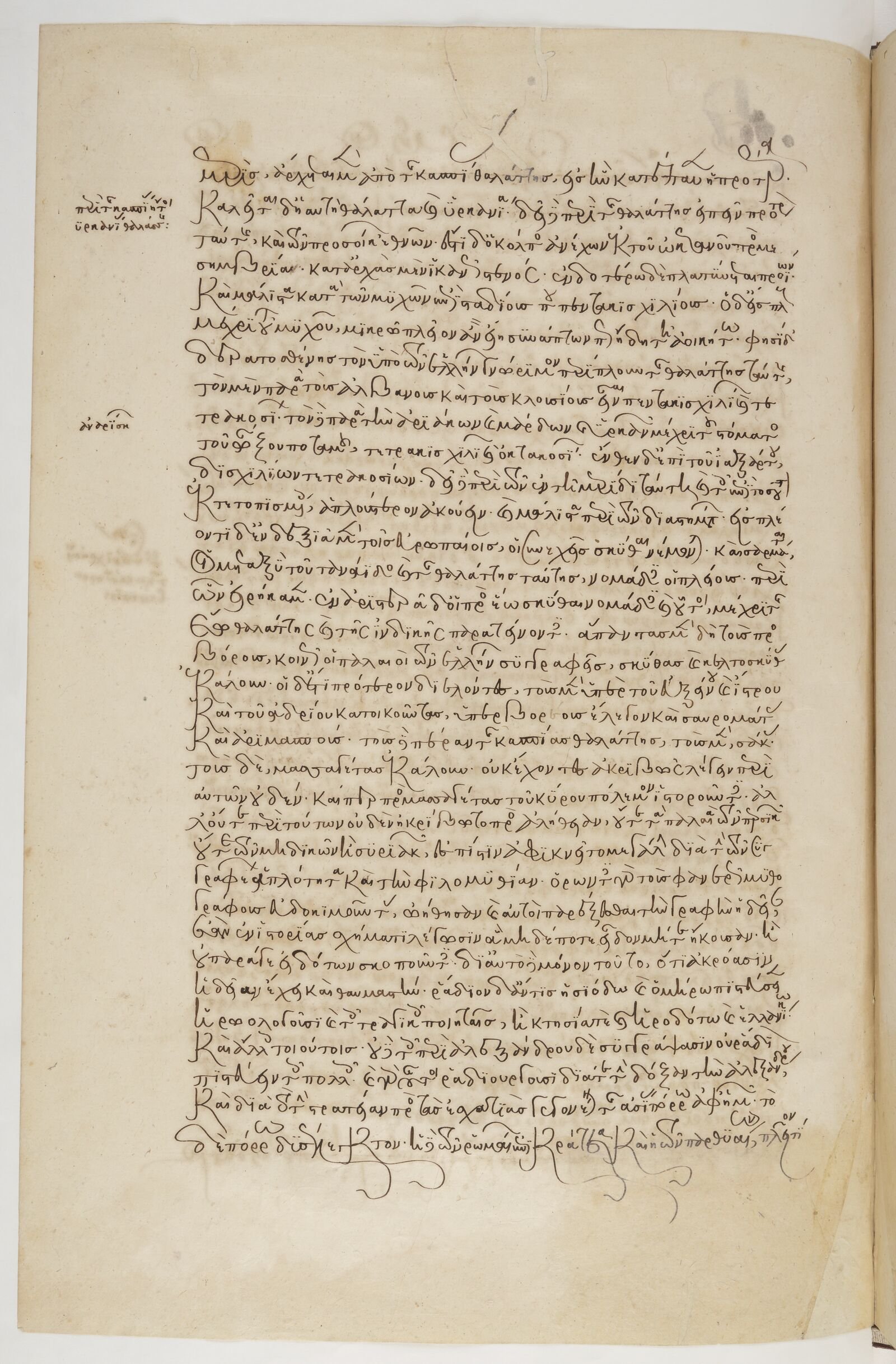
Where on the image
11.6.2 begins at fol. 132v line 12, after ‹καὶ μάλιστα περὶ τῶν διαστημάτων›: ‹εἰσπλέ-|οντι δ' ἐν δεξιᾷ μὲν τοῖς εὐρωπαίοις›; line 19 reads ‹καὶ τοῦ ἀδρίου κατοικοῦντας, ὑπερβορέους ἔλεγον καὶ σαυρομάτ(ας)›; the section ends at line 25, ‹ἁπλότητα καὶ τὴν φιλομυθίαν›, followed by 11.6.3. The page begins ‹ἀρχὴ αὕτη ἀπὸ τῆς κασπίας θαλάττης› (in 11.6.1). Line numbers on this page carry a margin of one line (a flourish above the text). Read on the BnF images (line-numbered page and crops).
εἰσπλέοντι δʼ ἐν δεξιᾷ μὲν τοῖς Εὐρωπαίοις οἱ συνεχεῖς Σκύθαι νέμονται καὶ Σαρμάται οἱ μεταξὺ τοῦ Τανάιδος καὶ τῆς θαλάττης ταύτης, νομάδες οἱ πλείους, περὶ ὧν εἰρήκαμεν· ἐν ἀριστερᾷ δʼ οἱ πρὸς ἕω Σκύθαι, νομάδες καὶ οὗτοι, μέχρι τῆς ἑῴας θαλάττης καὶ τῆς Ἰνδικῆς παρατείνοντες. ἅπαντας μὲν δὴ τοὺς προσβόρρους κοινῶς οἱ παλαιοὶ τῶν Ἑλλήνων συγγραφεῖς Σκύθας καὶ Κελτοσκύθας ἐκάλουν· οἱ δʼ ἔτι πρότερον διελόντες τοὺς μὲν ὑπὲρ τοῦ Εὐξείνου καὶ Ἴστρου καὶ τοῦ Ἀδρίου κατοικοῦντας Ὑπερβορέους ἔλεγον καὶ Σαυρομάτας καὶ Ἀριμασπούς, τοὺς δὲ πέραν τῆς Κασπίας θαλάττης τοὺς μὲν Σάκας τοὺς δὲ Μασσαγέτας ἐκάλουν, οὐκ ἔχοντες ἀκριβὲς λέγειν περὶ αὐτῶν οὐδέν, καίπερ πρὸς Μασσαγέτας τοῦ Κύρου πόλεμον ἱστοροῦντες. ἀλλʼ οὔτε περὶ τούτων οὐδὲν ἠκρίβωτο πρὸς ἀλήθειαν, οὔτε τὰ παλαιὰ τῶν Περσικῶν οὔτε τῶν Μηδικῶν ἢ Συριακῶν ἐς πίστιν ἀφικνεῖτο μεγάλην διὰ τὴν τῶν συγγραφέων ἁπλότητα καὶ τὴν φιλομυθίαν.
Upon sailing into the Caspian, on the right hand, contiguous to the Europeans, Scythians and Sarmatians occupy the country between the Tanaïs and this sea; they are chiefly Normades, or shepherd tribes, of whom I have already spoken. On the left hand are the Eastern Scythian Nomades, who extend as far as the Eastern sea, and India.
The ancient Greek historians called all the nations towards the north by the common name of Scythians, and Kelto-Scythians. Writers still more ancient than these called the nations living above the Euxine, Danube, and Adriatic, Hyperboreans, Sauromatae, and Arimaspi. But in speaking of the nations on the other side the Caspian Sea, they called some Sacae, others Massagetae. They were unable to give any exact account of them, although they relate the history of the war of Cyrus with the Massagetae. Concerning these nations no one has ascertained the truth, and the ancient histories of Persia, Media, and Syria have not obtained much credit on account of the credulity of the writers and their love of fable.
Notes
- Greek: Meineke's Teubner text (Perseus), not a transcription of the manuscript.
- English: Hamilton and Falconer (Bohn, 1854-1857), who translated the earlier text of Kramer; small differences from Meineke's Greek result.
Cite
Sources
- Source: Paris, BnF, grec 1393 (Strabo C) fol. 132v via Gallica (BnF) + Meineke's Greek (Perseus) + Hamilton and Falconer's English (1854-1857, Perseus) (holding institution)
- Critical edition: Perseus editions named per passage
← previous · → next · v cycle view · l back to library