Strabo, Geography 7.3.1: ignorance of the north and the tales of the Rhipaean mountains and the Hyperboreans
Introduction
At 7.3.1, turning from the Germans to the Getae beyond the Danube, Strabo says that lack of knowledge of these northern regions is what gave credit to those who invented the Rhipaean mountains and the Hyperboreans, and to Pytheas' fabrications about the northern ocean, which he sets aside.
The manuscript is Paris, BnF, grec 1397 (Strabo A), 10th-11th century. 7.3.1 runs from fol. 155v line 18 to fol. 156r line 2; the Hyperboreans are named on 155v line 27.
How was this verified? (Provenance)
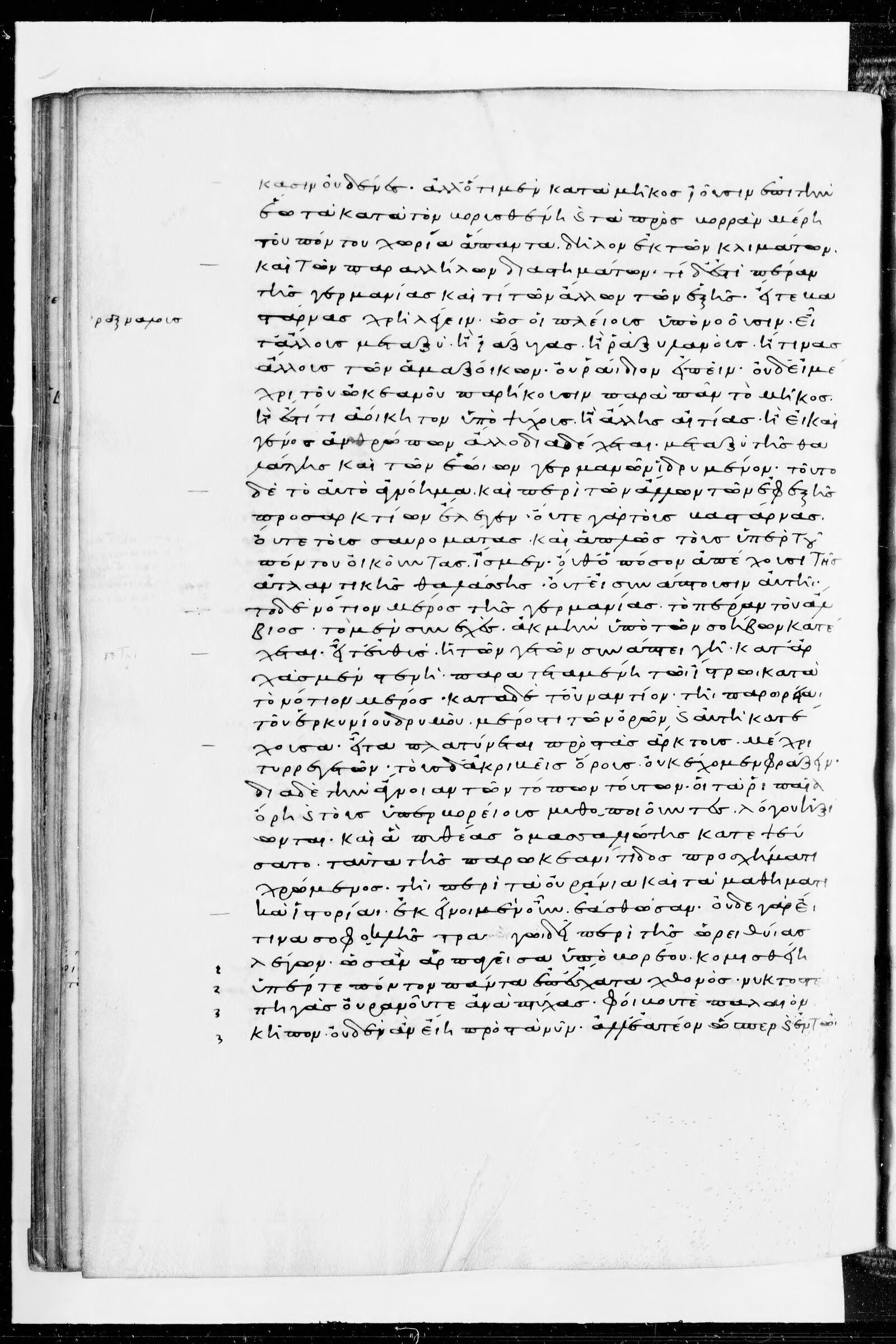
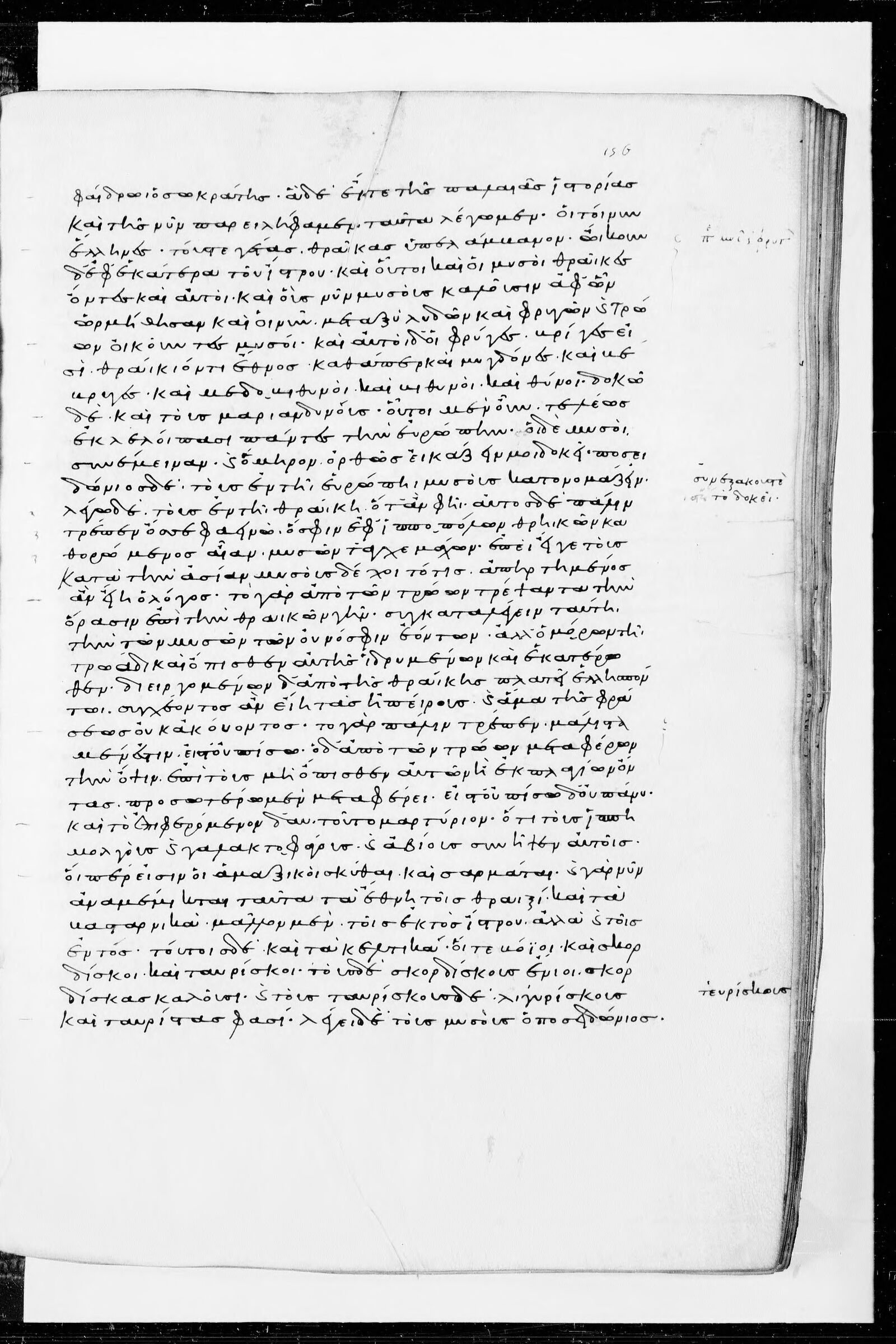
Where on the image
7.3.1 begins at fol. 155v line 18, ‹τὸ δὲ νότιον μέρος τῆς γερμανίας τὸ πέραν τοῦ ἄλ-|βιος›; line 27 reads ‹ὄρη καὶ τοὺς ὑπερβορείους μυθοποιοῦντες›; fol. 155v ends (line 36) ‹ἀλλ' ἐατέον ὥσπερ καὶ ἐν τῷ› and fol. 156r begins ‹φαίδρῳ ὁ σωκράτης›; the section ends at 156r line 2, ‹παρειλήφαμεν· ταῦτα λέγωμεν›. Read on the BnF images (line-numbered page and crops).
τὸ δὲ νότιον μέρος τῆς Γερμανίας τὸ πέραν τοῦ Ἄλβιος τὸ μὲν συνεχὲς ἀκμὴν ὑπὸ τῶν Σοήβων κατέχεται· εἶτʼ εὐθὺς ἡ τῶν Γετῶν συνάπτει γῆ, κατʼ ἀρχὰς μὲν στενή, παρατεταμένη τῷ Ἴστρῳ κατὰ τὸ νότιον μέρος, κατὰ δὲ τοὐναντίον τῇ παρωρείᾳ τοῦ Ἑρκυνίου δρυμοῦ, μέρος τι τῶν ὀρῶν καὶ αὐτὴ κατέχουσα, εἶτα πλατύνεται πρὸς τὰς ἄρκτους μέχρι Τυρεγετῶν· τοὺς δὲ ἀκριβεῖς ὅρους οὐκ ἔχομεν φράζειν. διὰ δὲ τὴν ἄγνοιαν τῶν τόπων τούτων οἱ τὰ Ῥιπαῖα ὄρη καὶ τοὺς Ὑπερβορείους μυθοποιοῦντες λόγου ἠξίωνται, καὶ ἃ Πυθέας ὁ Μασσαλιώτης κατεψεύσατο ταῦτα τῆς παρωκεανίτιδος, προσχήματι χρώμενος τῇ περὶ τὰ οὐράνια καὶ τὰ μαθηματικὰ ἱστορίᾳ. ἐκεῖνοι μὲν οὖν ἐάσθωσαν· οὐδὲ γὰρ εἴ τινα Σοφοκλῆς τραγῳδεῖ περὶ τῆς Ὠρειθυίας λέγων ὡς ἀναρπαγεῖσα ὑπὸ Βορέου κομισθείη
ὑπέρ τε πόντον πάντʼ ἐπʼ ἔσχατα χθονὸς
νυκτός τε πηγὰς οὐρανοῦ τʼ ἀναπτυχάς,
Φοίβου παλαιὸν κῆπον,
οὐδὲν ἂν εἴη πρὸς τὰ νῦν, ἀλλʼ ἐατέον, ὥσπερ καὶ ἐν τῷ Φαίδρῳ ὁ Σωκράτης. ἃ δὲ ἔκ τε τῆς παλαιᾶς ἱστορίας καὶ τῆς νῦν παρειλήφαμεν, ταῦτα λέγωμεν.
As to the southern part of Germany beyond the Elbe, the country which adjoins the bank of that river is now occupied by the Suevi. Next lies the country of the Getae, at first narrow, its southern side extends along the Danube, and the opposite side along the mountains of the Hercynian Forest, even including part of those mountains, it then becomes broader towards the north, and extends as far as the Tyregetae; however, we are unable to declare its boundaries with accuracy; and it is on account of our ignorance of these places that those who relate fables of the Riphaean mountains and the Hyperboreans have received credit; as also that which Pytheas of Marseilles has forged concerning the countries bordering on the Northern Ocean, making use of his acquaintance with astronomy and mathematics to fabricate his false narration: let us therefore pass over them; as also what Sophocles, speaking of Orithya in one of his tragedies, says, that she, being snatched by the north wind, was carried
Over the whole ocean, to the extremities of the earth,
Even to the place where night received its birth,
Where the opposite side of the heavens is beheld,
And where is situated the ancient garden of Phoebus.
This is of no value to our present inquiry, but must be omitted, as Socrates has done in the Phaedrus of Plato. We will relate only what we have learnt from ancient accounts, and the reports made in our times.
Notes
- Greek: Meineke's Teubner text (Perseus), not a transcription of the manuscript.
- English: Hamilton and Falconer (Bohn, 1854-1857), who translated the earlier text of Kramer; small differences from Meineke's Greek result.
Cite
Sources
- Source: Paris, BnF, grec 1397 (Strabo A) fol. 155v-156r via Gallica (BnF) + Meineke's Greek (Perseus) + Hamilton and Falconer's English (1854-1857, Perseus) (holding institution)
- Critical edition: Perseus editions named per passage
← previous · → next · v cycle view · l back to library