P75 (Papyrus Hanna 1): Luke 4:34-5:10 (fols. 9r-9v)
Introduction
P75 is a papyrus codex of Luke and John copied in Egypt around 175-225, the oldest known copy of Luke and one of the oldest of John. It was bought by Martin Bodmer in the 1950s and published as Papyrus Bodmer XIV-XV; in 2006 it was given to the Vatican Library, where it is kept as Papyrus Hanna 1 (Mater Verbi). Its text is very close to that of Codex Vaticanus, written some 150 years later. Where Luke ends and John begins (folio 44r) both titles stand on the same page.
About 51 leaves survive, many damaged at the top and edges, especially in Luke 3-7. Lost: Luke 1:1-3:17, most of 3:23-4:33, 5:11-36, 6:5-10, 7:33-34 and 7:44-45 (and parts of 7:36-49), 17:16-19, 18:19-22:3; John 11:46-47, 12:1-2, 13:11-14:7 and everything after 15:10 except small fragments. Each section below is one page: the photograph, the NTVMR diplomatic transcription line by line, and the King James Version of every verse on the page. Where P75 lacks a verse or words that the KJV has (for example John 5:4 or the account of the adulteress, John 7:53-8:11), the section says so. Six damaged pages (folios 7v, 11r, 39v, 58r, 58v and 64v) are left out because their text could not be matched to the photographs with certainty.
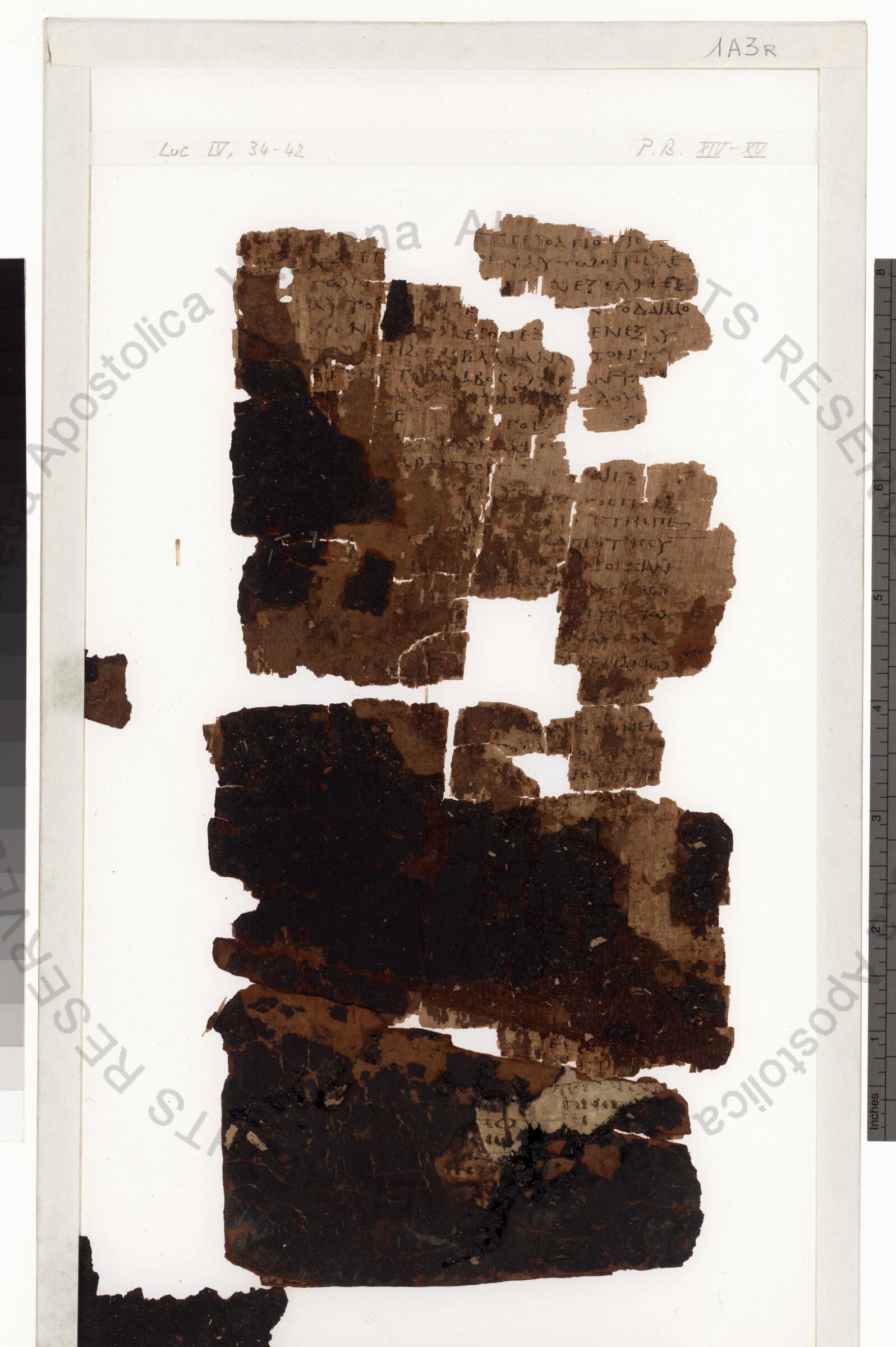
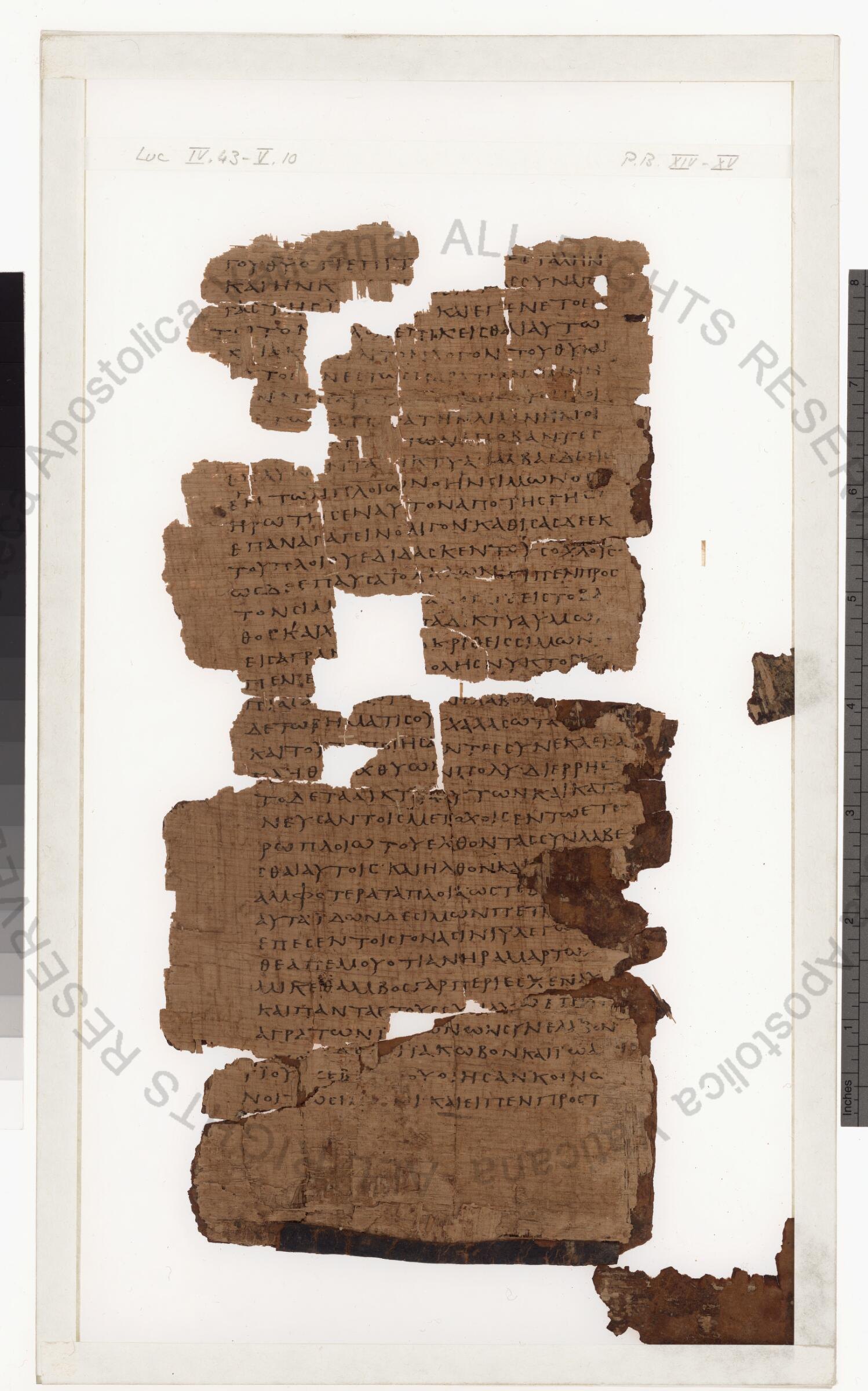
This entry covers fols. 9r-9v (Luke 4:34-5:10), shown on the Vatican Library's photographs (frames 1A.3r to 1A.3v).
How was this verified? (Provenance)
Where on the image
Vatican Library, Pap. Hanna 1 (Mater Verbi), DigiVatLib image 5, frame 1A.3r (https://digi.vatlib.it/view/MSS_Pap.Hanna.1(Mater.Verbi)/0005), cropped to the frame. NTVMR page 40 (folio 9r). 4:34 begins on the previous page; 4:42 continues on the next page. Checked on the image: the frame is pencilled 'Luc IV, 34-42'; on the upper right fragment δαιμο[νια] (4:41) can be read, matching the transcription of this page.
4:34 [μ]α̣[ς οιδα σ]ε̣ τις ει ο αγιος του̣ θ̣̣̅υ̣̣̅
35 και επ̣[ετιμη]σ̣ε̣ν αυτω ο ι̅η̅ς̅ λε
γων φ̣[ι]μ̣[ωθητι] κ̣αι εξελθε εξ
αυτο[υ] κ̣αι ρ̣ε̣ι̣[ψαν αυ]τ̣ο̣ν̣ τ̣ο δαιμο
νιον ε[ις] τ̣ο μεσον εξ[ηλθ]εν εξ α̣υ
τ̣ου̣ μηδεν βλαψαν α[υ]τον· 36 κα̣ι
ε̣γενετο θαμβος ε̣πι̣ π̣α̣ντα̣ς̣ κ̣[αι]
[σ]υ̣[νελ]αλου̣ν̣ π̣ρος̣ α̣[λ]λ̣η̣λους̣ [λε]
[γον]τ̣ες̣ [τις] ο̣ λο̣γος ου̣[τος] οτ[ι εν εξ]
[ουσι]α̣ κα̣ι δυναμε̣ι̣ [επιτασσει]
[τοις ακ]αθ̣αρ̣τοις̣ π̣̣̅[ν̅α̅]σ̣̣̅[ι̅] κ̣αι εξ[ερχον]
[ται] 37 [και εξε]π̣ο̣ρ̣ε̣υε̣τ̣ο η̣χ̣ος πε̣ρι
[αυτου εις] π̣α̣ν̣τ̣α̣ τ̣ο̣π̣ο̣ν̣ της πε
[ριχωρου] 38 [αναστας] δ̣ε απο της συν
[αγωγης εισηλθεν εις] τ̣[η]ν οικιαν
[σιμωνος πενθ]ε̣ρα δ̣[ε τ]ο̣υ σιμ̣ω
[νος ην συνεχομενη] π̣υρ̣ε̣τω
[μεγαλω και ηρωτησ]αν αυτ̣ον
[περι αυτης] 39 [και επισ]τ̣α̣ς επ̣ανω
[αυτης επετιμησεν τω π]υ[ρε]
[τω και αφηκεν αυτην παραχρη]
[μα δε αναστασα] δ̣ιηκ̣ο̣νει [αυ]
[τοις] 40 [δυνον]τ̣ο̣ς̣ δ̣ε̣ του ηλιου [απαν]
[τες οσοι ειχο]ν̣ α[σθε]ν̣ουν̣τ̣α̣ς [νο]
[σοις ποικιλαις ηγαγο]ν̣ α̣υτ̣ους
[προς αυτον ο δε ενι εκα]σ̣τ̣ω̣ α̣υ̣
[των τας χειρας επιτιθεις] ε̣θ̣ε
[ραπευ]ε̣ν̣ αυτου[ς] 41 ε̣[ξη]ρ̣χετο̣ δ̣ε
[και δαι]μ̣[ονια α]π̣ο̣ π̣[ο]λ̣λων κρα̣[υ]
[γαζοντα και λεγο]ν̣τ̣α̣ οτι συ ει ο υιος
[του θεου και επιτιμ]ων ουκ εια αυ
[τα λ]ε̣γ̣ε̣ι̣ν̣ ο̣τ̣[ι η]δ̣ε̣ισαν τον χ̅ν̅
[αυτον ειναι] 42 [γ]ε̣νο̣μενης δε η
[μερας εξελθων επορε]υ̣θ̣η εις
[ερημον τοπον και οι οχλ]ο̣ι̣ επεζ̣η
[τουν αυτον και ηλ]θ̣ο̣ν εως αυτο̣υ̣
[και κατειχον αυτον τ]ο̣υ̣ μη πορ̣[ευ]
[εσθαι]
4:34Saying, Let us alone; what have we to do with thee, thou Jesus of Nazareth? art thou come to destroy us? I know thee who thou art; the Holy One of God. 35And Jesus rebuked him, saying, Hold thy peace, and come out of him. And when the devil had thrown him in the midst, he came out of him, and hurt him not. 36And they were all amazed, and spake among themselves, saying, What a word is this! for with authority and power he commandeth the unclean spirits, and they come out. 37And the fame of him went out into every place of the country round about. 38¶ And he arose out of the synagogue, and entered into Simon’s house. And Simon’s wife’s mother was taken with a great fever; and they besought him for her. 39And he stood over her, and rebuked the fever; and it left her: and immediately she arose and ministered unto them. 40¶ Now when the sun was setting, all they that had any sick with divers diseases brought them unto him; and he laid his hands on every one of them, and healed them. 41And devils also came out of many, crying out, and saying, Thou art Christ the Son of God. And he rebuking them suffered them not to speak: for they knew that he was Christ. 42And when it was day, he departed and went into a desert place: and the people sought him, and came unto him, and stayed him, that he should not depart from them.
Where on the image
Vatican Library, Pap. Hanna 1 (Mater Verbi), DigiVatLib image 6, frame 1A.3v (https://digi.vatlib.it/view/MSS_Pap.Hanna.1(Mater.Verbi)/0006), cropped to the frame. NTVMR page 50 (folio 9v). 4:43 begins on the previous page; 5:10 continues on the next page. Checked on the image: near the top εγενετο ... επικεισθαι αυτω ... τον λογον του θ̅υ̅ (5:1), matching the transcription of this page.
4:43 του θ̅υ̅ οτι επι τ[ουτο απ]ε̣σταλην
44 και ην κ[ηρ]υ̣σ̣[σων] ε̣ι̣ς̣ τ̣α̣ς συναγω̣
γας της ι[ουδαιας] 5:1 και εγενετο εν̣
τω τον̣ [οχ]λο̣ν̣ επικεισθαι αυτω
κ[α]ι ακ[ου]ε̣ι̣ν τον λογον του θ̅υ̅ και
[α]υ̣τος̣ [η]ν εστως παρα̣ την λ̣ι̣μ̣νην
[γε]ννη̣σαρε̣τ 2 κ̣[αι] ε̣ι̣δ̣ε̣ν̣ δ̣υο [π]λοι
[α ε]σ̣τωτ̣α πα̣ρ̣α την λιμνην· οι
[δε αλιεις] απ [αυ]των αποβαντες
επλυν[ο]ν τα [δ]ικτυα· 3 ε̣μβας δε εις
εν των πλοιων ο ην σιμωνος
ηρωτησεν αυτον απο της γης
επαναγαγειν ολιγον· καθισας δε εκ
του πλοιου εδιδασκεν τους οχλους·
4 ως δε επαυσατο λαλων ε̣ιπεν προς
τον σιμ[ωνα ε]π̣αν̣α̣γα̣γε εις το βα
θος και χ[αλασατε] τα δικτυα υμων̣
εις αγρα̣ν̣ 5 [και απ]οκριθεις σιμων ε̣ι̣
πεν· ε[πιστατα δ]ι̣ ολης νυκτος κο
πιασα[ντε]ς̣ ο̣υ̣δ̣[ε]ν̣ ελαβομ̣[εν επι]
δε τω ρηματι σου χαλασω τα [δικτυα]
6 και τουτ̣[ο] ποιησαντες συνεκλεισαν̣
πληθ[ος] ι̣χθυων πολυ· διερρησ[σε]
το δε τα δικτυ̣α̣ α̣υτων 7 και κατε̣
νευσαν τοις μετοχοις εν τω ετε
ρω πλοιω του ελθοντας συνλαβε
σθαι αυτοις· και ηλθον και̣ [επλησαν]
αμφοτερα τα πλοια· ωστε β̣υ̣θ̣[ιζεσθαι]
αυτα· 8 ιδων δε σιμων πετρ̣[ος προσ]
επεσεν τοις γονασιν ι̅υ̅ λεγω[ν εξελ]
θε απ εμου οτι ανηρ αμαρτωλ̣[ος ει]
μι κ̅ε̅ 9 θαμβος γαρ περιεσχεν αυ[τον]
και παντας τους συν̣ αυ̣τ̣ω επι̣ τ̣η̣
αγρα των ι[χθυ]ω̣ν ων συνελαβον·
10 [ο]μ̣ο̣[ιω]ς̣ δε κ̣[α]ι ιακωβον και ιωαν̣η̣[ν]
υιου[ς] ζ̣εβε̣δ̣[α]ι̣ου οι ησαν κοινω̣
νοι τ̣ω σιμ̣ω̣ν̣ι· και ειπεν προς το̣ν
4:43And he said unto them, I must preach the kingdom of God to other cities also: for therefore am I sent. 44And he preached in the synagogues of Galilee. 5:1And it came to pass, that, as the people pressed upon him to hear the word of God, he stood by the lake of Gennesaret, 2And saw two ships standing by the lake: but the fishermen were gone out of them, and were washing their nets. 3And he entered into one of the ships, which was Simon’s, and prayed him that he would thrust out a little from the land. And he sat down, and taught the people out of the ship. 4Now when he had left speaking, he said unto Simon, Launch out into the deep, and let down your nets for a draught. 5And Simon answering said unto him, Master, we have toiled all the night, and have taken nothing: nevertheless at thy word I will let down the net. 6And when they had this done, they inclosed a great multitude of fishes: and their net brake. 7And they beckoned unto their partners, which were in the other ship, that they should come and help them. And they came, and filled both the ships, so that they began to sink. 8When Simon Peter saw it, he fell down at Jesus’ knees, saying, Depart from me; for I am a sinful man, O Lord. 9For he was astonished, and all that were with him, at the draught of the fishes which they had taken: 10And so was also James, and John, the sons of Zebedee, which were partners with Simon. And Jesus said unto Simon, Fear not; from henceforth thou shalt catch men.
Notes
- Greek: the NTVMR diplomatic transcription, line by line as on the papyrus. Square brackets enclose letters that are lost or illegible and were supplied by the transcribers; a dot under a letter marks it as uncertain; [...] marks a gap. Nomina sacra and numerals keep the scribe's overline. Spelling is the scribe's (no accents or breathings). Words broken at a line end stay broken as on the papyrus. Corrections are not shown: the text is the first hand.
- English: the King James Version (1611), whole verses, for every verse that has text on the page. A verse that begins on one page and ends on the next is given in full on both. The KJV translates a later form of the Greek text, so its wording does not always match the papyrus; material differences (such as verses the papyrus does not have) are noted in the section.
Cite
Sources
- Source: Papyrus Hanna 1 (Mater Verbi), Vatican Library: photographs from DigiVatLib; Greek from the INTF NTVMR transcription of P75; English from the King James Version (holding institution)
- Critical edition: INTF NTVMR diplomatic transcription (CC BY 4.0)
← previous · → next · v cycle view · l back to library