P75 (Papyrus Hanna 1): Luke 6:11-7:9 (fols. 11v-13v)
Introduction
P75 is a papyrus codex of Luke and John copied in Egypt around 175-225, the oldest known copy of Luke and one of the oldest of John. It was bought by Martin Bodmer in the 1950s and published as Papyrus Bodmer XIV-XV; in 2006 it was given to the Vatican Library, where it is kept as Papyrus Hanna 1 (Mater Verbi). Its text is very close to that of Codex Vaticanus, written some 150 years later. Where Luke ends and John begins (folio 44r) both titles stand on the same page.
About 51 leaves survive, many damaged at the top and edges, especially in Luke 3-7. Lost: Luke 1:1-3:17, most of 3:23-4:33, 5:11-36, 6:5-10, 7:33-34 and 7:44-45 (and parts of 7:36-49), 17:16-19, 18:19-22:3; John 11:46-47, 12:1-2, 13:11-14:7 and everything after 15:10 except small fragments. Each section below is one page: the photograph, the NTVMR diplomatic transcription line by line, and the King James Version of every verse on the page. Where P75 lacks a verse or words that the KJV has (for example John 5:4 or the account of the adulteress, John 7:53-8:11), the section says so. Six damaged pages (folios 7v, 11r, 39v, 58r, 58v and 64v) are left out because their text could not be matched to the photographs with certainty.
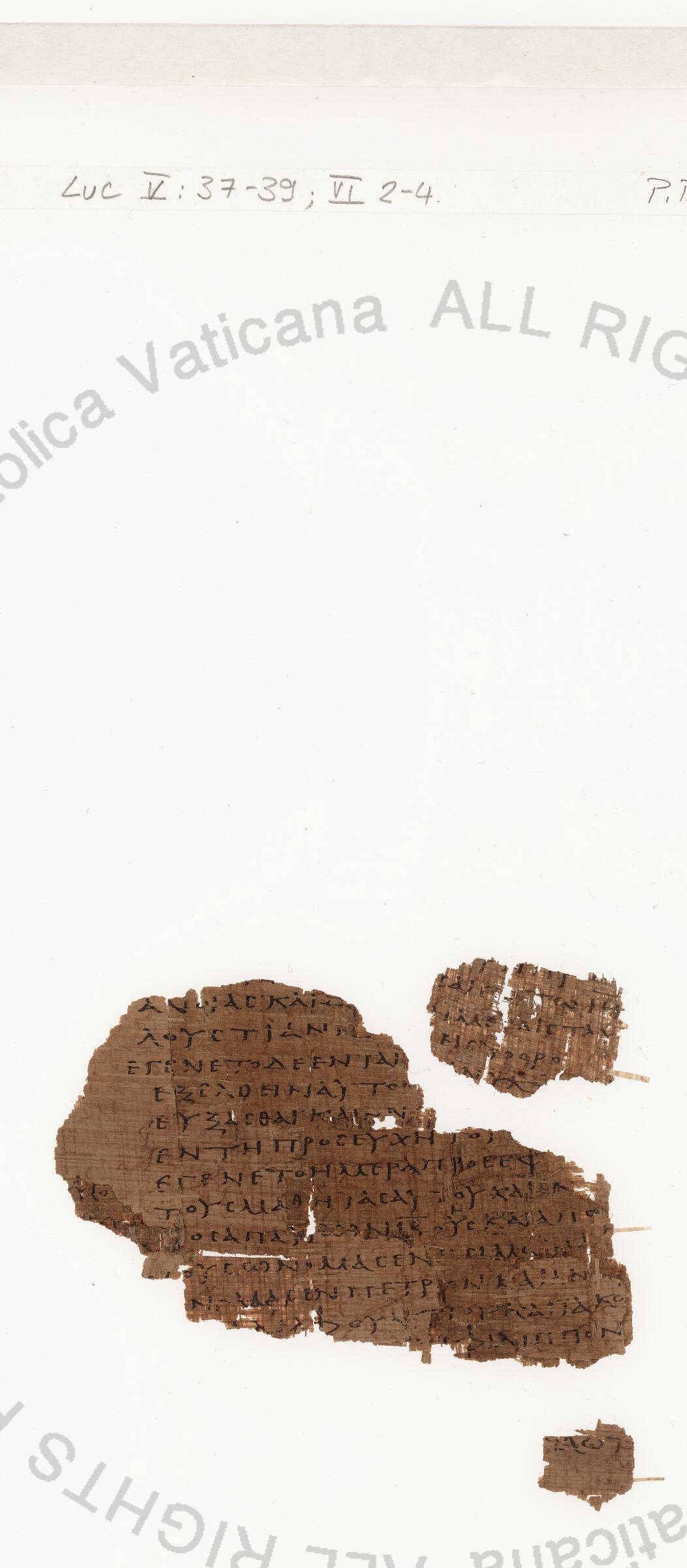
This entry covers fols. 11v-13v (Luke 6:11-7:9), shown on the Vatican Library's photographs (frames 1A.2v to 1A.5v).
How was this verified? (Provenance)
Where on the image
Vatican Library, Pap. Hanna 1 (Mater Verbi), DigiVatLib image 4, frame 1A.2v (https://digi.vatlib.it/view/MSS_Pap.Hanna.1(Mater.Verbi)/0004), cropped to the frame. NTVMR page 70 (folio 11v). 6:11 begins on the previous page; 6:15 continues on the next page. Checked on the image: the large fragment on frame 1A.2v reads εγενετο δε εν τω ... εξελθειν αυτον ... προσευξασθαι ... τους μαθητας αυτου και εκλεξαμενος ... σιμωνα ον και ωνομασεν πετρον (6:12-14); the frame's pencilled label, 'Luc V: 37-39; VI 2-4', describes the other side of this leaf, matching the transcription of this page.
6:11 ανοιας· και δ̣[ιελαλο]υ̣ν̣ π̣ρ̣[ο]ς̣ [αλλη]
λους τι αν π̣[οιη]σαιεν τω ι̅η̅[υ̅]
12 εγενετο δε εν ταις̣ ημερ̣αις ταυ[ταις]
εξελθειν αυτον εις το ορο[ς προσ]
ευξασθαι· και ην [δι]α̣νυκτ̣[ερευων]
εν τη προσευχη του θ̣̣̅[υ̅] 13 [και οτε]
εγενετο ημερα προσεφ[ωνησεν]
τους μαθητας αυτου και εκ̣[λεξαμε]
νος απ αυτων ι̅β̅ ους και απο[στο]
[λ]ους ωνομασεν· 14 σιμων̣α̣ [ον και]
[ω]νο̣μασεν πετρον και αν[δ]ρ̣[εαν]
[του] α̣δ̣ελφ̣ου αυτο̣υ· και ιακω̣[βον]
[και ιωανην κα]ι̣ φιλιππον [και βαρ]
[θολομαιον] 15 [... σι]
[μωνα τον καλουμενον ζ]η̣λ̣ωτ[ην]
6:11And they were filled with madness; and communed one with another what they might do to Jesus. 12And it came to pass in those days, that he went out into a mountain to pray, and continued all night in prayer to God. 13¶ And when it was day, he called unto him his disciples: and of them he chose twelve, whom also he named apostles; 14Simon, (whom he also named Peter,) and Andrew his brother, James and John, Philip and Bartholomew, 15Matthew and Thomas, James the son of Alphæus, and Simon called Zelotes,
Where on the image
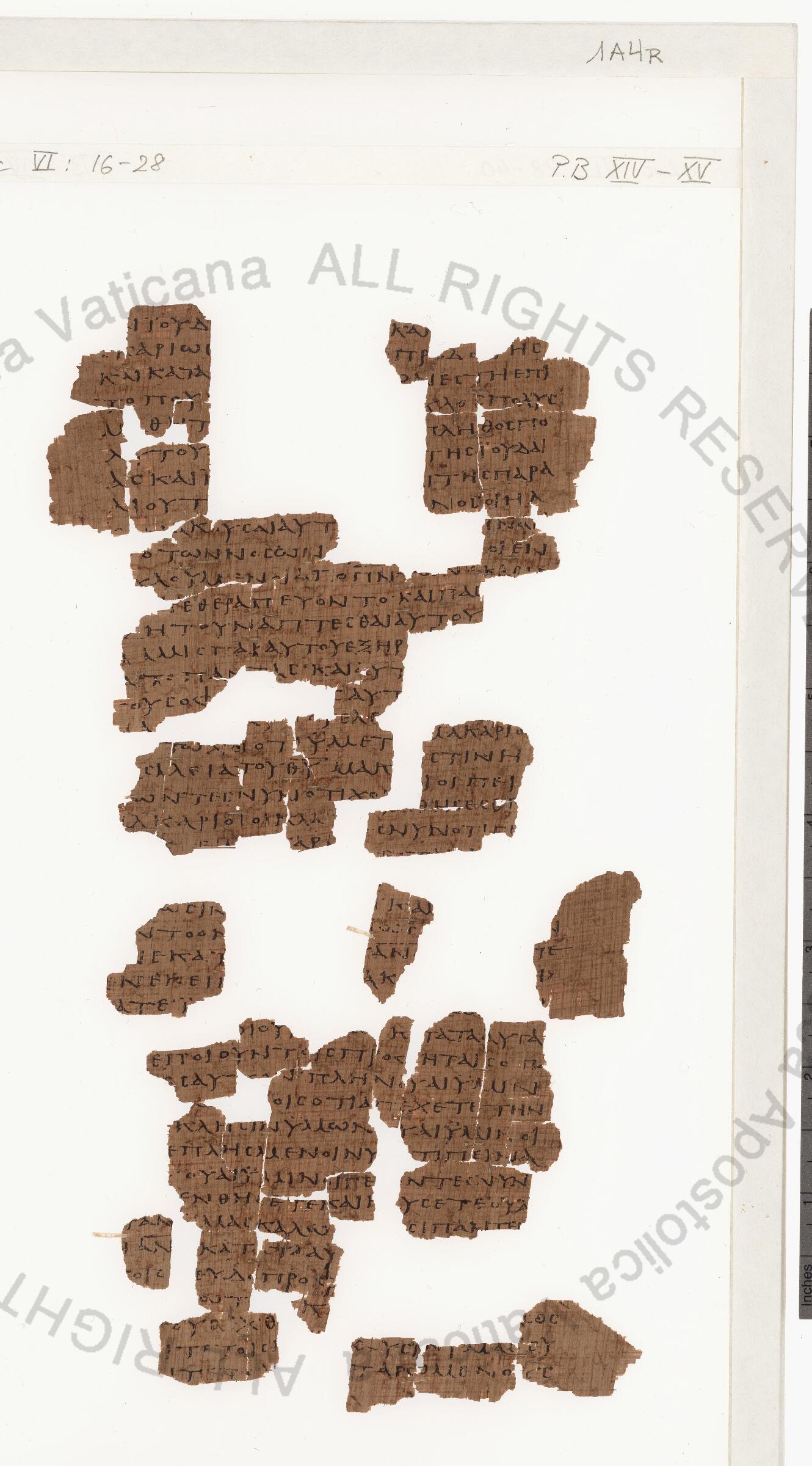
Vatican Library, Pap. Hanna 1 (Mater Verbi), DigiVatLib image 7, frame 1A.4r (https://digi.vatlib.it/view/MSS_Pap.Hanna.1(Mater.Verbi)/0007), cropped to the frame. NTVMR page 75 (folio 12r). 6:28 continues on the next page. Checked on the image: near the top ισκαριωθ (6:16), at the foot καταρωμενους (6:28), matching the transcription of this page.
6:16 [κ]α̣ι ιουδ[αν ιακωβου] και [ιουδαν ι]
σ̣καριωθ̣ [ος εγενετο] προ̣δο̣τ̣ης
17 και κατα[βας μετ αυτ]ω̣ν̣ εστη επι
τοπου [πεδινου και ο]χ̣λος πολυς
μα̣θη̣τ[ων αυτου και] π̣ληθος πο
λυ̣ του [λαου απο πασης] της ιουδαι
ας και ι[ερουσαλημ κα]ι της παρα
λιου τ[υρου και σιδω]νος 18 οι ηλ
θ̣[ο]ν̣ α̣κουσαι αυτ[ου και ιαθ]η̣ναι̣·
[απ]ο των νοσων [αυτων και] οι εν
[ο]χ̣λουμενο̣ι απο π̅ν̅τ̣̣̅ω̣̣̅ν̣̣̅ α̣κα̣θ̣α̣ρ
[τω]ν̣ εθεραπευοντο· 19 και πας̣ [ο οχ]λ̣ος
[ε]ζ̣ητουν απτεσθαι αυτου [οτι] δυ
ν̣αμις παρ αυτου εξηρ[... και]
[ι]ατο παν̣τ̣ας· 20 και α̣υτ[ος επαρας]
τ̣ους οφ[θαλμου]ς αυτ̣[ου εις τους]
μ̣α̣[θητας] α̣υ̣τ̣ο̣υ̣ ελε̣[γεν] μ̣ακαριο[ι]
[οι π]τωχοι οτι̣ υμετ[ερα] ε̣στιν η
[βα]σιλεια του θ̅υ̅ 21 μακ[αριο]ι οι πει
ν̣ωντες νυν οτι χο[ρτασ]θησεσθ̣ε̣
μ̣ακαριοι οι κλα[ιοντ]ε̣ς νυν οτι γε̣
[λασε]τ̣ε̣ 22 μ̣[ακ]αρι̣[οι εστ]ε̣ ο̣τ̣α̣ν̣ μ̣[ι]
[σησ]ωσιν̣ [υμας οι α̅ν̅ο̅]ι̣̣̅· και [εκβαλω]
[σι]ν το ον̣[ομα υμω]ν̣ ως π̣[ονηρο]ν̣
[ε]ν̣εκα τ̣[ου υιου το]υ̣ α̅ν̅[ο̅υ̅] 23 [χαρη]τε
εν εκειν̣[η τη ημερ]α κ[αι σκιρτ]η̣
[σ]ατε· ι[δου γαρ ο μισθος υ]μ̣ω̣[ν π]ο̣
[λυς εν τ]ω̣ι ουρ̣[αν]ω̣[ι] κ[α]τα τα αυτα
[γαρ] εποιουν το̣ις προφ̣ηταις ο[ι] πα̣
[τερ]ε̣ς αυτ̣ω̣ν̣· 24 πλην ο̣υαι υμιν
[τοις π]λ̣[ουσι]οις οτι απεχετε την
[παρα]κλησ̣ιν υμων̣ 25 [ο]υαι υμιν οι
[εμπ]επλησμενοι νυ[ν ο]τι πεινα
[σετ]ε̣· ουαι υμιν οι γε[λω]ντες νυν
[οτι π]ενθησ̣ετε και κ̣[λα]υσετε· 26 ουα[ι]
[ο]τ̣αν υ̣μας καλω[ς ειπω]σι παντες̣
[ο]ι α̅ν̅[ο̅ι̅] κατα̣ τα αυ[τα γαρ εποιουν]
τ̣οις [ψ]ευδο̣προφ[ηταις] 27 [αλλα υ]
[μιν λεγ]ω τ[οις α]κ[ουουσιν αγ]α̣
[πατε] τ̣ους ε̣χθ[ρους υμων κα]λ̣ως
[ποιε]ιτε τοις μ̣[ει]σο̣υσιν̣ υ̣μας̣ 28 ευ
[λογε]ιτε̣ το̣υ̣[ς κα]ταρωμενου̣ς
6:16And Judas the brother of James, and Judas Iscariot, which also was the traitor. 17¶ And he came down with them, and stood in the plain, and the company of his disciples, and a great multitude of people out of all Judæa and Jerusalem, and from the sea coast of Tyre and Sidon, which came to hear him, and to be healed of their diseases; 18And they that were vexed with unclean spirits: and they were healed. 19And the whole multitude sought to touch him: for there went virtue out of him, and healed them all. 20¶ And he lifted up his eyes on his disciples, and said, Blessed be ye poor: for yours is the kingdom of God. 21Blessed are ye that hunger now: for ye shall be filled. Blessed are ye that weep now: for ye shall laugh. 22Blessed are ye, when men shall hate you, and when they shall separate you from their company, and shall reproach you, and cast out your name as evil, for the Son of man’s sake. 23Rejoice ye in that day, and leap for joy: for, behold, your reward is great in heaven: for in the like manner did their fathers unto the prophets. 24But woe unto you that are rich! for ye have received your consolation. 25Woe unto you that are full! for ye shall hunger. Woe unto you that laugh now! for ye shall mourn and weep. 26Woe unto you, when all men shall speak well of you! for so did their fathers to the false prophets. 27¶ But I say unto you which hear, Love your enemies, do good to them which hate you, 28Bless them that curse you, and pray for them which despitefully use you.
Where on the image
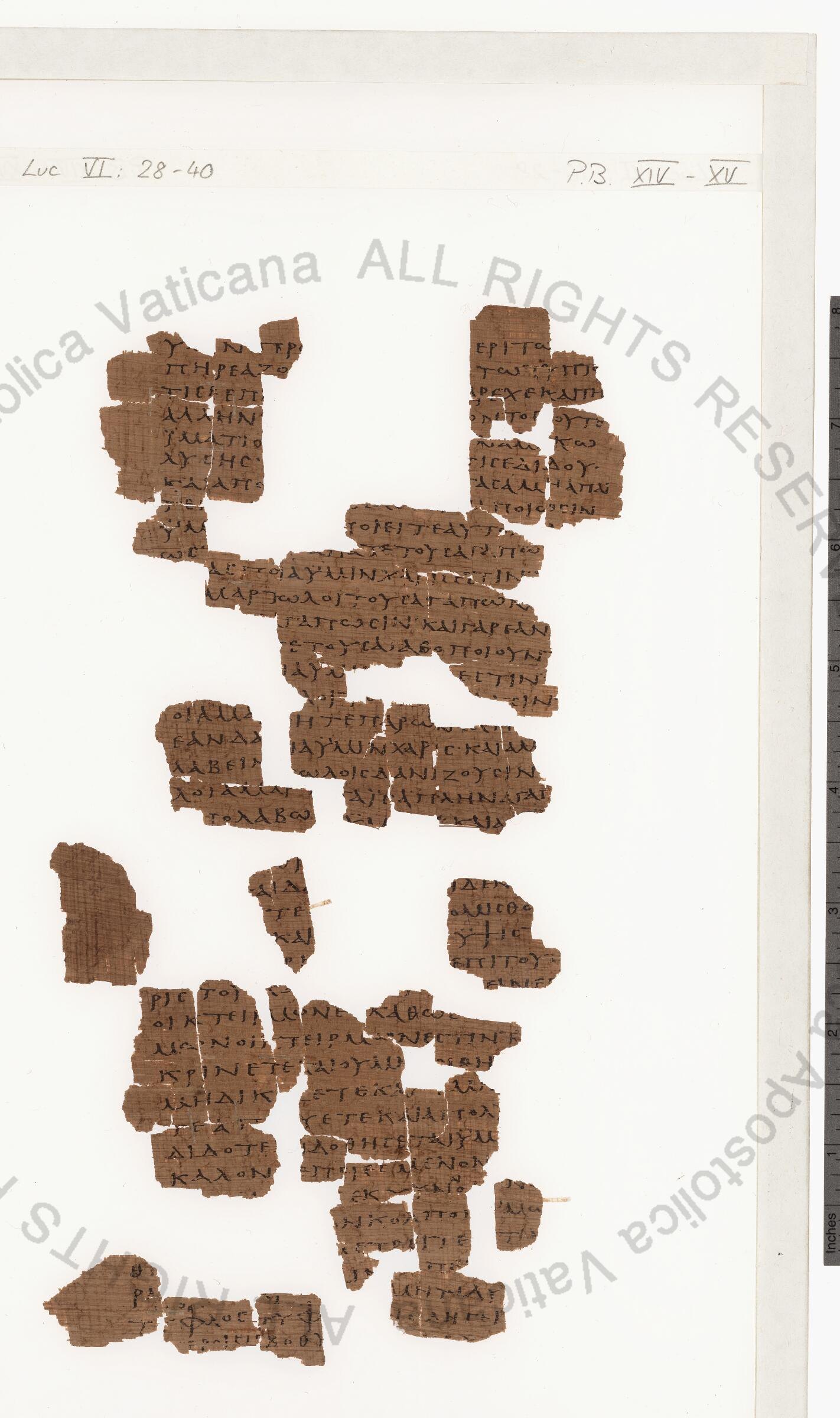
Vatican Library, Pap. Hanna 1 (Mater Verbi), DigiVatLib image 8, frame 1A.4v (https://digi.vatlib.it/view/MSS_Pap.Hanna.1(Mater.Verbi)/0008), cropped to the frame. NTVMR page 76 (folio 12v). 6:28 begins on the previous page. Checked on the image: near the top επηρεαζοντων (6:28), near the foot τυφλος (6:39), matching the transcription of this page.
6:28 υμ̣[ι]ν προ̣[σευχεσθεπ]ερι τω[νε]
πηρεαζο[ντωνυμας] 29 τω τυπτο[ν]
τι σε επι̣[τηνσιαγοναπ]α̣ρεχε και τη[ν]
αλλην· [καιαποτουαιρ]οντος̣[σ]ου το
ιματιο[νκαιτονχιτω]ν̣α μ[η] κω
λυσης· 30 [παντιαιτουν]τ̣ι σε διδου·
και απο [τουαιροντος]τ̣α σα μη απαι
τει 31 [καικαθως]θ̣ε̣λ̣ε̣[τει]ν̣α ποιωσιν
υμ[ινοια̅ν̅ο̅ι̅]π̣οιειτε αυτο̣[ιςο]μ̣[οι]
ως· 32 [καιειαγ]α̣π̣α̣τε τους αγαπω[ντας]
[υμ]ας ποια υμιν χαρ̣ις εστιν· [καιγαρ]
[οια]μαρτωλοι τους αγαπων[τας]
[αυτους]α̣γαπωσιν· 33 και γαρ εαν [αγα]
[θοποιη]τ̣ε τους αγαθοποιουντ̣[ας]
[υμαςπο]ια υμι̣ν̣[χαρις] εστιν· [και]
οι αμαρ̣[τω]λ̣οι τ̣ο̣[αυτοπο]ι̣[ο]υ̣σιν· 34 [και]
εαν δα[νι]σ̣ητε παρ ων ελπ̣[ιζετε]
λαβειν̣[πο]ια υμιν χαρι̣ς· και αμ[αρτω]
λοι αμαρ̣τ̣ωλοις δανιζουσιν [ινα]
α̣πολαβω[σιν]τ̣α ισα· 35 πλην αγαπ̣[ατε]
[τουςεχ]θ̣ρ̣[ους] υμ̣[ων]· και α[γαθο]
[ποιειτε]κ̣αι δα̣[νιζετεμ]η̣δεν̣[απ]
[ελπιζον]τε[ςκαιεσται] ο μισθο[ςυ]
[μωνπολυς] και [εσεσθευιοι] υψιστ̣[ου]
[οτιαυτοςχ]ρ̣η̣[στοςεστιν] επι τους̣[αχα]
ριστου̣[ς]κ̣α̣[ιπονη]ρ̣[ους] 36 [γ]εινεσ̣[θε]
οικτειρ̣μονε[ς] καθως̣[οπατηρυ]
μων οικ̣τειρμω̣ν εστιν· 37 κ̣[αιμη]
κρινετε κ̣αι ου μη̣[κ]ρ̣ι̣θη[τεκαι]
μη δικ[α]ζ̣ετε και̣[ο]υ̣ μη̣[δικασθη]
τε απ[ολ]υετε και απολυ̣[θησεσθε]
38 διδοτε [κα]ι δοθησεται υμ[ινμετρον]
καλον [π]επειεσμενον [σεσαλευ]
[μενο]ν̣ [υπερ]εκχ̣υνομ̣[ε]ν[ον δω]
[σουσινειςτ]ο̣ν κολπον̣υ̣μω̣[νω]
[γαρμετρω]μ̣ετρ̣ειτε [αν]τιμ̣[ετρη]
θη̣[σεταιυ]μ̣ιν̣ 39 [ει]πε[νδεκαιπα]
ρα[β]ο[λην]α̣υ̣[τοις] μητι δυ[ναται]
τυ̣φλος τυφ[λο]ν̣ οδηγει[νουχιαμ]
[φοτ]ε̣ρο̣ι εις̣ βοθυ̣[νονπεσ]ο̣υ̣[νται]
6:28Bless them that curse you, and pray for them which despitefully use you. 29And unto him that smiteth thee on the one cheek offer also the other; and him that taketh away thy cloke forbid not to take thy coat also. 30Give to every man that asketh of thee; and of him that taketh away thy goods ask them not again. 31And as ye would that men should do to you, do ye also to them likewise. 32For if ye love them which love you, what thank have ye? for sinners also love those that love them. 33And if ye do good to them which do good to you, what thank have ye? for sinners also do even the same. 34And if ye lend to them of whom ye hope to receive, what thank have ye? for sinners also lend to sinners, to receive as much again. 35But love ye your enemies, and do good, and lend, hoping for nothing again; and your reward shall be great, and ye shall be the children of the Highest: for he is kind unto the unthankful and to the evil. 36Be ye therefore merciful, as your Father also is merciful. 37Judge not, and ye shall not be judged: condemn not, and ye shall not be condemned: forgive, and ye shall be forgiven: 38Give, and it shall be given unto you; good measure, pressed down, and shaken together, and running over, shall men give into your bosom. For with the same measure that ye mete withal it shall be measured to you again. 39And he spake a parable unto them, Can the blind lead the blind? shall they not both fall into the ditch?
Where on the image
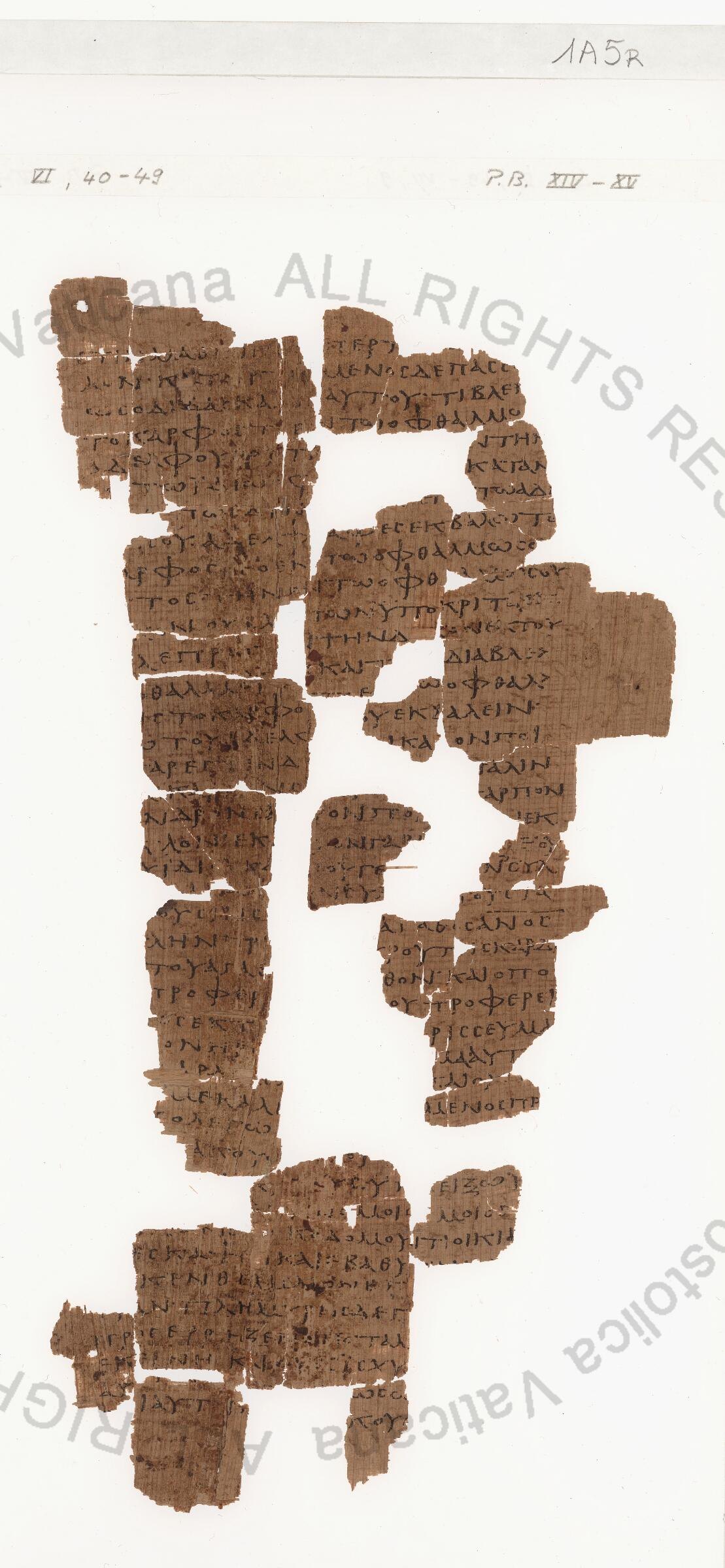
Vatican Library, Pap. Hanna 1 (Mater Verbi), DigiVatLib image 9, frame 1A.5r (https://digi.vatlib.it/view/MSS_Pap.Hanna.1(Mater.Verbi)/0009), cropped to the frame. NTVMR page 80 (folio 13r). 6:40 begins on the previous page; 6:49 continues on the next page. Checked on the image: near the top κατηρτισμενος δε πας ... αυτου τι βλεπεις (6:40-41), near the foot προσερηξεν (6:48-49), matching the transcription of this page.
6:40 στιν̣ μαθη̣τ̣η̣[ς υ]περ τ[ον διδασκα]
λο̣ν· κα̣τη̣ρτ̣ι̣σ̣μενος δε πας ε̣[σται]
ως ο διδ̣ασκαλ̣ο̣ς̣ αυτου· 41 τι βλεπ̣[εις]
το καρφος τ[ο] εν̣ τω οφθαλμω̣ [του]
α̣δελφου σ̣ου̣ τη̣[ν δε δοκο]ν̣ την̣
[εν] τω ιδιω [ο]φ[θαλμω ου] καταν̣[ο]
[εις] 42 η̣ π̣ως δυ̣ν[ασαι λεγ]ε̣ι̣[ν] τω αδε̣[λ]
[φω] σου. αδελφ[ε] αφ̣ες εκβαλω το̣
[κ]α̣ρφος τ̣ο εν̣ τω οφθαλμω σο̣υ̣
[αυ]τος την εν τω οφθ[α]λ̣μω̣ σου
[δο]κ̣ο̣ν ου β̣λ[ε]π̣ων· υποκριτα̣· ε̣κ̣
[βα]λε πρω̣τ̣[ο]ν̣ την δ[ο]κ̣ον εκ του
[ο]φ̣θαλμο̣υ̣ [σο]υ̣. και τ̣[οτε] διαβλε
[ψε]ι̣ς το κα̣ρ̣φος̣ τ̣ο̣ ε̣[ν τ]ω οφθαλ
[μ]ω̣ του α̣δελφ̣[ου σ]ο̣υ εκβ̣αλειν·
43 [ου γ]αρ εστιν δ[ενδρο]ν̣ κα[λ]ον ποι
[ου]ν̣ κα̣ρ̣π̣[ο]ν σ[απ]ρ̣[ον ουδε] π̣αλιν
[δε]νδρο̣ν σα[π]ρ̣ον πο[ιουν] κ̣αρπον
[κ]α̣λον· 44 εκα̣[σ]τ̣ο̣ν γαρ̣ δ̣[ενδρο]ν̣ εκ
[το]υ̣ ιδιο̣υ̣ κα̣[ρ]π̣ου γε[ινωσκε]τ̣ε· ου
[γαρ εξ] α̣κ̣α̣[νθω]ν συλ̣[λεγουσι]ν συλ
[λεγ]ουσιν̣ σ[υκα ουδε εκ βα]τ̣ου στ̣α̣
[φυ]λην τ̣ρ[υγωσιν] 45 [ο] αγ̣αθο̣ς α̅ν̅ο̅ς̅
[εκ] του αγαθ̣[ου θησα]υ̣ρου τη̣ς καρδ[ι]
[ας] π̣ροφερ[ει το αγα]θον· και ο πο
[νηρ]ο̣ς εκ τ[ου πονηρ]ου π̣ροφερει
[το π]ονηρο̣[ν εκ γαρ πε]ρισσευμα̣
[τος κ]α̣ρδ̣ι̣[α]ς̣ λ̣[αλει το στο]μ̣α αυτ[ου]
46 [τι δε] με καλε̣[ιτε κ̅ε̅ κ̅ε̅] κ̣αι ου [ποι]
[ειτ]ε̣ ο λεγω 47 [πας ο ερχο]μενος πρ[ος]
[με και] ακ̣ουω̣[ν] μ̣ου̣ [των λογων]
[και ποιων] α̣υ̣τ̣ο̣υς. υπ̣[οδ]ειξω υ̣
[μιν τινι] ε̣σ̣τ̣ι̣ν ο̣μοιο̣[ς] 48 [ο]μοιος̣ [ε]
[στ]ι̣ν̣ α̣̣̅ν̣̣̅ω̣̣̅ [οι]κοδομουν̣τι οικια[ν]
[ος] εσκαψε̣ν̣ και εβαθυ[νεν και ε]
[θη]κεν θεμελι̣ον επ̣[ι την πε]
τ̣ρ̣α̣ν· πλημυ̣ρη̣ς δε γ[ενομενης]
προ̣σερρη̣ξεν̣ ο̣ ποταμ̣[ος τη οικια]
εκε̣ινη κ̣α̣ι ου̣κ̣ ισχυ[σεν σαλευσαι]
αυ[την δια το καλ]ως ω̣[κοδομησ]
[θα]ι αυτη̣ν̣ 49 [ο δε α]κουσ̣[ας και μη]
6:40The disciple is not above his master: but every one that is perfect shall be as his master. 41And why beholdest thou the mote that is in thy brother’s eye, but perceivest not the beam that is in thine own eye? 42Either how canst thou say to thy brother, Brother, let me pull out the mote that is in thine eye, when thou thyself beholdest not the beam that is in thine own eye? Thou hypocrite, cast out first the beam out of thine own eye, and then shalt thou see clearly to pull out the mote that is in thy brother’s eye. 43For a good tree bringeth not forth corrupt fruit; neither doth a corrupt tree bring forth good fruit. 44For every tree is known by his own fruit. For of thorns men do not gather figs, nor of a bramble bush gather they grapes. 45A good man out of the good treasure of his heart bringeth forth that which is good; and an evil man out of the evil treasure of his heart bringeth forth that which is evil: for of the abundance of the heart his mouth speaketh. 46¶ And why call ye me, Lord, Lord, and do not the things which I say? 47Whosoever cometh to me, and heareth my sayings, and doeth them, I will shew you to whom he is like: 48He is like a man which built an house, and digged deep, and laid the foundation on a rock: and when the flood arose, the stream beat vehemently upon that house, and could not shake it: for it was founded upon a rock. 49But he that heareth, and doeth not, is like a man that without a foundation built an house upon the earth; against which the stream did beat vehemently, and immediately it fell; and the ruin of that house was great.
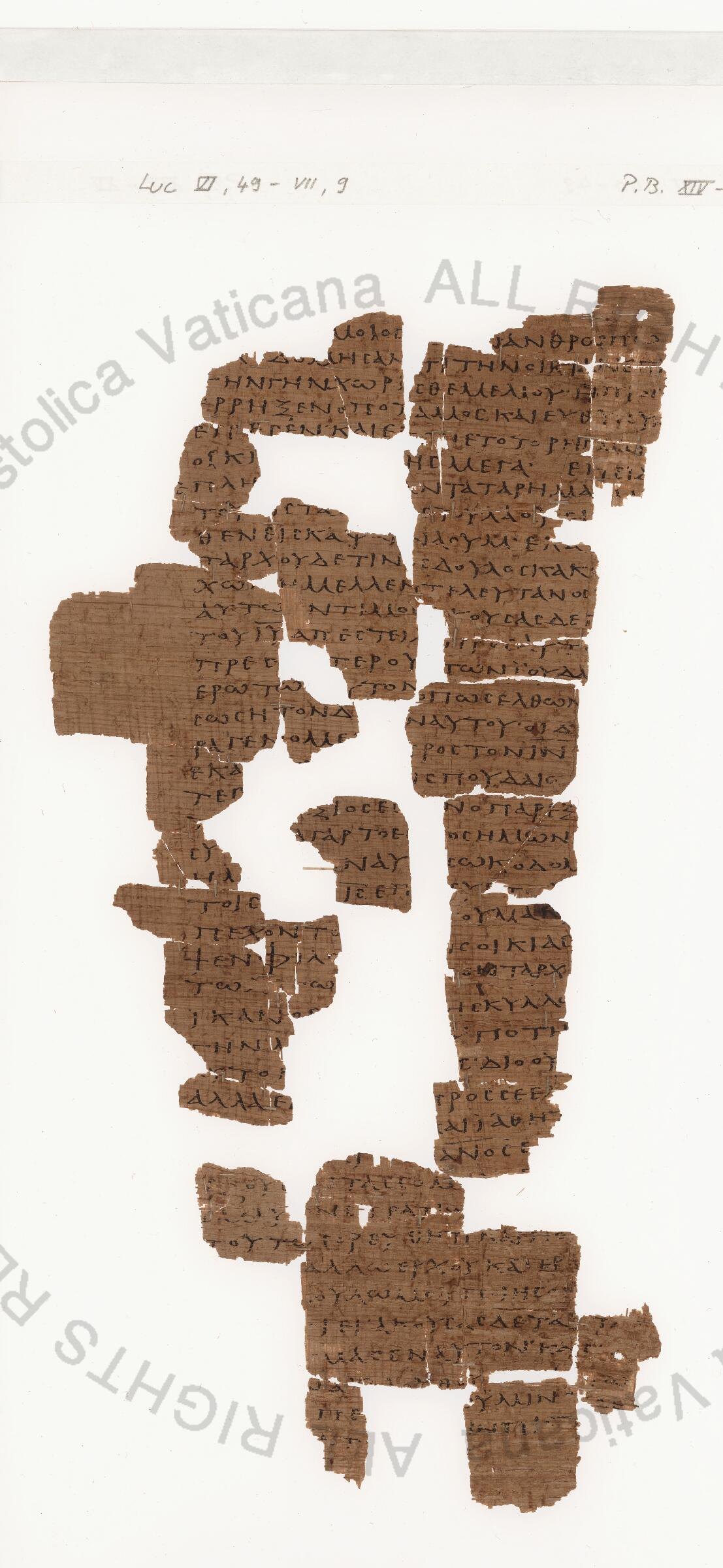
Where on the image
Vatican Library, Pap. Hanna 1 (Mater Verbi), DigiVatLib image 10, frame 1A.5v (https://digi.vatlib.it/view/MSS_Pap.Hanna.1(Mater.Verbi)/0010), cropped to the frame. NTVMR page 90 (folio 13v). 6:49 begins on the previous page; 7:9 continues on the next page. Checked on the image: near the top ομοιος ... ανθρωπω ... θεμελιον (6:49), matching the transcription of this page.
6:49 [ποιησας ο]μοιος [εστι]ν̣ ανθρωπω
[οι]κ̣[ο]δο̣μησαν̣τι την οικιαν επι̣
τ̣ην γην χωρις θεμελιου· η προσ
ε̣ρρηξεν ο ποταμος και ευθυς̣ σ̣υν̣
επεσεν· και εγ̣εν̣ετο το ρηγμα τ[ης]
οικι[ας εκειν]ης μεγα· 7:1 επειδ̣[η]
επλη[ρωσεν π]α̣ντα τα ρημα[τ]α̣ α̣[υ]
του [ε]ι̣ς τα[ς ακοα]ς του λαου ε̣ι̣[σηλ]
θεν εις καφ̣α̣ρ̣ν̣αουμ· 2 εκα̣[τον]
ταρχου δε τιν[ο]ς δουλος κακω̣[ς ε]
χων̣ ημελλεν τελευταν ος [ην]
αυτω [ε]ντιμος̣ 3 [α]κ̣ουσας δε π̣[ερι]
του ι̅υ̅ απεστειλ̣[ε] προς αυτο̣[ν]
πρεσ[βυ]τερου[ς] των ιουδα[ιων]
ερωτω[ν α]υ̣τον οπως ελθων [δια]
σωση τον δ[ουλο]ν αυτου· 4 οι δ[ε πα]
ραγεν̣ομε[νοι] π̣ρος τον ι̅ν̅ [παρ]
εκα[λουν αυτο]ν̣ σπουδαιω̣[ς λεγον]
τες̣ [οτι] α̣ξ̣ιος εσ̣[τι]ν ο παρεξ[η του]
τ̣[ο] 5 [αγαπ]α̣ γαρ το εθ̣[ν]ος ημων [και την]
συ[ναγωγ]η̣ν αυ[το]ς ωκοδομ̣[ησεν]
ημ̣[ιν] 6 [ο δε] ι̅ς̅ επ[ορ]ε̣υετ[ο σ]υ̣[ν αυ]
τοις [ηδη δε αυτου] ου μακ[ραν α]
πεχοντο[ς απο τ]η̣ς οικιας [επεμ]
ψεν φιλο̣[υς ο εκα]τ̣ονταρχ[ης αυ]
τω λ̣ε̣γ̣ω[ν κ̅ε̅ μ]η σκυλλο̣[υ ου γαρ]
ικανος̣ [ειμι ινα] υ̣πο τη[ν στε]
γ̣ην μ̣[ου εισελθη]ς· 7 διο ου[δε εμ]
α̣υτον̣ [ηξιωσα] π̣ρος σε ελ̣[θειν]
αλλα ει̣[πε λογω] κ̣αι ιαθητ̣[ω ο παις]
[μου] 8 [και γ]α̣ρ̣ [εγω] α̅ν̅ο̅ς̅ ε[ιμι υπο]
ε̣ξ̣ουσ̣[ια]ν̣ τασσομε̣[νο]ς̣ [εχων υπ]
ε̣μαυ[τ]ο̣ν στρατι̣ω̣[τας και λεγω]
τουτω π̣ορευθητι̣ κ̣αι π̣ο[ρευε]
[ται και] αλλω ερχου και ερ[χεται]
[και τω] δ̣ουλω μου ποιησο̣ν̣ [τουτο]
[και πο]ιει· 9 ακουσα̣ς δε ταυ̣τα̣ [ο]
[ι̅ς̅ εθαυ]μασεν αυτον· κα[ι] σ[τρα]
[φεις τ]ω̣ ακ̣ο̣λ̣ο̣υ̣θου[ντι αυ]τ̣ω
[οχλω ει]πε[ν λεγ]ω̣ υμιν ο̣υ̣δε
[εν τω ι̅η̅]λ̣̣̅ το̣[σαυτ]η̣ν πισ̣τ̣[ιν]
6:49But he that heareth, and doeth not, is like a man that without a foundation built an house upon the earth; against which the stream did beat vehemently, and immediately it fell; and the ruin of that house was great. 7:1Now when he had ended all his sayings in the audience of the people, he entered into Capernaum. 2And a certain centurion’s servant, who was dear unto him, was sick, and ready to die. 3And when he heard of Jesus, he sent unto him the elders of the Jews, beseeching him that he would come and heal his servant. 4And when they came to Jesus, they besought him instantly, saying, That he was worthy for whom he should do this: 5For he loveth our nation, and he hath built us a synagogue. 6Then Jesus went with them. And when he was now not far from the house, the centurion sent friends to him, saying unto him, Lord, trouble not thyself: for I am not worthy that thou shouldest enter under my roof: 7Wherefore neither thought I myself worthy to come unto thee: but say in a word, and my servant shall be healed. 8For I also am a man set under authority, having under me soldiers, and I say unto one, Go, and he goeth; and to another, Come, and he cometh; and to my servant, Do this, and he doeth it. 9When Jesus heard these things, he marvelled at him, and turned him about, and said unto the people that followed him, I say unto you, I have not found so great faith, no, not in Israel.
Notes
- Greek: the NTVMR diplomatic transcription, line by line as on the papyrus. Square brackets enclose letters that are lost or illegible and were supplied by the transcribers; a dot under a letter marks it as uncertain; [...] marks a gap. Nomina sacra and numerals keep the scribe's overline. Spelling is the scribe's (no accents or breathings). Words broken at a line end stay broken as on the papyrus. Corrections are not shown: the text is the first hand.
- English: the King James Version (1611), whole verses, for every verse that has text on the page. A verse that begins on one page and ends on the next is given in full on both. The KJV translates a later form of the Greek text, so its wording does not always match the papyrus; material differences (such as verses the papyrus does not have) are noted in the section.
Cite
Sources
- Source: Papyrus Hanna 1 (Mater Verbi), Vatican Library: photographs from DigiVatLib; Greek from the INTF NTVMR transcription of P75; English from the King James Version (holding institution)
- Critical edition: INTF NTVMR diplomatic transcription (CC BY 4.0)
← previous · → next · v cycle view · l back to library