P75 (Papyrus Hanna 1): Luke 7:9-8:5 (fols. 14r-15v)
Introduction
P75 is a papyrus codex of Luke and John copied in Egypt around 175-225, the oldest known copy of Luke and one of the oldest of John. It was bought by Martin Bodmer in the 1950s and published as Papyrus Bodmer XIV-XV; in 2006 it was given to the Vatican Library, where it is kept as Papyrus Hanna 1 (Mater Verbi). Its text is very close to that of Codex Vaticanus, written some 150 years later. Where Luke ends and John begins (folio 44r) both titles stand on the same page.
About 51 leaves survive, many damaged at the top and edges, especially in Luke 3-7. Lost: Luke 1:1-3:17, most of 3:23-4:33, 5:11-36, 6:5-10, 7:33-34 and 7:44-45 (and parts of 7:36-49), 17:16-19, 18:19-22:3; John 11:46-47, 12:1-2, 13:11-14:7 and everything after 15:10 except small fragments. Each section below is one page: the photograph, the NTVMR diplomatic transcription line by line, and the King James Version of every verse on the page. Where P75 lacks a verse or words that the KJV has (for example John 5:4 or the account of the adulteress, John 7:53-8:11), the section says so. Six damaged pages (folios 7v, 11r, 39v, 58r, 58v and 64v) are left out because their text could not be matched to the photographs with certainty.
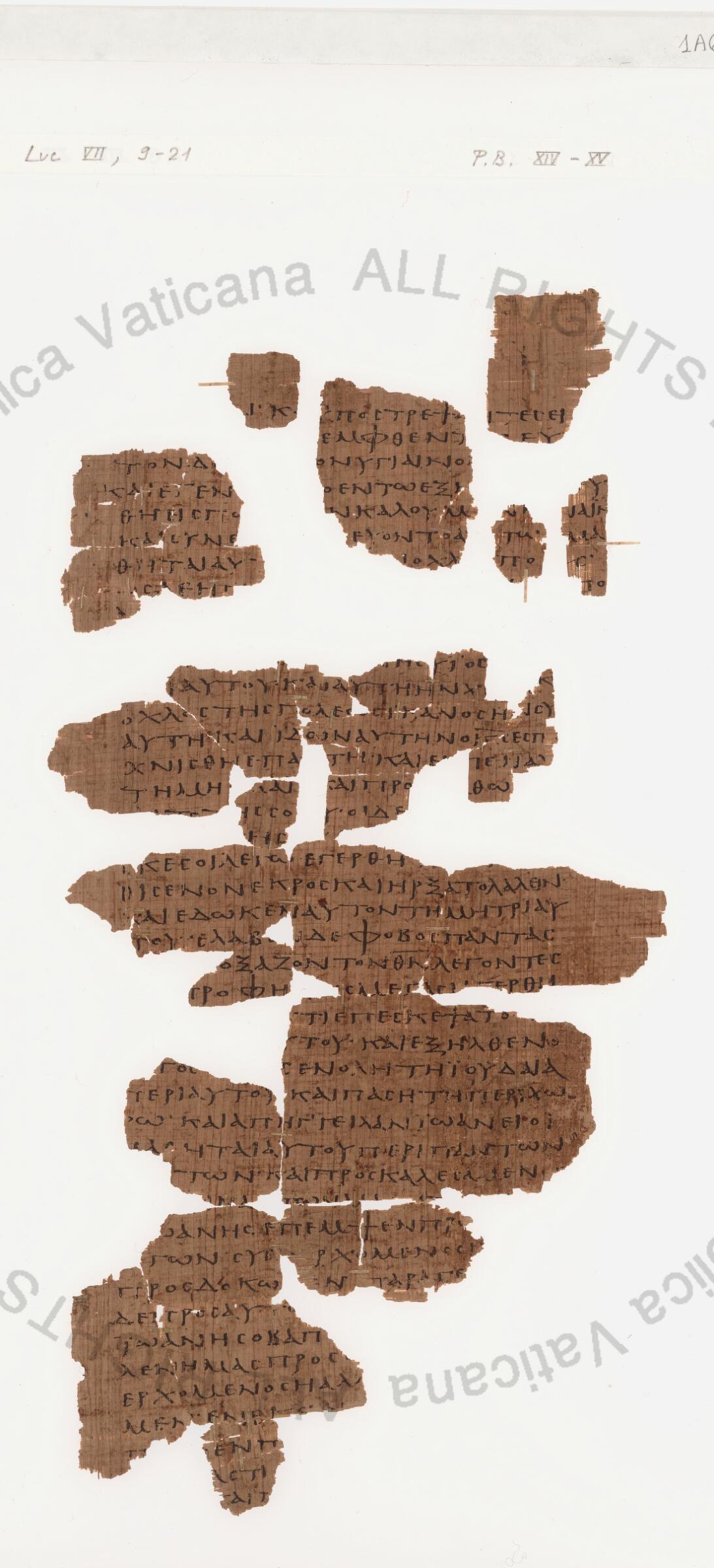
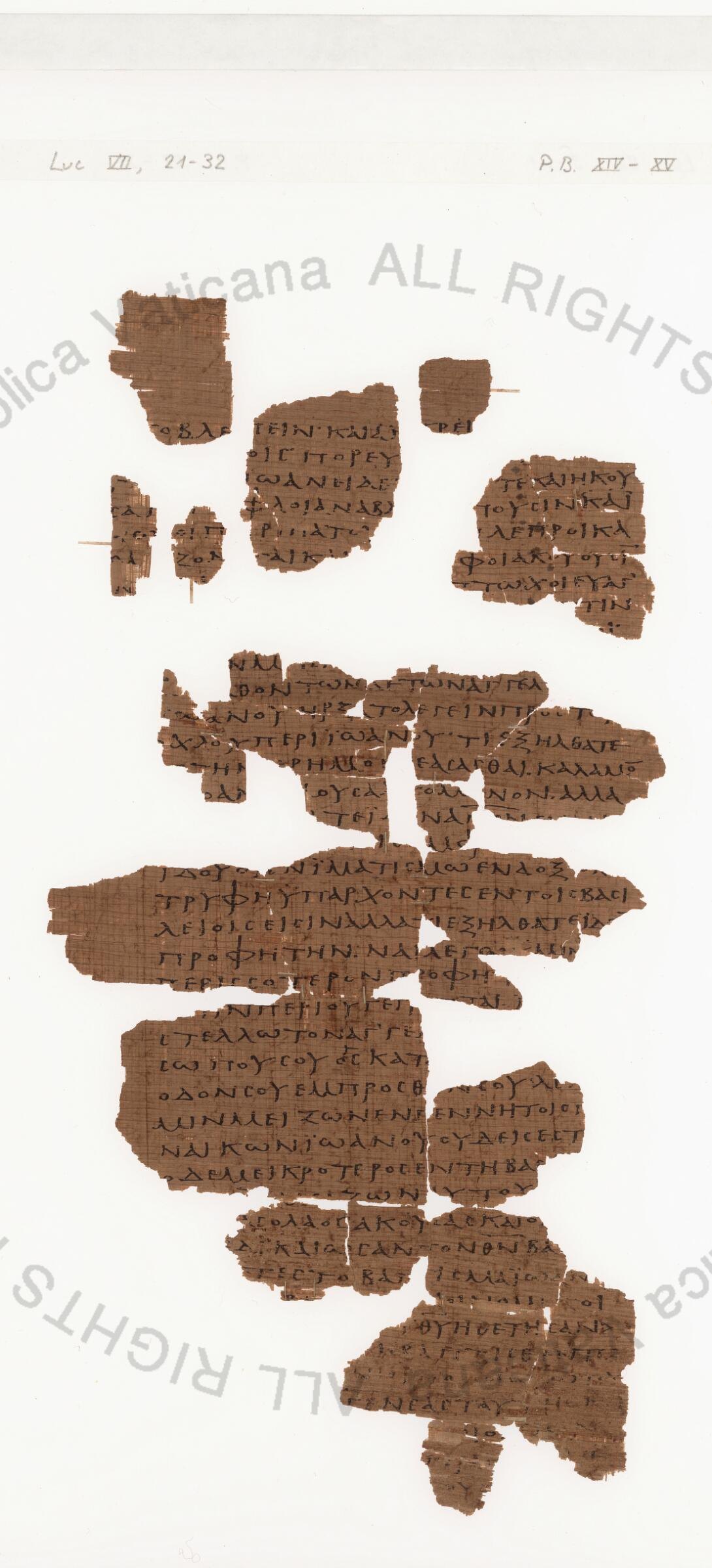
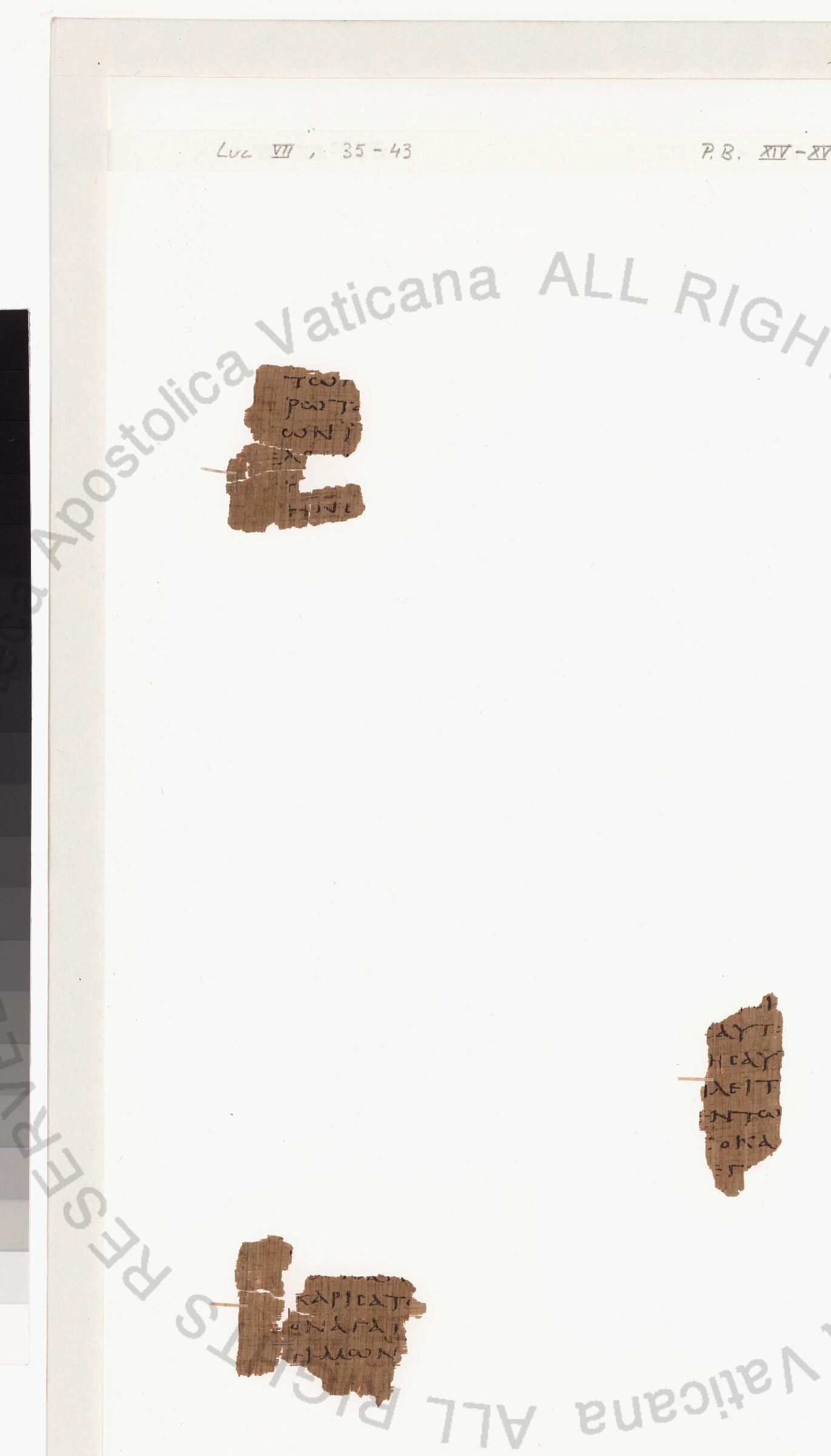
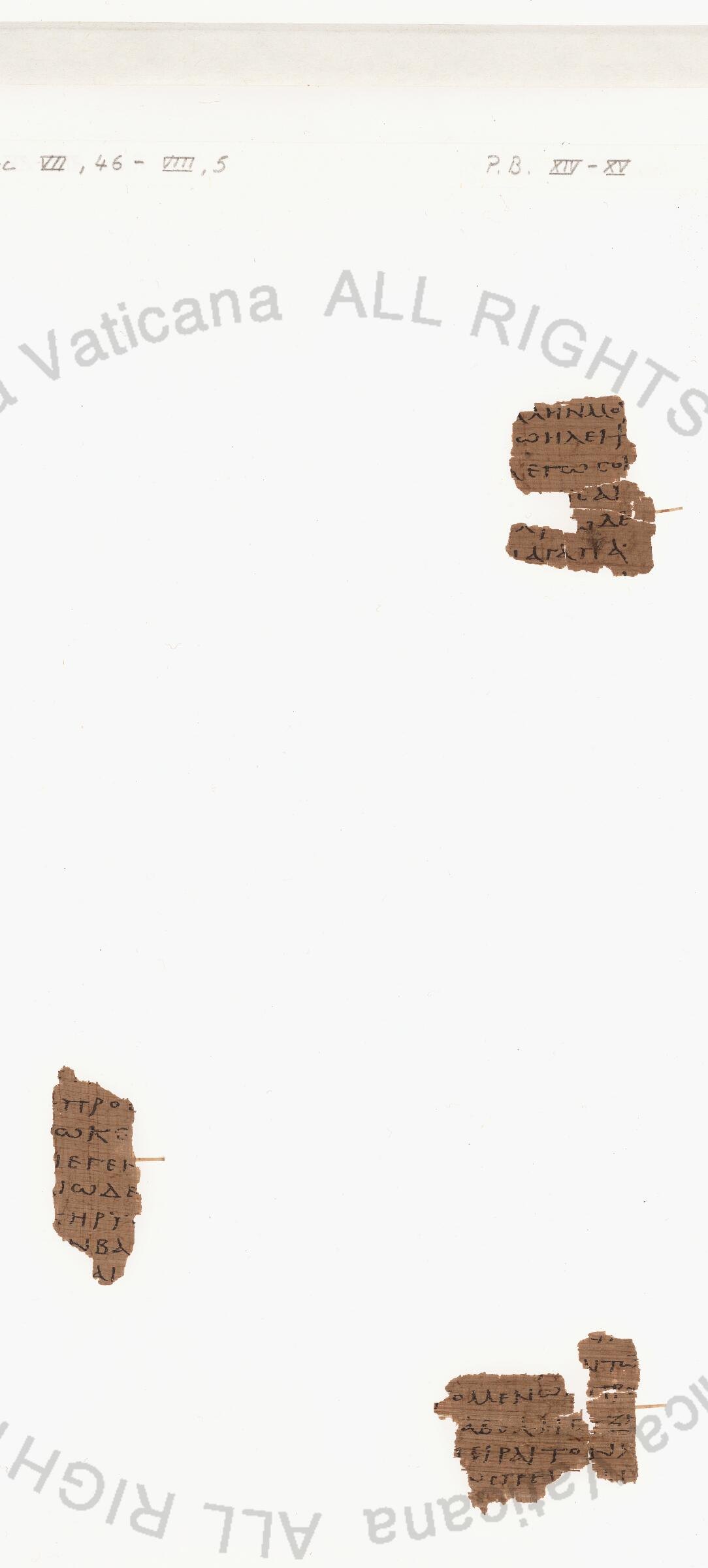
This entry covers fols. 14r-15v (Luke 7:9-8:5), shown on the Vatican Library's photographs (frames 1A.6r to 1A.7v).
How was this verified? (Provenance)
Where on the image
Vatican Library, Pap. Hanna 1 (Mater Verbi), DigiVatLib image 11, frame 1A.6r (https://digi.vatlib.it/view/MSS_Pap.Hanna.1(Mater.Verbi)/0011), cropped to the frame. NTVMR page 100 (folio 14r). 7:9 begins on the previous page; 7:21 continues on the next page. Checked on the image: near the top υποστρεψαντες ... πεμφθεντες ... υγιαινοντα (7:10), near the foot προσδοκωμεν ... ιωανης ο βαπτιστης (7:19-20), matching the transcription of this page.
7:9 [ευρο]ν̣· 10 κ[αι] υ̣ποστρεψα̣ν̣τες ει[ς τον]
[οικον οι π]εμφθεντ̣[ε]ς̣ ευ[ρον]
τον δο̣[υλ]ον υγιαινον̣[τα]
11 και εγεν[ετ]ο εν τω εξη̣[ς επορ]ε̣υ
θη εις πο[λι]ν καλουμ[ε]ν̣η̣[ν] ν̣αιν̣
και̣ συνε[πορ]ευοντο αυ̣τω [οι] μα
θηται αυτ̣[ου κα]ι οχλ̣[ος] πο[λ]υ̣ς·
12 ω̣ς δ̣ε ηγ̣[γισεν τη πυλη της] π̣ο
λ̣[εως και ιδου εξεκομιζετο τε]
[θνηκως μονογε]ν̣η̣ς̣ υιος [τη μη]
[τρ]ι αυτου· και αυτη ην χ[ηρα] κ[αι]
οχλος της π̣ολεω̣ς ικανος ην̣ συ[ν]
αυτη· 13 και ιδων αυτην ο κ̅ς̅ εσπ[λαγ]
χνισθη επ α[υ]τη· και ει̣π̣εν αυ̣
τη μη [κ]λ̣αι[ε] 14 κ̣αι προ[σε]λ̣θω[ν η]
[ψ]α̣τ̣ο̣ τ̣η̣ς σο[ρο]υ· οι δε [βασταζον]
[τες εστ]ησ[αν και ειπεν νεανι]
σ̣κε σοι λεγω εγερθητ̣ι̣ 15 [και ανεκα]
θισεν ο νεκρος και ηρξατο λαλειν·
και εδωκεν αυτον τη μητρι αυ
του· 16 ελαβε̣ν̣ δε φοβος παντας
[και εδ]οξαζον τον θ̅ν̅ λεγοντες
[οτι] π̣ροφη[τ]η̣ς μεγα̣ς η̣γ̣ερθη̣
[εν ημιν και ο]τι επεσκεψατο [ο θ̅ς̅]
[τον λαον α]υ̣του· 17 και εξηλθεν ο
[λο]γος̣ [ουτο]ς εν ολη τη ιουδαια
π̣ερι αυτου̣ και παση τη περιχω
ρ̣ω· 18 και απηγγειλαν ιωανει οι
μ̣α̣θηται αυτου περι παντων
[του]των· και προσκαλεσαμενο̣ς̣
[δυο τ]ινα[ς] των μ̣α̣[θ]η̣τ̣[ων αυτου]
[ο ι]ω̣ανης. 19 επεμψεν προ̣[ς τον κ̅ν̅]
[λ]ε̣γων· συ ε[ι ο ε]ρχομενος η̣ [αλλον]
προσδοκω[μ]ε̣ν· 20 π̣αραγε[νομενοι]
δε π̣ρος αυτ̣ο̣[ν οι ανδρες ειπαν]
ιωανης ο βαπ[τιστης απεστει]
λεν ημας προς σ̣[ε λεγων συ ει ο]
ερχ[ο]μενος η αλλ̣[ον προσδοκω]
μεν̣· 21 εν εκ̣ε̣ι̣ν̣[η τη ωρα εθερα]
π[ευ]σ̣εν π[ολλους απο νοσων]
[και μ]α̣στι[γων και π̅ν̅ω̅ν̅ πονη]
[ρων] κ̣αι τ̣[υφλοις πολλοις εχαρι]
7:9When Jesus heard these things, he marvelled at him, and turned him about, and said unto the people that followed him, I say unto you, I have not found so great faith, no, not in Israel. 10And they that were sent, returning to the house, found the servant whole that had been sick. 11¶ And it came to pass the day after, that he went into a city called Nain; and many of his disciples went with him, and much people. 12Now when he came nigh to the gate of the city, behold, there was a dead man carried out, the only son of his mother, and she was a widow: and much people of the city was with her. 13And when the Lord saw her, he had compassion on her, and said unto her, Weep not. 14And he came and touched the bier: and they that bare him stood still. And he said, Young man, I say unto thee, Arise. 15And he that was dead sat up, and began to speak. And he delivered him to his mother. 16And there came a fear on all: and they glorified God, saying, That a great prophet is risen up among us; and, That God hath visited his people. 17And this rumour of him went forth throughout all Judæa, and throughout all the region round about. 18And the disciples of John shewed him of all these things. 19¶ And John calling unto him two of his disciples sent them to Jesus, saying, Art thou he that should come? or look we for another? 20When the men were come unto him, they said, John Baptist hath sent us unto thee, saying, Art thou he that should come? or look we for another? 21And in that same hour he cured many of their infirmities and plagues, and of evil spirits; and unto many that were blind he gave sight.
Where on the image
Vatican Library, Pap. Hanna 1 (Mater Verbi), DigiVatLib image 12, frame 1A.6v (https://digi.vatlib.it/view/MSS_Pap.Hanna.1(Mater.Verbi)/0012), cropped to the frame. NTVMR page 110 (folio 14v). 7:21 begins on the previous page; 7:32 continues on the next page. Checked on the image: near the top το βλεπειν ... πορευθεντες (7:21-22), near the foot περισσοτερον προφητου (7:26), matching the transcription of this page.
7:21 [σα]τ̣ο βλε̣π̣ειν· 22 και απ̣[ο]κ̣ρει[θεις]
[ειπεν αυτ]οις· πορευ[θεντες απαγ]
γ̣[ειλατε] ιωανει α ει̣[δε]τε και ηκου
σατ̣[ε] τ̣[υ]φλοι αναβλ̣[ε]π̣ουσιν· και
[χ]ω[λ]οι π[ε]ρι̣π̣ατο̣υ̣[σι]ν̣ λεπροι κα
θ̣α[ρι]ζον̣τ̣αι κα̣ι̣ [κω]φοι ακο̣υουσιν
ν[εκρο]ι̣ [εγειρονται] π̣τωχοι ευαγ
[γελιζονται] 23 [και μακαριος εσ]τιν
[ος εα]ν μη̣ σ̣κ̣[ανδαλισθη εν εμ]ο̣ι·
24 [απε]λ̣θοντων δ̣ε των αγγελ[ων]
ι̣ωανου· ηρξα̣το λεγειν προ̣ς̣ το̣υ̣
ο̣χλου περι ιωανου· τι εξηλθατε
[ει]ς̣ τ̣ην̣ ε̣ρημον̣ [θ]εασασ̣θαι. καλαμον
[υπ]ο αν̣[ε]μ̣ου σαλ̣[ε]υ̣ομε̣νον. 25 αλλα
[τι εξηλθα]τε ιδ̣[ει]ν α̅ν̣̣̅ο̣̣̅ν̣̣̅ ε̣ν̣ μ̣α̣
[λακοις ιματιο]ι̣ς̣ [η]μφ̣[ιεσμενον]
ιδου οι̣ ε̣ν ιματισμω ενδοξω̣ κ̣[αι]
τρυφη υπαρχοντες εν τοις βασι
λειοις εισιν 26 αλλα τ̣ι εξηλθατε ιδε̣[ι]ν
προφητην. ναι λεγω̣ υ̣μιν̣ [και]
π̣ερισσοτερον πρ̣οφητ̣[ου] 27 [ουτος]
[εσ]τ̣ι̣ν περι ου γεγρ̣[α]π̣τ̣αι. ι[δου απο]
στελλω τον αγγελ̣[ον μου προ προ]
σωπου σου ος κατ[ασκευασει την]
οδον σου εμπροσθ[ε]ν̣ σου· 28 λε̣[γω υ]
μιν μειζων εν γεννητοις γ[υ]
ναικων ιωανου ουδεις εστ[ιν]
ο δε μεικροτερος εν τη βασ̣[ιλεια]
[του θ̅υ̅] μ̣ε̣ι̣ζ̣ων α̣υτου [εστιν]
29 [και π]α̣ς ο λαος ακουσ̣ας και οι̣ [τελω]
[ναι] ε̣δικαιωσαν τ̣ον θ̅ν̅ βα[πτι]
[σθεν]τες το βαπ̣τ̣ισμα ιωαν[ου]
30 [οι δε φα]ρ̣ι̣[σαιοι κα]ι̣ οι νομικ̣οι
[την βουλην το]υ̣ θ̅υ̅ ηθετησαν
[εις εαυτους μ]η̣ β̣απτισθεντε̣ς
[υπ αυτου] 31 [τι]νι ου̣ν ομ̣οιω̣σ̣ω του[ς]
[α̅ν̅ο̅υ̅ς̅ της] γενεας ταυτ̣ης̣ κα̣ι
[τινι εισιν ομοιοι] 32 [ομ]ο̣ιο[ι ει]σ̣ι̣ν
[παιδιοις τοις εν α]γ̣ο̣ρ̣α̣ κ̣[αθη]μ̣ε̣
[νοις και προσφων]ουσ̣[ιν αλλη]
[λοις]
7:21And in that same hour he cured many of their infirmities and plagues, and of evil spirits; and unto many that were blind he gave sight. 22Then Jesus answering said unto them, Go your way, and tell John what things ye have seen and heard; how that the blind see, the lame walk, the lepers are cleansed, the deaf hear, the dead are raised, to the poor the gospel is preached. 23And blessed is he, whosoever shall not be offended in me. 24¶ And when the messengers of John were departed, he began to speak unto the people concerning John, What went ye out into the wilderness for to see? A reed shaken with the wind? 25But what went ye out for to see? A man clothed in soft raiment? Behold, they which are gorgeously apparelled, and live delicately, are in kings’ courts. 26But what went ye out for to see? A prophet? Yea, I say unto you, and much more than a prophet. 27This is he, of whom it is written, Behold, I send my messenger before thy face, which shall prepare thy way before thee. 28For I say unto you, Among those that are born of women there is not a greater prophet than John the Baptist: but he that is least in the kingdom of God is greater than he. 29And all the people that heard him, and the publicans, justified God, being baptized with the baptism of John. 30But the Pharisees and lawyers rejected the counsel of God against themselves, being not baptized of him. 31¶ And the Lord said, Whereunto then shall I liken the men of this generation? and to what are they like? 32They are like unto children sitting in the marketplace, and calling one to another, and saying, We have piped unto you, and ye have not danced; we have mourned to you, and ye have not wept.
Where on the image
Vatican Library, Pap. Hanna 1 (Mater Verbi), DigiVatLib image 13, frame 1A.7r (https://digi.vatlib.it/view/MSS_Pap.Hanna.1(Mater.Verbi)/0013), cropped to the frame. NTVMR page 120 (folio 15r). 7:35 begins on the previous page; 7:43 continues on the next page. Luke 7:40-41 fall in the damaged part of the page (lines lost or unreadable), so the English skips them. Checked on the image: on the narrow surviving strip των at the top and σιμων at the foot (7:40), matching the transcription of this page.
7:35 [παν]
των̣ [των τεκνων αυτης] 36 [η]
ρωτα̣ [δε τις αυτον των φαρισαι]
ων ι[να φαγη μετ αυτου και εισ]
ελθ̣[ων εις τον οικον του φαρισαιου]
κ̣[ατεκλιθη] 37 [και ιδου γυνη ητις]
ην ε̣[ν τη πολει αμαρτωλος και] [...]
38 [... αυ]
[του κλαιουσα τοις δακρ]υ̣σ̣ι[ν ηρ]
[ξατο βρεχειν τους ποδα]ς̣ αυτο̣[υ και]
[ταις θριξιν της κεφαλ]ης αυτ̣[ης]
[εξεμασσεν και κατεφ]ιλει τ[ους]
[ποδας αυτου και ηλειφ]εν τω [μυ]
[ρω] 39 [ιδων δε ο φαρισαιο]ς̣ ο κα[λεσας]
[αυτον ειπεν εν εαυτω λ]εγ[ων ου]
[τος] [...]
42 [μη εχοντων αυ]
[τ]ω̣ν̣ α̣π̣[οδουναι αμφοτεροις ε]
χ̣αρισατο̣ [τις ουν αυτων πλει]
ον αγαπ̣[ησει αυτον] 43 [αποκριθεις]
σιμων [ειπεν υπολαμβανω οτι ω]
7:35But wisdom is justified of all her children. 36¶ And one of the Pharisees desired him that he would eat with him. And he went into the Pharisee’s house, and sat down to meat. 37And, behold, a woman in the city, which was a sinner, when she knew that Jesus sat at meat in the Pharisee’s house, brought an alabaster box of ointment, 38And stood at his feet behind him weeping, and began to wash his feet with tears, and did wipe them with the hairs of her head, and kissed his feet, and anointed them with the ointment. 39Now when the Pharisee which had bidden him saw it, he spake within himself, saying, This man, if he were a prophet, would have known who and what manner of woman this is that toucheth him: for she is a sinner. 42And when they had nothing to pay, he frankly forgave them both. Tell me therefore, which of them will love him most? 43Simon answered and said, I suppose that he, to whom he forgave most. And he said unto him, Thou hast rightly judged.
Where on the image
Vatican Library, Pap. Hanna 1 (Mater Verbi), DigiVatLib image 14, frame 1A.7v (https://digi.vatlib.it/view/MSS_Pap.Hanna.1(Mater.Verbi)/0014), cropped to the frame. NTVMR page 130 (folio 15v). 8:5 continues on the next page. Luke 7:49 falls in the damaged part of the page (lines lost or unreadable), so the English skips it. Checked on the image: at the top αλην μου (7:46), at the foot σπειραι τον (8:5), matching the transcription of this page.
7:46 [ελαιω την κεφ]α̣λην μου̣
[ουκ ηλειψας αυτη δε μυρ]ω ηλειψ[εν]
[τους ποδας μου] 47 [ου χαριν] λ̣εγω σοι
[αφεωνται αι αμαρτιαι αυτ]η̣ς αι
[πολλαι οτι ηγαπησεν πο]λ̣υ̣ ω̣ δε
[ολιγον αφιεται ολιγο]ν̣ αγαπα·
48 [ειπεν δε αυτη αφεωνται σου α]ι̣ [...]
50 [ειπεν δ]ε̣ προς̣ [την γυναικα η πιστις]
[σου σεσ]ωκε[ν σε πορευου εις ειρη]
[νην] 8:1 [κα]ι εγεν̣[ετο εν τω καθεξης και]
[αυτος] δ̣ιωδε[υεν κατα πολιν και]
[κωμην] κ̣ηρυσ̣[σων και ευαγγελιζο]
[μενος τη]ν βα[σιλειαν του θ̅υ̅ και οι ι̅β̅]
[συν αυτω] 2 [κ]αι [γυναικες τινες αι] [...]
3 [... αυ]
[τοις εκ των υπαρχοντων] α̣υ̣τ̣[αις]
4 [συνιοντος δε οχλου πολλο]υ̣ [κ]α̣ι των
[κατα πολιν επιπορε]υ̣ομενων̣ προ[ς]
[αυτον ειπεν δια παρ]αβολης 5 ε̣ξη̣[λ]
[θεν ο σπειρων του σ]π̣ειραι τον
[σπορον αυτου και εν τ]ω̣ σπει[ρει]ν̣
7:46My head with oil thou didst not anoint: but this woman hath anointed my feet with ointment. 47Wherefore I say unto thee, Her sins, which are many, are forgiven; for she loved much: but to whom little is forgiven, the same loveth little. 48And he said unto her, Thy sins are forgiven. 50And he said to the woman, Thy faith hath saved thee; go in peace. 8:1And it came to pass afterward, that he went throughout every city and village, preaching and shewing the glad tidings of the kingdom of God: and the twelve were with him, 2And certain women, which had been healed of evil spirits and infirmities, Mary called Magdalene, out of whom went seven devils, 3And Joanna the wife of Chuza Herod’s steward, and Susanna, and many others, which ministered unto him of their substance. 4¶ And when much people were gathered together, and were come to him out of every city, he spake by a parable: 5A sower went out to sow his seed: and as he sowed, some fell by the way side; and it was trodden down, and the fowls of the air devoured it.
Notes
- Greek: the NTVMR diplomatic transcription, line by line as on the papyrus. Square brackets enclose letters that are lost or illegible and were supplied by the transcribers; a dot under a letter marks it as uncertain; [...] marks a gap. Nomina sacra and numerals keep the scribe's overline. Spelling is the scribe's (no accents or breathings). Words broken at a line end stay broken as on the papyrus. Corrections are not shown: the text is the first hand.
- English: the King James Version (1611), whole verses, for every verse that has text on the page. A verse that begins on one page and ends on the next is given in full on both. The KJV translates a later form of the Greek text, so its wording does not always match the papyrus; material differences (such as verses the papyrus does not have) are noted in the section.
Cite
Sources
- Source: Papyrus Hanna 1 (Mater Verbi), Vatican Library: photographs from DigiVatLib; Greek from the INTF NTVMR transcription of P75; English from the King James Version (holding institution)
- Critical edition: INTF NTVMR diplomatic transcription (CC BY 4.0)
← previous · → next · v cycle view · l back to library