Plato, Critias 110a-110e: names remembered, deeds forgotten; the classes of ancient Athens; the borders of Attica
Introduction
Stephanus page 110 of Plato's Critias (110a-110e): names remembered, deeds forgotten; the classes of ancient Athens; the borders of Attica.
The Critias is Plato's full account of Atlantis and of the Athens that fought it: the land and city of ancient Athens (109b-112e), then the island of Atlantis, Poseidon's kingdom beyond the Pillars of Heracles, its royal city, plain, army and laws (113b-120d), and the moral decline of its kings (120e-121c). Plato left the dialogue unfinished; it stops in mid-sentence as Zeus begins to speak, and the manuscript shown here stops at the same words.
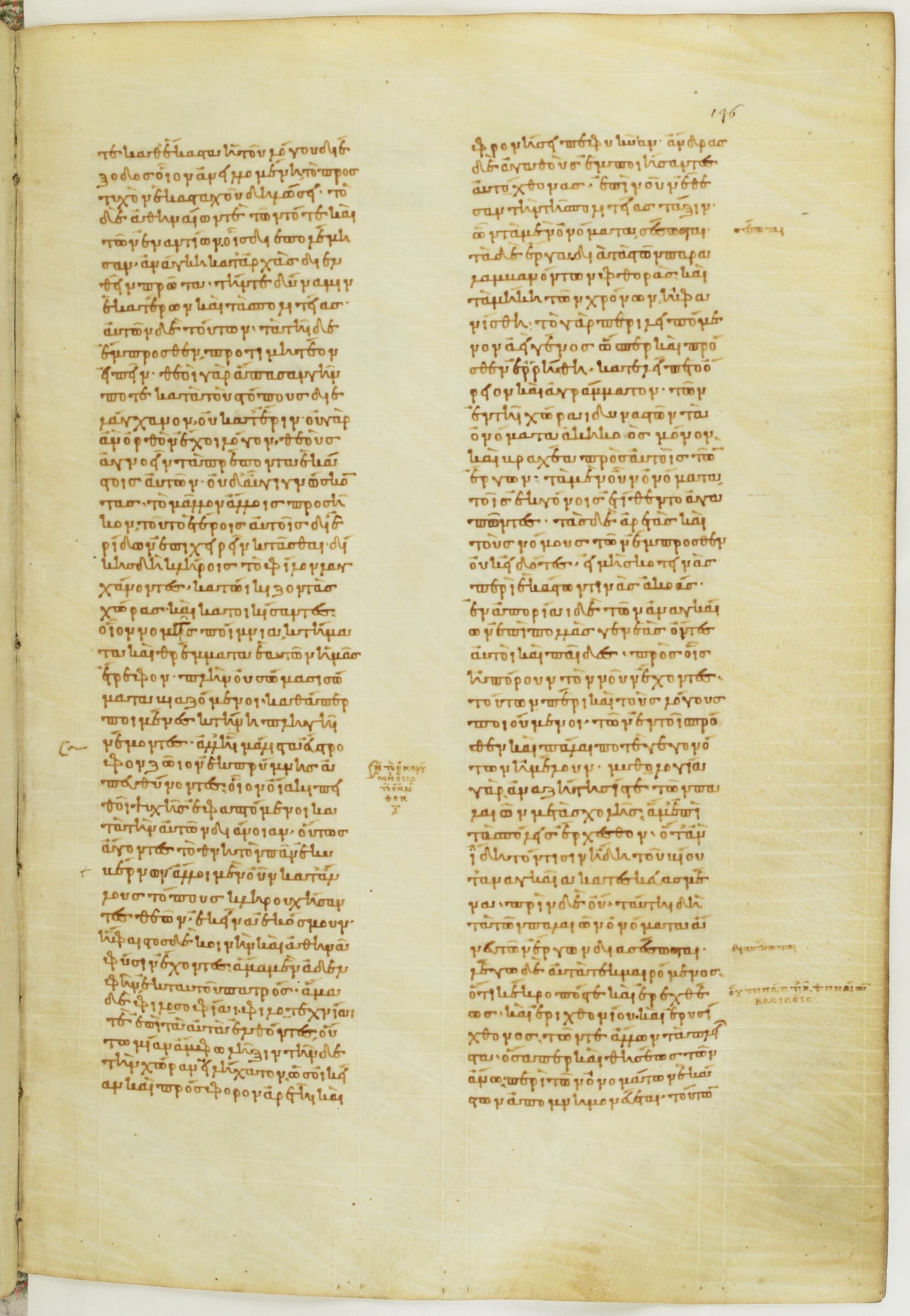
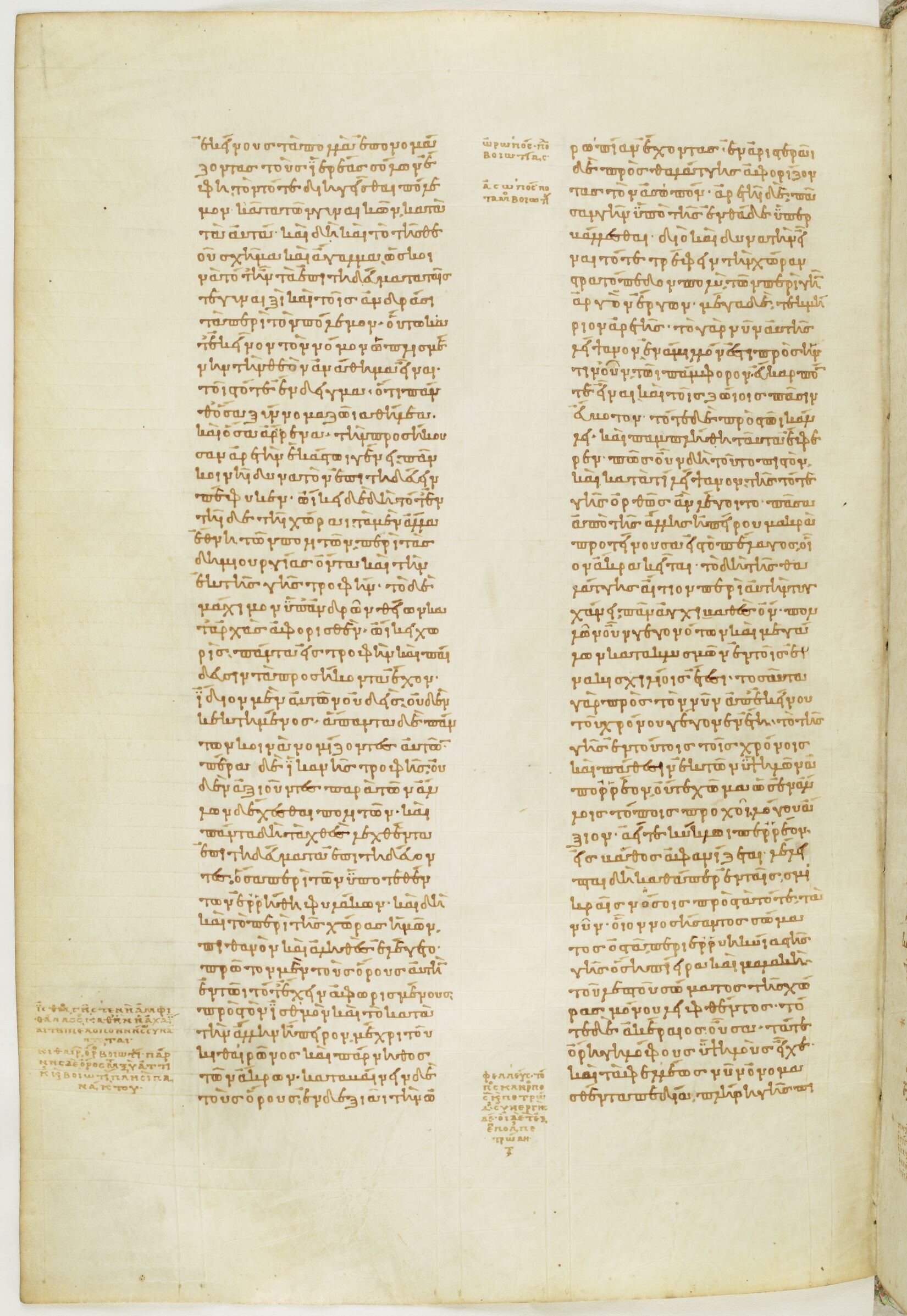
The manuscript is Paris, Bibliothèque nationale de France, grec 1807, known to editors as Plato A. It was copied in Constantinople around 850-875 by the scribe of the so-called philosophical collection, and is the oldest surviving medieval manuscript of the Timaeus and Critias (tetralogies VIII-IX: Clitophon, Republic, Timaeus, Critias, Minos, Laws, Epinomis, Letters). Each page has two columns of 44 lines. The Timaeus fills fol. 114r-144v and the Critias fol. 145r-151r.
On the manuscript this page of text runs over fol. 146r col. b to fol. 146v col. b. Each section below is linked to the folio side(s) that carry it. The mapping comes from reading the first words of every column on the images and finding them in Burnet's text: fol. 146r col. b begins ‹φρονήσει πεφυκυῖαν, ἄνδρας δὲ ἀγαθοὺς ἐμποιήσαντες› (Crit. 109d); fol. 146v col. a begins ‹ἑκάστων ἀπομνημονεύεται, τούτων ἐκείνους τὰ πολλὰ› (Crit. 110b); fol. 146v col. b begins ‹-ρωπίαν ἔχοντας, ἐν ἀριστερᾷ δὲ πρὸς› (Crit. 110e).
The Greek is John Burnet's critical text (Oxford, 1902), not a transcription of this manuscript; the scribe's spelling, accents and occasional readings differ from it. The English is R. G. Bury's Loeb translation (1929).
How was this verified? (Provenance)
Where on the image
Crit. 110a stands in Paris gr. 1807, fol. 146r col. b. Checked on the image (column openings read on the BnF photographs and found in Burnet's text, quoted in Burnet's spelling): fol. 146r col. b begins ‹φρονήσει πεφυκυῖαν, ἄνδρας δὲ ἀγαθοὺς ἐμποιήσαντες› (Crit. 109d). English: the Greek sentence λέγω δὲ αὐτὰ τεκμαιρόμενος ... κατὰ τὰ αὐτά begins at the end of 110a and runs on through most of 110b; Bury's rendering of it (And for evidence of what I say ... the names of the women.) is given whole with 110b, so the English of 110a ends at ‹have been preserved.› and that of 110b begins at ‹And for evidence›.
καὶ παῖδες, πρὸς οἷς ἠπόρουν τὸν νοῦν ἔχοντες, τούτων πέρι καὶ τοὺς λόγους ποιούμενοι, τῶν ἐν τοῖς πρόσθεν καὶ πάλαι ποτὲ γεγονότων ἠμέλουν.
μυθολογία γὰρ ἀναζήτησίς τε τῶν παλαιῶν μετὰ σχολῆς ἅμʼ ἐπὶ τὰς πόλεις ἔρχεσθον, ὅταν ἴδητόν τισιν ἤδη τοῦ βίου τἀναγκαῖα κατεσκευασμένα, πρὶν δὲ οὔ. ταύτῃ δὴ τὰ τῶν παλαιῶν ὀνόματα ἄνευ τῶν ἔργων διασέσωται. λέγω δὲ αὐτὰ τεκμαιρόμενος ὅτι Κέκροπός τε καὶ Ἐρεχθέως καὶ Ἐριχθονίου καὶ Ἐρυσίχθονος
and all their talk was about them; and in consequence they paid no regard to the happenings of bygone ages.
For legendary lore and the investigation of antiquity are visitants that come to cities in company with leisure, when they see that men are already furnished with the necessaries of life, and not before. In this way, then, the names of the ancients, without their works, have been preserved.
Where on the image
Crit. 110b stands in Paris gr. 1807, fol. 146r col. b to fol. 146v col. a. Checked on the image (column openings read on the BnF photographs and found in Burnet's text, quoted in Burnet's spelling): fol. 146r col. b begins ‹φρονήσει πεφυκυῖαν, ἄνδρας δὲ ἀγαθοὺς ἐμποιήσαντες› (Crit. 109d); fol. 146v col. a begins ‹ἑκάστων ἀπομνημονεύεται, τούτων ἐκείνους τὰ πολλὰ› (Crit. 110b). English: the Greek sentence λέγω δὲ αὐτὰ τεκμαιρόμενος ... κατὰ τὰ αὐτά begins at the end of 110a and runs on through most of 110b; Bury's rendering of it (And for evidence of what I say ... the names of the women.) is given whole with 110b, so the English of 110a ends at ‹have been preserved.› and that of 110b begins at ‹And for evidence›.
τῶν τε ἄλλων τὰ πλεῖστα ὅσαπερ καὶ Θησέως τῶν ἄνω περὶ τῶν ὀνομάτων ἑκάστων ἀπομνημονεύεται, τούτων ἐκείνους τὰ πολλὰ ἐπονομάζοντας τοὺς ἱερέας Σόλων ἔφη τὸν τότε διηγεῖσθαι πόλεμον, καὶ τὰ τῶν γυναικῶν κατὰ τὰ αὐτά. καὶ δὴ καὶ τὸ τῆς θεοῦ σχῆμα καὶ ἄγαλμα, ὡς κοινὰ τότʼ ἦν τὰ ἐπιτηδεύματα ταῖς τε γυναιξὶ καὶ τοῖς ἀνδράσι τὰ περὶ τὸν πόλεμον, οὕτω κατʼ ἐκεῖνον τὸν νόμον ὡπλισμένην τὴν θεὸν ἀνάθημα εἶναι τοῖς τότε, ἔνδειγμα ὅτι πάνθʼ
And for evidence of what I say I point to the statement of Solon, that the Egyptian priests, in describing the war of that period, mentioned most of those names—such as those of Cecrops and Erechtheus and Erichthonius and Erysichthon and most of the other names which are recorded of the various heroes before Theseus—and in like manner also the names of the women. Moreover, the habit and figure of the goddess indicate that in the case of all animals,
Where on the image
Crit. 110c stands in Paris gr. 1807, fol. 146v col. a. Checked on the image (column openings read on the BnF photographs and found in Burnet's text, quoted in Burnet's spelling): fol. 146v col. a begins ‹ἑκάστων ἀπομνημονεύεται, τούτων ἐκείνους τὰ πολλὰ› (Crit. 110b).
ὅσα σύννομα ζῷα θήλεα καὶ ὅσα ἄρρενα, τὴν προσήκουσαν ἀρετὴν ἑκάστῳ γένει πᾶν κοινῇ δυνατὸν ἐπιτηδεύειν πέφυκεν. ὤικει δὲ δὴ τότʼ ἐν τῇδε τῇ χώρᾳ τὰ μὲν ἄλλα ἔθνη τῶν πολιτῶν περὶ τὰς δημιουργίας ὄντα καὶ τὴν ἐκ τῆς γῆς τροφήν, τὸ δὲ μάχιμον ὑπʼ ἀνδρῶν θείων κατʼ ἀρχὰς ἀφορισθὲν ᾤκει χωρίς, πάντα εἰς τροφὴν καὶ παίδευσιν τὰ προσήκοντα ἔχον, ἴδιον μὲν αὐτῶν οὐδεὶς οὐδὲν κεκτημένος,
male and female, that herd together, every species is naturally capable of practising as a whole and in common its own proper excellence. Now at that time there dwelt in this country not only the other classes of the citizens who were occupied in the handicrafts and in the raising of food from the soil, but also the military class, which had been separated off at the commencement by divine heroes and dwelt apart. It was supplied with all that was required for its sustenance and training, and none of its members possessed any private property, but they regarded all they had
Where on the image
Crit. 110d stands in Paris gr. 1807, fol. 146v col. a. Checked on the image (column openings read on the BnF photographs and found in Burnet's text, quoted in Burnet's spelling): fol. 146v col. a begins ‹ἑκάστων ἀπομνημονεύεται, τούτων ἐκείνους τὰ πολλὰ› (Crit. 110b).
ἅπαντα δὲ πάντων κοινὰ νομίζοντες αὑτῶν, πέρα δὲ ἱκανῆς τροφῆς οὐδὲν ἀξιοῦντες παρὰ τῶν ἄλλων δέχεσθαι πολιτῶν, καὶ πάντα δὴ τὰ χθὲς λεχθέντα ἐπιτηδεύματα ἐπιτηδεύοντες, ὅσα περὶ τῶν ὑποτεθέντων ἐρρήθη φυλάκων. καὶ δὴ καὶ τὸ περὶ τῆς χώρας ἡμῶν πιθανὸν καὶ ἀληθὲς ἐλέγετο, πρῶτον μὲν τοὺς ὅρους αὐτὴν ἐν τῷ τότʼ ἔχειν ἀφωρισμένους πρὸς τὸν Ἰσθμὸν καὶ τὸ κατὰ τὴν ἄλλην ἤπειρον μέχρι τοῦ
as the common property of all; and from the rest of the citizens they claimed to receive nothing beyond a sufficiency of sustenance; and they practised all those pursuits which were mentioned yesterday, in the description of our proposed Guardians. Moreover, what was related about our country was plausible and true, namely, that, in the first place, it had its boundaries at that time marked off by the Isthmus, and on the inland side reaching to the heights of Cithaeron and Parnes;
Where on the image
Crit. 110e stands in Paris gr. 1807, fol. 146v col. a to fol. 146v col. b. Checked on the image (column openings read on the BnF photographs and found in Burnet's text, quoted in Burnet's spelling): fol. 146v col. a begins ‹ἑκάστων ἀπομνημονεύεται, τούτων ἐκείνους τὰ πολλὰ› (Crit. 110b); fol. 146v col. b begins ‹-ρωπίαν ἔχοντας, ἐν ἀριστερᾷ δὲ πρὸς› (Crit. 110e).
Κιθαιρῶνος καὶ Πάρνηθος τῶν ἄκρων, καταβαίνειν δὲ τοὺς ὅρους ἐν δεξιᾷ τὴν Ὠρωπίαν ἔχοντας, ἐν ἀριστερᾷ δὲ πρὸς θαλάττης ἀφορίζοντας τὸν Ἀσωπόν· ἀρετῇ δὲ πᾶσαν γῆν ὑπὸ τῆς ἐνθάδε ὑπερβάλλεσθαι, διὸ καὶ δυνατὴν εἶναι τότε τρέφειν τὴν χώραν στρατόπεδον πολὺ τῶν περὶ γῆν ἀργὸν ἔργων.
μέγα δὲ τεκμήριον ἀρετῆς· τὸ γὰρ νῦν αὐτῆς λείψανον ἐνάμιλλόν ἐστι πρὸς ἡντινοῦν τῷ πάμφορον εὔκαρπόν
and that the boundaries ran down with Oropia on the right, and on the seaward side they shut off the Asopus on the left; and that all other lands were surpassed by ours in goodness of soil, so that it was actually able at that period to support a large host which was exempt from the labors of husbandry.
And of its goodness a strong proof is this: what is now left of our soil rivals any other in being all-productive and abundant in crops and rich in pasturage for all kinds of cattle;
Notes
- Greek: John Burnet, Platonis Opera IV (Oxford, 1902), via Perseus canonical-greekLit; Burnet's text is a critical edition, so its wording can differ from the manuscript shown.
- English: R. G. Bury, Plato IX (Loeb Classical Library, 1929), via Perseus. Bury's footnotes are not reproduced. Quotation marks stand where Perseus marks quoted speech.
- Stephanus sections (a-e) are those of the 1578 Stephanus edition as given by Burnet and Bury; Bury's section breaks can fall a few words away from Burnet's because English word order differs.
Cite
Sources
- Source: Paris, BnF grec 1807 (Plato A, c. 850-875) fol. 146r-146v via BnF IIIF + Burnet's Greek (Perseus) + R. G. Bury's English (Loeb 1929, Perseus) (holding institution)
- Critical edition: Burnet, Platonis Opera IV (1902), via Perseus
← previous · → next · v cycle view · l back to library