Plato, Critias 119a-119e: the allotments and the army; the laws of Poseidon and the bull sacrifice
Introduction
Stephanus page 119 of Plato's Critias (119a-119e): the allotments and the army; the laws of Poseidon and the bull sacrifice.
The Critias is Plato's full account of Atlantis and of the Athens that fought it: the land and city of ancient Athens (109b-112e), then the island of Atlantis, Poseidon's kingdom beyond the Pillars of Heracles, its royal city, plain, army and laws (113b-120d), and the moral decline of its kings (120e-121c). Plato left the dialogue unfinished; it stops in mid-sentence as Zeus begins to speak, and the manuscript shown here stops at the same words.
The manuscript is Paris, Bibliothèque nationale de France, grec 1807, known to editors as Plato A. It was copied in Constantinople around 850-875 by the scribe of the so-called philosophical collection, and is the oldest surviving medieval manuscript of the Timaeus and Critias (tetralogies VIII-IX: Clitophon, Republic, Timaeus, Critias, Minos, Laws, Epinomis, Letters). Each page has two columns of 44 lines. The Timaeus fills fol. 114r-144v and the Critias fol. 145r-151r.
On the manuscript this page of text runs over fol. 150r col. b to fol. 150v col. a. Each section below is linked to the folio side(s) that carry it. The mapping comes from reading the first words of every column on the images and finding them in Burnet's text: fol. 150r col. b begins ‹τήν τε ἐκ τῶν ὀρῶν ὕλην› (Crit. 118d); fol. 150v col. a begins ‹τῆς βασιλικῆς πόλεως, τῶν δὲ ἐννέα› (Crit. 119b).
The Greek is John Burnet's critical text (Oxford, 1902), not a transcription of this manuscript; the scribe's spelling, accents and occasional readings differ from it. The English is R. G. Bury's Loeb translation (1929).
How was this verified? (Provenance)
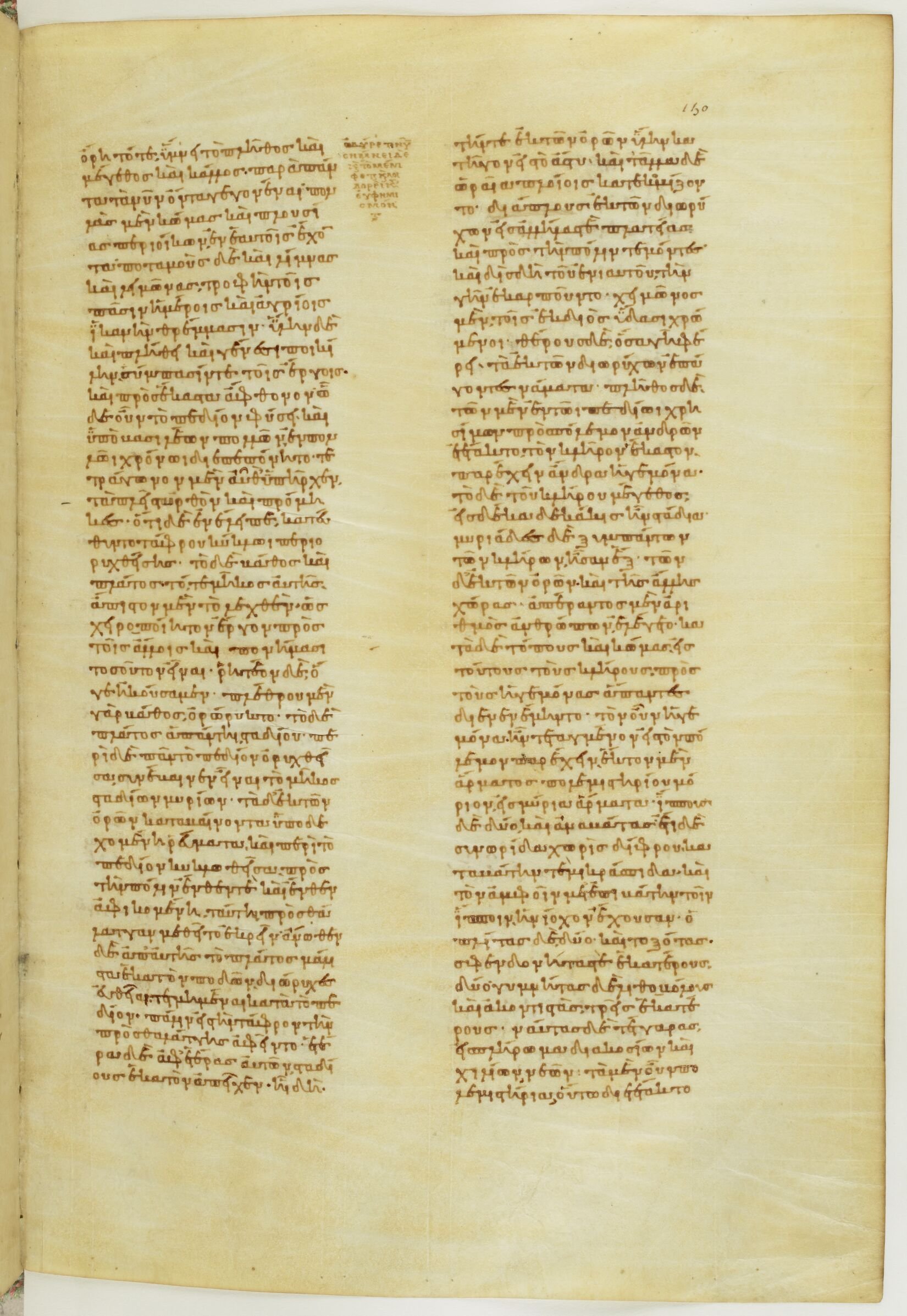
Where on the image
Crit. 119a stands in Paris gr. 1807, fol. 150r col. b. Checked on the image (column openings read on the BnF photographs and found in Burnet's text, quoted in Burnet's spelling): fol. 150r col. b begins ‹τήν τε ἐκ τῶν ὀρῶν ὕλην› (Crit. 118d).
κλῆρον ἕκαστον παρέχειν ἄνδρα ἡγεμόνα, τὸ δὲ τοῦ κλήρου μέγεθος εἰς δέκα δεκάκις ἦν στάδια, μυριάδες δὲ συμπάντων τῶν κλήρων ἦσαν ἕξ· τῶν δʼ ἐκ τῶν ὀρῶν καὶ τῆς ἄλλης χώρας ἀπέραντος μὲν ἀριθμὸς ἀνθρώπων ἐλέγετο, κατὰ δὲ τόπους καὶ κώμας εἰς τούτους τοὺς κλήρους πρὸς τοὺς ἡγεμόνας ἅπαντες διενενέμηντο. τὸν οὖν ἡγεμόνα ἦν τεταγμένον εἰς τὸν πόλεμον παρέχειν ἕκτον μὲν ἅρματος πολεμιστηρίου μόριον εἰς μύρια ἅρματα, ἵππους δὲ δύο καὶ
and the size of the allotment was about ten times ten stades, and the total number of all the allotments was 60,000; and the number of the men in the mountains and in the rest of the country was countless, according to the report, and according to their districts and villages they were all assigned to these allotments under their leaders. So it was ordained that each such leader should provide for war the sixth part of a war-chariots equipment, so as to make up 10,000 chariots in all, together with two horses and mounted men;
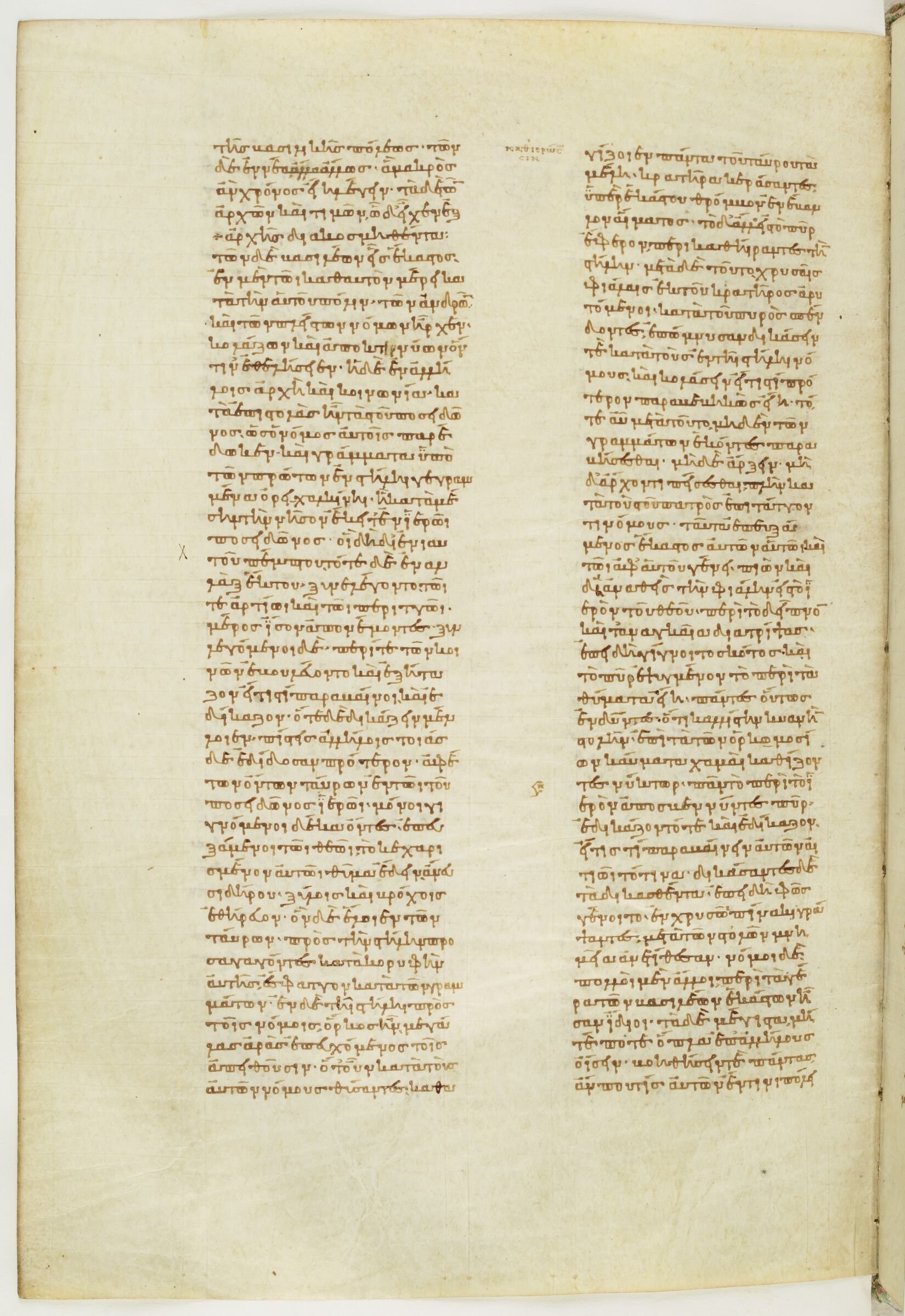
Where on the image
Crit. 119b stands in Paris gr. 1807, fol. 150r col. b to fol. 150v col. a. Checked on the image (column openings read on the BnF photographs and found in Burnet's text, quoted in Burnet's spelling): fol. 150r col. b begins ‹τήν τε ἐκ τῶν ὀρῶν ὕλην› (Crit. 118d); fol. 150v col. a begins ‹τῆς βασιλικῆς πόλεως, τῶν δὲ ἐννέα› (Crit. 119b).
ἀναβάτας, ἔτι δὲ συνωρίδα χωρὶς δίφρου καταβάτην τε μικράσπιδα καὶ τὸν ἀμφοῖν μετʼ ἐπιβάτην τοῖν ἵπποιν ἡνίοχον ἔχουσαν, ὁπλίτας δὲ δύο καὶ τοξότας σφενδονήτας τε ἑκατέρους δύο, γυμνῆτας δὲ λιθοβόλους καὶ ἀκοντιστὰς τρεῖς ἑκατέρους, ναύτας δὲ τέτταρας εἰς πλήρωμα διακοσίων καὶ χιλίων νεῶν. τὰ μὲν οὖν πολεμιστήρια οὕτω διετέτακτο τῆς βασιλικῆς πόλεως, τῶν δὲ ἐννέα ἄλλα ἄλλως, ἃ μακρὸς ἂν χρόνος εἴη λέγειν.
also a pair of horses without a car, and attached thereto a combatant with a small shield and for charioteer the rider who springs from horse to horse; and two hoplites; and archers and slingers, two of each; and light-armed slingers and javelin-men, three of each; and four sailors towards the manning of twelve hundred ships. Such then were the military dispositions of the royal City; and those of the other nine varied in various ways, which it would take a long time to tell.
Where on the image
Crit. 119c stands in Paris gr. 1807, fol. 150v col. a. Checked on the image (column openings read on the BnF photographs and found in Burnet's text, quoted in Burnet's spelling): fol. 150v col. a begins ‹τῆς βασιλικῆς πόλεως, τῶν δὲ ἐννέα› (Crit. 119b).
τὰ δὲ τῶν ἀρχῶν καὶ τιμῶν ὧδʼ εἶχεν ἐξ ἀρχῆς διακοσμηθέντα. τῶν δέκα βασιλέων εἷς ἕκαστος ἐν μὲν τῷ καθʼ αὑτὸν μέρει κατὰ τὴν αὑτοῦ πόλιν τῶν ἀνδρῶν καὶ τῶν πλείστων νόμων ἦρχεν, κολάζων καὶ ἀποκτεινὺς ὅντινʼ ἐθελήσειεν· ἡ δὲ ἐν ἀλλήλοις ἀρχὴ καὶ κοινωνία κατὰ ἐπιστολὰς ἦν τὰς τοῦ Ποσειδῶνος, ὡς ὁ νόμος αὐτοῖς παρέδωκεν καὶ γράμματα ὑπὸ τῶν πρώτων ἐν στήλῃ γεγραμμένα
Of the magistracies and posts of honor the disposition, ever since the beginning, was this. Each of the ten kings ruled over the men and most of the laws in his own particular portion and throughout his own city, punishing and putting to death whomsoever he willed. But their authority over one another and their mutual relations were governed by the precepts of Poseidon, as handed down to them by the law and by the records inscribed by the first princes on a pillar of orichalcum, which was placed within the temple of Poseidon in the center of the island;
Where on the image
Crit. 119d stands in Paris gr. 1807, fol. 150v col. a. Checked on the image (column openings read on the BnF photographs and found in Burnet's text, quoted in Burnet's spelling): fol. 150v col. a begins ‹τῆς βασιλικῆς πόλεως, τῶν δὲ ἐννέα› (Crit. 119b).
ὀρειχαλκίνῃ, ἣ κατὰ μέσην τὴν νῆσον ἔκειτʼ ἐν ἱερῷ Ποσειδῶνος, οἷ δὴ διʼ ἐνιαυτοῦ πέμπτου, τοτὲ δὲ ἐναλλὰξ ἕκτου, συνελέγοντο, τῷ τε ἀρτίῳ καὶ τῷ περιττῷ μέρος ἴσον ἀπονέμοντες, συλλεγόμενοι δὲ περί τε τῶν κοινῶν ἐβουλεύοντο καὶ ἐξήταζον εἴ τίς τι παραβαίνοι, καὶ ἐδίκαζον. ὅτε δὲ δικάζειν μέλλοιεν, πίστεις ἀλλήλοις τοιάσδε ἐδίδοσαν πρότερον. ἀφέτων ὄντων ταύρων ἐν τῷ τοῦ Ποσειδῶνος ἱερῷ, μόνοι γιγνόμενοι δέκα ὄντες, ἐπευξάμενοι τῷ θεῷ τὸ κεχαρισμένον
and thither they assembled every fifth year, and then alternately every sixth year—giving equal honor to both the even and the odd—and when thus assembled they took counsel about public affairs and inquired if any had in any way transgressed and gave judgement. And when they were about to give judgement they first gave pledges one to another of the following description. In the sacred precincts of Poseidon there were bulls at large ; and the ten princes, being alone by themselves, after praying to the God that they might capture a victim well-pleasing unto him,
Where on the image
Crit. 119e stands in Paris gr. 1807, fol. 150v col. a. Checked on the image (column openings read on the BnF photographs and found in Burnet's text, quoted in Burnet's spelling): fol. 150v col. a begins ‹τῆς βασιλικῆς πόλεως, τῶν δὲ ἐννέα› (Crit. 119b).
αὐτῷ θῦμα ἑλεῖν, ἄνευ σιδήρου ξύλοις καὶ βρόχοις ἐθήρευον, ὃν δὲ ἕλοιεν τῶν ταύρων, πρὸς τὴν στήλην προσαγαγόντες κατὰ κορυφὴν αὐτῆς ἔσφαττον κατὰ τῶν γραμμάτων. ἐν δὲ τῇ στήλῃ πρὸς τοῖς νόμοις ὅρκος ἦν μεγάλας ἀρὰς ἐπευχόμενος τοῖς ἀπειθοῦσιν.
ὅτʼ οὖν κατὰ τοὺς
hunted after the bulls with staves and nooses but with no weapon of iron; and whatsoever bull they captured they led up to the pillar and cut its throat over the top of the pillar, raining down blood on the inscription. And inscribed upon the pillar, besides the laws, was an oath which invoked mighty curses upon them that disobeyed.
When, then, they had done sacrifice according to their laws and were consecrating
Notes
- Greek: John Burnet, Platonis Opera IV (Oxford, 1902), via Perseus canonical-greekLit; Burnet's text is a critical edition, so its wording can differ from the manuscript shown.
- English: R. G. Bury, Plato IX (Loeb Classical Library, 1929), via Perseus. Bury's footnotes are not reproduced. Quotation marks stand where Perseus marks quoted speech.
- Stephanus sections (a-e) are those of the 1578 Stephanus edition as given by Burnet and Bury; Bury's section breaks can fall a few words away from Burnet's because English word order differs.
Cite
Sources
- Source: Paris, BnF grec 1807 (Plato A, c. 850-875) fol. 150r-150v via BnF IIIF + Burnet's Greek (Perseus) + R. G. Bury's English (Loeb 1929, Perseus) (holding institution)
- Critical edition: Burnet, Platonis Opera IV (1902), via Perseus
← previous · → next · v cycle view · l back to library