Plato, Timaeus 19a-19e: Socrates wishes to see the city he described in action
Introduction
Stephanus page 19 of Plato's Timaeus (19a-19e): Socrates wishes to see the city he described in action.
The manuscript is Paris, Bibliothèque nationale de France, grec 1807, known to editors as Plato A. It was copied in Constantinople around 850-875 by the scribe of the so-called philosophical collection, and is the oldest surviving medieval manuscript of the Timaeus and Critias (tetralogies VIII-IX: Clitophon, Republic, Timaeus, Critias, Minos, Laws, Epinomis, Letters). Each page has two columns of 44 lines. The Timaeus fills fol. 114r-144v and the Critias fol. 145r-151r.
On the manuscript this page of text runs over fol. 114v col. b to fol. 115r col. b. Each section below is linked to the folio side(s) that carry it. The mapping comes from reading the first words of every column on the images and finding them in Burnet's text: fol. 114v col. b begins ‹ἢ τοῦτο μὲν διὰ τὴν ἀήθειαν› (Tim. 18c); fol. 115r col. a begins ‹ἦν τὰ λεχθέντα, ὦ Σώκρατες› (Tim. 19b); fol. 115r col. b begins ‹τὸ δὲ τῶν σοφιστῶν γένος αὖ› (Tim. 19e).
The Greek is John Burnet's critical text (Oxford, 1902), not a transcription of this manuscript; the scribe's spelling, accents and occasional readings differ from it. The English is R. G. Bury's Loeb translation (1929).
How was this verified? (Provenance)
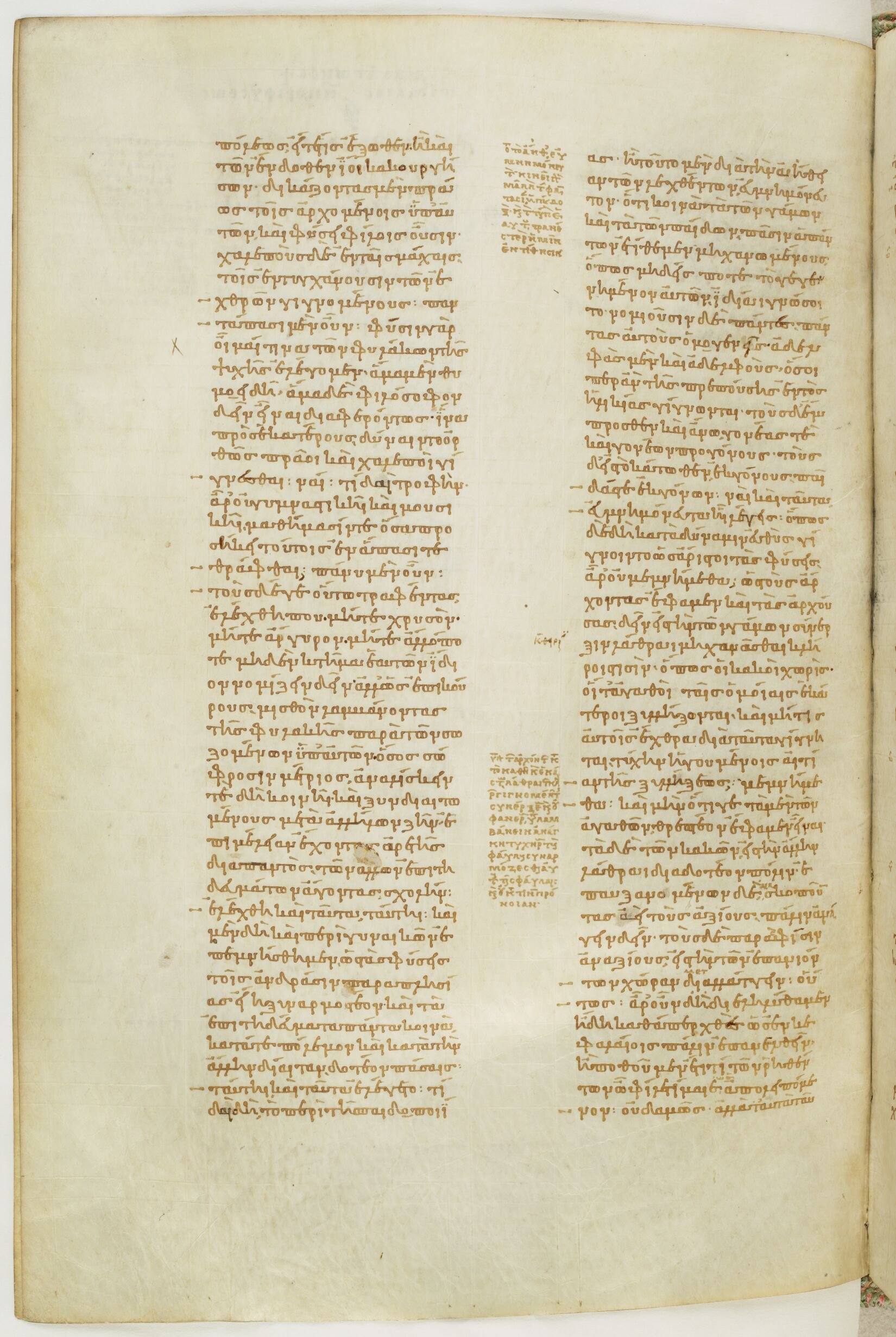
Where on the image
Tim. 19a stands in Paris gr. 1807, fol. 114v col. b. Checked on the image (column openings read on the BnF photographs and found in Burnet's text, quoted in Burnet's spelling): fol. 114v col. b begins ‹ἢ τοῦτο μὲν διὰ τὴν ἀήθειαν› (Tim. 18c).
ΣΩ. καὶ μὴν ὅτι γε τὰ μὲν τῶν ἀγαθῶν θρεπτέον ἔφαμεν εἶναι, τὰ δὲ τῶν κακῶν εἰς τὴν ἄλλην λάθρᾳ διαδοτέον πόλιν· ἐπαυξανομένων δὲ σκοποῦντας ἀεὶ τοὺς ἀξίους πάλιν ἀνάγειν δεῖν, τοὺς δὲ παρὰ σφίσιν ἀναξίους εἰς τὴν τῶν ἐπανιόντων χώραν μεταλλάττειν;
ΤΙ. οὕτως.
ΣΩ. ἆρʼ οὖν δὴ διεληλύθαμεν ἤδη καθάπερ χθές, ὡς ἐν κεφαλαίοις πάλιν ἐπανελθεῖν, ἢ ποθοῦμεν ἔτι τι τῶν ῥηθέντων, ὦ φίλε Γίμαιε, ὡς ἀπολειπόμενον;
Soc. And do you recollect further how we said that the offspring of the good were to be reared, but those of the bad were to be sent privily to various other parts of the State; and as these grew up the rulers should keep constantly on the watch for the deserving amongst them and bring them back again, and into the place of those thus restored transplant the undeserving among themselves?
Tim. So we said.
Soc. May we say then that we have now gone through our discourse of yesterday, so far as is requisite in a summary review; or is there any point omitted, my dear, which we should like to see added?
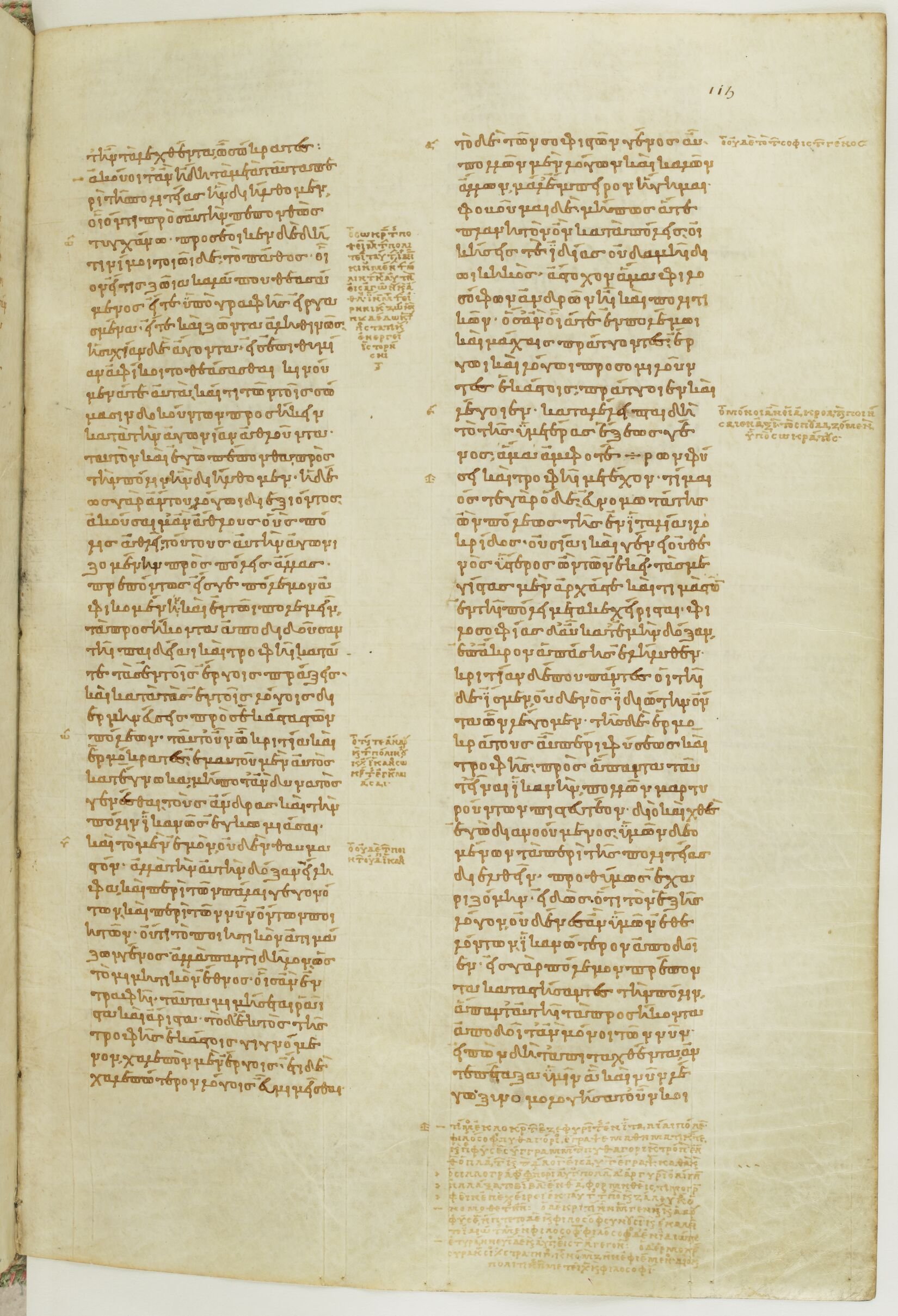
Where on the image
Tim. 19b stands in Paris gr. 1807, fol. 114v col. b to fol. 115r col. a. Checked on the image (column openings read on the BnF photographs and found in Burnet's text, quoted in Burnet's spelling): fol. 114v col. b begins ‹ἢ τοῦτο μὲν διὰ τὴν ἀήθειαν› (Tim. 18c); fol. 115r col. a begins ‹ἦν τὰ λεχθέντα, ὦ Σώκρατες› (Tim. 19b).
ΤΙ. οὐδαμῶς, ἀλλὰ αὐτὰ ταῦτʼ ἦν τὰ λεχθέντα, ὦ Σώκρατες.
ΣΩ. ἀκούοιτʼ ἂν ἤδη τὰ μετὰ ταῦτα περὶ τῆς πολιτείας ἣν διήλθομεν, οἷόν τι πρὸς αὐτὴν πεπονθὼς τυγχάνω. προσέοικεν δὲ δή τινί μοι τοιῷδε τὸ πάθος, οἷον εἴ τις ζῷα καλά που θεασάμενος, εἴτε ὑπὸ γραφῆς εἰργασμένα εἴτε καὶ ζῶντα ἀληθινῶς ἡσυχίαν δὲ ἄγοντα, εἰς ἐπιθυμίαν ἀφίκοιτο θεάσασθαι κινούμενά τε αὐτὰ καί τι τῶν τοῖς σώμασιν δοκούντων
Tim. Certainly not: this is precisely what was said, Socrates.
Soc. And now, in the next place, listen to what my feeling is with regard to the polity we have described. I may compare my feeling to something of this kind: suppose, for instance, that on seeing beautiful creatures, whether works of art or actually alive but in repose, a man should be moved with desire to behold them in motion and vigorously engaged in some such exercise as seemed suitable to their physique;
Where on the image
Tim. 19c stands in Paris gr. 1807, fol. 115r col. a. Checked on the image (column openings read on the BnF photographs and found in Burnet's text, quoted in Burnet's spelling): fol. 115r col. a begins ‹ἦν τὰ λεχθέντα, ὦ Σώκρατες› (Tim. 19b).
προσήκειν κατὰ τὴν ἀγωνίαν ἀθλοῦντα· ταὐτὸν καὶ ἐγὼ πέπονθα πρὸς τὴν πόλιν ἣν διήλθομεν. ἡδέως γὰρ ἄν του λόγῳ διεξιόντος ἀκούσαιμʼ ἂν ἄθλους οὓς πόλις ἀθλεῖ, τούτους αὐτὴν ἀγωνιζομένην πρὸς πόλεις ἄλλας, πρεπόντως εἴς τε πόλεμον ἀφικομένην καὶ ἐν τῷ πολεμεῖν τὰ προσήκοντα ἀποδιδοῦσαν τῇ παιδείᾳ καὶ τροφῇ κατά τε τὰς ἐν τοῖς ἔργοις πράξεις καὶ κατὰ τὰς ἐν τοῖς λόγοις διερμηνεύσεις πρὸς ἑκάστας τῶν πόλεων. ταῦτʼ οὖν, ὦ Κριτία καὶ Ἑρμόκρατες,
well, that is the very feeling I have regarding the State we have described. Gladly would I listen to anyone who should depict in words our State contending against others in those struggles which States wage; in how proper a spirit it enters upon war, and how in its warring it exhibits qualities such as befit its education and training in its dealings with each several State whether in respect of military actions or in respect of verbal negotiations. And herein, Critias and Hermocrates,
Where on the image
Tim. 19d stands in Paris gr. 1807, fol. 115r col. a. Checked on the image (column openings read on the BnF photographs and found in Burnet's text, quoted in Burnet's spelling): fol. 115r col. a begins ‹ἦν τὰ λεχθέντα, ὦ Σώκρατες› (Tim. 19b).
ἐμαυτοῦ μὲν αὐτὸς κατέγνωκα μή ποτʼ ἂν δυνατὸς γενέσθαι τοὺς ἄνδρας καὶ τὴν πόλιν ἱκανῶς ἐγκωμιάσαι. καὶ τὸ μὲν ἐμὸν οὐδὲν θαυμαστόν· ἀλλὰ τὴν αὐτὴν δόξαν εἴληφα καὶ περὶ τῶν πάλαι γεγονότων καὶ περὶ τῶν νῦν ὄντων ποιητῶν, οὔτι τὸ ποιητικὸν ἀτιμάζων γένος, ἀλλὰ παντὶ δῆλον ὡς τὸ μιμητικὸν ἔθνος, οἷς ἂν ἐντραφῇ, ταῦτα μιμήσεται ῥᾷστα καὶ ἄριστα, τὸ δʼ ἐκτὸς τῆς τροφῆς ἑκάστοις
I am conscious of my own inability ever to magnify sufficiently our citizens and our State. Now in this inability of mine there is nothing surprising; but I have formed the same opinion about the poets also, those of the present as well as those of the past; not that I disparage in any way the poetic clan, but it is plain to all that the imitative tribe will imitate with most ease and success the things amidst which it has been reared, whereas it is hard for any man to imitate well in action what lies outside the range of his rearing,
Where on the image
Tim. 19e stands in Paris gr. 1807, fol. 115r col. a to fol. 115r col. b. Checked on the image (column openings read on the BnF photographs and found in Burnet's text, quoted in Burnet's spelling): fol. 115r col. a begins ‹ἦν τὰ λεχθέντα, ὦ Σώκρατες› (Tim. 19b); fol. 115r col. b begins ‹τὸ δὲ τῶν σοφιστῶν γένος αὖ› (Tim. 19e).
γιγνόμενον χαλεπὸν μὲν ἔργοις, ἔτι δὲ χαλεπώτερον λόγοις εὖ μιμεῖσθαι. τὸ δὲ τῶν σοφιστῶν γένος αὖ πολλῶν μὲν λόγων καὶ καλῶν ἄλλων μάλʼ ἔμπειρον ἥγημαι, φοβοῦμαι δὲ μή πως, ἅτε πλανητὸν ὂν κατὰ πόλεις οἰκήσεις τε ἰδίας οὐδαμῇ διῳκηκός, ἄστοχον ἅμα φιλοσόφων ἀνδρῶν ᾖ καὶ πολιτικῶν, ὅσʼ ἂν οἷά τε ἐν πολέμῳ καὶ μάχαις πράττοντες ἔργῳ καὶ λόγῳ προσομιλοῦντες ἑκάστοις πράττοιεν καὶ λέγοιεν.
καταλέλειπται δὴ τὸ τῆς ὑμετέρας ἕξεως γένος,
and still harder in speech. Again, as to the class of Sophists, although I esteem them highly versed in many fine discourses of other kinds, yet I fear lest haply, seeing they are a class which roams from city to city and has no settled habitations of its own, they may go wide of the mark in regard to men who are at once philosophers and statesmen, and what they would be likely to do and say, in their several dealings with foemen in war and battle, both by word and deed.
Thus there remains only that class which is of your complexion—
Notes
- Greek: John Burnet, Platonis Opera IV (Oxford, 1902), via Perseus canonical-greekLit; Burnet's text is a critical edition, so its wording can differ from the manuscript shown.
- English: R. G. Bury, Plato IX (Loeb Classical Library, 1929), via Perseus. Bury's footnotes are not reproduced. Quotation marks stand where Perseus marks quoted speech.
- Stephanus sections (a-e) are those of the 1578 Stephanus edition as given by Burnet and Bury; Bury's section breaks can fall a few words away from Burnet's because English word order differs.
Cite
Sources
- Source: Paris, BnF grec 1807 (Plato A, c. 850-875) fol. 114v-115r via BnF IIIF + Burnet's Greek (Perseus) + R. G. Bury's English (Loeb 1929, Perseus) (holding institution)
- Critical edition: Burnet, Platonis Opera IV (1902), via Perseus
← previous · → next · v cycle view · l back to library