Plato, Timaeus 20a-20e: the speakers' qualifications; Critias introduces the story Solon brought from Egypt
Introduction
Stephanus page 20 of Plato's Timaeus (20a-20e): the speakers' qualifications; Critias introduces the story Solon brought from Egypt.
Timaeus 20d-25d is Critias' first account of Atlantis: the story Solon was told by a priest at Sais in Egypt about an Athens of 9,000 years before, which defeated an invading power from the island of Atlantis beyond the Pillars of Heracles, after which the island sank into the sea. Plato returns to it at length in the Critias.
The manuscript is Paris, Bibliothèque nationale de France, grec 1807, known to editors as Plato A. It was copied in Constantinople around 850-875 by the scribe of the so-called philosophical collection, and is the oldest surviving medieval manuscript of the Timaeus and Critias (tetralogies VIII-IX: Clitophon, Republic, Timaeus, Critias, Minos, Laws, Epinomis, Letters). Each page has two columns of 44 lines. The Timaeus fills fol. 114r-144v and the Critias fol. 145r-151r.
On the manuscript this page of text runs over fol. 115r col. b to fol. 115v col. b. Each section below is linked to the folio side(s) that carry it. The mapping comes from reading the first words of every column on the images and finding them in Burnet's text: fol. 115r col. b begins ‹τὸ δὲ τῶν σοφιστῶν γένος αὖ› (Tim. 19e); fol. 115v col. a begins ‹σκεψάμενοι πρὸς ὑμᾶς αὐτοὺς εἰς νῦν› (Tim. 20b); fol. 115v col. b begins ‹ἀληθοῦς, ὡς ὁ τῶν ἑπτὰ σοφώτατος› (Tim. 20d).
The Greek is John Burnet's critical text (Oxford, 1902), not a transcription of this manuscript; the scribe's spelling, accents and occasional readings differ from it. The English is R. G. Bury's Loeb translation (1929).
How was this verified? (Provenance)
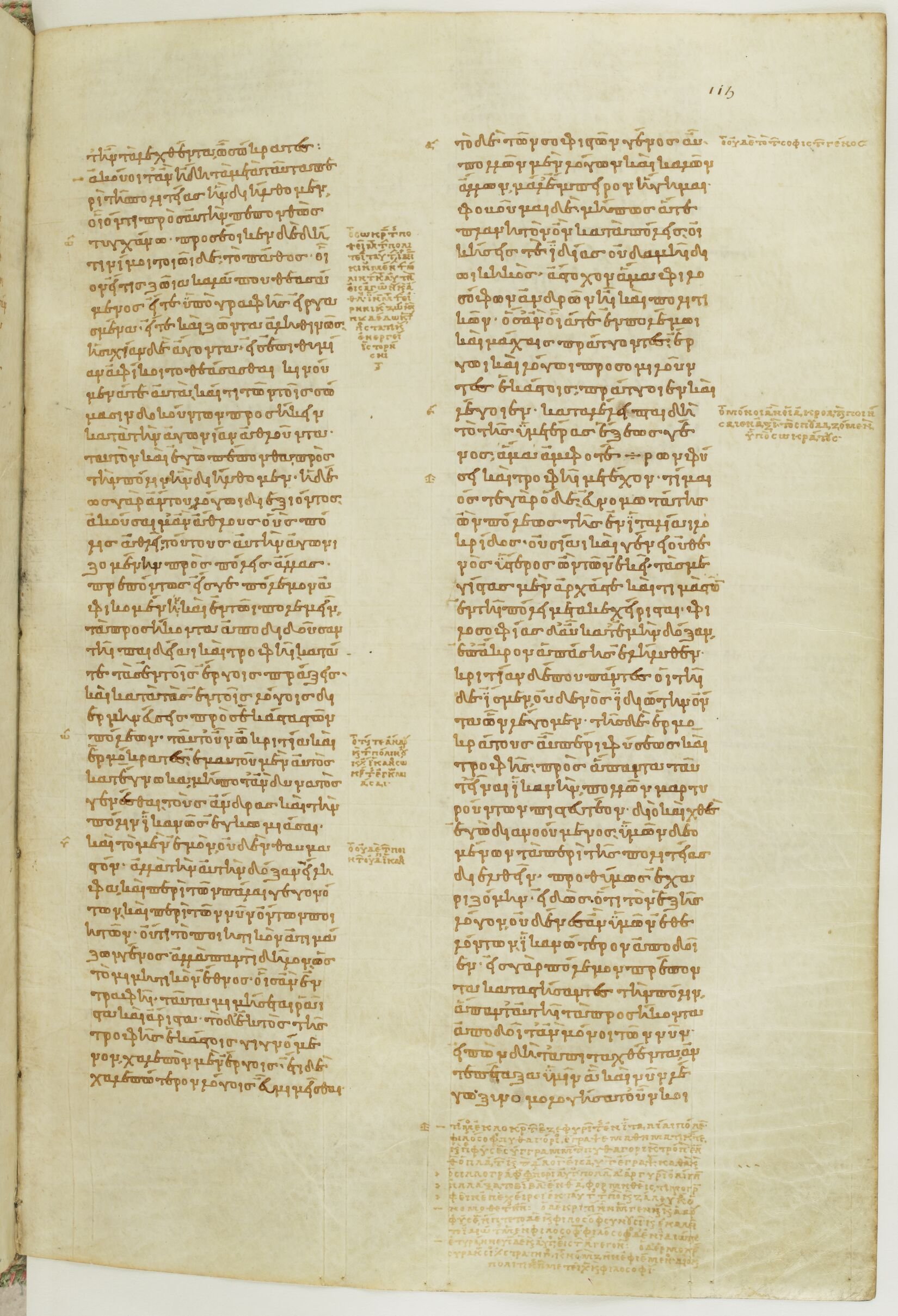
Where on the image
Tim. 20a stands in Paris gr. 1807, fol. 115r col. b. Checked on the image (column openings read on the BnF photographs and found in Burnet's text, quoted in Burnet's spelling): fol. 115r col. b begins ‹τὸ δὲ τῶν σοφιστῶν γένος αὖ› (Tim. 19e).
ἅμα ἀμφοτέρων φύσει καὶ τροφῇ μετέχον. Τίμαιός τε γὰρ ὅδε, εὐνομωτάτης ὢν πόλεως τῆς ἐν Ἰταλίᾳ Λοκρίδος, οὐσίᾳ καὶ γένει οὐδενὸς ὕστερος ὢν τῶν ἐκεῖ, τὰς μεγίστας μὲν ἀρχάς τε καὶ τιμὰς τῶν ἐν τῇ πόλει μετακεχείρισται, φιλοσοφίας δʼ αὖ κατʼ ἐμὴν δόξαν ἐπʼ ἄκρον ἁπάσης ἐλήλυθεν· Κριτίαν δέ που πάντες οἱ τῇδε ἴσμεν οὐδενὸς ἰδιώτην ὄντα ὧν λέγομεν. τῆς δὲ Ἑρμοκράτους αὖ περὶ φύσεως καὶ τροφῆς, πρὸς ἅπαντα ταῦτʼ εἶναι ἱκανὴν πολλῶν μαρτυρούντων
a class which, alike by nature and nurture, shares the qualities of both the others. For our friend is a native of a most well-governed State, Italian Locris, and inferior to none of its citizens either in property or in rank; and not only has he occupied the highest offices and posts of honor in his State, but he has also attained, in my opinion, the very summit of eminence in all branches of philosophy. As to Critias, all of us here know that he is no novice in any of the subjects we are discussing. As regards Hermocrates, we must believe the many witnesses who assert that both by nature and by nurture
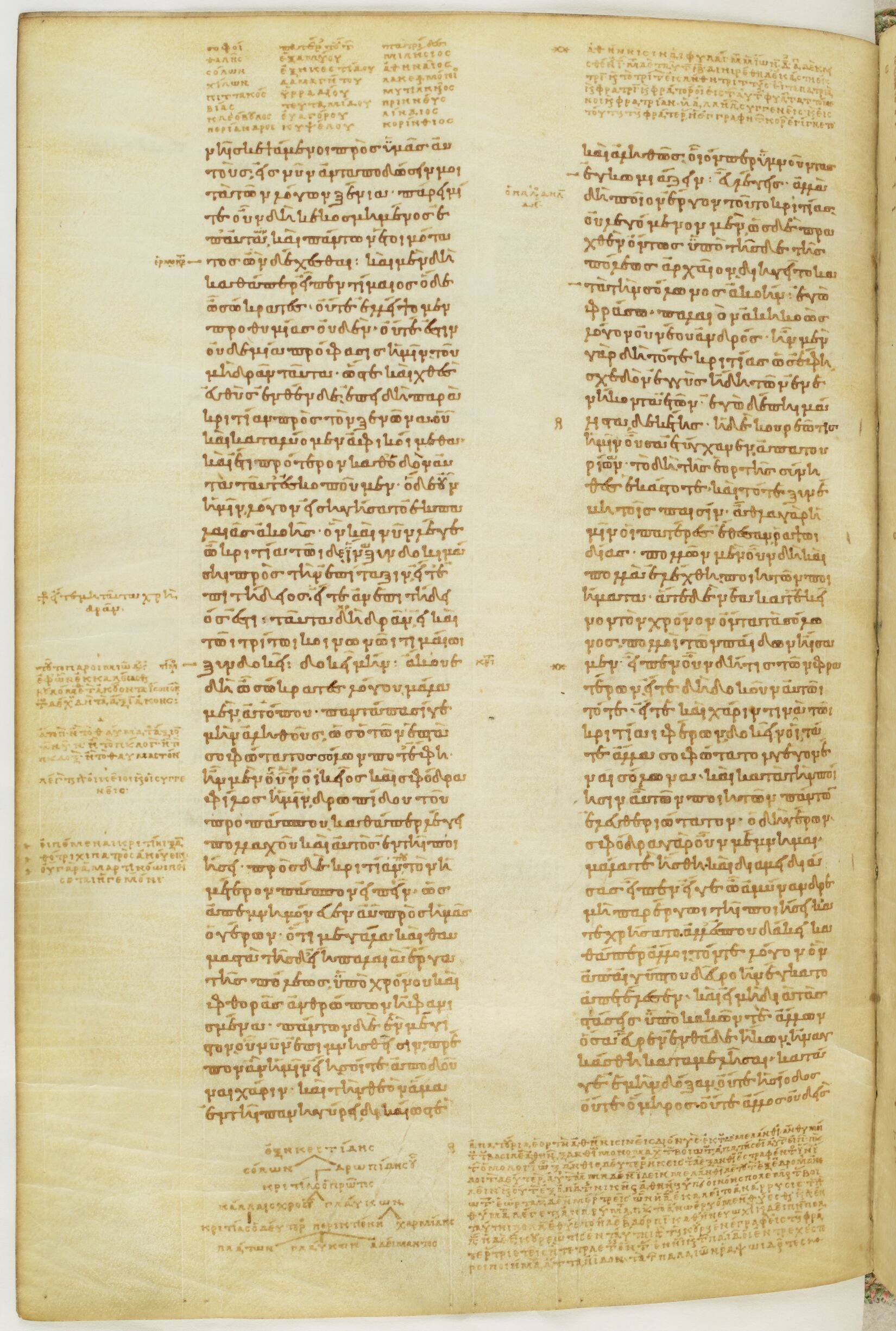
Where on the image
Tim. 20b stands in Paris gr. 1807, fol. 115r col. b to fol. 115v col. a. Checked on the image (column openings read on the BnF photographs and found in Burnet's text, quoted in Burnet's spelling): fol. 115r col. b begins ‹τὸ δὲ τῶν σοφιστῶν γένος αὖ› (Tim. 19e); fol. 115v col. a begins ‹σκεψάμενοι πρὸς ὑμᾶς αὐτοὺς εἰς νῦν› (Tim. 20b).
πιστευτέον. διὸ καὶ χθὲς ἐγὼ διανοούμενος, ὑμῶν δεομένων τὰ περὶ τῆς πολιτείας διελθεῖν, προθύμως ἐχαριζόμην, εἰδὼς ὅτι τὸν ἑξῆς λόγον οὐδένες ἂν ὑμῶν ἐθελόντων ἱκανώτερον ἀποδοῖεν—εἰς γὰρ πόλεμον πρέποντα καταστήσαντες τὴν πόλιν ἅπαντʼ αὐτῇ τὰ προσήκοντα ἀποδοῖτʼ ἂν μόνοι τῶν νῦν—εἰπὼν δὴ τἀπιταχθέντα ἀντεπέταξα ὑμῖν ἃ καὶ νῦν λέγω. συνωμολογήσατʼ οὖν κοινῇ σκεψάμενοι πρὸς ὑμᾶς
he is competent for all these inquiries. So, with this in my mind, when you requested me yesterday to expound my views of the polity I gratified you most willingly, since I knew that none could deal more adequately than you (if you were willing) with the next subject of discourse; for you alone, of men now living, could show our State engaged in a suitable war and exhibiting all the qualities which belong to it. Accordingly, when I had spoken upon my prescribed theme, I in turn prescribed for you this theme which I am now explaining. And you, after consulting together among yourselves,
Where on the image
Tim. 20c stands in Paris gr. 1807, fol. 115v col. a. Checked on the image (column openings read on the BnF photographs and found in Burnet's text, quoted in Burnet's spelling): fol. 115v col. a begins ‹σκεψάμενοι πρὸς ὑμᾶς αὐτοὺς εἰς νῦν› (Tim. 20b).
αὐτοὺς εἰς νῦν ἀνταποδώσειν μοι τὰ τῶν λόγων ξένια, πάρειμί τε οὖν δὴ κεκοσμημένος ἐπʼ αὐτὰ καὶ πάντων ἑτοιμότατος ὢν δέχεσθαι.
ΕΡ. καὶ μὲν δή, καθάπερ εἶπεν Τίμαιος ὅδε, ὦ Σώκρατες, οὔτε ἐλλείψομεν προθυμίας οὐδὲν οὔτε ἔστιν οὐδεμία πρόφασις ἡμῖν τοῦ μὴ δρᾶν ταῦτα· ὥστε καὶ χθές, εὐθὺς ἐνθένδε ἐπειδὴ παρὰ Κριτίαν πρὸς τὸν ξενῶνα οὗ καὶ καταλύομεν ἀφικόμεθα, καὶ ἔτι πρότερον καθʼ ὁδὸν αὐτὰ ταῦτʼ ἐσκοποῦμεν.
agreed to pay me back today with a feast of words; so here I am, ready for that feast in festal garb, and eager above all men to begin.
Herm. Of a truth, Socrates, as our friend has said, we will show no lack of zeal, nor have we any excuse for refusing to do as you say. Yesterday, in fact, immediately after our return from you to the guest-chamber at Critias where we are lodging—aye, and earlier still, on our way there—we were considering these very subjects.
Where on the image
Tim. 20d stands in Paris gr. 1807, fol. 115v col. a to fol. 115v col. b. Checked on the image (column openings read on the BnF photographs and found in Burnet's text, quoted in Burnet's spelling): fol. 115v col. a begins ‹σκεψάμενοι πρὸς ὑμᾶς αὐτοὺς εἰς νῦν› (Tim. 20b); fol. 115v col. b begins ‹ἀληθοῦς, ὡς ὁ τῶν ἑπτὰ σοφώτατος› (Tim. 20d).
ὅδε οὖν ἡμῖν λόγον εἰσηγήσατο ἐκ παλαιᾶς ἀκοῆς· ὃν καὶ νῦν λέγε, ὦ Κριτία, τῷδε, ἵνα συνδοκιμάσῃ πρὸς τὴν ἐπίταξιν εἴτʼ ἐπιτήδειος εἴτε ἀνεπιτήδειός ἐστι.
ΚΡ. ταῦτα χρὴ δρᾶν, εἰ καὶ τῷ τρίτῳ κοινωνῷ Τιμαίῳ συνδοκεῖ.
ΤΙ. δοκεῖ μήν.
ΚΡ. ἄκουε δή, ὦ Σώκρατες, λόγου μάλα μὲν ἀτόπου, παντάπασί γε μὴν ἀληθοῦς, ὡς ὁ τῶν ἑπτὰ σοφώτατος
Critias here mentioned to us a story derived from ancient tradition; and now, Critias, pray tell it again to our friend here, so that he may help us to decide whether or not it is pertinent to our prescribed theme.
Crit. That I must certainly do, if our third partner, also approves.
Tim. Assuredly I approve.
Crit. Listen then, Socrates, to a tale which, though passing strange, is yet wholly true, as Solon,
Where on the image
Tim. 20e stands in Paris gr. 1807, fol. 115v col. b. Checked on the image (column openings read on the BnF photographs and found in Burnet's text, quoted in Burnet's spelling): fol. 115v col. b begins ‹ἀληθοῦς, ὡς ὁ τῶν ἑπτὰ σοφώτατος› (Tim. 20d).
Σόλων ποτʼ ἔφη. ἦν μὲν οὖν οἰκεῖος καὶ σφόδρα φίλος ἡμῖν Δρωπίδου τοῦ προπάππου, καθάπερ λέγει πολλαχοῦ καὶ αὐτὸς ἐν τῇ ποιήσει·
πρὸς δὲ Κριτίαν τὸν ἡμέτερον πάππον εἶπεν, ὡς ἀπεμνημόνευεν αὖ πρὸς ἡμᾶς ὁ γέρων, ὅτι μεγάλα καὶ θαυμαστὰ τῆσδʼ εἴη παλαιὰ ἔργα τῆς πόλεως ὑπὸ χρόνου καὶ φθορᾶς ἀνθρώπων ἠφανισμένα, πάντων δὲ ἓν μέγιστον,
the wisest of the Seven, once upon a time declared. Now Solon—as indeed he often says himself in his poems—was a relative and very dear friend of our great-grandfather Dropides;
and Dropides told our grandfather Critias as the old man himself, in turn, related to us—that the exploits of this city in olden days, the record of which had perished through time and the destruction of its inhabitants, were great and marvellous, the greatest of all being one which it would be proper
Notes
- Greek: John Burnet, Platonis Opera IV (Oxford, 1902), via Perseus canonical-greekLit; Burnet's text is a critical edition, so its wording can differ from the manuscript shown.
- English: R. G. Bury, Plato IX (Loeb Classical Library, 1929), via Perseus. Bury's footnotes are not reproduced. Quotation marks stand where Perseus marks quoted speech.
- Stephanus sections (a-e) are those of the 1578 Stephanus edition as given by Burnet and Bury; Bury's section breaks can fall a few words away from Burnet's because English word order differs.
Cite
Sources
- Source: Paris, BnF grec 1807 (Plato A, c. 850-875) fol. 115r-115v via BnF IIIF + Burnet's Greek (Perseus) + R. G. Bury's English (Loeb 1929, Perseus) (holding institution)
- Critical edition: Burnet, Platonis Opera IV (1902), via Perseus
← previous · → next · v cycle view · l back to library