Plato, Timaeus 21a-21e: Critias heard the story as a boy at the Apaturia; Solon at Sais
Introduction
Stephanus page 21 of Plato's Timaeus (21a-21e): Critias heard the story as a boy at the Apaturia; Solon at Sais.
Timaeus 20d-25d is Critias' first account of Atlantis: the story Solon was told by a priest at Sais in Egypt about an Athens of 9,000 years before, which defeated an invading power from the island of Atlantis beyond the Pillars of Heracles, after which the island sank into the sea. Plato returns to it at length in the Critias.
The manuscript is Paris, Bibliothèque nationale de France, grec 1807, known to editors as Plato A. It was copied in Constantinople around 850-875 by the scribe of the so-called philosophical collection, and is the oldest surviving medieval manuscript of the Timaeus and Critias (tetralogies VIII-IX: Clitophon, Republic, Timaeus, Critias, Minos, Laws, Epinomis, Letters). Each page has two columns of 44 lines. The Timaeus fills fol. 114r-144v and the Critias fol. 145r-151r.
On the manuscript this page of text runs over fol. 115v col. b to fol. 116r col. a. Each section below is linked to the folio side(s) that carry it. The mapping comes from reading the first words of every column on the images and finding them in Burnet's text: fol. 115v col. b begins ‹ἀληθοῦς, ὡς ὁ τῶν ἑπτὰ σοφώτατος› (Tim. 20d); fol. 116r col. a begins ‹ποιητὴς εὐδοκιμώτερος ἐγένετο ἄν ποτε αὐτοῦ› (Tim. 21d).
The Greek is John Burnet's critical text (Oxford, 1902), not a transcription of this manuscript; the scribe's spelling, accents and occasional readings differ from it. The English is R. G. Bury's Loeb translation (1929).
How was this verified? (Provenance)
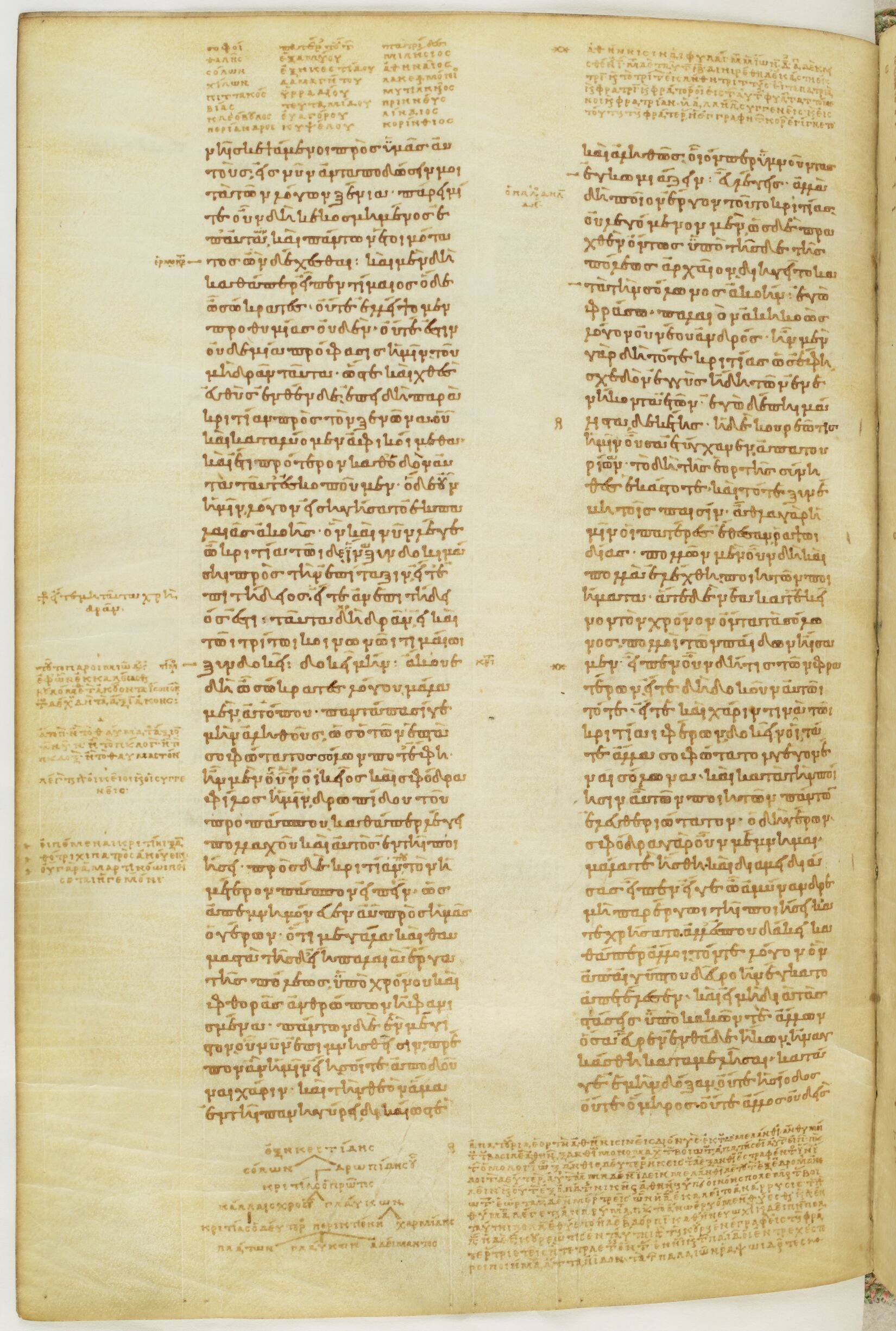
Where on the image
Tim. 21a stands in Paris gr. 1807, fol. 115v col. b. Checked on the image (column openings read on the BnF photographs and found in Burnet's text, quoted in Burnet's spelling): fol. 115v col. b begins ‹ἀληθοῦς, ὡς ὁ τῶν ἑπτὰ σοφώτατος› (Tim. 20d).
οὗ νῦν ἐπιμνησθεῖσιν πρέπον ἂν ἡμῖν εἴη σοί τε ἀποδοῦναι χάριν καὶ τὴν θεὸν ἅμα ἐν τῇ πανηγύρει δικαίως τε καὶ ἀληθῶς οἷόνπερ ὑμνοῦντας ἐγκωμιάζειν.
ΣΩ. εὖ λέγεις. ἀλλὰ δὴ ποῖον ἔργον τοῦτο Κριτίας οὐ λεγόμενον μέν, ὡς δὲ πραχθὲν ὄντως ὑπὸ τῆσδε τῆς πόλεως ἀρχαῖον διηγεῖτο κατὰ τὴν Σόλωνος ἀκοήν;
ΚΡ. ἐγὼ φράσω, παλαιὸν ἀκηκοὼς λόγον οὐ νέου ἀνδρός. ἦν μὲν γὰρ δὴ τότε Κριτίας, ὡς ἔφη, σχεδὸν ἐγγὺς
for us now to relate both as a payment of our debt of thanks to you and also as a tribute of praise, chanted as it were duly and truly, in honor of the Goddess on this her day of Festival.
Soc. Excellent! But come now, what was this exploit described by Critias, following Solons report, as a thing not verbally recorded, although actually performed by this city long ago?
Crit. I will tell you: it is an old tale, and I heard it from a man not young. For indeed at that time, as he said himself,
Where on the image
Tim. 21b stands in Paris gr. 1807, fol. 115v col. b. Checked on the image (column openings read on the BnF photographs and found in Burnet's text, quoted in Burnet's spelling): fol. 115v col. b begins ‹ἀληθοῦς, ὡς ὁ τῶν ἑπτὰ σοφώτατος› (Tim. 20d).
ἤδη τῶν ἐνενήκοντα ἐτῶν, ἐγὼ δέ πῃ μάλιστα δεκέτης· ἡ δὲ Κουρεῶτις ἡμῖν οὖσα ἐτύγχανεν Ἀπατουρίων. τὸ δὴ τῆς ἑορτῆς σύνηθες ἑκάστοτε καὶ τότε συνέβη τοῖς παισίν· ἆθλα γὰρ ἡμῖν οἱ πατέρες ἔθεσαν ῥαψῳδίας. πολλῶν μὲν οὖν δὴ καὶ πολλὰ ἐλέχθη ποιητῶν ποιήματα, ἅτε δὲ νέα κατʼ ἐκεῖνον τὸν χρόνον ὄντα τὰ Σόλωνος πολλοὶ τῶν παίδων ᾔσαμεν. εἶπεν οὖν τις τῶν φρατέρων, εἴτε δὴ δοκοῦν αὐτῷ τότε εἴτε καὶ χάριν τινὰ τῷ Κριτίᾳ φέρων, δοκεῖν οἱ τά τε
Critias was already close upon ninety years of age, while I was somewhere about ten; and it chanced to be that day of the Apaturia which is called Cureotis. The ceremony for boys which was always customary at the feast was held also on that occasion, our fathers arranging contests in recitation. So while many poems of many poets were declaimed, since the poems of Solon were at that time new, many of us children chanted them. And one of our fellow tribesmen—whether he really thought so at the time or whether he was paying a compliment
Where on the image
Tim. 21c stands in Paris gr. 1807, fol. 115v col. b. Checked on the image (column openings read on the BnF photographs and found in Burnet's text, quoted in Burnet's spelling): fol. 115v col. b begins ‹ἀληθοῦς, ὡς ὁ τῶν ἑπτὰ σοφώτατος› (Tim. 20d).
ἄλλα σοφώτατον γεγονέναι Σόλωνα καὶ κατὰ τὴν ποίησιν αὖ τῶν ποιητῶν πάντων ἐλευθεριώτατον. ὁ δὴ γέρων— σφόδρα γὰρ οὖν μέμνημαι—μάλα τε ἥσθη καὶ διαμειδιάσας εἶπεν· εἴ γε, ὦ Ἀμύνανδρε, μὴ παρέργῳ τῇ ποιήσει κατεχρήσατο, ἀλλʼ ἐσπουδάκει καθάπερ ἄλλοι, τόν τε λόγον ὃν ἀπʼ Αἰγύπτου δεῦρο ἠνέγκατο ἀπετέλεσεν, καὶ μὴ διὰ τὰς στάσεις ὑπὸ κακῶν τε ἄλλων ὅσα ηὗρεν ἐνθάδε ἥκων ἠναγκάσθη
to Critias—declared that in his opinion Solon was not only the wisest of men in all else, but in poetry also he was of all poets the noblest. Whereat the old man (I remember the scene well) was highly pleased and said with a smile, “If only, Amynander, he had not taken up poetry as a by-play but had worked hard at it like others, and if he had completed the story he brought here from Egypt, instead of being forced to lay it aside owing to the seditions and all the other evils he found here on his return,—
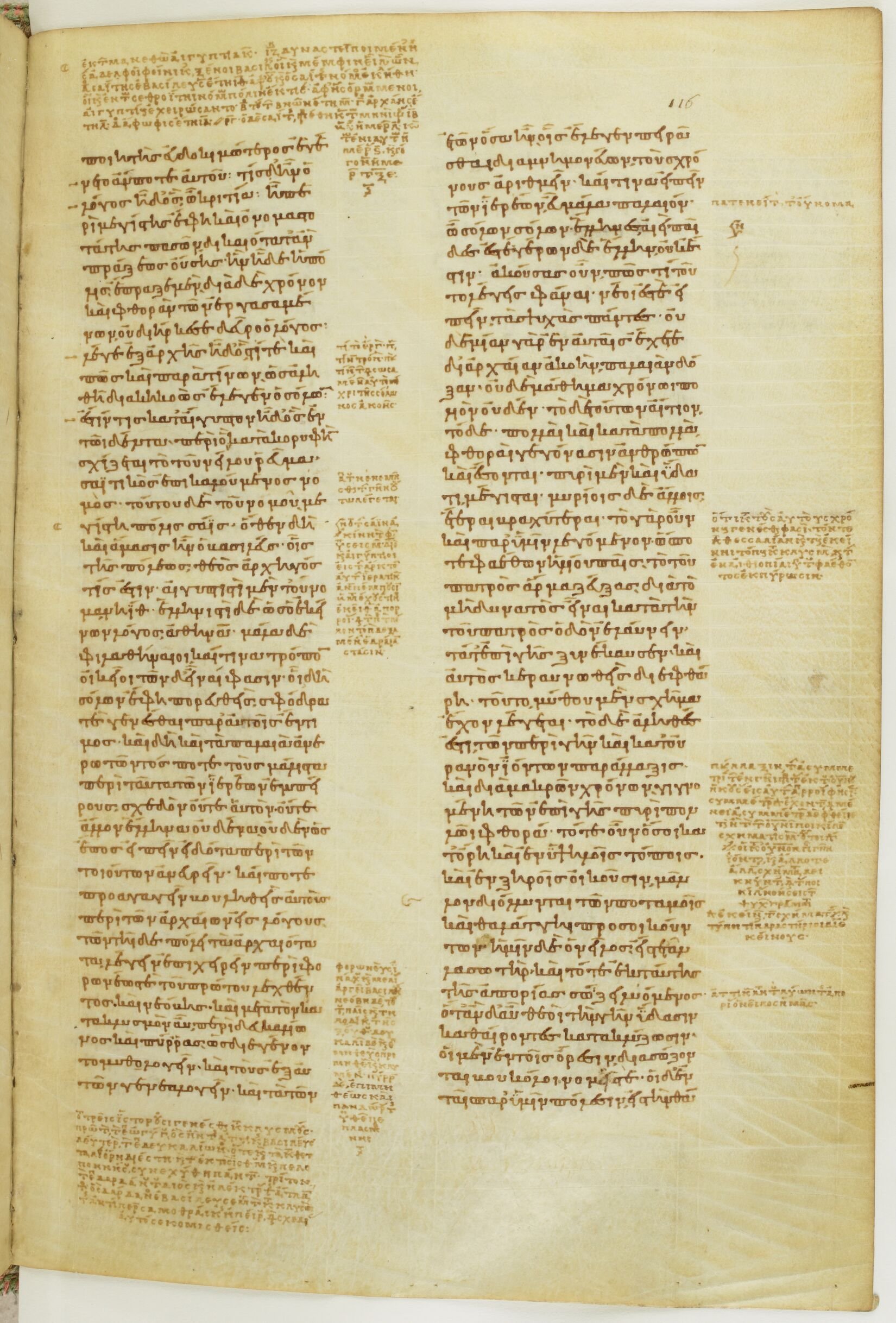
Where on the image
Tim. 21d stands in Paris gr. 1807, fol. 115v col. b to fol. 116r col. a. Checked on the image (column openings read on the BnF photographs and found in Burnet's text, quoted in Burnet's spelling): fol. 115v col. b begins ‹ἀληθοῦς, ὡς ὁ τῶν ἑπτὰ σοφώτατος› (Tim. 20d); fol. 116r col. a begins ‹ποιητὴς εὐδοκιμώτερος ἐγένετο ἄν ποτε αὐτοῦ› (Tim. 21d).
καταμελῆσαι, κατά γε ἐμὴν δόξαν οὔτε Ἡσίοδος οὔτε Ὅμηρος οὔτε ἄλλος οὐδεὶς ποιητὴς εὐδοκιμώτερος ἐγένετο ἄν ποτε αὐτοῦ. τίς δʼ ἦν ὁ λόγος, ἦ δʼ ὅς, ὦ Κριτία; ἦ περὶ μεγίστης, ἔφη, καὶ ὀνομαστοτάτης πασῶν δικαιότατʼ ἂν πράξεως οὔσης, ἣν ἥδε ἡ πόλις ἔπραξε μέν, διὰ δὲ χρόνον καὶ φθορὰν τῶν ἐργασαμένων οὐ διήρκεσε δεῦρο ὁ λόγος. λέγε ἐξ ἀρχῆς, ἦ δʼ ὅς, τί τε καὶ πῶς καὶ παρὰ τίνων ὡς ἀληθῆ διακηκοὼς ἔλεγεν ὁ Σόλων.
why then, I say, neither Hesiod nor Homer nor any other poet would ever have proved more famous than he.” “And what was the story, Critias?” said the other. “Its subject,” replied Critias, “was a very great exploit, worthy indeed to be accounted the most notable of all exploits, which was performed by this city, although the record of it has not endured until now owing to lapse of time and the destruction of those who wrought it.” “Tell us from the beginning,” said Amynander, “what Solon related and how, and who were the informants who vouched for its truth.”
Where on the image
Tim. 21e stands in Paris gr. 1807, fol. 116r col. a. Checked on the image (column openings read on the BnF photographs and found in Burnet's text, quoted in Burnet's spelling): fol. 116r col. a begins ‹ποιητὴς εὐδοκιμώτερος ἐγένετο ἄν ποτε αὐτοῦ› (Tim. 21d).
ἔστιν τις κατʼ Αἴγυπτον, ἦ δʼ ὅς, ἐν τῷ Δέλτα, περὶ ὃν κατὰ κορυφὴν σχίζεται τὸ τοῦ Νείλου ῥεῦμα Σαϊτικὸς ἐπικαλούμενος νομός, τούτου δὲ τοῦ νομοῦ μεγίστη πόλις Σάις—ὅθεν δὴ καὶ Ἄμασις ἦν ὁ βασιλεύς—οἷς τῆς πόλεως θεὸς ἀρχηγός τίς ἐστιν, Αἰγυπτιστὶ μὲν τοὔνομα Νηίθ, Ἑλληνιστὶ δέ, ὡς ὁ ἐκείνων λόγος, Ἀθηνᾶ· μάλα δὲ φιλαθήναιοι καί τινα τρόπον οἰκεῖοι τῶνδʼ εἶναί φασιν.
οἷ δὴ Σόλων ἔφη πορευθεὶς σφόδρα τε γενέσθαι παρʼ αὐτοῖς ἔντιμος,
“In the Delta of Egypt,” said Critias, “where, at its head, the stream of the Nile parts in two, there is a certain district called the Saitic. The chief city in this district is Sais—the home of King Amasis,—the founder of which, they say, is a goddess whose Egyptian name is Neith, and in Greek, as they assert, Athena. These people profess to be great lovers of Athens and in a measure akin to our people here.
And Solon said that when he travelled there he was held in great esteem amongst them; moreover, when he was questioning such of their priests
Notes
- Greek: John Burnet, Platonis Opera IV (Oxford, 1902), via Perseus canonical-greekLit; Burnet's text is a critical edition, so its wording can differ from the manuscript shown.
- English: R. G. Bury, Plato IX (Loeb Classical Library, 1929), via Perseus. Bury's footnotes are not reproduced. Quotation marks stand where Perseus marks quoted speech.
- Stephanus sections (a-e) are those of the 1578 Stephanus edition as given by Burnet and Bury; Bury's section breaks can fall a few words away from Burnet's because English word order differs.
Cite
Sources
- Source: Paris, BnF grec 1807 (Plato A, c. 850-875) fol. 115v-116r via BnF IIIF + Burnet's Greek (Perseus) + R. G. Bury's English (Loeb 1929, Perseus) (holding institution)
- Critical edition: Burnet, Platonis Opera IV (1902), via Perseus
← previous · → next · v cycle view · l back to library