Plato, Timaeus 26a-26e: Critias recalled the story overnight; it will be fitted to Socrates' city
Introduction
Stephanus page 26 of Plato's Timaeus (26a-26e): Critias recalled the story overnight; it will be fitted to Socrates' city.
The manuscript is Paris, Bibliothèque nationale de France, grec 1807, known to editors as Plato A. It was copied in Constantinople around 850-875 by the scribe of the so-called philosophical collection, and is the oldest surviving medieval manuscript of the Timaeus and Critias (tetralogies VIII-IX: Clitophon, Republic, Timaeus, Critias, Minos, Laws, Epinomis, Letters). Each page has two columns of 44 lines. The Timaeus fills fol. 114r-144v and the Critias fol. 145r-151r.
On the manuscript this page of text runs over fol. 117v col. b to fol. 118r col. a. Each section below is linked to the folio side(s) that carry it. The mapping comes from reading the first words of every column on the images and finding them in Burnet's text: fol. 117v col. b begins ‹εἰπεῖν, ἀκήκοας· λέγοντος δὲ δὴ χθὲς› (Tim. 25e); fol. 118r col. a begins ‹-φῆς ἔμμονά μοι γέγονεν· καὶ δὴ› (Tim. 26c).
The Greek is John Burnet's critical text (Oxford, 1902), not a transcription of this manuscript; the scribe's spelling, accents and occasional readings differ from it. The English is R. G. Bury's Loeb translation (1929).
How was this verified? (Provenance)
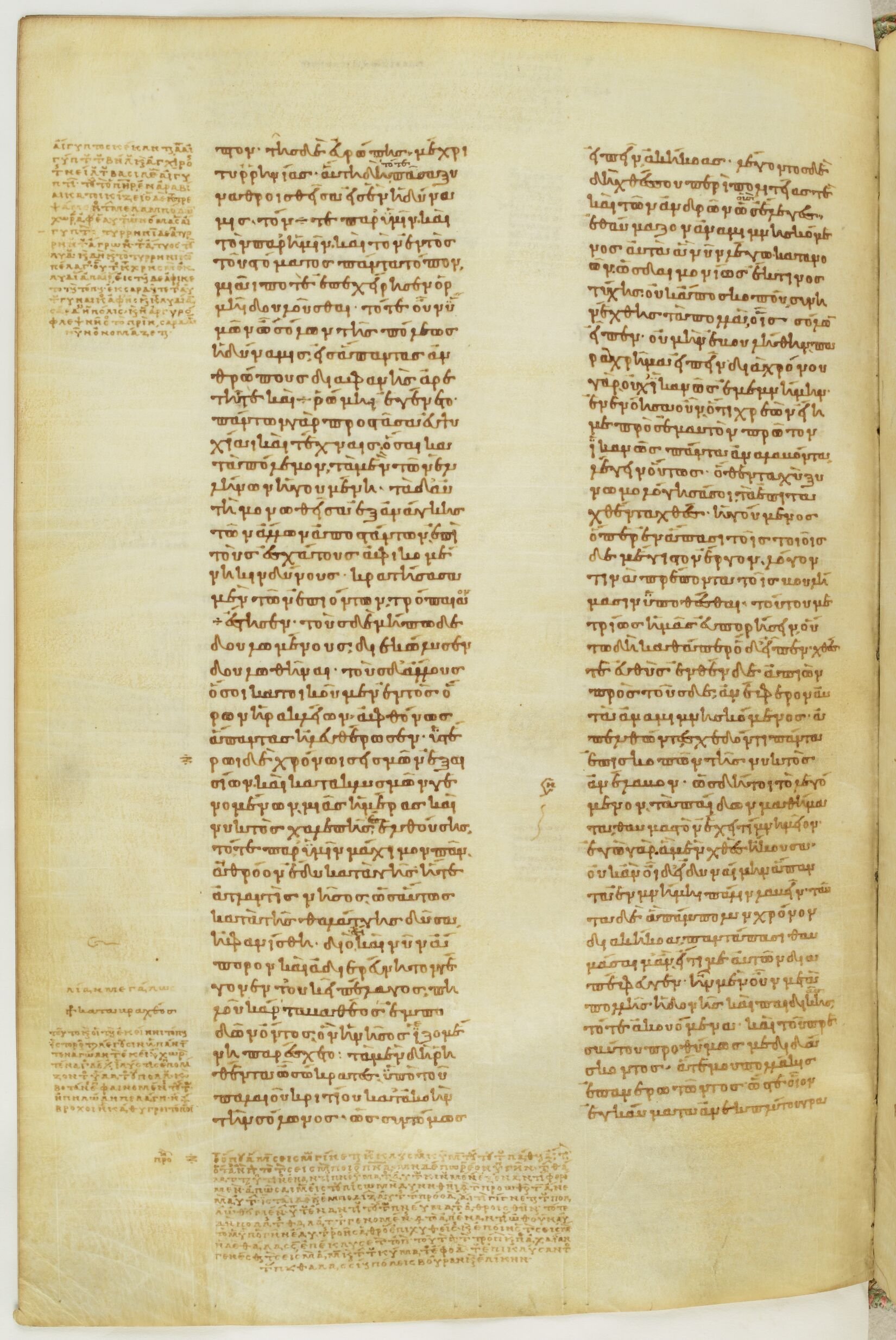
Where on the image
Tim. 26a stands in Paris gr. 1807, fol. 117v col. b. Checked on the image (column openings read on the BnF photographs and found in Burnet's text, quoted in Burnet's spelling): fol. 117v col. b begins ‹εἰπεῖν, ἀκήκοας· λέγοντος δὲ δὴ χθὲς› (Tim. 25e).
ἐβουλήθην παραχρῆμα εἰπεῖν· διὰ χρόνου γὰρ οὐχ ἱκανῶς ἐμεμνήμην. ἐνενόησα οὖν ὅτι χρεὼν εἴη με πρὸς ἐμαυτὸν πρῶτον ἱκανῶς πάντα ἀναλαβόντα λέγειν οὕτως. ὅθεν ταχὺ συνωμολόγησά σοι τὰ ἐπιταχθέντα χθές, ἡγούμενος, ὅπερ ἐν ἅπασι τοῖς τοιοῖσδε μέγιστον ἔργον, λόγον τινὰ πρέποντα τοῖς βουλήμασιν ὑποθέσθαι, τούτου μετρίως ἡμᾶς εὐπορήσειν. οὕτω δή, καθάπερ ὅδʼ εἶπεν, χθές τε εὐθὺς ἐνθένδε ἀπιὼν
to speak on the instant; for owing to lapse of time my recollection of his account was not sufficiently clear. So I decided that I ought not to relate it until I had first gone over it all carefully in my own mind. Consequently, I readily consented to the theme you proposed yesterday, since I thought that we should be reasonably well provided for the task of furnishing a satisfactory discourse—which in all such cases is the greatest task. So it was that, as Hermocrates has said, the moment I left your place yesterday I began to relate to them the story as I recollected it,
Where on the image
Tim. 26b stands in Paris gr. 1807, fol. 117v col. b. Checked on the image (column openings read on the BnF photographs and found in Burnet's text, quoted in Burnet's spelling): fol. 117v col. b begins ‹εἰπεῖν, ἀκήκοας· λέγοντος δὲ δὴ χθὲς› (Tim. 25e).
πρὸς τούσδε ἀνέφερον αὐτὰ ἀναμιμνῃσκόμενος, ἀπελθών τε σχεδόν τι πάντα ἐπισκοπῶν τῆς νυκτὸς ἀνέλαβον. ὡς δή τοι, τὸ λεγόμενον, τὰ παίδων μαθήματα θαυμαστὸν ἔχει τι μνημεῖον. ἐγὼ γὰρ ἃ μὲν χθὲς ἤκουσα, οὐκ ἂν οἶδʼ εἰ δυναίμην ἅπαντα ἐν μνήμῃ πάλιν λαβεῖν· ταῦτα δὲ ἃ πάμπολυν χρόνον διακήκοα, παντάπασι θαυμάσαιμʼ ἂν εἴ τί με αὐτῶν διαπέφευγεν. ἦν μὲν οὖν μετὰ πολλῆς ἡδονῆς καὶ
and after I parted from them I pondered it over during the night and recovered, as I may say, the whole story. Marvellous, indeed, is the way in which the lessons of one’s childhood grip the mind, as the saying is. For myself, I know not whether I could recall to mind all that I heard yesterday; but as to the account I heard such a great time ago, I should be immensely surprised if a single detail of it has escaped me. I had then the greatest pleasure and amusement in hearing it,
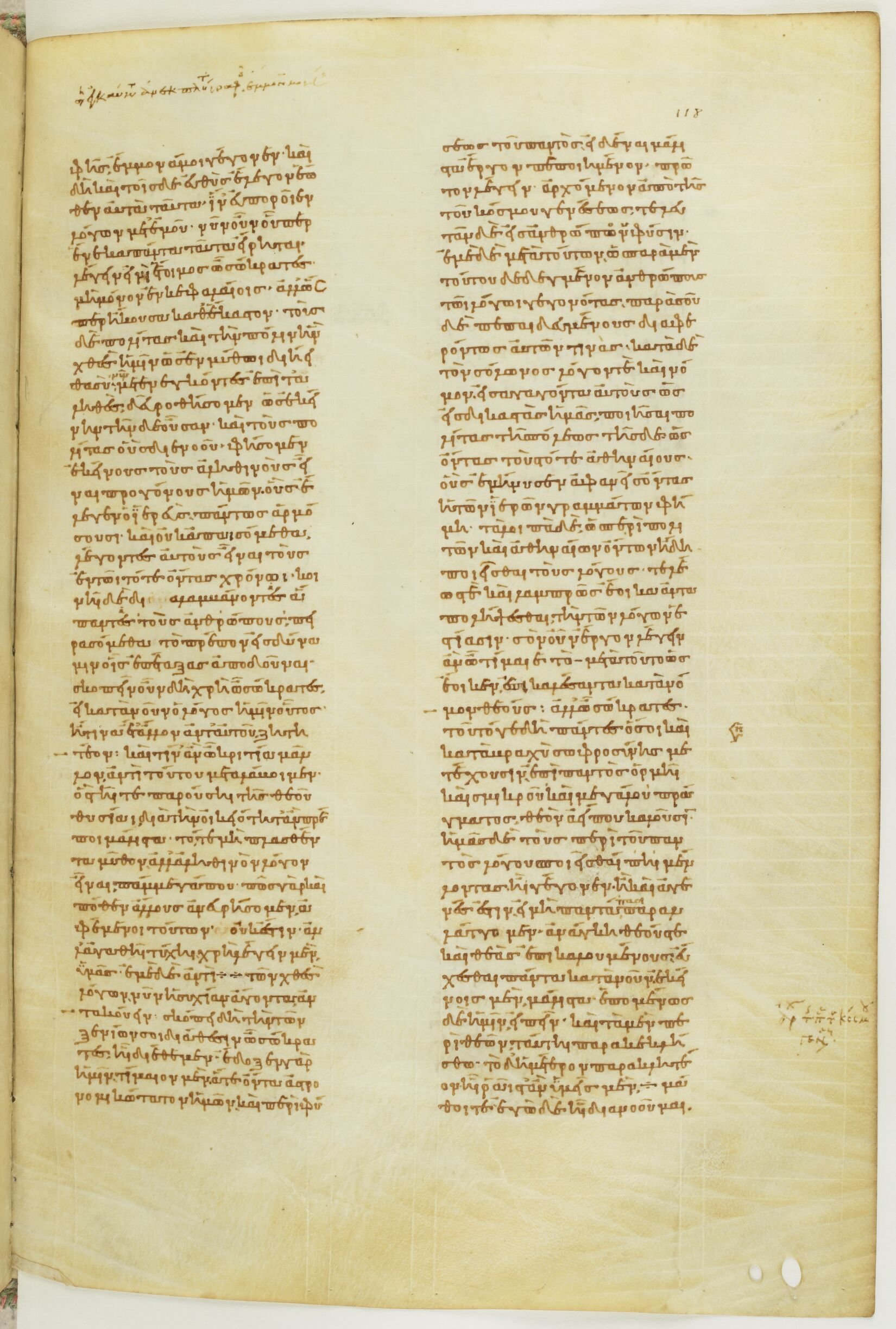
Where on the image
Tim. 26c stands in Paris gr. 1807, fol. 117v col. b to fol. 118r col. a. Checked on the image (column openings read on the BnF photographs and found in Burnet's text, quoted in Burnet's spelling): fol. 117v col. b begins ‹εἰπεῖν, ἀκήκοας· λέγοντος δὲ δὴ χθὲς› (Tim. 25e); fol. 118r col. a begins ‹-φῆς ἔμμονά μοι γέγονεν· καὶ δὴ› (Tim. 26c).
παιδιᾶς τότε ἀκουόμενα, καὶ τοῦ πρεσβύτου προθύμως με διδάσκοντος, ἅτʼ ἐμοῦ πολλάκις ἐπανερωτῶντος, ὥστε οἷον ἐγκαύματα ἀνεκπλύτου γραφῆς ἔμμονά μοι γέγονεν· καὶ δὴ καὶ τοῖσδε εὐθὺς ἔλεγον ἕωθεν αὐτὰ ταῦτα, ἵνα εὐποροῖεν λόγων μετʼ ἐμοῦ. νῦν οὖν, οὗπερ ἕνεκα πάντα ταῦτα εἴρηται, λέγειν εἰμὶ ἕτοιμος, ὦ Σώκρατες, μὴ μόνον ἐν κεφαλαίοις ἀλλʼ ὥσπερ ἤκουσα καθʼ ἕκαστον· τοὺς δὲ πολίτας καὶ τὴν πόλιν ἣν χθὲς ἡμῖν ὡς ἐν μύθῳ διῄεισθα σύ, νῦν μετενεγκόντες
and the old man was eager to tell me, since I kept questioning him repeatedly, so that the story is stamped firmly on my mind like the encaustic designs of an indelible painting. Moreover, immediately after daybreak I related this same story to our friends here, so that they might share in my rich provision of discourse. Now, therefore,—and this is the purpose of all that I have been saying,—I am ready to tell my tale, not in summary outline only but in full detail just as I heard it. And the city with its citizens which you described to us yesterday, as it were in a fable,
Where on the image
Tim. 26d stands in Paris gr. 1807, fol. 118r col. a. Checked on the image (column openings read on the BnF photographs and found in Burnet's text, quoted in Burnet's spelling): fol. 118r col. a begins ‹-φῆς ἔμμονά μοι γέγονεν· καὶ δὴ› (Tim. 26c).
ἐπὶ τἀληθὲς δεῦρο θήσομεν ὡς ἐκείνην τήνδε οὖσαν, καὶ τοὺς πολίτας οὓς διενοοῦ φήσομεν ἐκείνους τοὺς ἀληθινοὺς εἶναι προγόνους ἡμῶν, οὓς ἔλεγεν ὁ ἱερεύς. πάντως ἁρμόσουσι καὶ οὐκ ἀπᾳσόμεθα λέγοντες αὐτοὺς εἶναι τοὺς ἐν τῷ τότε ὄντας χρόνῳ. κοινῇ δὲ διαλαμβάνοντες ἅπαντες πειρασόμεθα τὸ πρέπον εἰς δύναμιν οἷς ἐπέταξας ἀποδοῦναι. σκοπεῖν οὖν δὴ χρή, ὦ Σώκρατες, εἰ κατὰ νοῦν ὁ λόγος ἡμῖν
we will now transport hither into the realm of fact; for we will assume that the city is that ancient city of ours, and declare that the citizens you conceived are in truth those actual progenitors of ours, of whom the priest told. In all ways they will correspond, nor shall we be out of tune if we affirm that those citizens of yours are the very men who lived in that age. Thus, with united effort, each taking his part, we will endeavor to the best of our powers to do justice to the theme you have prescribed. Wherefore, Socrates, we must consider whether this story is to our mind, or
Where on the image
Tim. 26e stands in Paris gr. 1807, fol. 118r col. a. Checked on the image (column openings read on the BnF photographs and found in Burnet's text, quoted in Burnet's spelling): fol. 118r col. a begins ‹-φῆς ἔμμονά μοι γέγονεν· καὶ δὴ› (Tim. 26c).
οὗτος, ἤ τινα ἔτʼ ἄλλον ἀντʼ αὐτοῦ ζητητέον.
ΣΩ. καὶ τίνʼ ἄν, ὦ Κριτία, μᾶλλον ἀντὶ τούτου μεταλάβοιμεν, ὃς τῇ τε παρούσῃ τῆς θεοῦ θυσίᾳ διὰ τὴν οἰκειότητʼ ἂν πρέποι μάλιστα, τό τε μὴ πλασθέντα μῦθον ἀλλʼ ἀληθινὸν λόγον εἶναι πάμμεγά που. πῶς γὰρ καὶ πόθεν ἄλλους ἀνευρήσομεν ἀφέμενοι τούτων; οὐκ ἔστιν, ἀλλʼ ἀγαθῇ τύχῃ χρὴ λέγειν μὲν ὑμᾶς, ἐμὲ δὲ ἀντὶ τῶν χθὲς λόγων νῦν
we have still to look for some other to take its place.
Soc. What story should we adopt, Critias, in preference to this? For this story will be admirably suited to the festival of the Goddess which is now being held, because of its connection with her; and the fact that it is no invented fable but genuine history is all-important. How, indeed, and where shall we discover other stories if we let these slip? Nay, it is impossible. You, therefore, must now deliver your discourse (and may Good Fortune attend you!), while I, in requital for my speech of yesterday, must now
Notes
- Greek: John Burnet, Platonis Opera IV (Oxford, 1902), via Perseus canonical-greekLit; Burnet's text is a critical edition, so its wording can differ from the manuscript shown.
- English: R. G. Bury, Plato IX (Loeb Classical Library, 1929), via Perseus. Bury's footnotes are not reproduced. Quotation marks stand where Perseus marks quoted speech.
- Stephanus sections (a-e) are those of the 1578 Stephanus edition as given by Burnet and Bury; Bury's section breaks can fall a few words away from Burnet's because English word order differs.
Cite
Sources
- Source: Paris, BnF grec 1807 (Plato A, c. 850-875) fol. 117v-118r via BnF IIIF + Burnet's Greek (Perseus) + R. G. Bury's English (Loeb 1929, Perseus) (holding institution)
- Critical edition: Burnet, Platonis Opera IV (1902), via Perseus
← previous · → next · v cycle view · l back to library