Plato, Timaeus 40a-40e: the fixed stars, the earth and the traditional gods
Introduction
Stephanus page 40 of Plato's Timaeus (40a-40e): the fixed stars, the earth and the traditional gods.
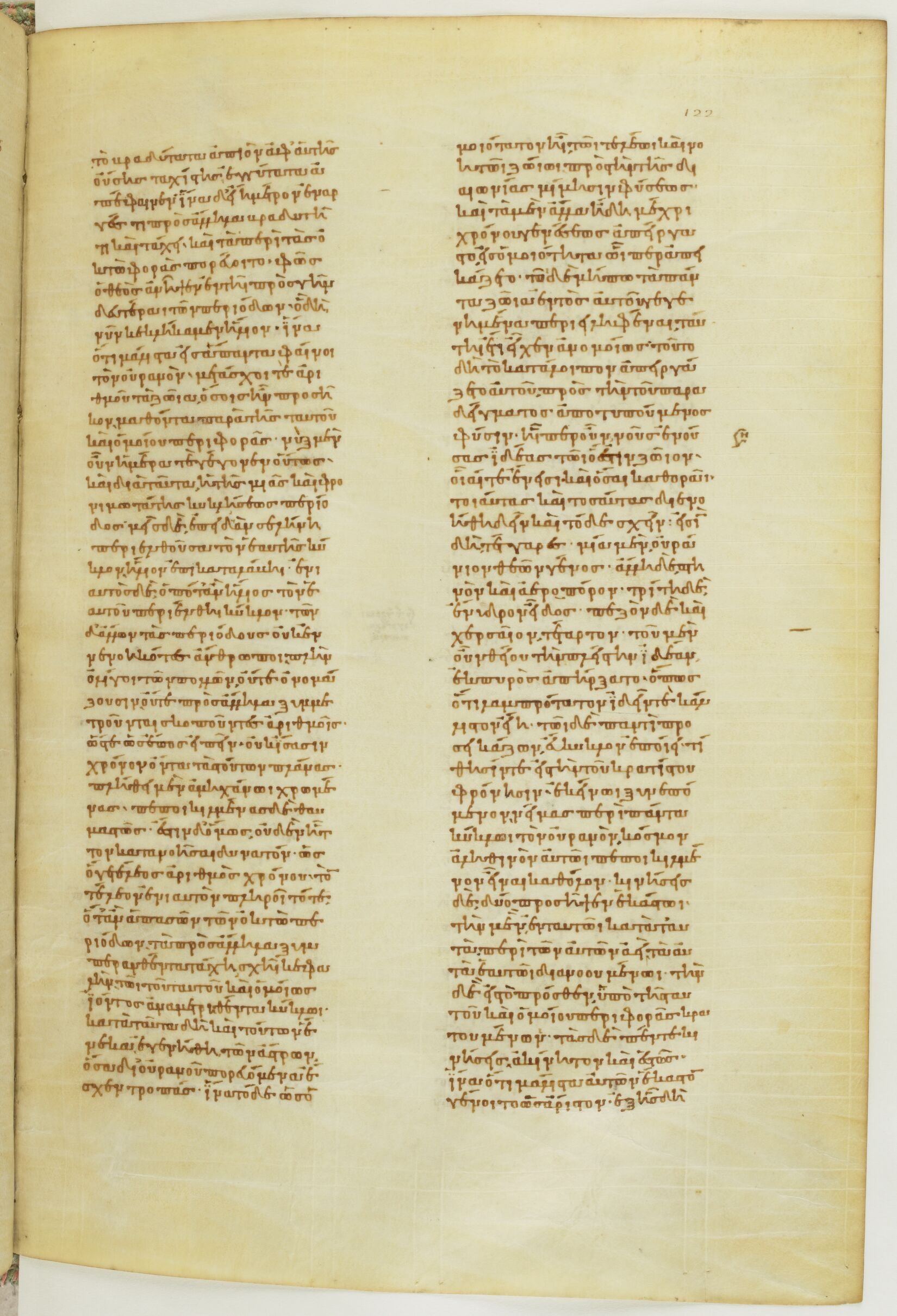
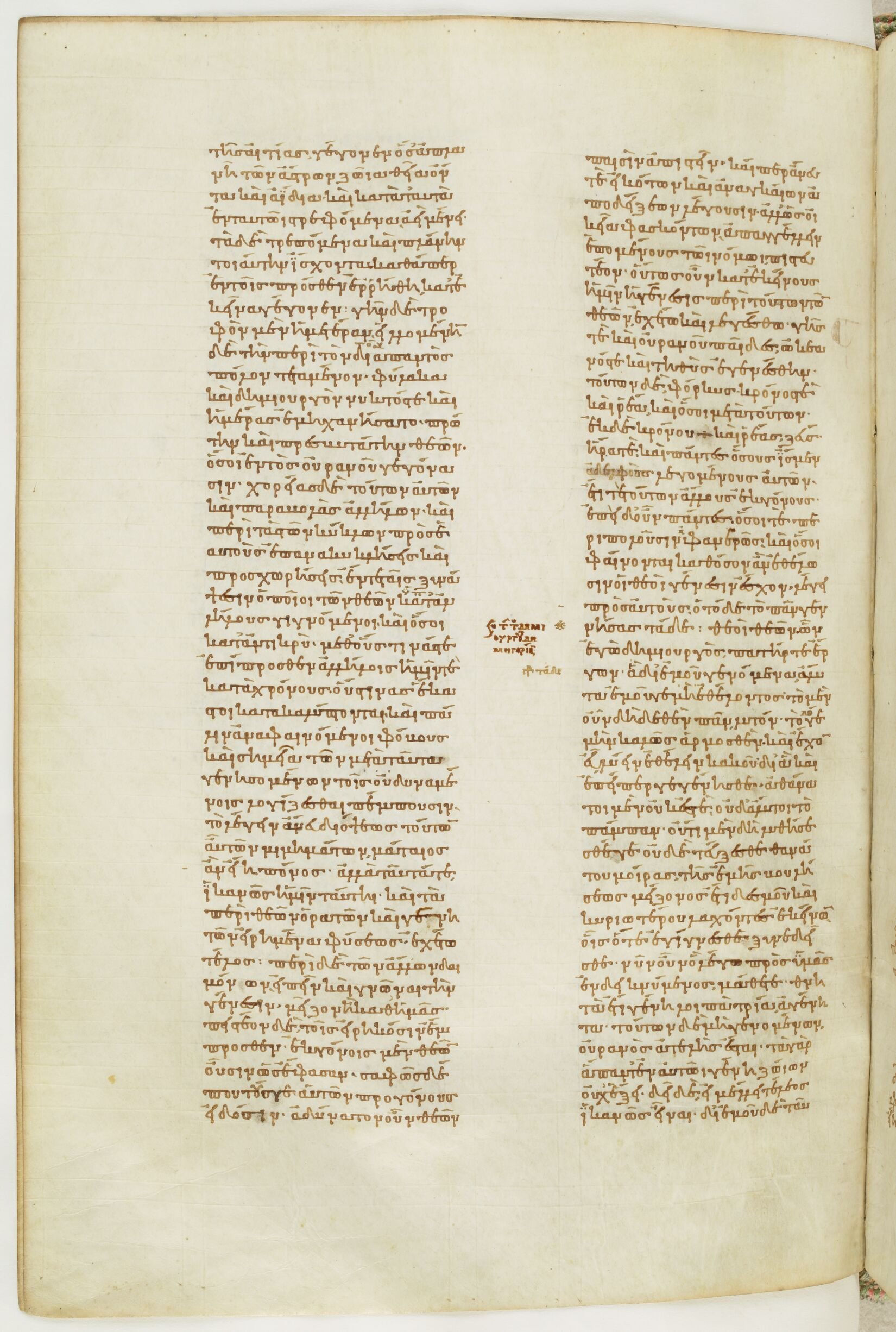
The manuscript is Paris, Bibliothèque nationale de France, grec 1807, known to editors as Plato A. It was copied in Constantinople around 850-875 by the scribe of the so-called philosophical collection, and is the oldest surviving medieval manuscript of the Timaeus and Critias (tetralogies VIII-IX: Clitophon, Republic, Timaeus, Critias, Minos, Laws, Epinomis, Letters). Each page has two columns of 44 lines. The Timaeus fills fol. 114r-144v and the Critias fol. 145r-151r.
On the manuscript this page of text runs over fol. 122r col. b to fol. 122v col. b. Each section below is linked to the folio side(s) that carry it. The mapping comes from reading the first words of every column on the images and finding them in Burnet's text: fol. 122r col. b begins ‹-μοιότατον ᾖ τῷ τελέῳ καὶ νοητῷ› (Tim. 39e); fol. 122v col. a begins ‹τῆς αἰτίας γέγονεν ὅσʼ ἀπλανῆ τῶν› (Tim. 40b); fol. 122v col. b begins ‹παισὶν ἀπιστεῖν, καίπερ ἄνευ τε εἰκότων› (Tim. 40e).
The Greek is John Burnet's critical text (Oxford, 1902), not a transcription of this manuscript; the scribe's spelling, accents and occasional readings differ from it. The English is R. G. Bury's Loeb translation (1929).
How was this verified? (Provenance)
Where on the image
Tim. 40a stands in Paris gr. 1807, fol. 122r col. b. Checked on the image (column openings read on the BnF photographs and found in Burnet's text, quoted in Burnet's spelling): fol. 122r col. b begins ‹-μοιότατον ᾖ τῷ τελέῳ καὶ νοητῷ› (Tim. 39e).
πτηνὸν καὶ ἀεροπόρον, τρίτη δὲ ἔνυδρον εἶδος, πεζὸν δὲ καὶ χερσαῖον τέταρτον. τοῦ μὲν οὖν θείου τὴν πλείστην ἰδέαν ἐκ πυρὸς ἀπηργάζετο, ὅπως ὅτι λαμπρότατον ἰδεῖν τε κάλλιστον εἴη, τῷ δὲ παντὶ προσεικάζων εὔκυκλον ἐποίει, τίθησίν τε εἰς τὴν τοῦ κρατίστου φρόνησιν ἐκείνῳ συνεπόμενον, νείμας περὶ πάντα κύκλῳ τὸν οὐρανόν, κόσμον ἀληθινὸν αὐτῷ πεποικιλμένον εἶναι καθʼ ὅλον. κινήσεις δὲ δύο προσῆψεν ἑκάστῳ, τὴν μὲν ἐν ταὐτῷ κατὰ ταὐτά, περὶ τῶν αὐτῶν ἀεὶ
another the winged kind which traverses the air; thirdly, the class which inhabits the waters; and fourthly, that which goes on foot on dry land. The form of the divine class He wrought for the most part out of fire, that this kind might be as bright as possible to behold and as fair; and likening it to the All He made it truly spherical; and He placed it in the intelligence of the Supreme to follow therewith, distributing it round about over all the Heaven, to be unto it a veritable adornment cunningly traced over the whole. And each member of this class He endowed with two motions, whereof the one is uniform motion in the same spot, whereby it conceives always identical thoughts about the same objects,
Where on the image
Tim. 40b stands in Paris gr. 1807, fol. 122r col. b to fol. 122v col. a. Checked on the image (column openings read on the BnF photographs and found in Burnet's text, quoted in Burnet's spelling): fol. 122r col. b begins ‹-μοιότατον ᾖ τῷ τελέῳ καὶ νοητῷ› (Tim. 39e); fol. 122v col. a begins ‹τῆς αἰτίας γέγονεν ὅσʼ ἀπλανῆ τῶν› (Tim. 40b).
τὰ αὐτὰ ἑαυτῷ διανοουμένῳ, τὴν δὲ εἰς τὸ πρόσθεν, ὑπὸ τῆς ταὐτοῦ καὶ ὁμοίου περιφορᾶς κρατουμένῳ· τὰς δὲ πέντε κινήσεις ἀκίνητον καὶ ἑστός, ἵνα ὅτι μάλιστα αὐτῶν ἕκαστον γένοιτο ὡς ἄριστον. ἐξ ἧς δὴ τῆς αἰτίας γέγονεν ὅσʼ ἀπλανῆ τῶν ἄστρων ζῷα θεῖα ὄντα καὶ ἀίδια καὶ κατὰ ταὐτὰ ἐν ταὐτῷ στρεφόμενα ἀεὶ μένει· τὰ δὲ τρεπόμενα καὶ πλάνην τοιαύτην ἴσχοντα, καθάπερ ἐν τοῖς πρόσθεν ἐρρήθη, κατʼ ἐκεῖνα γέγονεν. γῆν δὲ τροφὸν μὲν ἡμετέραν, ἰλλομένην δὲ
and the other is a forward motion due to its being dominated by the revolution of the Same and Similar; but in respect of the other five motions they are at rest and move not, so that each of them may attain the greatest possible perfection. From this cause, then, came into existence all those unwandering stars which are living creatures divine and eternal and abide for ever revolving uniformly in the same spot; and those which keep swerving and wandering have been generated in the fashion previously described. And Earth, our nurse, which is globed around the pole that stretches through all,
Where on the image
Tim. 40c stands in Paris gr. 1807, fol. 122v col. a. Checked on the image (column openings read on the BnF photographs and found in Burnet's text, quoted in Burnet's spelling): fol. 122v col. a begins ‹τῆς αἰτίας γέγονεν ὅσʼ ἀπλανῆ τῶν› (Tim. 40b).
τὴν περὶ τὸν διὰ παντὸς πόλον τεταμένον, φύλακα καὶ δημιουργὸν νυκτός τε καὶ ἡμέρας ἐμηχανήσατο, πρώτην καὶ πρεσβυτάτην θεῶν ὅσοι ἐντὸς οὐρανοῦ γεγόνασιν. χορείας δὲ τούτων αὐτῶν καὶ παραβολὰς ἀλλήλων, καὶ περὶ τὰς τῶν κύκλων πρὸς ἑαυτοὺς ἐπανακυκλήσεις καὶ προχωρήσεις, ἔν τε ταῖς συνάψεσιν ὁποῖοι τῶν θεῶν κατʼ ἀλλήλους γιγνόμενοι καὶ ὅσοι καταντικρύ, μεθʼ οὕστινάς τε ἐπίπροσθεν ἀλλήλοις ἡμῖν τε κατὰ χρόνους οὕστινας ἕκαστοι κατακαλύπτονται καὶ πάλιν ἀναφαινόμενοι φόβους καὶ σημεῖα τῶν
He framed to be the wardress and fashioner of night and day, she being the first and eldest of all the gods which have come into existence within the Heaven. But the choric dances of these same stars and their crossings one of another, and the relative reversals and progressions of their orbits, and which of the gods meet in their conjunctions, and how many are in opposition, and behind which and at what times they severally pass before one another and are hidden from our view, and again re-appearing
Where on the image
Tim. 40d stands in Paris gr. 1807, fol. 122v col. a. Checked on the image (column openings read on the BnF photographs and found in Burnet's text, quoted in Burnet's spelling): fol. 122v col. a begins ‹τῆς αἰτίας γέγονεν ὅσʼ ἀπλανῆ τῶν› (Tim. 40b).
μετὰ ταῦτα γενησομένων τοῖς οὐ δυναμένοις λογίζεσθαι πέμπουσιν, τὸ λέγειν ἄνευ διʼ ὄψεως τούτων αὖ τῶν μιμημάτων μάταιος ἂν εἴη πόνος· ἀλλὰ ταῦτά τε ἱκανῶς ἡμῖν ταύτῃ καὶ τὰ περὶ θεῶν ὁρατῶν καὶ γεννητῶν εἰρημένα φύσεως ἐχέτω τέλος. περὶ δὲ τῶν ἄλλων δαιμόνων εἰπεῖν καὶ γνῶναι τὴν γένεσιν μεῖζον ἢ καθʼ ἡμᾶς, πειστέον δὲ τοῖς εἰρηκόσιν ἔμπροσθεν, ἐκγόνοις μὲν θεῶν οὖσιν, ὡς ἔφασαν, σαφῶς δέ που τούς γε αὑτῶν προγόνους εἰδόσιν· ἀδύνατον οὖν θεῶν
send upon men unable to calculate alarming portents of the things which shall come to pass hereafter,—to describe all this without an inspection of models of these movements would be labor in vain. Wherefore, let this account suffice us, and let our discourse concerning the nature of the visible and generated gods have an end. Concerning the other divinities, to discover and declare their origin is too great a task for us, and we must trust to those who have declared it aforetime, they being, as they affirmed, descendants of gods and knowing well, no doubt, their own forefathers.
Where on the image
Tim. 40e stands in Paris gr. 1807, fol. 122v col. b. Checked on the image (column openings read on the BnF photographs and found in Burnet's text, quoted in Burnet's spelling): fol. 122v col. b begins ‹παισὶν ἀπιστεῖν, καίπερ ἄνευ τε εἰκότων› (Tim. 40e).
παισὶν ἀπιστεῖν, καίπερ ἄνευ τε εἰκότων καὶ ἀναγκαίων ἀποδείξεων λέγουσιν, ἀλλʼ ὡς οἰκεῖα φασκόντων ἀπαγγέλλειν ἑπομένους τῷ νόμῳ πιστευτέον.
οὕτως οὖν κατʼ ἐκείνους ἡμῖν ἡ γένεσις περὶ τούτων τῶν θεῶν ἐχέτω καὶ λεγέσθω. Γῆς τε καὶ Οὐρανοῦ παῖδες Ὠκεανός τε καὶ Τηθὺς ἐγενέσθην, τούτων δὲ Φόρκυς Κρόνος τε καὶ Ῥέα καὶ ὅσοι μετὰ
It is, as I say, impossible to disbelieve the children of gods, even though their statements lack either probable or necessary demonstration; and inasmuch as they profess to speak of family matters, we must follow custom and believe them.
Therefore let the generation of these gods be stated by us, following their account, in this wise: Of Ge and Uranus were born the children Oceanus and Tethys; and of these, Phorkys, Cronos, Rhea, and all that go with them;
Notes
- Greek: John Burnet, Platonis Opera IV (Oxford, 1902), via Perseus canonical-greekLit; Burnet's text is a critical edition, so its wording can differ from the manuscript shown.
- English: R. G. Bury, Plato IX (Loeb Classical Library, 1929), via Perseus. Bury's footnotes are not reproduced. Quotation marks stand where Perseus marks quoted speech.
- Stephanus sections (a-e) are those of the 1578 Stephanus edition as given by Burnet and Bury; Bury's section breaks can fall a few words away from Burnet's because English word order differs.
Cite
Sources
- Source: Paris, BnF grec 1807 (Plato A, c. 850-875) fol. 122r-122v via BnF IIIF + Burnet's Greek (Perseus) + R. G. Bury's English (Loeb 1929, Perseus) (holding institution)
- Critical edition: Burnet, Platonis Opera IV (1902), via Perseus
← previous · → next · v cycle view · l back to library