Plato, Timaeus 41a-41e: the maker's speech to the gods; the mixing of souls
Introduction
Stephanus page 41 of Plato's Timaeus (41a-41e): the maker's speech to the gods; the mixing of souls.
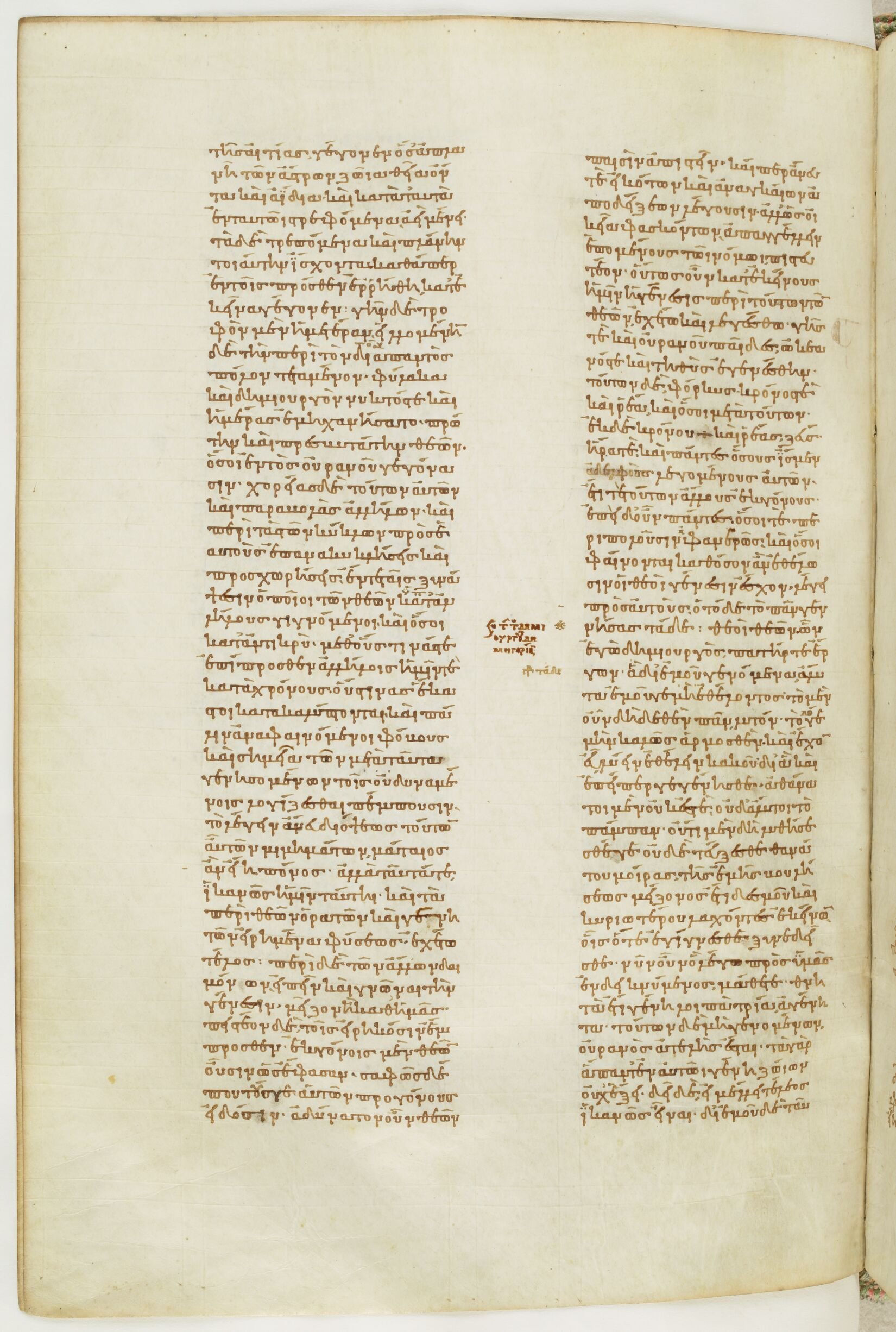
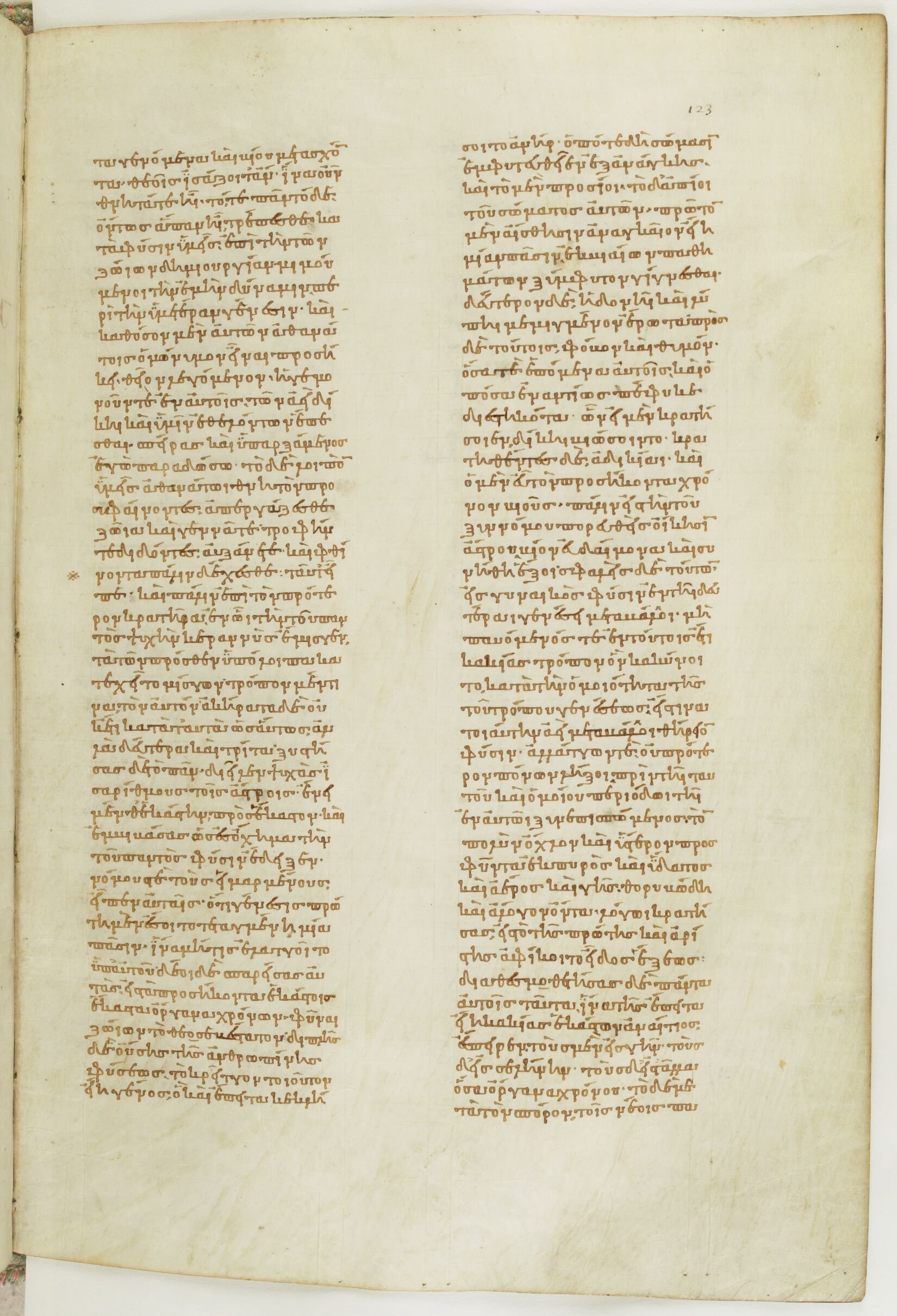
The manuscript is Paris, Bibliothèque nationale de France, grec 1807, known to editors as Plato A. It was copied in Constantinople around 850-875 by the scribe of the so-called philosophical collection, and is the oldest surviving medieval manuscript of the Timaeus and Critias (tetralogies VIII-IX: Clitophon, Republic, Timaeus, Critias, Minos, Laws, Epinomis, Letters). Each page has two columns of 44 lines. The Timaeus fills fol. 114r-144v and the Critias fol. 145r-151r.
On the manuscript this page of text runs over fol. 122v col. b to fol. 123r col. a. Each section below is linked to the folio side(s) that carry it. The mapping comes from reading the first words of every column on the images and finding them in Burnet's text: fol. 122v col. b begins ‹παισὶν ἀπιστεῖν, καίπερ ἄνευ τε εἰκότων› (Tim. 40e); fol. 123r col. a begins ‹-τα γενόμενα καὶ βίου μετασχόντα θεοῖς› (Tim. 41c).
The Greek is John Burnet's critical text (Oxford, 1902), not a transcription of this manuscript; the scribe's spelling, accents and occasional readings differ from it. The English is R. G. Bury's Loeb translation (1929).
How was this verified? (Provenance)
Where on the image
Tim. 41a stands in Paris gr. 1807, fol. 122v col. b. Checked on the image (column openings read on the BnF photographs and found in Burnet's text, quoted in Burnet's spelling): fol. 122v col. b begins ‹παισὶν ἀπιστεῖν, καίπερ ἄνευ τε εἰκότων› (Tim. 40e).
τούτων, ἐκ δὲ Κρόνου καὶ Ῥέας Ζεὺς Ἥρα τε καὶ πάντες ὅσους ἴσμεν ἀδελφοὺς λεγομένους αὐτῶν, ἔτι τε τούτων ἄλλους ἐκγόνους· ἐπεὶ δʼ οὖν πάντες ὅσοι τε περιπολοῦσιν φανερῶς καὶ ὅσοι φαίνονται καθʼ ὅσον ἂν ἐθέλωσιν θεοὶ γένεσιν ἔσχον, λέγει πρὸς αὐτοὺς ὁ τόδε τὸ πᾶν γεννήσας τάδε— θεοὶ θεῶν, ὧν ἐγὼ δημιουργὸς πατήρ τε ἔργων, διʼ ἐμοῦ γενόμενα ἄλυτα ἐμοῦ γε μὴ ἐθέλοντος. τὸ μὲν οὖν δὴ
and of Cronos and Rhea were born Zeus and Hera and all those who are, as we know, called their brethren; and of these again, other descendants. Now when all the gods, both those who revolve manifestly and those who manifest themselves so far as they choose, had come to birth, He that generated this All addressed them thus: “Gods of gods, those works whereof I am framer and father are indissoluble save by my will. For though all that is bound may be dissolved,
Where on the image
Tim. 41b stands in Paris gr. 1807, fol. 122v col. b. Checked on the image (column openings read on the BnF photographs and found in Burnet's text, quoted in Burnet's spelling): fol. 122v col. b begins ‹παισὶν ἀπιστεῖν, καίπερ ἄνευ τε εἰκότων› (Tim. 40e).
δεθὲν πᾶν λυτόν, τό γε μὴν καλῶς ἁρμοσθὲν καὶ ἔχον εὖ λύειν ἐθέλειν κακοῦ· διʼ ἃ καὶ ἐπείπερ γεγένησθε, ἀθάνατοι μὲν οὐκ ἐστὲ οὐδʼ ἄλυτοι τὸ πάμπαν, οὔτι μὲν δὴ λυθήσεσθέ γε οὐδὲ τεύξεσθε θανάτου μοίρας, τῆς ἐμῆς βουλήσεως μείζονος ἔτι δεσμοῦ καὶ κυριωτέρου λαχόντες ἐκείνων οἷς ὅτʼ ἐγίγνεσθε συνεδεῖσθε. νῦν οὖν ὃ λέγω πρὸς ὑμᾶς ἐνδεικνύμενος, μάθετε. θνητὰ ἔτι γένη λοιπὰ τρία ἀγέννητα· τούτων δὲ μὴ γενομένων οὐρανὸς ἀτελὴς ἔσται· τὰ γὰρ ἅπαντʼ ἐν
yet to will to dissolve that which is fairly joined together and in good case were the deed of a wicked one. Wherefore ye also, seeing that ye were generated, are not wholly immortal or indissoluble, yet in no wise shall ye be dissolved nor incur the doom of death, seeing that in my will ye possess a bond greater and more sovereign than the bonds wherewith, at your birth, ye were bound together. Now, therefore, what I manifest and declare unto you do ye learn. Three mortal kinds still remain ungenerated; but if these come not into being the Heaven will be imperfect; for it will not contain within itself the whole sum of the hinds of living creatures, yet contain them it must if
Where on the image
Tim. 41c stands in Paris gr. 1807, fol. 122v col. b to fol. 123r col. a. Checked on the image (column openings read on the BnF photographs and found in Burnet's text, quoted in Burnet's spelling): fol. 122v col. b begins ‹παισὶν ἀπιστεῖν, καίπερ ἄνευ τε εἰκότων› (Tim. 40e); fol. 123r col. a begins ‹-τα γενόμενα καὶ βίου μετασχόντα θεοῖς› (Tim. 41c).
αὑτῷ γένη ζῴων οὐχ ἕξει, δεῖ δέ, εἰ μέλλει τέλεος ἱκανῶς εἶναι. διʼ ἐμοῦ δὲ ταῦτα γενόμενα καὶ βίου μετασχόντα θεοῖς ἰσάζοιτʼ ἄν· ἵνα οὖν θνητά τε ᾖ τό τε πᾶν τόδε ὄντως ἅπαν ᾖ, τρέπεσθε κατὰ φύσιν ὑμεῖς ἐπὶ τὴν τῶν ζῴων δημιουργίαν, μιμούμενοι τὴν ἐμὴν δύναμιν περὶ τὴν ὑμετέραν γένεσιν. καὶ καθʼ ὅσον μὲν αὐτῶν ἀθανάτοις ὁμώνυμον εἶναι προσήκει, θεῖον λεγόμενον ἡγεμονοῦν τε ἐν αὐτοῖς τῶν ἀεὶ δίκῃ καὶ ὑμῖν ἐθελόντων ἕπεσθαι, σπείρας καὶ ὑπαρξάμενος
it is to be fully perfect. But if by my doing these creatures came into existence and partook of life, they would be made equal unto gods; in order, therefore, that they may be mortal and that this World-all may be truly All, do ye turn yourselves, as Nature directs, to the work of fashioning these living creatures, imitating the power showed by me in my generating of you. Now so much of them as it is proper to designate ’immortal,’ the part we call divine which rules supreme in those who are fain to follow justice always and yourselves, that part I will deliver unto you when I have sown it and given it origin.
Where on the image
Tim. 41d stands in Paris gr. 1807, fol. 123r col. a. Checked on the image (column openings read on the BnF photographs and found in Burnet's text, quoted in Burnet's spelling): fol. 123r col. a begins ‹-τα γενόμενα καὶ βίου μετασχόντα θεοῖς› (Tim. 41c).
ἐγὼ παραδώσω· τὸ δὲ λοιπὸν ὑμεῖς, ἀθανάτῳ θνητὸν προσυφαίνοντες, ἀπεργάζεσθε ζῷα καὶ γεννᾶτε τροφήν τε διδόντες αὐξάνετε καὶ φθίνοντα πάλιν δέχεσθε. ταῦτʼ εἶπε, καὶ πάλιν ἐπὶ τὸν πρότερον κρατῆρα, ἐν ᾧ τὴν τοῦ παντὸς ψυχὴν κεραννὺς ἔμισγεν, τὰ τῶν πρόσθεν ὑπόλοιπα κατεχεῖτο μίσγων τρόπον μέν τινα τὸν αὐτόν, ἀκήρατα δὲ οὐκέτι κατὰ ταὐτὰ ὡσαύτως, ἀλλὰ δεύτερα καὶ τρίτα. συστήσας δὲ τὸ πᾶν διεῖλεν ψυχὰς ἰσαρίθμους τοῖς ἄστροις,
For the rest, do ye weave together the mortal with the immortal, and thereby fashion and generate living creatures, and give them food that they may grow, and when they waste away receive them to yourselves again.” Thus He spake, and once more into the former bowl, wherein He had blended and mixed the Soul of the Universe, He poured the residue of the previous material, mixing it in somewhat the same manner, yet no longer with a uniform and invariable purity, but second and third in degree of purity. And when He had compounded the whole He divided it into souls equal in number to the stars, and each several soul He assigned to one star,
Where on the image
Tim. 41e stands in Paris gr. 1807, fol. 123r col. a. Checked on the image (column openings read on the BnF photographs and found in Burnet's text, quoted in Burnet's spelling): fol. 123r col. a begins ‹-τα γενόμενα καὶ βίου μετασχόντα θεοῖς› (Tim. 41c).
ἔνειμέν θʼ ἑκάστην πρὸς ἕκαστον, καὶ ἐμβιβάσας ὡς ἐς ὄχημα τὴν τοῦ παντὸς φύσιν ἔδειξεν, νόμους τε τοὺς εἱμαρμένους εἶπεν αὐταῖς, ὅτι γένεσις πρώτη μὲν ἔσοιτο τεταγμένη μία πᾶσιν, ἵνα μήτις ἐλαττοῖτο ὑπʼ αὐτοῦ, δέοι δὲ σπαρείσας αὐτὰς εἰς τὰ προσήκοντα ἑκάσταις ἕκαστα ὄργανα χρόνων
and setting them each as it were in a chariot He showed them the nature of the Universe, and declared unto them the laws of destiny,—namely, how that the first birth should be one and the same ordained for all, in order that none might be slighted by Him; and how it was needful that they, when sown each into his own proper organ of time, should grow into the most god-fearing of living creatures;
Notes
- Greek: John Burnet, Platonis Opera IV (Oxford, 1902), via Perseus canonical-greekLit; Burnet's text is a critical edition, so its wording can differ from the manuscript shown.
- English: R. G. Bury, Plato IX (Loeb Classical Library, 1929), via Perseus. Bury's footnotes are not reproduced. Quotation marks stand where Perseus marks quoted speech.
- Stephanus sections (a-e) are those of the 1578 Stephanus edition as given by Burnet and Bury; Bury's section breaks can fall a few words away from Burnet's because English word order differs.
Cite
Sources
- Source: Paris, BnF grec 1807 (Plato A, c. 850-875) fol. 122v-123r via BnF IIIF + Burnet's Greek (Perseus) + R. G. Bury's English (Loeb 1929, Perseus) (holding institution)
- Critical edition: Burnet, Platonis Opera IV (1902), via Perseus
← previous · → next · v cycle view · l back to library