Plato, Timaeus 42a-42e: souls sown in the stars; the young gods shape mortal bodies
Introduction
Stephanus page 42 of Plato's Timaeus (42a-42e): souls sown in the stars; the young gods shape mortal bodies.
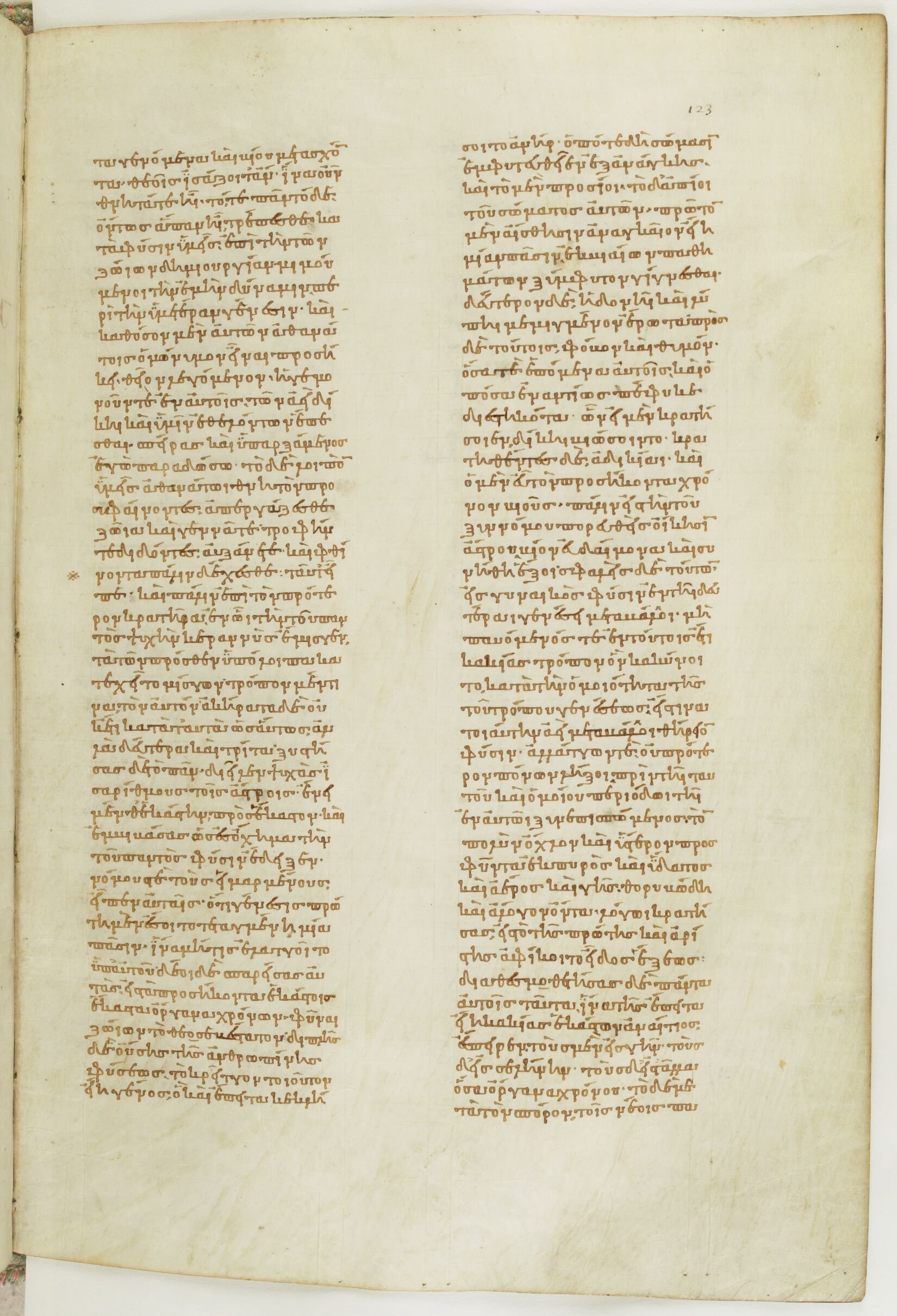
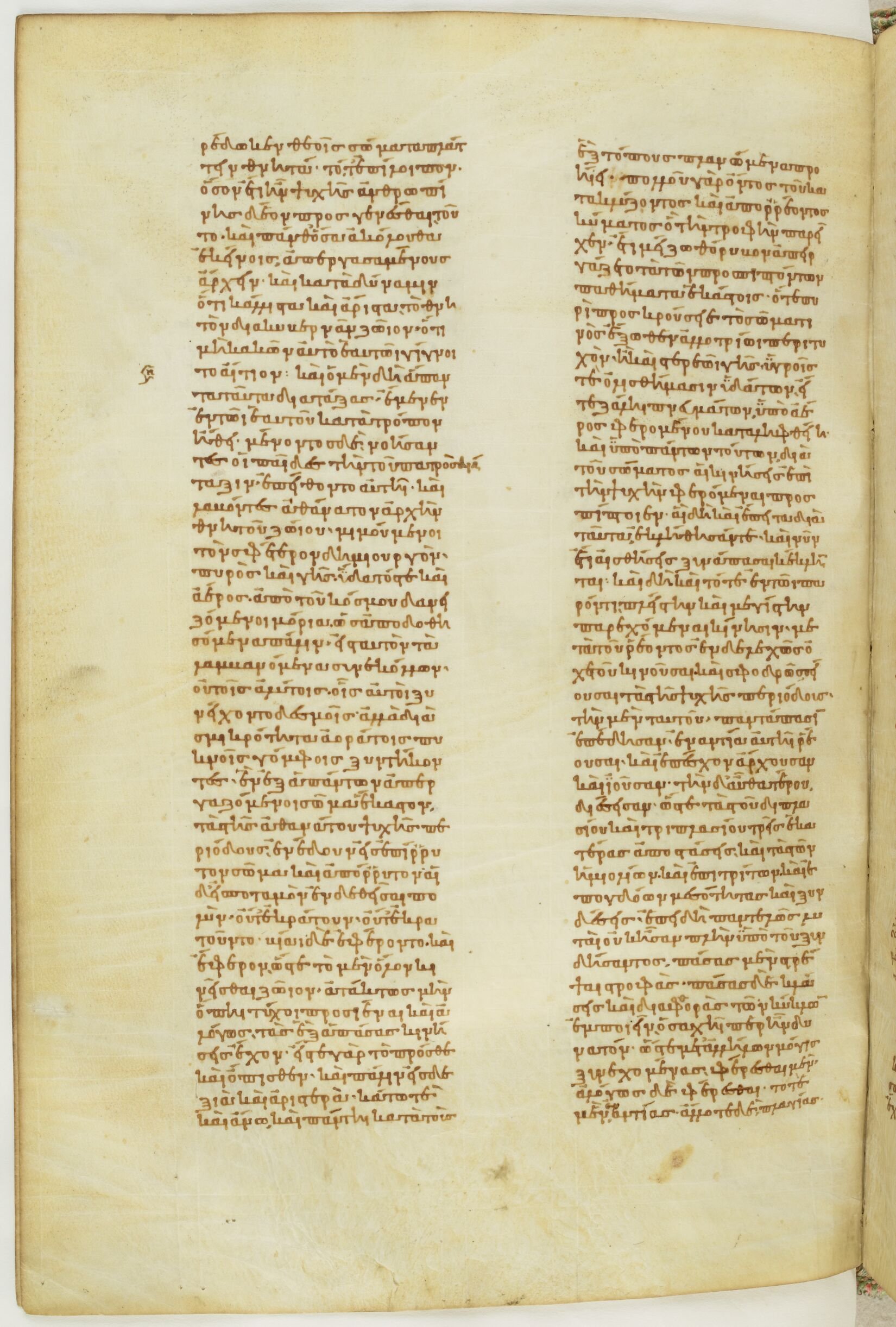
The manuscript is Paris, Bibliothèque nationale de France, grec 1807, known to editors as Plato A. It was copied in Constantinople around 850-875 by the scribe of the so-called philosophical collection, and is the oldest surviving medieval manuscript of the Timaeus and Critias (tetralogies VIII-IX: Clitophon, Republic, Timaeus, Critias, Minos, Laws, Epinomis, Letters). Each page has two columns of 44 lines. The Timaeus fills fol. 114r-144v and the Critias fol. 145r-151r.
On the manuscript this page of text runs over fol. 123r col. a to fol. 123v col. a. Each section below is linked to the folio side(s) that carry it. The mapping comes from reading the first words of every column on the images and finding them in Burnet's text: fol. 123r col. a begins ‹-τα γενόμενα καὶ βίου μετασχόντα θεοῖς› (Tim. 41c); fol. 123r col. b begins ‹-σοιτο ἀνήρ. ΤΙ. ὁπότε δὴ σώμασιν› (Tim. 42a); fol. 123v col. a begins ‹-ρέδωκεν θεοῖς σώματα πλάττειν θνητά, τό› (Tim. 42d).
The Greek is John Burnet's critical text (Oxford, 1902), not a transcription of this manuscript; the scribe's spelling, accents and occasional readings differ from it. The English is R. G. Bury's Loeb translation (1929).
How was this verified? (Provenance)
Where on the image
Tim. 42a stands in Paris gr. 1807, fol. 123r col. a to fol. 123r col. b. Checked on the image (column openings read on the BnF photographs and found in Burnet's text, quoted in Burnet's spelling): fol. 123r col. a begins ‹-τα γενόμενα καὶ βίου μετασχόντα θεοῖς› (Tim. 41c); fol. 123r col. b begins ‹-σοιτο ἀνήρ. ΤΙ. ὁπότε δὴ σώμασιν› (Tim. 42a).
φῦναι ζῴων τὸ θεοσεβέστατον, διπλῆς δὲ οὔσης τῆς ἀνθρωπίνης φύσεως, τὸ κρεῖττον τοιοῦτον εἴη γένος ὃ καὶ ἔπειτα κεκλήσοιτο ἀνήρ.
ὁπότε δὴ σώμασιν ἐμφυτευθεῖεν ἐξ ἀνάγκης, καὶ τὸ μὲν προσίοι, τὸ δʼ ἀπίοι τοῦ σώματος αὐτῶν, πρῶτον μὲν αἴσθησιν ἀναγκαῖον εἴη μίαν πᾶσιν ἐκ βιαίων παθημάτων σύμφυτον γίγνεσθαι, δεύτερον δὲ ἡδονῇ καὶ λύπῃ μεμειγμένον ἔρωτα, πρὸς δὲ τούτοις φόβον καὶ θυμὸν ὅσα
and that, since human nature is two-fold, the superior sex is that which hereafter should be designated man.
And when, by virtue of Necessity, they should be implanted in bodies, and their bodies are subject to influx and efflux, these results would necessarily follow,—firstly, sensation that is innate and common to all proceeding from violent affections; secondly, desire mingled with pleasure and pain; and besides these, fear and anger
Where on the image
Tim. 42b stands in Paris gr. 1807, fol. 123r col. b. Checked on the image (column openings read on the BnF photographs and found in Burnet's text, quoted in Burnet's spelling): fol. 123r col. b begins ‹-σοιτο ἀνήρ. ΤΙ. ὁπότε δὴ σώμασιν› (Tim. 42a).
τε ἑπόμενα αὐτοῖς καὶ ὁπόσα ἐναντίως πέφυκε διεστηκότα· ὧν εἰ μὲν κρατήσοιεν, δίκῃ βιώσοιντο, κρατηθέντες δὲ ἀδικίᾳ. καὶ ὁ μὲν εὖ τὸν προσήκοντα χρόνον βιούς, πάλιν εἰς τὴν τοῦ συννόμου πορευθεὶς οἴκησιν ἄστρου, βίον εὐδαίμονα καὶ συνήθη ἕξοι, σφαλεὶς δὲ τούτων εἰς γυναικὸς φύσιν ἐν τῇ
and all such emotions as are naturally allied thereto, and all such as are of a different and opposite character. And if they shall master these they will live justly, but if they are mastered, unjustly. And he that has lived his appointed time well shall return again to his abode in his native star, and shall gain a life that is blessed and congenial but whoso has failed therein shall be changed into woman’s nature at the second birth; and if, in that shape, he still refraineth not from wickedness
Where on the image
Tim. 42c stands in Paris gr. 1807, fol. 123r col. b. Checked on the image (column openings read on the BnF photographs and found in Burnet's text, quoted in Burnet's spelling): fol. 123r col. b begins ‹-σοιτο ἀνήρ. ΤΙ. ὁπότε δὴ σώμασιν› (Tim. 42a).
δευτέρᾳ γενέσει μεταβαλοῖ· μὴ παυόμενός τε ἐν τούτοις ἔτι κακίας, τρόπον ὃν κακύνοιτο, κατὰ τὴν ὁμοιότητα τῆς τοῦ τρόπου γενέσεως εἴς τινα τοιαύτην ἀεὶ μεταβαλοῖ θήρειον φύσιν, ἀλλάττων τε οὐ πρότερον πόνων λήξοι, πρὶν τῇ ταὐτοῦ καὶ ὁμοίου περιόδῳ τῇ ἐν αὑτῷ συνεπισπώμενος τὸν πολὺν ὄχλον καὶ ὕστερον προσφύντα ἐκ πυρὸς καὶ ὕδατος καὶ ἀέρος
he shall be changed every time, according to the nature of his wickedness, into some bestial form after the similitude of his own nature; nor in his changings shall he cease from woes until he yields himself to the revolution of the Same and Similar that is within him, and dominating by force of reason that burdensome mass which afterwards adhered to him of fire and water
Where on the image
Tim. 42d stands in Paris gr. 1807, fol. 123r col. b to fol. 123v col. a. Checked on the image (column openings read on the BnF photographs and found in Burnet's text, quoted in Burnet's spelling): fol. 123r col. b begins ‹-σοιτο ἀνήρ. ΤΙ. ὁπότε δὴ σώμασιν› (Tim. 42a); fol. 123v col. a begins ‹-ρέδωκεν θεοῖς σώματα πλάττειν θνητά, τό› (Tim. 42d).
καὶ γῆς, θορυβώδη καὶ ἄλογον ὄντα, λόγῳ κρατήσας εἰς τὸ τῆς πρώτης καὶ ἀρίστης ἀφίκοιτο εἶδος ἕξεως. διαθεσμοθετήσας δὲ πάντα αὐτοῖς ταῦτα, ἵνα τῆς ἔπειτα εἴη κακίας ἑκάστων ἀναίτιος, ἔσπειρεν τοὺς μὲν εἰς γῆν, τοὺς δʼ εἰς σελήνην, τοὺς δʼ εἰς τἆλλα ὅσα ὄργανα χρόνου· τὸ δὲ μετὰ τὸν σπόρον τοῖς νέοις παρέδωκεν θεοῖς σώματα πλάττειν θνητά, τό τʼ ἐπίλοιπον, ὅσον ἔτι ἦν ψυχῆς ἀνθρωπίνης δέον
and earth and air, a mass tumultuous and irrational, returns again to the semblance of his first and best state. When He had fully declared unto them all these ordinances, to the end that He might be blameless in respect of the future wickedness of any one of them, He proceeded to sow them, some in the Earth, some in the Moon, others in the rest of the organs of Time. Following upon this sowing, He delivered over to the young gods the task of molding mortal bodies, and of framing and controlling all the rest of the human soul which it was still necessary to add, together with all that belonged thereto,
Where on the image
Tim. 42e stands in Paris gr. 1807, fol. 123v col. a. Checked on the image (column openings read on the BnF photographs and found in Burnet's text, quoted in Burnet's spelling): fol. 123v col. a begins ‹-ρέδωκεν θεοῖς σώματα πλάττειν θνητά, τό› (Tim. 42d).
προσγενέσθαι, τοῦτο καὶ πάνθʼ ὅσα ἀκόλουθα ἐκείνοις ἀπεργασαμένους ἄρχειν, καὶ κατὰ δύναμιν ὅτι κάλλιστα καὶ ἄριστα τὸ θνητὸν διακυβερνᾶν ζῷον, ὅτι μὴ κακῶν αὐτὸ ἑαυτῷ γίγνοιτο αἴτιον. καὶ ὁ μὲν δὴ ἅπαντα ταῦτα διατάξας ἔμενεν ἐν τῷ ἑαυτοῦ κατὰ τρόπον ἤθει·
μένοντος δὲ νοήσαντες οἱ παῖδες τὴν τοῦ πατρὸς τάξιν ἐπείθοντο αὐτῇ, καὶ λαβόντες ἀθάνατον ἀρχὴν θνητοῦ ζῴου, μιμούμενοι τὸν σφέτερον δημιουργόν, πυρὸς καὶ γῆς ὕδατός τε καὶ ἀέρος ἀπὸ τοῦ κόσμου δανειζόμενοι
and of governing this mortal creature in the fairest and best way possible, to the utmost of their power, except in so far as it might itself become the cause of its own evils. So He, then, having given all these commands, was abiding in His own proper and wonted state.
And as He thus abode, His children gave heed to their Father’s command and obeyed it. They took the immortal principle of the mortal living creature, and imitating their own Maker, they borrowed from the Cosmos portions of fire and earth and water and air,
Notes
- Greek: John Burnet, Platonis Opera IV (Oxford, 1902), via Perseus canonical-greekLit; Burnet's text is a critical edition, so its wording can differ from the manuscript shown.
- English: R. G. Bury, Plato IX (Loeb Classical Library, 1929), via Perseus. Bury's footnotes are not reproduced. Quotation marks stand where Perseus marks quoted speech.
- Stephanus sections (a-e) are those of the 1578 Stephanus edition as given by Burnet and Bury; Bury's section breaks can fall a few words away from Burnet's because English word order differs.
Cite
Sources
- Source: Paris, BnF grec 1807 (Plato A, c. 850-875) fol. 123r-123v via BnF IIIF + Burnet's Greek (Perseus) + R. G. Bury's English (Loeb 1929, Perseus) (holding institution)
- Critical edition: Burnet, Platonis Opera IV (1902), via Perseus
← previous · → next · v cycle view · l back to library