Plato, Timaeus 81a-81e: nourishment, growth and decline; death
Introduction
Stephanus page 81 of Plato's Timaeus (81a-81e): nourishment, growth and decline; death.
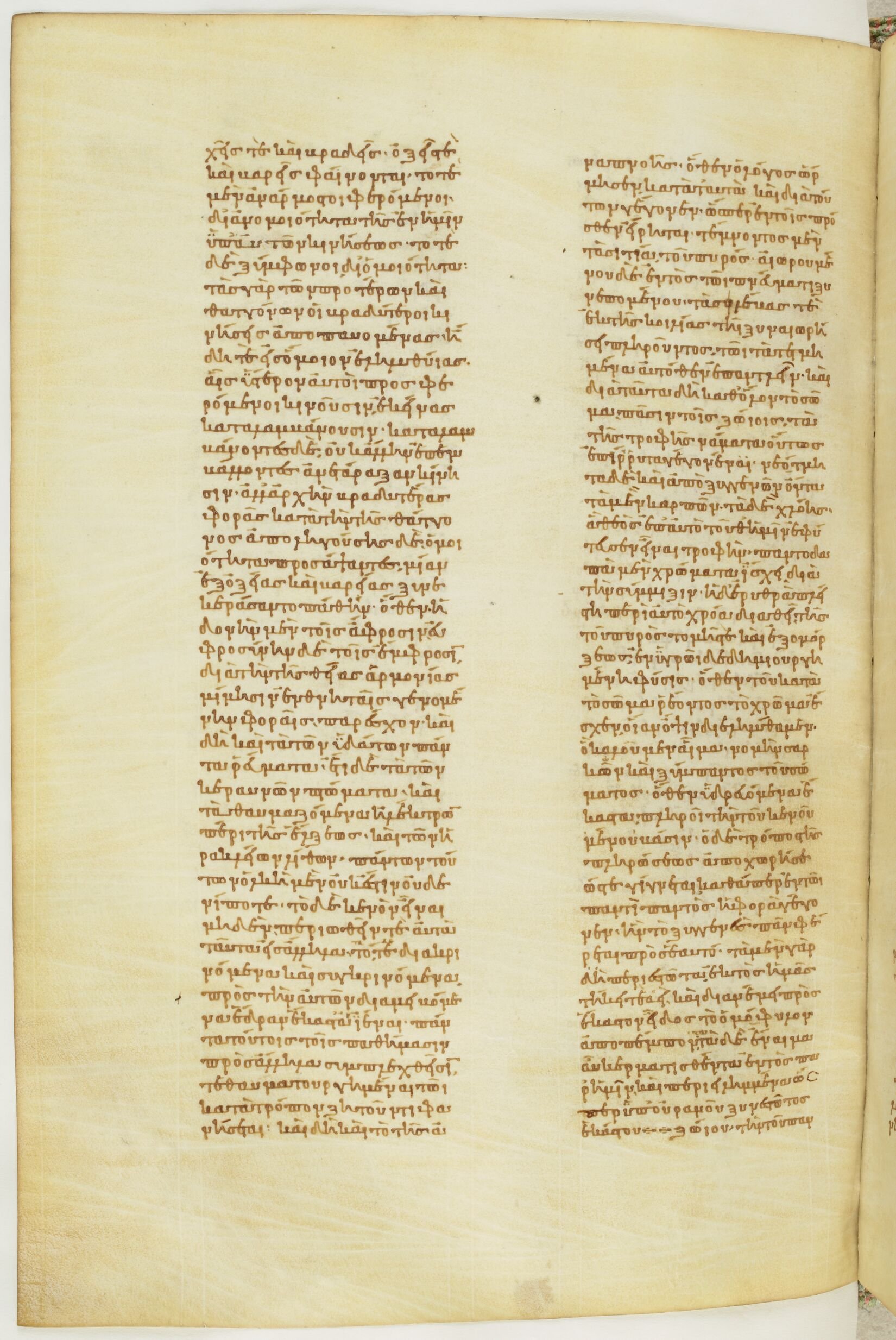
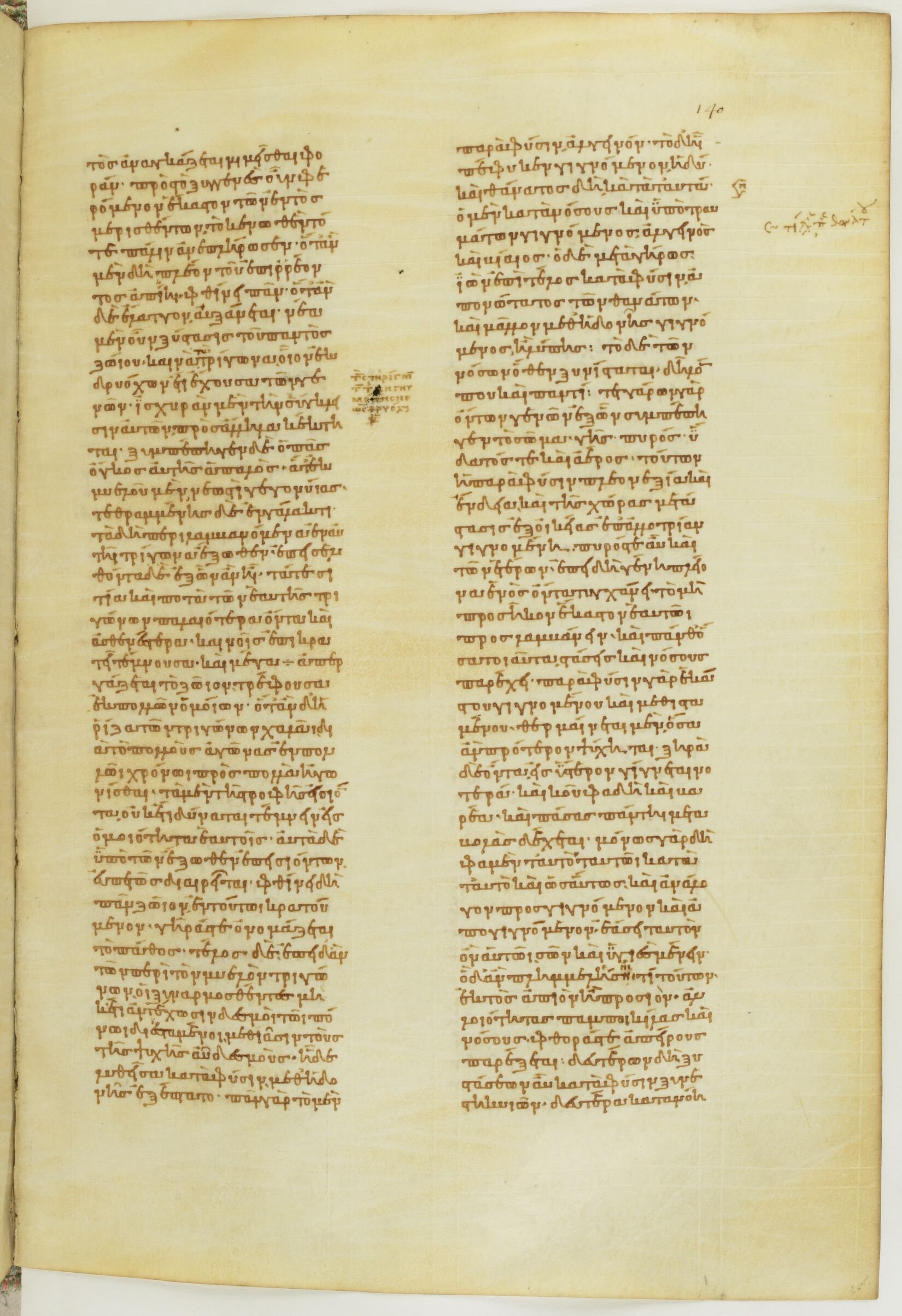
The manuscript is Paris, Bibliothèque nationale de France, grec 1807, known to editors as Plato A. It was copied in Constantinople around 850-875 by the scribe of the so-called philosophical collection, and is the oldest surviving medieval manuscript of the Timaeus and Critias (tetralogies VIII-IX: Clitophon, Republic, Timaeus, Critias, Minos, Laws, Epinomis, Letters). Each page has two columns of 44 lines. The Timaeus fills fol. 114r-144v and the Critias fol. 145r-151r.
On the manuscript this page of text runs over fol. 139v col. b to fol. 140r col. b. Each section below is linked to the folio side(s) that carry it. The mapping comes from reading the first words of every column on the images and finding them in Burnet's text: fol. 139v col. b begins ‹-ναπνοῆς, ὅθεν ὁ λόγος ὥρμησεν, κατὰ› (Tim. 80d); fol. 140r col. a begins ‹-τὸς ἀναγκάζεται μιμεῖσθαι φοράν· πρὸς τὸ› (Tim. 81b); fol. 140r col. b begins ‹παρὰ φύσιν ἀλγεινόν, τὸ δʼ ᾗ› (Tim. 81e).
The Greek is John Burnet's critical text (Oxford, 1902), not a transcription of this manuscript; the scribe's spelling, accents and occasional readings differ from it. The English is R. G. Bury's Loeb translation (1929).
How was this verified? (Provenance)
Where on the image
Tim. 81a stands in Paris gr. 1807, fol. 139v col. b. Checked on the image (column openings read on the BnF photographs and found in Burnet's text, quoted in Burnet's spelling): fol. 139v col. b begins ‹-ναπνοῆς, ὅθεν ὁ λόγος ὥρμησεν, κατὰ› (Tim. 80d).
ὅθεν ὑδρευόμενα ἕκαστα πληροῖ τὴν τοῦ κενουμένου βάσιν· ὁ δὲ τρόπος τῆς πληρώσεως ἀποχωρήσεώς τε γίγνεται καθάπερ ἐν τῷ παντὶ παντὸς ἡ φορὰ γέγονεν, ἣν τὸ συγγενὲς πᾶν φέρεται πρὸς ἑαυτό. τὰ μὲν γὰρ δὴ περιεστῶτα ἐκτὸς ἡμᾶς τήκει τε ἀεὶ καὶ διανέμει πρὸς ἕκαστον εἶδος τὸ ὁμόφυλον ἀποπέμποντα, τὰ δὲ ἔναιμα αὖ, κερματισθέντα ἐντὸς παρʼ ἡμῖν καὶ περιειλημμένα ὥσπερ ὑπʼ
and of the whole body, each part drawing therefrom supplies of fluid and filling up the room of the evacuated matter. And the processes of filling and evacuating take place just as the motion of everything in the Universe takes place, namely, according to the law that every kindred substance moves towards its kind. For the bodies which surround us without are always dissolving us and sending off and distributing to each species of substance what is akin thereto; while the blood-particles, again, being minced up within us and surrounded by the structure of each creature as by a Heaven, are compelled to copy the motion of the whole;
Where on the image
Tim. 81b stands in Paris gr. 1807, fol. 139v col. b to fol. 140r col. a. Checked on the image (column openings read on the BnF photographs and found in Burnet's text, quoted in Burnet's spelling): fol. 139v col. b begins ‹-ναπνοῆς, ὅθεν ὁ λόγος ὥρμησεν, κατὰ› (Tim. 80d); fol. 140r col. a begins ‹-τὸς ἀναγκάζεται μιμεῖσθαι φοράν· πρὸς τὸ› (Tim. 81b).
οὐρανοῦ συνεστῶτος ἑκάστου τοῦ ζῴου, τὴν τοῦ παντὸς ἀναγκάζεται μιμεῖσθαι φοράν· πρὸς τὸ συγγενὲς οὖν φερόμενον ἕκαστον τῶν ἐντὸς μερισθέντων τὸ κενωθὲν τότε πάλιν ἀνεπλήρωσεν. ὅταν μὲν δὴ πλέον τοῦ ἐπιρρέοντος ἀπίῃ, φθίνει πᾶν, ὅταν δὲ ἔλαττον, αὐξάνεται. νέα μὲν οὖν σύστασις τοῦ παντὸς ζῴου, καινὰ τὰ τρίγωνα οἷον ἐκ δρυόχων ἔτι ἔχουσα τῶν γενῶν, ἰσχυρὰν μὲν τὴν σύγκλεισιν αὐτῶν πρὸς ἄλληλα κέκτηται, συμπέπηγεν δὲ ὁ πᾶς ὄγκος αὐτῆς
hence, when each of the particles that are divided up inside moves towards its kin, it fills up again the emptied place. And when what passes out is more than the inflow every creature decays, but when less, it increases. Now when the structure of the whole creature is new, inasmuch as the triangles which form its elements are still fresh, and as it were straight from the stocks, it keeps them firmly interlocked one with another, and the whole mass of it is of a soft composition,
Where on the image
Tim. 81c stands in Paris gr. 1807, fol. 140r col. a. Checked on the image (column openings read on the BnF photographs and found in Burnet's text, quoted in Burnet's spelling): fol. 140r col. a begins ‹-τὸς ἀναγκάζεται μιμεῖσθαι φοράν· πρὸς τὸ› (Tim. 81b).
ἁπαλός, ἅτʼ ἐκ μυελοῦ μὲν νεωστὶ γεγονυίας, τεθραμμένης δὲ ἐν γάλακτι· τὰ δὴ περιλαμβανόμενα ἐν αὐτῇ τρίγωνα ἔξωθεν ἐπεισελθόντα, ἐξ ὧν ἂν ᾖ τά τε σιτία καὶ ποτά, τῶν ἑαυτῆς τριγώνων παλαιότερα ὄντα καὶ ἀσθενέστερα καινοῖς ἐπικρατεῖ τέμνουσα, καὶ μέγα ἀπεργάζεται τὸ ζῷον τρέφουσα ἐκ πολλῶν ὁμοίων. ὅταν δʼ ἡ ῥίζα τῶν τριγώνων χαλᾷ διὰ τὸ πολλοὺς ἀγῶνας ἐν πολλῷ χρόνῳ πρὸς πολλὰ
seeing that it is newly produced from marrow and nourished on milk; and as the triangles contained therein, which have invaded it from without and go to form the meats and drinks, are older and weaker than its own, it divides and overcomes them with its own new triangles, and thus renders the creature large by feeding it on many similar substances. But when the root of the triangles grows slack owing to their having fought many fights during long periods,
Where on the image
Tim. 81d stands in Paris gr. 1807, fol. 140r col. a. Checked on the image (column openings read on the BnF photographs and found in Burnet's text, quoted in Burnet's spelling): fol. 140r col. a begins ‹-τὸς ἀναγκάζεται μιμεῖσθαι φοράν· πρὸς τὸ› (Tim. 81b).
ἠγωνίσθαι, τὰ μὲν τῆς τροφῆς εἰσιόντα οὐκέτι δύναται τέμνειν εἰς ὁμοιότητα ἑαυτοῖς, αὐτὰ δὲ ὑπὸ τῶν ἔξωθεν ἐπεισιόντων εὐπετῶς διαιρεῖται· φθίνει δὴ πᾶν ζῷον ἐν τούτῳ κρατούμενον, γῆράς τε ὀνομάζεται τὸ πάθος. τέλος δέ, ἐπειδὰν τῶν περὶ τὸν μυελὸν τριγώνων οἱ συναρμοσθέντες μηκέτι ἀντέχωσιν δεσμοὶ τῷ πόνῳ διιστάμενοι, μεθιᾶσιν τοὺς τῆς ψυχῆς αὖ δεσμούς, ἡ δὲ λυθεῖσα κατὰ φύσιν μεθʼ ἡδονῆς
they are no longer able to divide the entering triangles of the food and assimilate them to themselves, but are themselves easily divided by those which enter from without; and in this condition every animal is overpowered and decays; and this process is named old age. And finally, when the bonds of the triangles in the marrow which have been fitly framed together no longer resist the strain but fall asunder, they let slip in turn the bonds of the soul, and it, when thus naturally set loose, flies out gladly;
Where on the image
Tim. 81e stands in Paris gr. 1807, fol. 140r col. a to fol. 140r col. b. Checked on the image (column openings read on the BnF photographs and found in Burnet's text, quoted in Burnet's spelling): fol. 140r col. a begins ‹-τὸς ἀναγκάζεται μιμεῖσθαι φοράν· πρὸς τὸ› (Tim. 81b); fol. 140r col. b begins ‹παρὰ φύσιν ἀλγεινόν, τὸ δʼ ᾗ› (Tim. 81e).
ἐξέπτατο· πᾶν γὰρ τὸ μὲν παρὰ φύσιν ἀλγεινόν, τὸ δʼ ᾗ πέφυκεν γιγνόμενον ἡδύ. καὶ θάνατος δὴ κατὰ ταὐτὰ ὁ μὲν κατὰ νόσους καὶ ὑπὸ τραυμάτων γιγνόμενος ἀλγεινὸς καὶ βίαιος, ὁ δὲ μετὰ γήρως ἰὼν ἐπὶ τέλος κατὰ φύσιν ἀπονώτατος τῶν θανάτων καὶ μᾶλλον μεθʼ ἡδονῆς γιγνόμενος ἢ λύπης.
τὸ δὲ τῶν νόσων ὅθεν συνίσταται, δῆλόν που καὶ παντί.
for whereas every process which is contrary to nature is painful, that which takes place naturally is pleasurable. So too, in like manner, the death which occurs in consequence of disease or by wounds is painful and violent, but that which follows on old age and constitutes a natural end is the least grievous of deaths and is accompanied by more of pleasure than of pain.
The origin of disease is plain, of course, to everybody.
Notes
- Greek: John Burnet, Platonis Opera IV (Oxford, 1902), via Perseus canonical-greekLit; Burnet's text is a critical edition, so its wording can differ from the manuscript shown.
- English: R. G. Bury, Plato IX (Loeb Classical Library, 1929), via Perseus. Bury's footnotes are not reproduced. Quotation marks stand where Perseus marks quoted speech.
- Stephanus sections (a-e) are those of the 1578 Stephanus edition as given by Burnet and Bury; Bury's section breaks can fall a few words away from Burnet's because English word order differs.
Cite
Sources
- Source: Paris, BnF grec 1807 (Plato A, c. 850-875) fol. 139v-140r via BnF IIIF + Burnet's Greek (Perseus) + R. G. Bury's English (Loeb 1929, Perseus) (holding institution)
- Critical edition: Burnet, Platonis Opera IV (1902), via Perseus
← previous · → next · v cycle view · l back to library