Plato, Timaeus 90a-90e: the care of the divine part in us
Introduction
Stephanus page 90 of Plato's Timaeus (90a-90e): the care of the divine part in us.
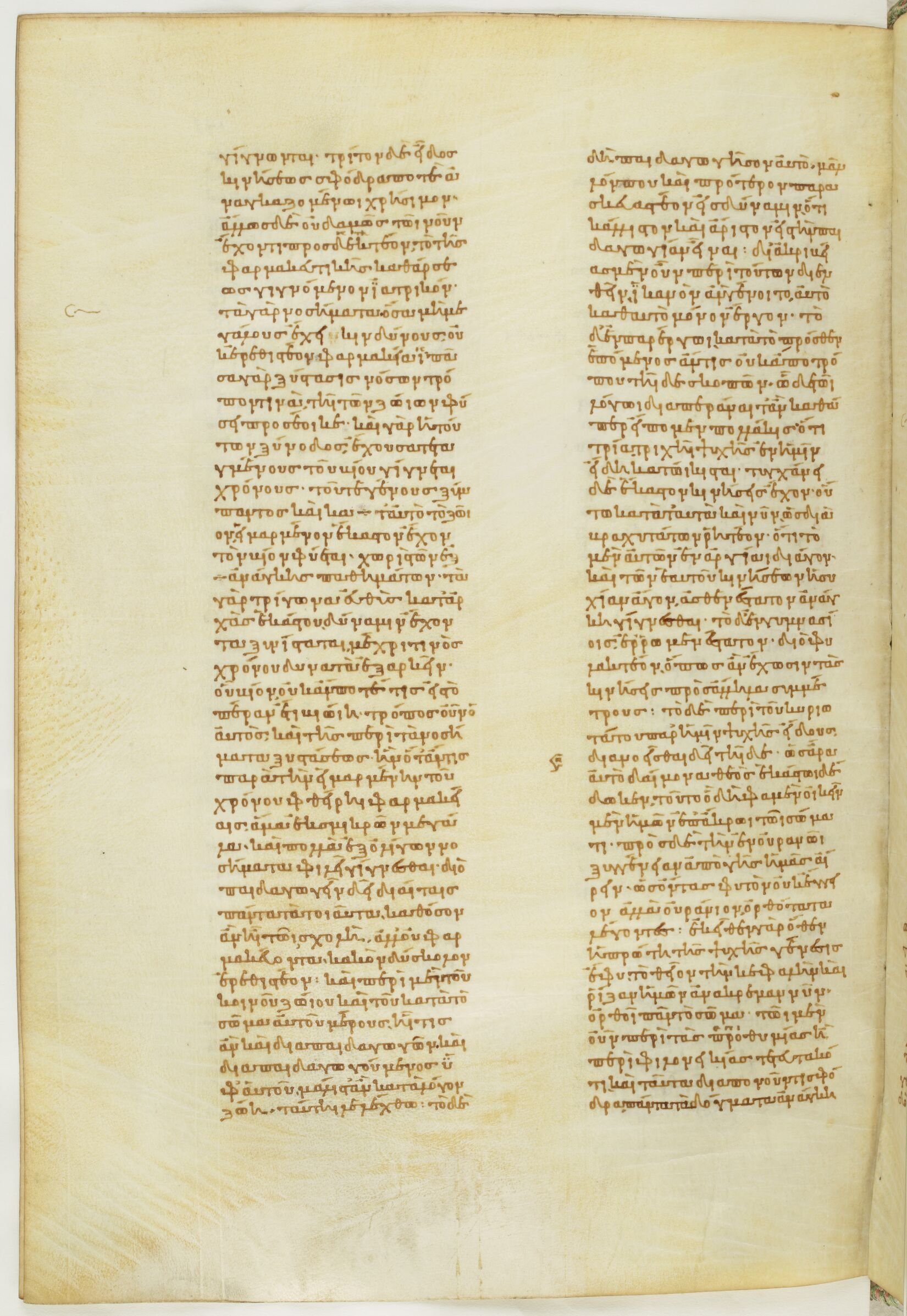
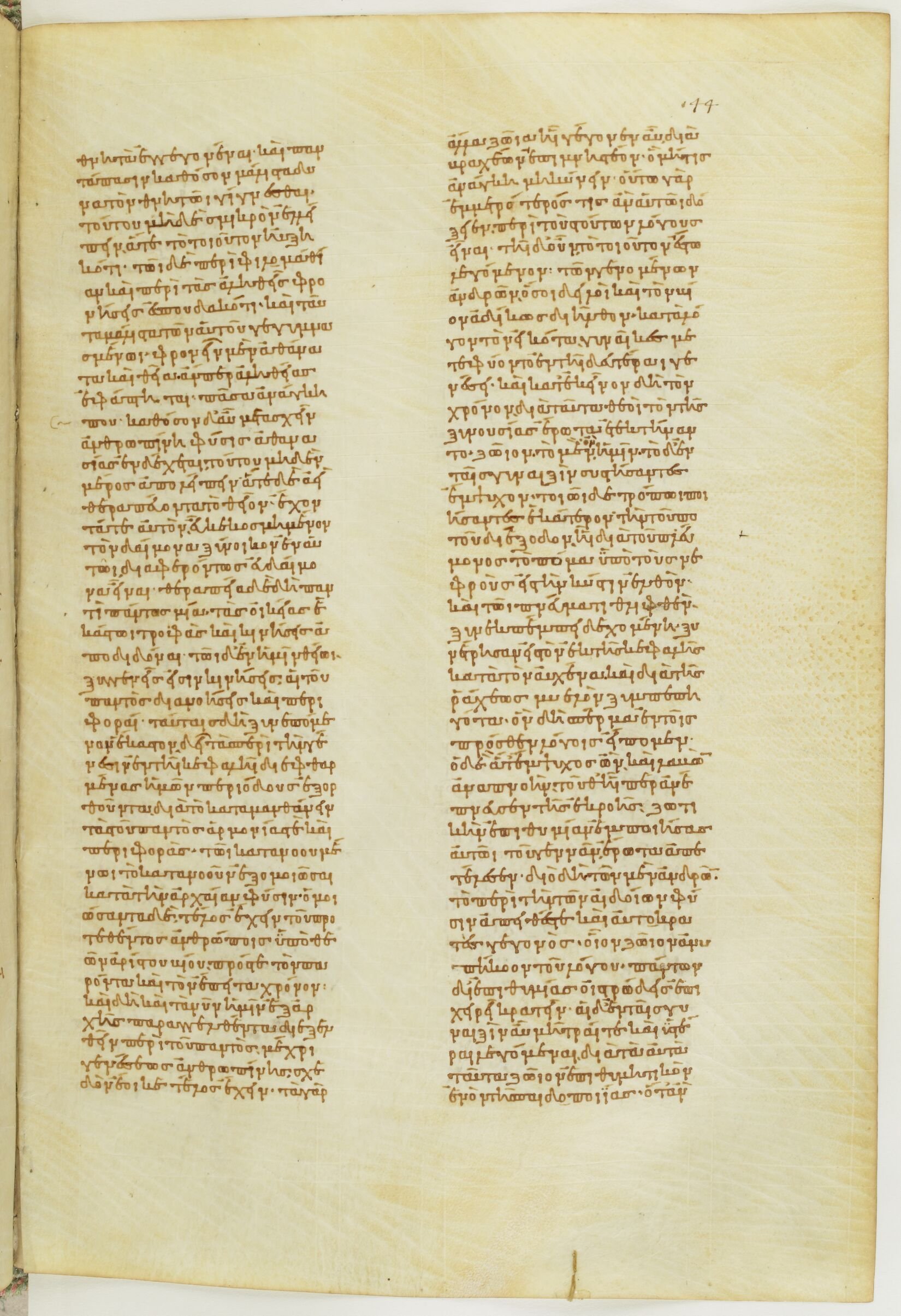
The manuscript is Paris, Bibliothèque nationale de France, grec 1807, known to editors as Plato A. It was copied in Constantinople around 850-875 by the scribe of the so-called philosophical collection, and is the oldest surviving medieval manuscript of the Timaeus and Critias (tetralogies VIII-IX: Clitophon, Republic, Timaeus, Critias, Minos, Laws, Epinomis, Letters). Each page has two columns of 44 lines. The Timaeus fills fol. 114r-144v and the Critias fol. 145r-151r.
On the manuscript this page of text runs over fol. 143v col. b to fol. 144r col. b. Each section below is linked to the folio side(s) that carry it. The mapping comes from reading the first words of every column on the images and finding them in Burnet's text: fol. 143v col. b begins ‹παιδαγωγῆσον αὐτὸ μᾶλλόν που καὶ πρότερον› (Tim. 89d); fol. 144r col. a begins ‹θνητὰ ἐγγεγονέναι, καὶ παντάπασιν καθʼ ὅσον› (Tim. 90b); fol. 144r col. b begins ‹ἄλλα ζῷα ᾗ γέγονεν αὖ, διὰ› (Tim. 90e).
The Greek is John Burnet's critical text (Oxford, 1902), not a transcription of this manuscript; the scribe's spelling, accents and occasional readings differ from it. The English is R. G. Bury's Loeb translation (1929).
How was this verified? (Provenance)
Where on the image
Tim. 90a stands in Paris gr. 1807, fol. 143v col. b. Checked on the image (column openings read on the BnF photographs and found in Burnet's text, quoted in Burnet's spelling): fol. 143v col. b begins ‹παιδαγωγῆσον αὐτὸ μᾶλλόν που καὶ πρότερον› (Tim. 89d).
διὸ φυλακτέον ὅπως ἂν ἔχωσιν τὰς κινήσεις πρὸς ἄλληλα συμμέτρους. τὸ δὲ δὴ περὶ τοῦ κυριωτάτου παρʼ ἡμῖν ψυχῆς εἴδους διανοεῖσθαι δεῖ τῇδε, ὡς ἄρα αὐτὸ δαίμονα θεὸς ἑκάστῳ δέδωκεν, τοῦτο ὃ δή φαμεν οἰκεῖν μὲν ἡμῶν ἐπʼ ἄκρῳ τῷ σώματι, πρὸς δὲ τὴν ἐν οὐρανῷ συγγένειαν ἀπὸ γῆς ἡμᾶς αἴρειν ὡς ὄντας φυτὸν οὐκ ἔγγειον ἀλλὰ οὐράνιον, ὀρθότατα λέγοντες· ἐκεῖθεν γάρ, ὅθεν ἡ πρώτη τῆς ψυχῆς γένεσις ἔφυ, τὸ θεῖον τὴν κεφαλὴν καὶ ῥίζαν ἡμῶν
wherefore care must be taken that they have their motions relatively to one another in due proportion. And as regards the most lordly kind of our soul, we must conceive of it in this wise: we declare that God has given to each of us, as his daemon, that kind of soul which is housed in the top of our body and which raises us—seeing that we are not an earthly but a heavenly plant up from earth towards our kindred in the heaven. And herein we speak most truly; for it is by suspending our head and root from that region whence the substance of our soul first came that the Divine Power
Where on the image
Tim. 90b stands in Paris gr. 1807, fol. 143v col. b to fol. 144r col. a. Checked on the image (column openings read on the BnF photographs and found in Burnet's text, quoted in Burnet's spelling): fol. 143v col. b begins ‹παιδαγωγῆσον αὐτὸ μᾶλλόν που καὶ πρότερον› (Tim. 89d); fol. 144r col. a begins ‹θνητὰ ἐγγεγονέναι, καὶ παντάπασιν καθʼ ὅσον› (Tim. 90b).
ἀνακρεμαννὺν ὀρθοῖ πᾶν τὸ σῶμα. τῷ μὲν οὖν περὶ τὰς ἐπιθυμίας ἢ περὶ φιλονικίας τετευτακότι καὶ ταῦτα διαπονοῦντι σφόδρα πάντα τὰ δόγματα ἀνάγκη θνητὰ ἐγγεγονέναι, καὶ παντάπασιν καθʼ ὅσον μάλιστα δυνατὸν θνητῷ γίγνεσθαι, τούτου μηδὲ σμικρὸν ἐλλείπειν, ἅτε τὸ τοιοῦτον ηὐξηκότι· τῷ δὲ περὶ φιλομαθίαν καὶ περὶ τὰς ἀληθεῖς φρονήσεις ἐσπουδακότι καὶ ταῦτα μάλιστα τῶν αὑτοῦ γεγυμνασμένῳ
keeps upright our whole body. Whoso, then, indulges in lusts or in contentions and devotes himself overmuch thereto must of necessity be filled with opinions that are wholly mortal, and altogether, so far as it is possible to become mortal, fall not short of this in even a small degree, inasmuch as he has made great his mortal part. But he who has seriously devoted himself to learning and to true thoughts, and has exercised these qualities above all his others,
Where on the image
Tim. 90c stands in Paris gr. 1807, fol. 144r col. a. Checked on the image (column openings read on the BnF photographs and found in Burnet's text, quoted in Burnet's spelling): fol. 144r col. a begins ‹θνητὰ ἐγγεγονέναι, καὶ παντάπασιν καθʼ ὅσον› (Tim. 90b).
φρονεῖν μὲν ἀθάνατα καὶ θεῖα, ἄνπερ ἀληθείας ἐφάπτηται, πᾶσα ἀνάγκη που, καθʼ ὅσον δʼ αὖ μετασχεῖν ἀνθρωπίνῃ φύσει ἀθανασίας ἐνδέχεται, τούτου μηδὲν μέρος ἀπολείπειν, ἅτε δὲ ἀεὶ θεραπεύοντα τὸ θεῖον ἔχοντά τε αὐτὸν εὖ κεκοσμημένον τὸν δαίμονα σύνοικον ἑαυτῷ, διαφερόντως εὐδαίμονα εἶναι. θεραπεία δὲ δὴ παντὶ παντὸς μία, τὰς οἰκείας ἑκάστῳ τροφὰς καὶ κινήσεις ἀποδιδόναι. τῷ δʼ ἐν ἡμῖν θείῳ συγγενεῖς εἰσιν κινήσεις αἱ τοῦ παντὸς διανοήσεις
must necessarily and inevitably think thoughts that are immortal and divine, if so be that he lays hold on truth, and in so far as it is possible for human nature to partake of immortality, he must fall short thereof in no degree; and inasmuch as he is for ever tending his divine part and duly magnifying that daemon who dwells along with him, he must be supremely blessed. And the way of tendance of every part by every man is one—namely, to supply each with its own congenial food and motion; and for the divine part within us the congenial motions
Where on the image
Tim. 90d stands in Paris gr. 1807, fol. 144r col. a. Checked on the image (column openings read on the BnF photographs and found in Burnet's text, quoted in Burnet's spelling): fol. 144r col. a begins ‹θνητὰ ἐγγεγονέναι, καὶ παντάπασιν καθʼ ὅσον› (Tim. 90b).
καὶ περιφοραί· ταύταις δὴ συνεπόμενον ἕκαστον δεῖ, τὰς περὶ τὴν γένεσιν ἐν τῇ κεφαλῇ διεφθαρμένας ἡμῶν περιόδους ἐξορθοῦντα διὰ τὸ καταμανθάνειν τὰς τοῦ παντὸς ἁρμονίας τε καὶ περιφοράς, τῷ κατανοουμένῳ τὸ κατανοοῦν ἐξομοιῶσαι κατὰ τὴν ἀρχαίαν φύσιν, ὁμοιώσαντα δὲ τέλος ἔχειν τοῦ προτεθέντος ἀνθρώποις ὑπὸ θεῶν ἀρίστου βίου πρός τε τὸν παρόντα καὶ τὸν ἔπειτα χρόνον.
are the intellections and revolutions of the Universe. These each one of us should follow, rectifying the revolutions within our head, which were distorted at our birth, by learning the harmonies and revolutions of the Universe, and thereby making the part that thinks like unto the object of its thought, in accordance with its original nature, and having achieved this likeness attain finally to that goal of life which is set before men by the gods as the most good both for the present and for the time to come.
Where on the image
Tim. 90e stands in Paris gr. 1807, fol. 144r col. a to fol. 144r col. b. Checked on the image (column openings read on the BnF photographs and found in Burnet's text, quoted in Burnet's spelling): fol. 144r col. a begins ‹θνητὰ ἐγγεγονέναι, καὶ παντάπασιν καθʼ ὅσον› (Tim. 90b); fol. 144r col. b begins ‹ἄλλα ζῷα ᾗ γέγονεν αὖ, διὰ› (Tim. 90e).
καὶ δὴ καὶ τὰ νῦν ἡμῖν ἐξ ἀρχῆς παραγγελθέντα διεξελθεῖν περὶ τοῦ παντὸς μέχρι γενέσεως ἀνθρωπίνης σχεδὸν ἔοικε τέλος ἔχειν. τὰ γὰρ ἄλλα ζῷα ᾗ γέγονεν αὖ, διὰ βραχέων ἐπιμνηστέον, ὃ μή τις ἀνάγκη μηκύνειν· οὕτω γὰρ ἐμμετρότερός τις ἂν αὑτῷ δόξειεν περὶ τοὺς τούτων λόγους εἶναι. τῇδʼ οὖν τὸ τοιοῦτον ἔστω λεγόμενον.
τῶν γενομένων ἀνδρῶν ὅσοι δειλοὶ καὶ τὸν βίον ἀδίκως διῆλθον, κατὰ λόγον τὸν εἰκότα γυναῖκες μετεφύοντο ἐν τῇ δευτέρᾳ
And now the task prescribed for us at the beginning to give a description of the Universe up to the production of mankind, would appear to be wellnigh completed. For as regards the mode in which the rest of living creatures have been produced we must make but a brief statement, seeing that there is no need to speak at length; for by such brevity we will feel ourselves to be preserving a right proportion in our handling of these subjects. Wherefore let this matter be treated as follows.
According to the probable account, all those creatures generated as men who proved themselves cowardly and spent their lives in wrong-doing were transformed,
Notes
- Greek: John Burnet, Platonis Opera IV (Oxford, 1902), via Perseus canonical-greekLit; Burnet's text is a critical edition, so its wording can differ from the manuscript shown.
- English: R. G. Bury, Plato IX (Loeb Classical Library, 1929), via Perseus. Bury's footnotes are not reproduced. Quotation marks stand where Perseus marks quoted speech.
- Stephanus sections (a-e) are those of the 1578 Stephanus edition as given by Burnet and Bury; Bury's section breaks can fall a few words away from Burnet's because English word order differs.
Cite
Sources
- Source: Paris, BnF grec 1807 (Plato A, c. 850-875) fol. 143v-144r via BnF IIIF + Burnet's Greek (Perseus) + R. G. Bury's English (Loeb 1929, Perseus) (holding institution)
- Critical edition: Burnet, Platonis Opera IV (1902), via Perseus
← previous · → next · v cycle view · l back to library