John, Chapter 2 (Codex Washingtonianus)
Introduction
John 2 from Codex Washingtonianus (the Freer Gospels, Gregory-Aland 032, Freer Gallery of Art F1906.274), a parchment codex of the four Gospels written in Egypt in the late 4th or early 5th century and bought by Charles Lang Freer from the dealer Ali Arabi at Giza in 1906. It is one of the oldest nearly complete Gospel books in existence. The Gospels stand in the so-called Western order, Matthew, John, Luke, Mark, and the text is famously block-mixed: the copyist drew on several exemplars of different textual character, so the text type changes in blocks within a single Gospel. After Mark 16:14 the codex carries the Freer Logion, a saying found in no other manuscript. Two passages are lost to damage: Mark 15:13-37 and John 14:26-16:6.
- Scan: each section is shown with the actual page of the codex that carries those verses, from the Freer Gallery's own photographs of F1906.274 served by the Smithsonian IIIF service (ids.si.edu). Which page holds which verse comes from the verse index of the Center for the Study of New Testament Manuscripts (CSNTM), whose photographs of the codex are the same shots; every CSNTM page was matched to its Smithsonian image by pixel comparison before use. Where a verse begins on one page and ends on the next, both pages are listed. For this chapter the page of each verse is taken from the transcription itself, which records where every page begins; CSNTM's index confirms which photograph shows that page.
- Greek: the manuscript's own text, from a diplomatic transcription (see Greek text below), with Tischendorf's 8th critical edition (1869) for comparison.
- English: the King James Version (1611, public domain), verbatim from bible-api.com. The KJV translates the later Byzantine text, so it will not always match the Greek shown or the reading of the codex.
Greek text: a diplomatic transcription of Codex Washingtonianus made by the International Greek New Testament Project (IGNTP), transcription of John in GA 032, version 2.1 (2013), published under a Creative Commons Attribution 4.0 licence. It gives the letters as the first scribe wrote them: no accents or breathings, the scribe's own spelling, and the sacred names in their contracted form (θς for θεος, ις for ιησους, κς for κυριος; the overline is not reproduced). A stroke ¯ after a letter (for example μενω¯, το¯) is the scribe's abbreviation for a final ν, kept as the transcription gives it. Corrections by later hands are not shown. Letters in square brackets are not legible on the page and were restored by the transcribers, a dot under a letter marks an uncertain reading, and [...] marks text lost to damage. Beneath each section, for comparison, is Tischendorf's 8th critical edition (1869). Where the two differ, the transcription is what the manuscript says. Each section is shown with the page on which the transcription places its verses.
Manuscript note: John 1:1-5:11 in this codex is on a replacement quire (fols. 57-64) written by a later hand; its transcription is the IGNTP file for that supplement (04_032S).
How was this verified? (Provenance)
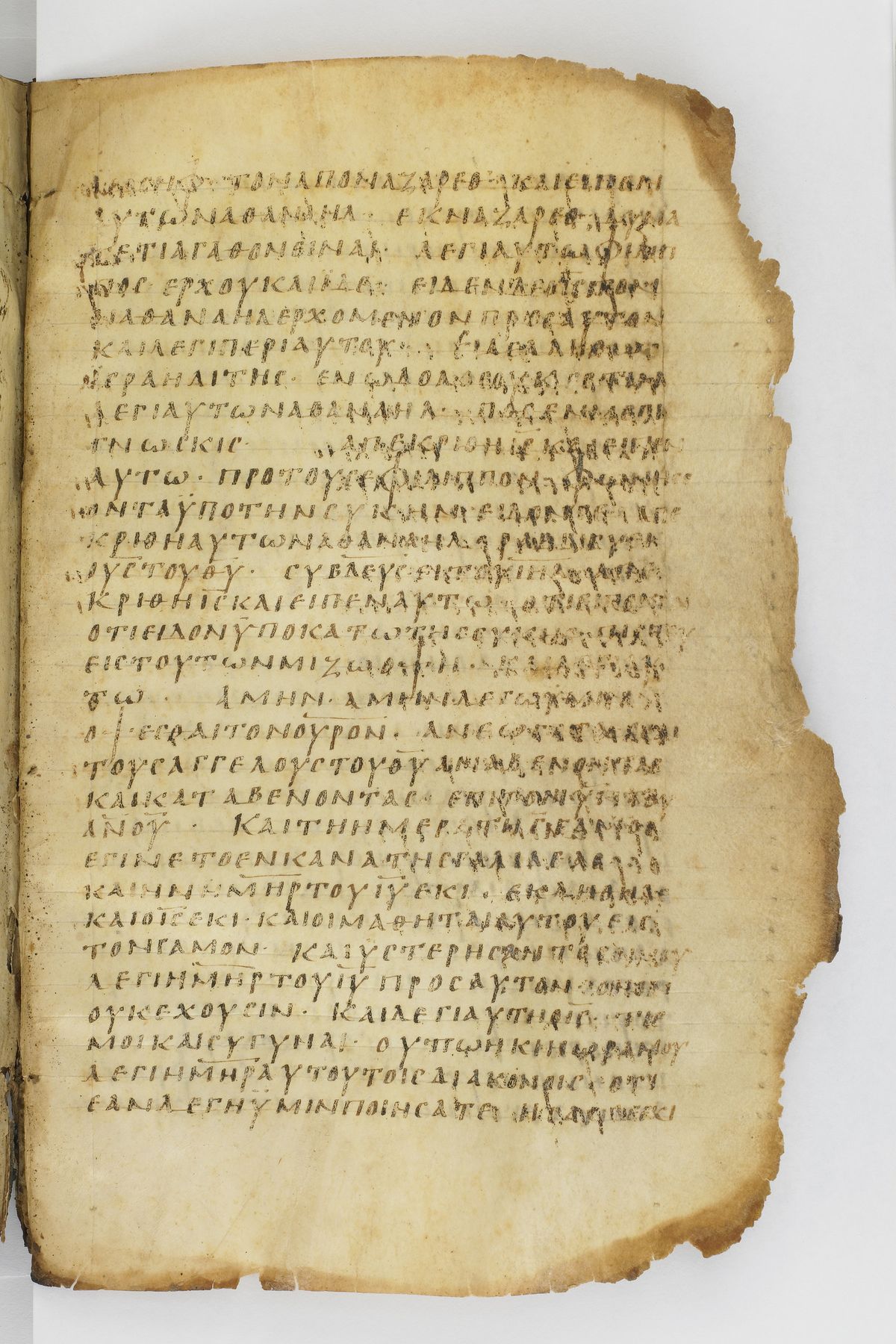
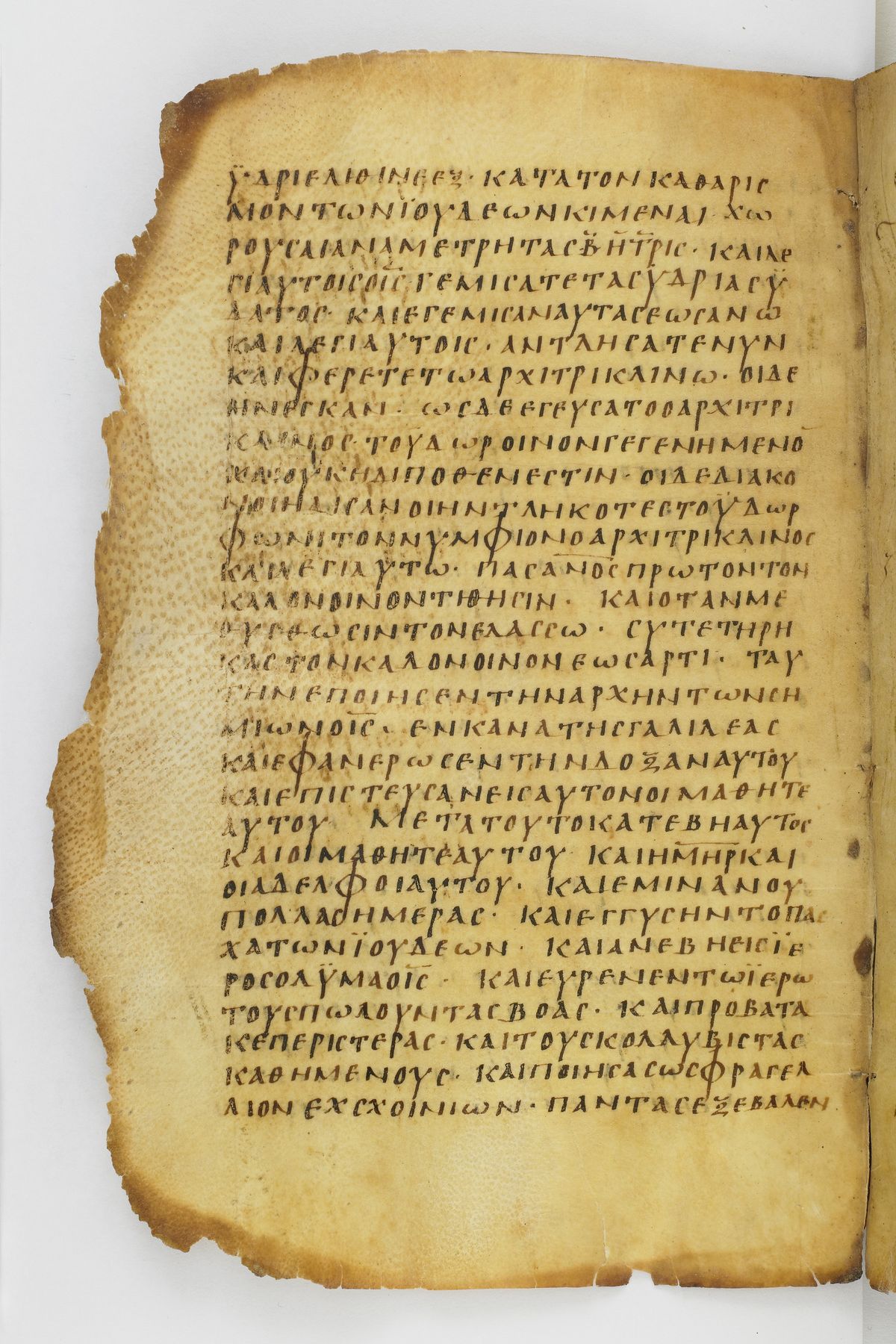
Where on the image
Page from the IGNTP transcription: verses 1-6 on fol. 59r, CSNTM GA_032_0117; verse 6 continues on fol. 59v, CSNTM GA_032_0118 (which begins 'υδριε λιθινε εξ').
1και τη ημερα τη γ γαμος εγινετο εν κανα της γαλιλεας και ην η μηρ του ιυ εκι 2εκληθη δε και ο ις εκι και οι μαθηται αυτου εις τον γαμον 3και υστερησαντος οινου λεγι η μηρ του ιυ προς αυτον οινον ουκ εχουσιν 4και λεγι αυτη ο ις τι εμοι και συ γυναι ουπω ηκι η ωρα μου 5λεγι η μηρ αυτου τοις διακονοις ο τι εαν λεγη υμιν ποιησατε 6ησαν δε εκι υδριε λιθινε εξ κατα τον καθαρισμον των ιουδεων κιμεναι χωρουσαι ανα μετρητας β η τρις
Compare: Tischendorf 8th edition (1869)
1Καὶ τῇ ἡμέρᾳ τῇ τρίτῃ γάμος ἐγένετο ἐν Κανὰ τῆς Γαλιλαίας, καὶ ἦν ἡ μήτηρ τοῦ Ἰησοῦ ἐκεῖ· 2ἐκλήθη δὲ καὶ ὁ Ἰησοῦς καὶ οἱ μαθηταὶ αὐτοῦ εἰς τὸν γάμον. 3καὶ οἶνον οὐκ εἶχον, ὅτι συνετελέσθη ὁ οἶνος τοῦ γάμου. εἶτα λέγει ἡ μήτηρ τοῦ Ἰησοῦ πρὸς αὐτόν· οἶνος οὐκ ἔστιν. 4λέγει αὐτῇ ὁ Ἰησοῦς· τί ἐμοὶ καὶ σοί, γύναι; οὔπω ἥκει ἡ ὥρα μου. 5λέγει ἡ μήτηρ αὐτοῦ τοῖς διακόνοις· ὅ τι ἂν λέγῃ ὑμῖν, ποιήσατε. 6ἦσαν δὲ ἐκεῖ λίθιναι ὑδρίαι ἓξ κατὰ τὸν καθαρισμὸν τῶν Ἰουδαίων κείμεναι, χωροῦσαι ἀνὰ μετρητὰς δύο ἢ τρεῖς.
1And the third day there was a marriage in Cana of Galilee; and the mother of Jesus was there: 2And both Jesus was called, and his disciples, to the marriage. 3And when they wanted wine, the mother of Jesus saith unto him, They have no wine. 4Jesus saith unto her, Woman, what have I to do with thee? mine hour is not yet come. 5His mother saith unto the servants, Whatsoever he saith unto you, do it. 6And there were set there six waterpots of stone, after the manner of the purifying of the Jews, containing two or three firkins apiece.
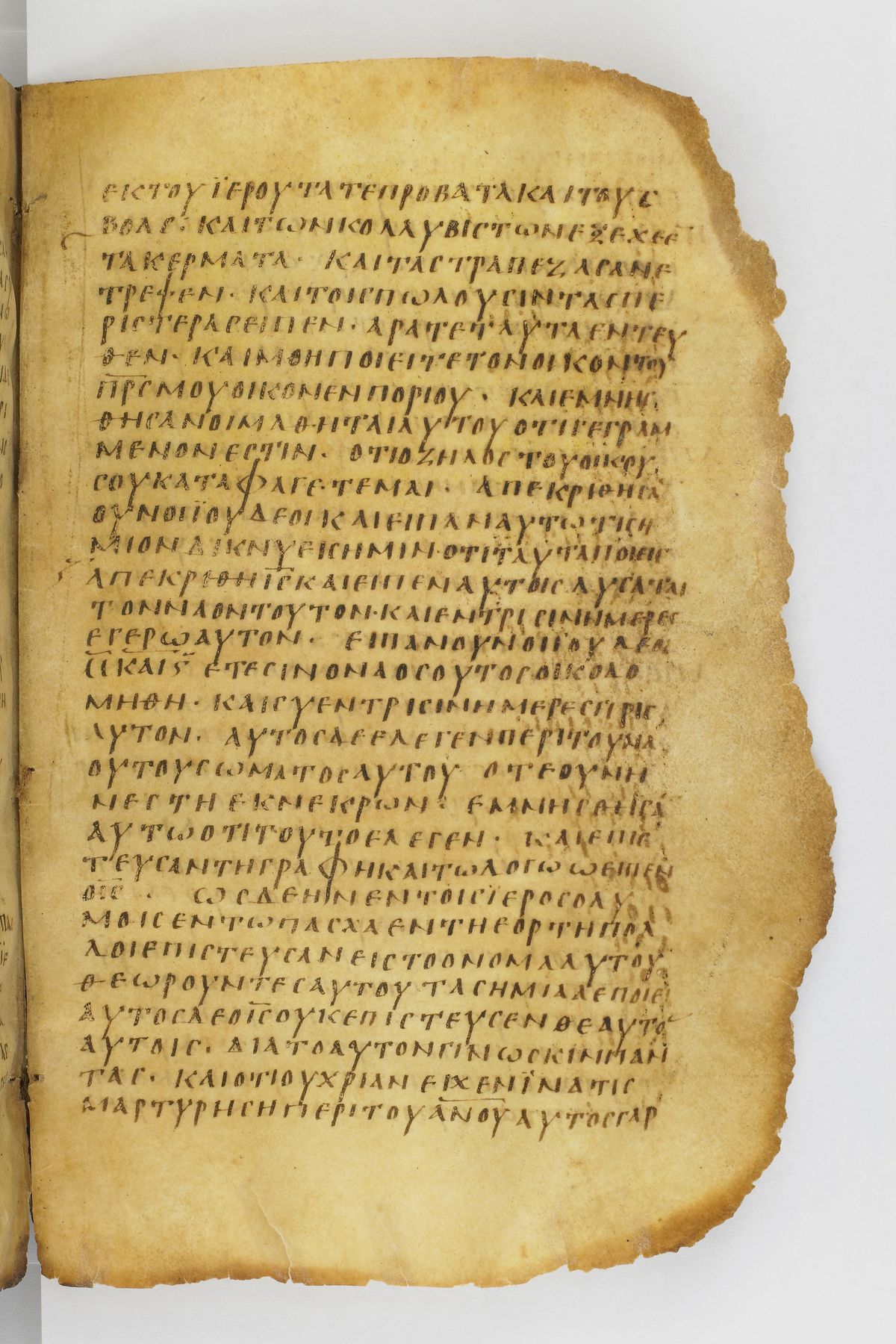
Where on the image
Page from the IGNTP transcription: verses 7-15 on fol. 59v, CSNTM GA_032_0118; verse 15 continues on fol. 60r, CSNTM GA_032_0119 (which begins 'εκ του ιερου').
7και λεγι αυτοις ο ις γεμισατε τας υδριας υδατος και εγεμισαν αυτας εως ανω 8και λεγι αυτοις αντλησατε νυν και φερετε τω αρχιτρικλινω οι δε ηνεγκαν 9ως δε εγευσατο ο αρχιτρικλινος το υδωρ οινον γεγενημενο¯ και ουκ ηδι ποθεν εστιν οι δε διακονοι ηδισαν οι ηντληκοτες το υδωρ φωνι τον νυμφιον ο αρχιτρικλινος 10και λεγι αυτω πας ανος πρωτον τον καλον οινον τιθησιν και οταν μεθυσθωσιν τον ελασσω συ τετηρηκας τον καλον οινον εως αρτι 11ταυτην εποιησεν την αρχην των σημιων ο ις εν κανα της γαλιλεας και εφανερωσεν την δοξαν αυτου και επιστευσαν εις αυτον οι μαθητε αυτου 12μετα τουτο κατεβη αυτος και οι μαθητε αυτου και η μηρ και οι αδελφοι αυτου και εμιναν ου πολλας ημερας 13και εγγυς ην το πασχα των ιουδεων και ανεβη εις ιεροσολυμα ο ις 14και ευρεν εν τω ιερω τους πωλουντας βοας και προβατα κε περιστερας και τους κολλυβιστας καθημενους 15και ποιησας ως φραγελλιον εχ σχοινιων παντας εξεβαλεν εκ του ιερου τα τε προβατα και τους βοας και των κολλυβιστων εξεχεε¯ τα κερματα και τας τραπεζας ανεστρεψεν
Compare: Tischendorf 8th edition (1869)
7λέγει αὐτοῖς ὁ Ἰησοῦς· γεμίσατε τὰς ὑδρίας ὕδατος. καὶ ἐγέμισαν αὐτὰς ἕως ἄνω. 8καὶ λέγει αὐτοῖς· ἀντλήσατε νῦν καὶ φέρετε τῷ ἀρχιτρικλίνῳ. οἱ δὲ ἤνεγκαν. 9ὡς δὲ ἐγεύσατο ὁ ἀρχιτρίκλινος τὸ ὕδωρ οἶνον γεγενημένον, καὶ οὐκ ᾔδει πόθεν ἐστίν, οἱ δὲ διάκονοι ᾔδεισαν οἱ ἠντληκότες τὸ ὕδωρ, φωνεῖ τὸν νυμφίον ὁ ἀρχιτρίκλινος 10καὶ λέγει αὐτῷ· πᾶς ἄνθρωπος πρῶτον τὸν καλὸν οἶνον τίθησιν, καὶ ὅταν μεθυσθῶσιν τὸν ἐλάσσω· σὺ τετήρηκας τὸν καλὸν οἶνον ἕως ἄρτι. 11ταύτην ἐποίησεν ἀρχὴν τῶν σημείων ὁ Ἰησοῦς ἐν Κανὰ τῆς Γαλιλαίας καὶ ἐφανέρωσεν τὴν δόξαν αὐτοῦ, καὶ ἐπίστευσαν εἰς αὐτὸν οἱ μαθηταὶ αὐτοῦ. 12Μετὰ τοῦτο κατέβη εἰς Καφαρναοὺμ αὐτὸς καὶ ἡ μήτηρ αὐτοῦ καὶ οἱ ἀδελφοὶ αὐτοῦ καὶ οἱ μαθηταὶ αὐτοῦ, καὶ ἐκεῖ ἔμειναν οὐ πολλὰς ἡμέρας. 13Καὶ ἐγγὺς ἦν τὸ πάσχα τῶν Ἰουδαίων, καὶ ἀνέβη εἰς Ἱεροσόλυμα ὁ Ἰησοῦς. 14καὶ εὗρεν ἐν τῷ ἱερῷ τοὺς πωλοῦντας βόας καὶ πρόβατα καὶ περιστερὰς καὶ τοὺς κερματιστὰς καθημένους, 15καὶ ποιήσας φραγέλλιον ἐκ σχοινίων πάντας ἐξέβαλεν ἐκ τοῦ ἱεροῦ, τά τε πρόβατα καὶ τοὺς βόας, καὶ τῶν κολλυβιστῶν ἐξέχεεν τὸ κέρμα καὶ τὰς τραπέζας ἀνέστρεψεν,
7Jesus saith unto them, Fill the waterpots with water. And they filled them up to the brim. 8And he saith unto them, Draw out now, and bear unto the governor of the feast. And they bare it. 9When the ruler of the feast had tasted the water that was made wine, and knew not whence it was: (but the servants which drew the water knew;) the governor of the feast called the bridegroom, 10And saith unto him, Every man at the beginning doth set forth good wine; and when men have well drunk, then that which is worse: but thou hast kept the good wine until now. 11This beginning of miracles did Jesus in Cana of Galilee, and manifested forth his glory; and his disciples believed on him. 12After this he went down to Capernaum, he, and his mother, and his brethren, and his disciples: and they continued there not many days. 13And the Jews’ passover was at hand, and Jesus went up to Jerusalem, 14And found in the temple those that sold oxen and sheep and doves, and the changers of money sitting: 15And when he had made a scourge of small cords, he drove them all out of the temple, and the sheep, and the oxen; and poured out the changers’ money, and overthrew the tables;
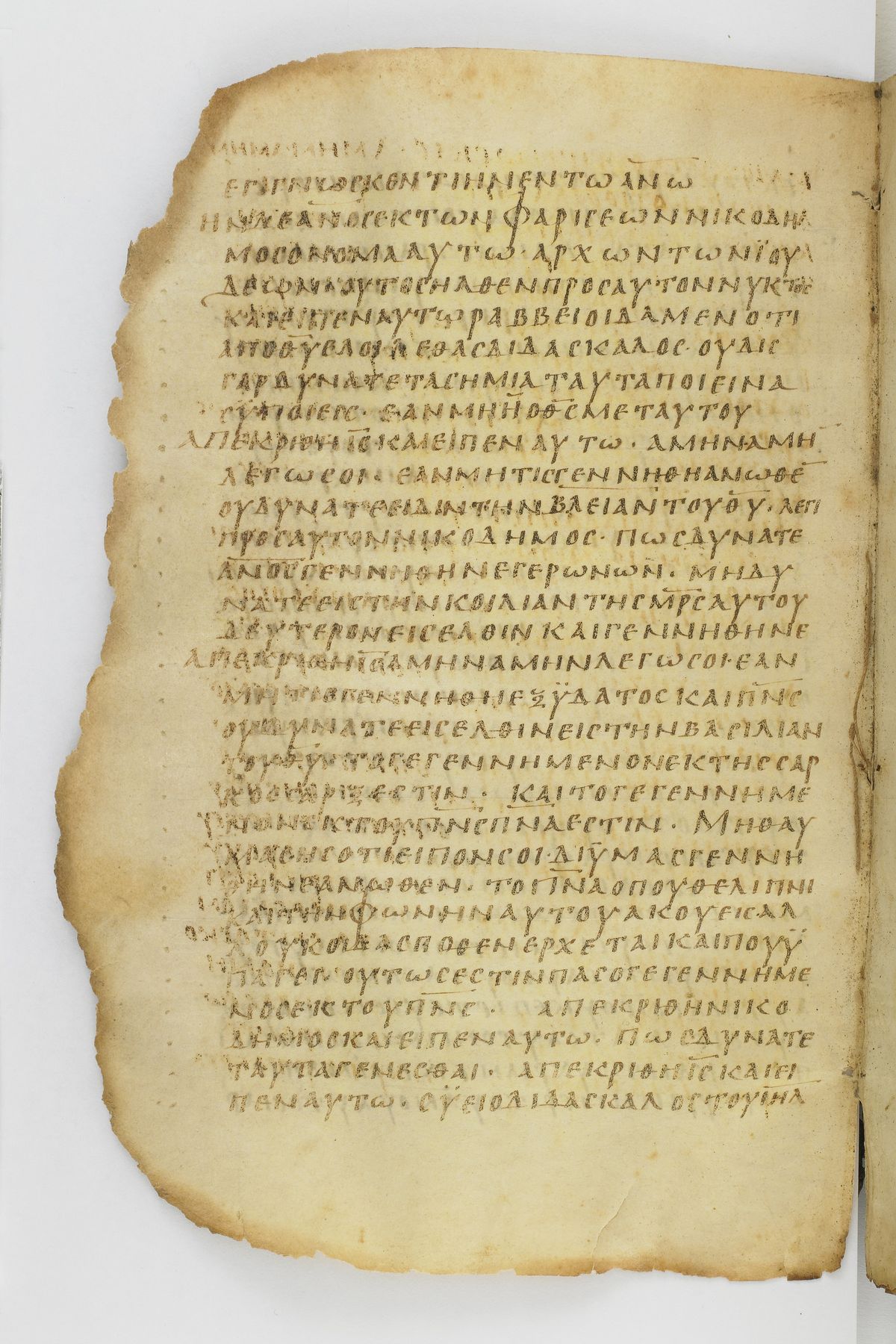
Where on the image
Page from the IGNTP transcription: verses 16-25 on fol. 60r, CSNTM GA_032_0119; verse 25 continues on fol. 60v, CSNTM GA_032_0120 (which begins 'εγιγνωσκεν τι ην').
16και τοις πωλουσιν τας περιστερας ειπεν αρατε ταυτα εντευθεν και μοη ποιειτε τον οικον του πρς μου οικον ενποριου 17και εμνησθησαν οι μαθηται αυτου οτι γεγραμμενον εστιν οτι ο ζηλος του οικου σου καταφαγετε μαι 18απεκριθησα¯ ουν οι ιουδεοι και ειπαν αυτω τι σημιον δικνυεις ημιν οτι ταυτα ποιεις 19απεκριθη ις και ειπεν αυτοις λυσαται τον ναον τουτον και εν τρισιν ημερες εγερω αυτον 20ειπαν ουν οι ιουδεοι μ και ϛ ετεσιν ο ναος ουτος οικοδομηθη και συ εν τρισιν ημερες γιρις αυτον 21αυτος δε ελεγεν περι του ναου του σωματος αυτου 22οτε ουν ηνεστη εκ νεκρων εμνησθησα¯ αυτω οτι τουτο ελεγεν και επιστευσαν τη γραφη και τω λογω ω ειπεν ο ις 23ως δε ην εν τοις ιεροσολυμοις εν τω πασχα εν τη εορτη πολλοι επιστευσαν εις το ονομα αυτου θεωρουντες αυτου τα σημια α εποιει 24αυτος δε ο ις ουκ επιστευσεν ο εαυτο¯ αυτοις δια το αυτον γινωσκιν παντας 25και οτι ου χριαν ειχεν ινα τις μαρτυρηση περι του ανου αυτος γαρ εγιγνωσκεν τι ην εν τω ανω
Compare: Tischendorf 8th edition (1869)
16καὶ τοῖς τὰς περιστερὰς πωλοῦσιν εἶπεν· ἄρατε ταῦτα ἐντεῦθεν, μὴ ποιεῖτε τὸν οἶκον τοῦ πατρός μου οἶκον ἐμπορίου. 17ἐμνήσθησαν οἱ μαθηταὶ αὐτοῦ ὅτι γεγραμμένον ἐστίν· ὁ ζῆλος τοῦ οἴκου σου καταφάγεταί με. 18ἀπεκρίθησαν οὖν οἱ Ἰουδαῖοι καὶ εἶπαν αὐτῷ· τί σημεῖον δεικνύεις ἡμῖν, ὅτι ταῦτα ποιεῖς; 19ἀπεκρίθη Ἰησοῦς καὶ εἶπεν αὐτοῖς· λύσατε τὸν ναὸν τοῦτον, καὶ ἐν τρισὶν ἡμέραις ἐγερῶ αὐτόν. 20εἶπαν οὖν οἱ Ἰουδαῖοι· τεσσεράκοντα καὶ ἓξ ἔτεσιν οἰκοδομήθη ὁ ναὸς οὗτος, καὶ σὺ ἐν τρισὶν ἡμέραις ἐγερεῖς αὐτόν; 21ἐκεῖνος δὲ ἔλεγεν περὶ τοῦ ναοῦ τοῦ σώματος αὐτοῦ. 22ὅτε οὖν ἠγέρθη ἐκ νεκρῶν, ἐμνήσθησαν οἱ μαθηταὶ αὐτοῦ ὅτι τοῦτο ἔλεγεν, καὶ ἐπίστευσαν τῇ γραφῇ καὶ τῷ λόγῳ ὃν εἶπεν ὁ Ἰησοῦς. 23Ὡς δὲ ἦν ἐν τοῖς Ἱεροσολύμοις ἐν τῷ πάσχα ἐν τῇ ἑορτῇ, πολλοὶ ἐπίστευσαν εἰς τὸ ὄνομα αὐτοῦ, θεωροῦντες αὐτοῦ τὰ σημεῖα ἃ ἐποίει· 24αὐτὸς δὲ Ἰησοῦς οὐκ ἐπίστευεν αὐτὸν αὐτοῖς διὰ τὸ αὐτὸν γινώσκειν πάντας, 25καὶ ὅτι οὐ χρείαν εἶχεν ἵνα τις μαρτυρήσῃ περὶ τοῦ ἀνθρώπου· αὐτὸς γὰρ ἐγίνωσκεν τί ἦν ἐν τῷ ἀνθρώπῳ.
16And said unto them that sold doves, Take these things hence; make not my Father’s house an house of merchandise. 17And his disciples remembered that it was written, The zeal of thine house hath eaten me up. 18Then answered the Jews and said unto him, What sign shewest thou unto us, seeing that thou doest these things? 19Jesus answered and said unto them, Destroy this temple, and in three days I will raise it up. 20Then said the Jews, Forty and six years was this temple in building, and wilt thou rear it up in three days? 21But he spake of the temple of his body. 22When therefore he was risen from the dead, his disciples remembered that he had said this unto them; and they believed the scripture, and the word which Jesus had said. 23Now when he was in Jerusalem at the passover, in the feast day, many believed in his name, when they saw the miracles which he did. 24But Jesus did not commit himself unto them, because he knew all men, 25And needed not that any should testify of man: for he knew what was in man.
Cite
Sources
- Source: Codex Washingtonianus page images + IGNTP transcription (CC BY 4.0) + Tischendorf 8th edition + KJV (holding institution)
- Critical edition: Codex Washingtonianus transcription, IGNTP (CC BY 4.0); Tischendorf 8th edition for comparison
← previous · → next · v cycle view · l back to library