John, Chapter 3 (Codex Washingtonianus)
Introduction
John 3 from Codex Washingtonianus (the Freer Gospels, Gregory-Aland 032, Freer Gallery of Art F1906.274), a parchment codex of the four Gospels written in Egypt in the late 4th or early 5th century and bought by Charles Lang Freer from the dealer Ali Arabi at Giza in 1906. It is one of the oldest nearly complete Gospel books in existence. The Gospels stand in the so-called Western order, Matthew, John, Luke, Mark, and the text is famously block-mixed: the copyist drew on several exemplars of different textual character, so the text type changes in blocks within a single Gospel. After Mark 16:14 the codex carries the Freer Logion, a saying found in no other manuscript. Two passages are lost to damage: Mark 15:13-37 and John 14:26-16:6.
- Scan: each section is shown with the actual page of the codex that carries those verses, from the Freer Gallery's own photographs of F1906.274 served by the Smithsonian IIIF service (ids.si.edu). Which page holds which verse comes from the verse index of the Center for the Study of New Testament Manuscripts (CSNTM), whose photographs of the codex are the same shots; every CSNTM page was matched to its Smithsonian image by pixel comparison before use. Where a verse begins on one page and ends on the next, both pages are listed. Verses the index cannot place on a surviving page are not shown.
- Greek: Constantin von Tischendorf's Editio octava critica maior (1869-72, public domain), verbatim from bolls.life. This is a printed critical edition, not a transcription of Washingtonianus itself: the codex has many readings of its own, and where it differs from Tischendorf the manuscript reading can be checked on the page image. Numbering: Tischendorf omits a few verses that the KJV prints (they are in the English column only).
- English: the King James Version (1611, public domain), verbatim from bible-api.com. The KJV translates the later Byzantine text, so it will not always match the Greek shown or the reading of the codex.
How was this verified? (Provenance)
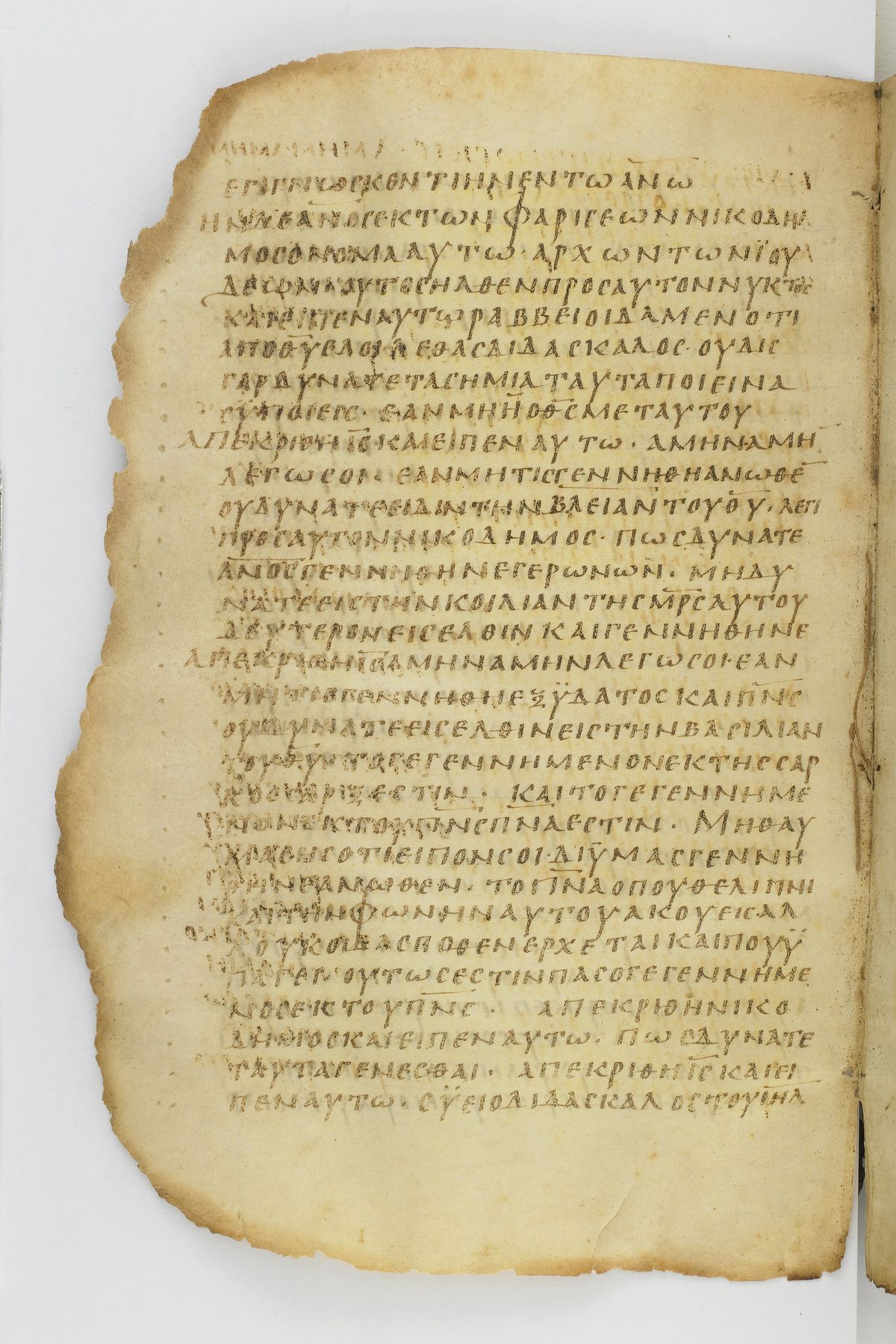
1Ἦν δὲ ἄνθρωπος ἐκ τῶν Φαρισαίων, Νικόδημος ὄνομα αὐτῷ, ἄρχων τῶν Ἰουδαίων· 2οὗτος ἦλθεν πρὸς αὐτὸν νυκτὸς καὶ εἶπεν αὐτῷ· ῥαββεί, οἴδαμεν ὅτι ἀπὸ θεοῦ ἐλήλυθας διδάσκαλος· οὐδεὶς γὰρ δύναται ταῦτα τὰ σημεῖα ποιεῖν ἃ σὺ ποιεῖς, ἐὰν μὴ ᾖ ὁ θεὸς μετ’ αὐτοῦ. 3ἀπεκρίθη Ἰησοῦς καὶ εἶπεν αὐτῷ· ἀμὴν ἀμὴν λέγω σοι, ἐὰν μή τις γεννηθῇ ἄνωθεν, οὐ δύναται ἰδεῖν τὴν βασιλείαν τοῦ θεοῦ. 4λέγει πρὸς αὐτὸν ὁ Νικόδημος· πῶς δύναται ἄνθρωπος γεννηθῆναι γέρων ὤν; μὴ δύναται εἰς τὴν κοιλίαν τῆς μητρὸς αὐτοῦ δεύτερον εἰσελθεῖν καὶ γεννηθῆναι; 5ἀπεκρίθη Ἰησοῦς· ἀμὴν ἀμὴν λέγω σοι, ἐὰν μή τις γεννηθῇ ἐξ ὕδατος καὶ πνεύματος, οὐ δύναται εἰσελθεῖν εἰς τὴν βασιλείαν τῶν οὐρανῶν. 6τὸ γεγεννημένον ἐκ τῆς σαρκὸς σάρξ ἐστιν, καὶ τὸ γεγεννημένον ἐκ τοῦ πνεύματος πνεῦμά ἐστιν. 7μὴ θαυμάσῃς ὅτι εἶπόν σοι· δεῖ ὑμᾶς γεννηθῆναι ἄνωθεν. 8τὸ πνεῦμα ὅπου θέλει πνεῖ, καὶ τὴν φωνὴν αὐτοῦ ἀκούεις, ἀλλ’ οὐκ οἶδας πόθεν ἔρχεται καὶ ποῦ ὑπάγει· οὕτως ἐστὶν πᾶς ὁ γεγεννημένος ἐκ τοῦ πνεύματος.
1There was a man of the Pharisees, named Nicodemus, a ruler of the Jews: 2The same came to Jesus by night, and said unto him, Rabbi, we know that thou art a teacher come from God: for no man can do these miracles that thou doest, except God be with him. 3Jesus answered and said unto him, Verily, verily, I say unto thee, Except a man be born again, he cannot see the kingdom of God. 4Nicodemus saith unto him, How can a man be born when he is old? can he enter the second time into his mother’s womb, and be born? 5Jesus answered, Verily, verily, I say unto thee, Except a man be born of water and of the Spirit, he cannot enter into the kingdom of God. 6That which is born of the flesh is flesh; and that which is born of the Spirit is spirit. 7Marvel not that I said unto thee, Ye must be born again. 8The wind bloweth where it listeth, and thou hearest the sound thereof, but canst not tell whence it cometh, and whither it goeth: so is every one that is born of the Spirit.
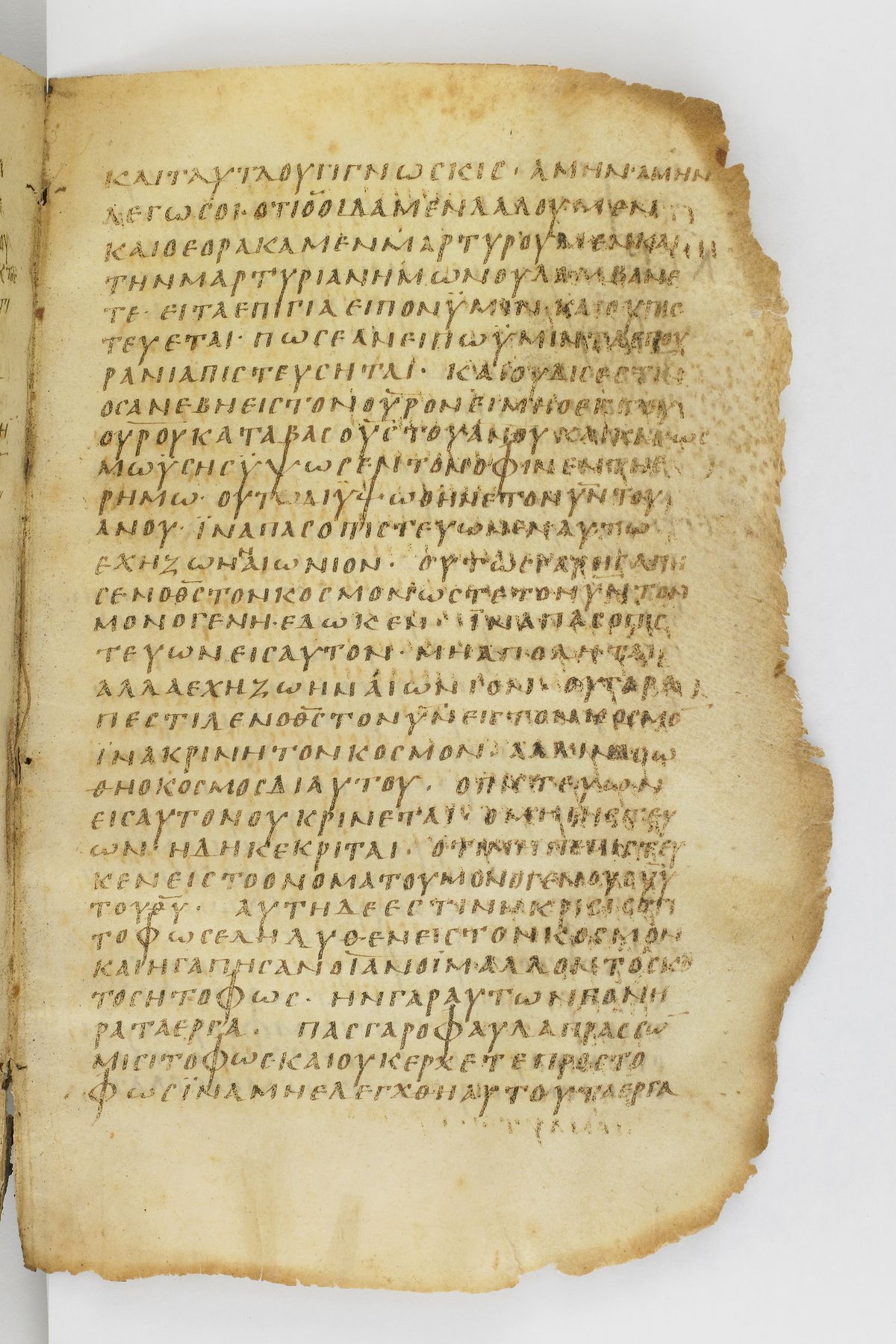
9ἀπεκρίθη Νικόδημος καὶ εἶπεν αὐτῷ· πῶς δύναται ταῦτα γενέσθαι; 10ἀπεκρίθη Ἰησοῦς καὶ εἶπεν αὐτῷ· σὺ εἶ ὁ διδάσκαλος τοῦ Ἰσραὴλ καὶ ταῦτα οὐ γινώσκεις; 11ἀμὴν ἀμὴν λέγω σοι ὅτι ὃ οἴδαμεν λαλοῦμεν καὶ ὃ ἑωράκαμεν μαρτυροῦμεν, καὶ τὴν μαρτυρίαν ἡμῶν οὐ λαμβάνετε. 12εἰ τὰ ἐπίγεια εἶπον ὑμῖν καὶ οὐ πιστεύετε, πῶς ἐὰν εἴπω ὑμῖν τὰ ἐπουράνια πιστεύσετε; 13καὶ οὐδεὶς ἀναβέβηκεν εἰς τὸν οὐρανὸν εἰ μὴ ὁ ἐκ τοῦ οὐρανοῦ καταβάς, ὁ υἱὸς τοῦ ἀνθρώπου ὁ ὢν ἐν τῷ οὐρανῷ. 14καὶ καθὼς Μωϋσῆς ὕψωσεν τὸν ὄφιν ἐν τῇ ἐρήμῳ, οὕτως ὑψωθῆναι δεῖ τὸν υἱὸν τοῦ ἀνθρώπου, 15ἵνα πᾶς ὁ πιστεύων ἐν αὐτῷ ἔχῃ ζωὴν αἰώνιον. 16οὕτως γὰρ ἠγάπησεν ὁ θεὸς τὸν κόσμον, ὥστε τὸν υἱὸν τὸν μονογενῆ ἔδωκεν, ἵνα πᾶς ὁ πιστεύων εἰς αὐτὸν μὴ ἀπόληται ἀλλ’ ἔχῃ ζωὴν αἰώνιον.
9Nicodemus answered and said unto him, How can these things be? 10Jesus answered and said unto him, Art thou a master of Israel, and knowest not these things? 11Verily, verily, I say unto thee, We speak that we do know, and testify that we have seen; and ye receive not our witness. 12If I have told you earthly things, and ye believe not, how shall ye believe, if I tell you of heavenly things? 13And no man hath ascended up to heaven, but he that came down from heaven, even the Son of man which is in heaven. 14And as Moses lifted up the serpent in the wilderness, even so must the Son of man be lifted up: 15That whosoever believeth in him should not perish, but have eternal life. 16For God so loved the world, that he gave his only begotten Son, that whosoever believeth in him should not perish, but have everlasting life.
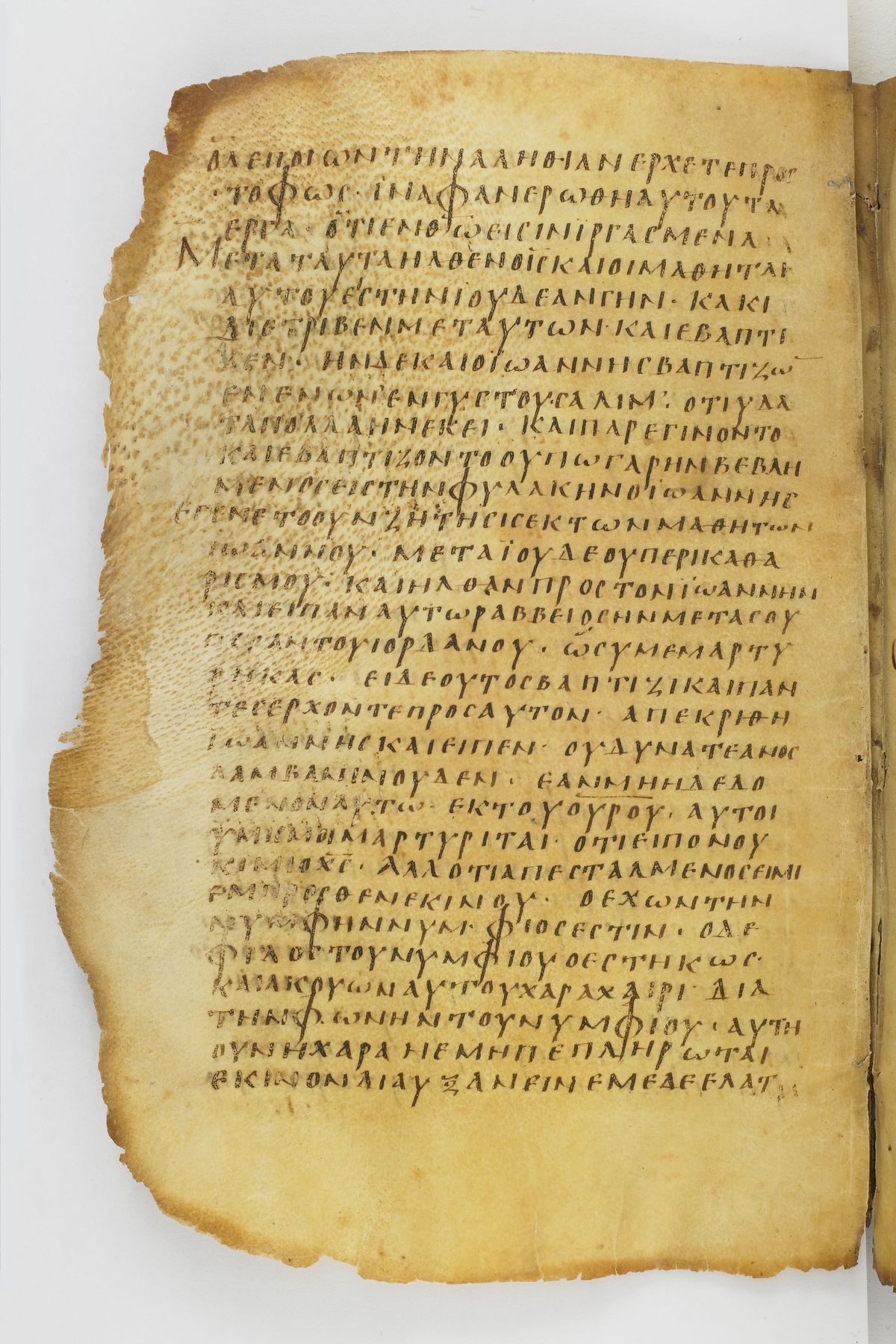
17οὐ γὰρ ἀπέστειλεν ὁ θεὸς τὸν υἱὸν εἰς τὸν κόσμον ἵνα κρίνῃ τὸν κόσμον, ἀλλ’ ἵνα σωθῇ ὁ κόσμος δι’ αὐτοῦ. 18ὁ πιστεύων εἰς αὐτὸν οὐ κρίνεται· ὁ μὴ πιστεύων ἤδη κέκριται, ὅτι μὴ πεπίστευκεν εἰς τὸ ὄνομα τοῦ μονογενοῦς υἱοῦ τοῦ θεοῦ. 19αὕτη δέ ἐστιν ἡ κρίσις, ὅτι τὸ φῶς ἐλήλυθεν εἰς τὸν κόσμον καὶ ἠγάπησαν οἱ ἄνθρωποι μᾶλλον τὸ σκότος ἢ τὸ φῶς· ἦν γὰρ αὐτῶν πονηρὰ τὰ ἔργα. 20πᾶς γὰρ ὁ φαῦλα πράσσων μισεῖ τὸ φῶς καὶ οὐκ ἔρχεται πρὸς τὸ φῶς, ἵνα μὴ ἐλεγχθῇ τὰ ἔργα αὐτοῦ· 21ὁ δὲ ποιῶν τὴν ἀλήθειαν ἔρχεται πρὸς τὸ φῶς, ἵνα φανερωθῇ αὐτοῦ τὰ ἔργα, ὅτι ἐν θεῷ ἐστιν εἰργασμένα. 22Μετὰ ταῦτα ἦλθεν ὁ Ἰησοῦς καὶ οἱ μαθηταὶ αὐτοῦ εἰς τὴν Ἰουδαίαν γῆν, καὶ ἐκεῖ διέτριβεν μετ’ αὐτῶν καὶ ἐβάπτιζεν. 23ἦν δὲ καὶ Ἰωάννης βαπτίζων ἐν Αἰνὼν ἐγγὺς τοῦ Σαλείμ, ὅτι ὕδατα πολλὰ ἦν ἐκεῖ, καὶ παρεγίνοντο καὶ ἐβαπτίζοντο· 24οὔπω γὰρ ἦν βεβλημένος εἰς τὴν φυλακὴν Ἰωάννης.
17For God sent not his Son into the world to condemn the world; but that the world through him might be saved. 18He that believeth on him is not condemned: but he that believeth not is condemned already, because he hath not believed in the name of the only begotten Son of God. 19And this is the condemnation, that light is come into the world, and men loved darkness rather than light, because their deeds were evil. 20For every one that doeth evil hateth the light, neither cometh to the light, lest his deeds should be reproved. 21But he that doeth truth cometh to the light, that his deeds may be made manifest, that they are wrought in God. 22After these things came Jesus and his disciples into the land of Judaea; and there he tarried with them, and baptized. 23And John also was baptizing in Aenon near to Salim, because there was much water there: and they came, and were baptized. 24For John was not yet cast into prison.
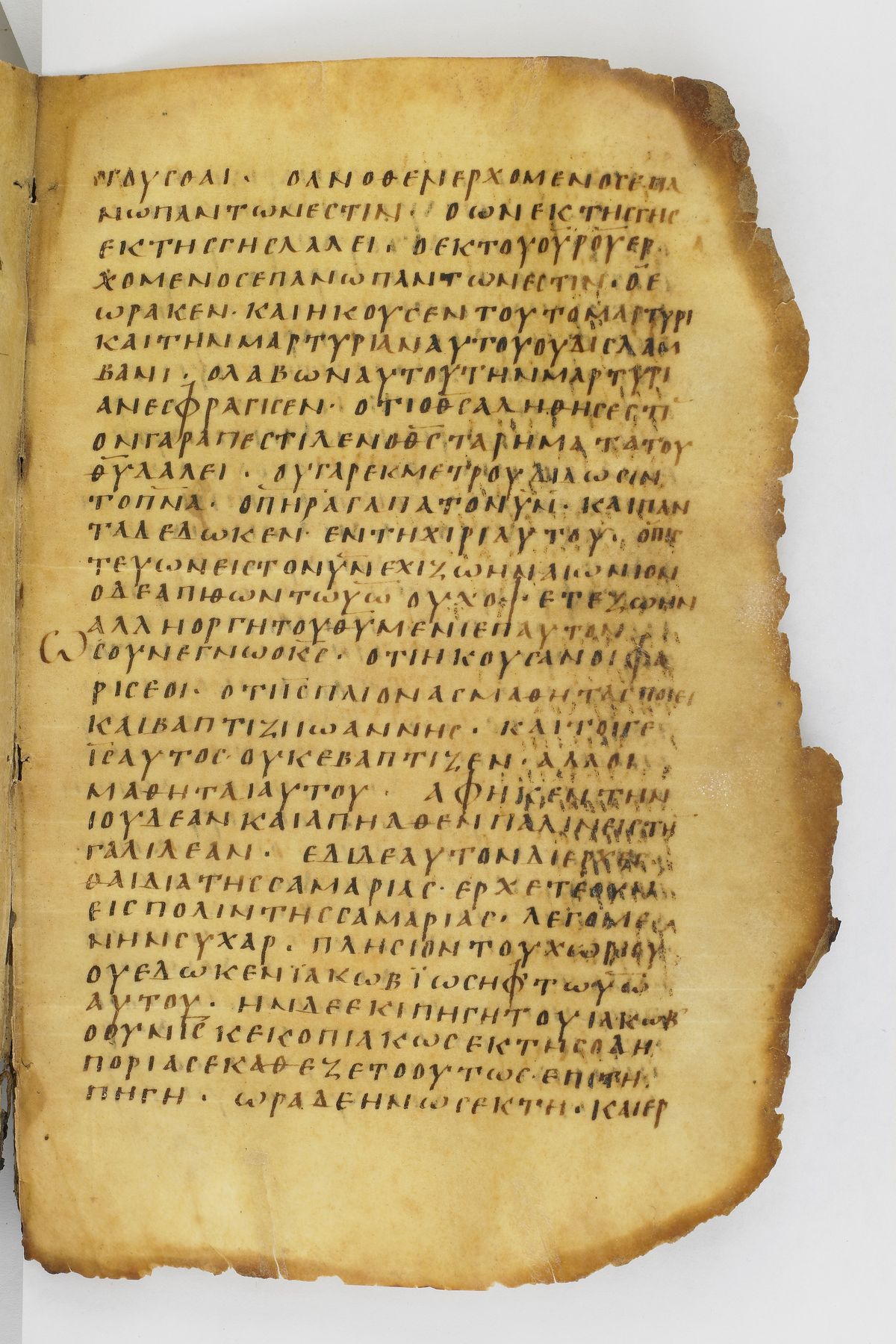
25ἐγένετο οὖν ζήτησις ἐκ τῶν μαθητῶν Ἰωάννου μετὰ Ἰουδαίου περὶ καθαρισμοῦ. 26καὶ ἦλθον πρὸς τὸν Ἰωάννην καὶ εἶπον αὐτῷ· ῥαββεί, ὃς ἦν μετὰ σοῦ πέραν τοῦ Ἰορδάνου, ᾧ σὺ μεμαρτύρηκας, ἴδε οὗτος βαπτίζει καὶ πάντες ἔρχονται πρὸς αὐτόν. 27ἀπεκρίθη Ἰωάννης καὶ εἶπεν· οὐ δύναται ἄνθρωπος λαμβάνειν οὐδέν ἐὰν μὴ ᾖ δεδομένον αὐτῷ ἐκ τοῦ οὐρανοῦ. 28αὐτοὶ ὑμεῖς μοι μαρτυρεῖτε ὅτι εἶπον· οὐκ εἰμὶ ἐγὼ ὁ Χριστός, ἀλλ’ ὅτι ἀπεσταλμένος εἰμὶ ἔμπροσθεν ἐκείνου. 29ὁ ἔχων τὴν νύμφην νυμφίος ἐστίν· ὁ δὲ φίλος τοῦ νυμφίου, ὁ ἑστηκὼς καὶ ἀκούων αὐτοῦ, χαρᾷ χαίρει διὰ τὴν φωνὴν τοῦ νυμφίου. αὕτη οὖν ἡ χαρὰ ἡ ἐμὴ πεπλήρωται. 30ἐκεῖνον δεῖ αὐξάνειν, ἐμὲ δὲ ἐλαττοῦσθαι. 31ὁ ἄνωθεν ἐρχόμενος ἐπάνω πάντων ἐστίν· ὁ ὢν ἐκ τῆς γῆς ἐκ τῆς γῆς ἐστιν καὶ ἐκ τῆς γῆς λαλεῖ. ὁ ἐκ τοῦ οὐρανοῦ ἐρχόμενος 32ὃ ἑώρακεν καὶ ἤκουσεν μαρτυρεῖ, καὶ τὴν μαρτυρίαν αὐτοῦ οὐδεὶς λαμβάνει.
25Then there arose a question between some of John’s disciples and the Jews about purifying. 26And they came unto John, and said unto him, Rabbi, he that was with thee beyond Jordan, to whom thou barest witness, behold, the same baptizeth, and all men come to him. 27John answered and said, A man can receive nothing, except it be given him from heaven. 28Ye yourselves bear me witness, that I said, I am not the Christ, but that I am sent before him. 29He that hath the bride is the bridegroom: but the friend of the bridegroom, which standeth and heareth him, rejoiceth greatly because of the bridegroom’s voice: this my joy therefore is fulfilled. 30He must increase, but I must decrease. 31He that cometh from above is above all: he that is of the earth is earthly, and speaketh of the earth: he that cometh from heaven is above all. 32And what he hath seen and heard, that he testifieth; and no man receiveth his testimony.
33ὁ λαβὼν αὐτοῦ τὴν μαρτυρίαν ἐσφράγισεν ὅτι ὁ θεὸς ἀληθής ἐστιν. 34ὃν γὰρ ἀπέστειλεν ὁ θεός, τὰ ῥήματα τοῦ θεοῦ λαλεῖ· οὐ γὰρ ἐκ μέτρου δίδωσιν τὸ πνεῦμα. 35ὁ πατὴρ ἀγαπᾷ τὸν υἱόν, καὶ πάντα δέδωκεν ἐν τῇ χειρὶ αὐτοῦ. 36ὁ πιστεύων εἰς τὸν υἱὸν ἔχει ζωὴν αἰώνιον· ὁ ἀπειθῶν τῷ υἱῷ οὐκ ὄψεται ζωήν, ἀλλ’ ἡ ὀργὴ τοῦ θεοῦ μένει ἐπ’ αὐτόν,
33He that hath received his testimony hath set to his seal that God is true. 34For he whom God hath sent speaketh the words of God: for God giveth not the Spirit by measure unto him. 35The Father loveth the Son, and hath given all things into his hand. 36He that believeth on the Son hath everlasting life: and he that believeth not the Son shall not see life; but the wrath of God abideth on him.
Cite
Source & Cross-References
- Source text: Codex Washingtonianus (Freer Gospels, GA 032) via Smithsonian/Freer IIIF + CSNTM verse index + Tischendorf + KJV — view original
- Critical edition: Tischendorf 8th edition (1869)
← previous · → next · v cycle view · l back to library