P46 (P.Mich. inv. 6238): Hebrews 6:4-7:1 (fols. 26r-26v)
Introduction
P46 is a papyrus codex of the letters of Paul copied in Egypt around 200, the oldest surviving collection of Paul's letters. 86 of its 104 leaves survive: 56 in the Chester Beatty Library, Dublin (Biblical Papyrus II, published by Frederic Kenyon in 1934-1937) and 30 in the University of Michigan Library, Ann Arbor (P.Mich. inv. 6238, published by Henry Sanders in 1935). The letters run in the order Romans, Hebrews, 1 and 2 Corinthians, Ephesians, Galatians, Philippians, Colossians and 1 Thessalonians; the first seven leaves (Romans 1:1-5:17) and the end of the book are lost. Hebrews standing after Romans, and the doxology of Romans (16:25-27) standing after 15:33, are among its best-known features.
Each section below is one page side: the holding library's photograph, the NTVMR diplomatic transcription line by line, and the King James Version of every verse that has text on the page. The lower lines of many leaves are lost; the transcribers' restorations are in square brackets.
This entry covers fols. 26r-26v (Hebrews 6:4-7:1).
How was this verified? (Provenance)
Where on the image
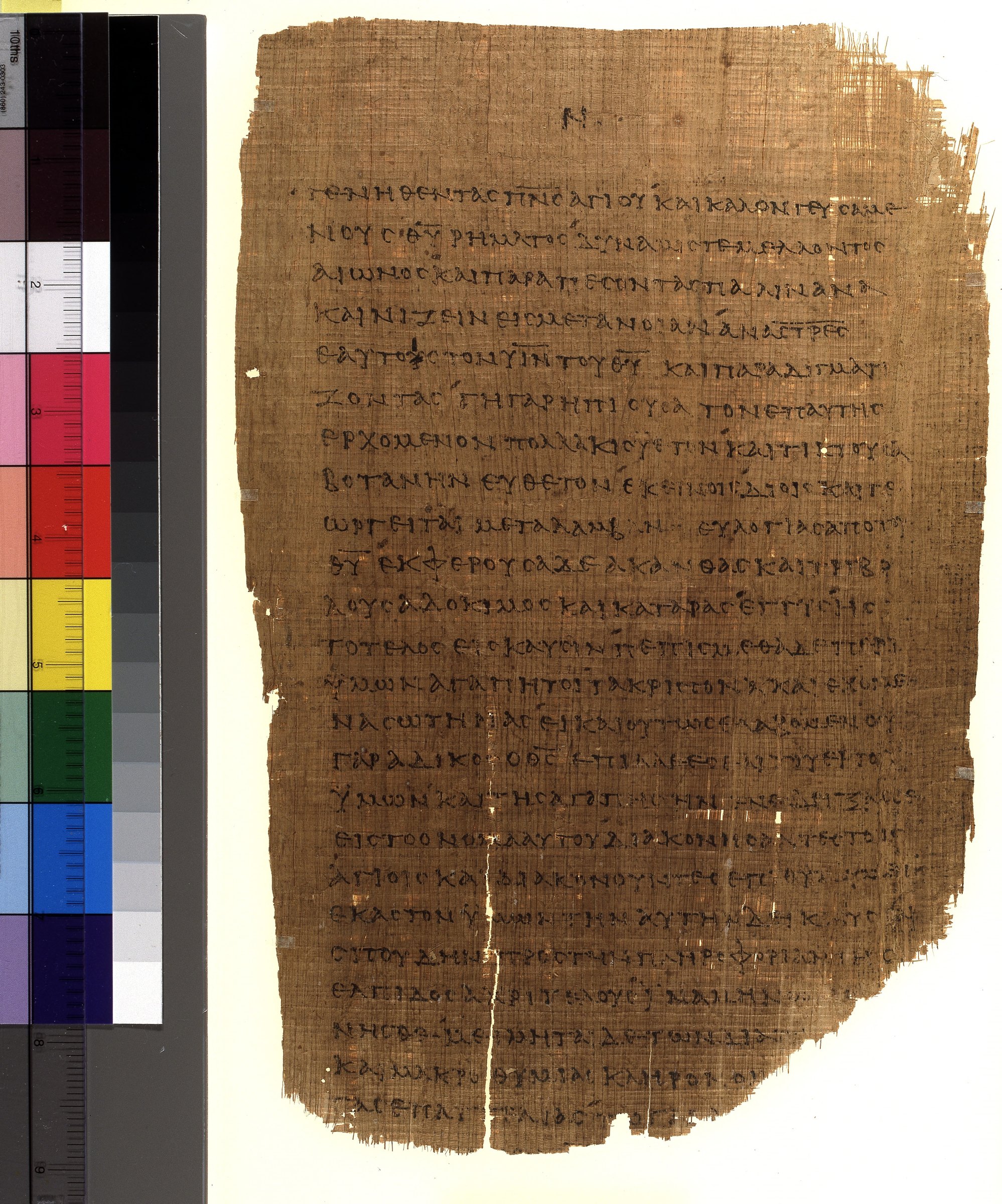
University of Michigan Library photograph 10046x6238_50JP2_UMich.jpg (https://ntmss.info/images/webfriendly/10046/10046x6238_50JP2_UMich.jpg), linked to NTVMR page 330 (folio 26r) in NTVMR's page index. 6:4 begins on the previous page; 6:13 continues on the next page. Checked on the image: the scribe's page number ν (50) at the head of the page, matching NTVMR folio 26r; the first line reads ‹γενηθεντας π̅ν̅ς̅ αγιου ...›, as in the transcription.
6:4 γενηθεντας π̅ν̅ς̅ αγιου 5 και καλον γευσαμε
νους θ̅υ̅ ρηματος δυναμις τε μελλοντος
αιωνος 6 και παραπεσοντας παλιν ανα
καινιζειν εις μετανοιαν α̅ν̅α̅σ̅τ̅ρ̅ε̅ς̅
εαυτους τον υ̅ι̅ν̅ του θ̅υ̅ και παραδιγματι
ζοντας 7 γη γαρ η πιουσα τον επ αυτης
ερχομενον πολλακις υετον και τικτουσα
βοτανην ευθετον εκεινοις δι οις και γε
ωργειται μεταλαμβανε̣[ι] ευλογιας απο του
θ̅υ̅ 8 εκφερουσα δε ακανθας και τριβο
λους αδοκιμος και καταρας εγγυς ης
το τελος εις καυσιν 9 πεπισμεθα δε περι
υμων αγαπητοι τα κρισσονα και εχομε
να σωτηριας ει και ουτως ελ̣αβομεν 10 ου
γαρ αδικος ο θ̅ς̅ επιλαθ̣εσθ̣αι του εργου̣
υμων και της αγαπης ην ενεδειξασθ̣ε
εις το ονομα αυτου διακονησαντες τοις
αγιοις και̣ διακονουντες 11 επι̣θυμ̣ο̣υμε̣ν̣
εκαστον υμων την αυτην δεικν̣υσθ̣αι
σπουδην προς την πληροφοριαν τ̣ης
ελπιδος αχρι τ̣ελους 12 ινα μη νω[θ]ρ̣ο̣[ι γε]
νησθε μειμηται δε των δια π̣ι̣[στεως]
και μακροθυμιας κληρονομ[ουντων]
τας επαγγ̣ελιας 13 τω̣ γαρ̣ α̣[βρααμ επαγ]
[γειλαμενος]
6:4For it is impossible for those who were once enlightened, and have tasted of the heavenly gift, and were made partakers of the Holy Ghost, 5And have tasted the good word of God, and the powers of the world to come, 6If they shall fall away, to renew them again unto repentance; seeing they crucify to themselves the Son of God afresh, and put him to an open shame. 7For the earth which drinketh in the rain that cometh oft upon it, and bringeth forth herbs meet for them by whom it is dressed, receiveth blessing from God: 8But that which beareth thorns and briers is rejected, and is nigh unto cursing; whose end is to be burned. 9But, beloved, we are persuaded better things of you, and things that accompany salvation, though we thus speak. 10For God is not unrighteous to forget your work and labour of love, which ye have shewed toward his name, in that ye have ministered to the saints, and do minister. 11And we desire that every one of you do shew the same diligence to the full assurance of hope unto the end: 12That ye be not slothful, but followers of them who through faith and patience inherit the promises. 13For when God made promise to Abraham, because he could swear by no greater, he sware by himself,
Where on the image
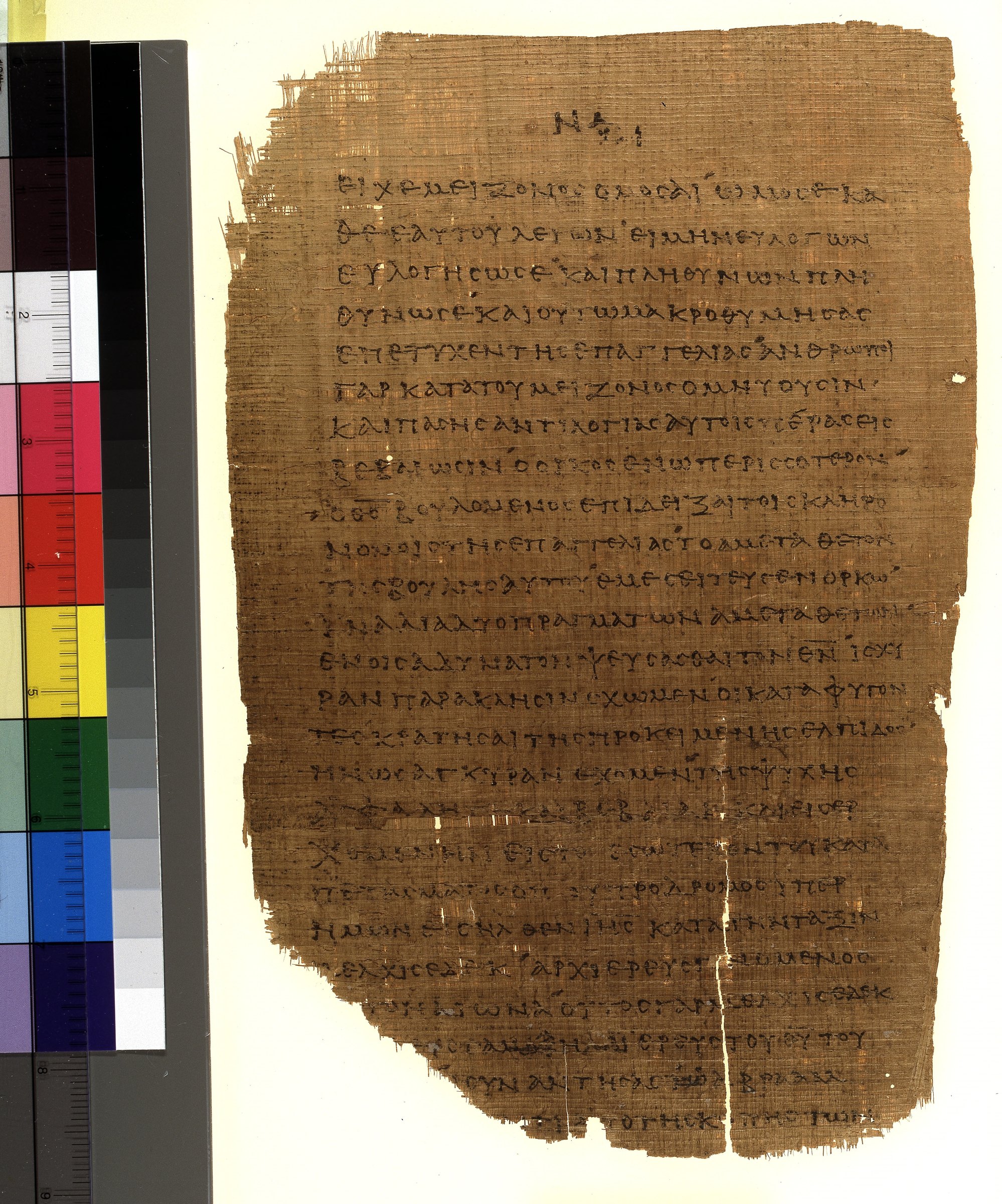
University of Michigan Library photograph 10046x6238_51JP2_UMich.jpg (https://ntmss.info/images/webfriendly/10046/10046x6238_51JP2_UMich.jpg), linked to NTVMR page 340 (folio 26v) in NTVMR's page index. 6:13 begins on the previous page; 7:1 continues on the next page. Checked on the image: the scribe's page number να (51) at the head of the page, matching NTVMR folio 26v; the first line reads ‹ειχε μειζονος ομοσαι ωμοσε κα...›, as in the transcription.
6:13 ειχε μειζονος ομοσαι ωμοσε κα
θε εαυτου 14 λεγων ει μην ευλογων
ευλογησω σε και πληθυνων πλη
θυνω σε 15 και ουτω μακροθυμησας
επετυχεν της επαγγελιας 16 ανθρωποι
γαρ κατα του μειζονος ομνυουσιν
και πασης αντιλογιας αυτοις περας εις
βεβαιωσιν ο ορ̣κος 17 εν ω περισσοτερον
ο θ̅ς̅ βουλομενος επιδειξαι τοις κληρο
νομοις της επαγγελιας το αμεταθετον
της βουλης αυτου εμεσειτευσεν ορκω
18 ινα δια δυο πραγματων αμεταθετων
εν οις αδυνατον ψευσασθαι τον θ̅ν̅ ισχυ
ραν παρακλησιν σ̣χωμεν οι καταφυγον
τες κρατησαι της προκειμενης ελπιδος
19 ην ως αγκυραν εχομεν της ψυχης
ασ̣φαλη τε̣ και βεβαιαν και εισερ
χομενην εις το εσωτερον του κατα
πετασματο̣ς 20 οπου προδρομος υπερ
ημων εισηλθεν ι̅η̅ς̅ κατα την ταξιν
μ̣ελχισεδεκ αρχιερευς γε̣νομενος
[εις] τον αιωνα 7:1 ουτος γαρ μελχισεδεκ
[βασι]λ̣ευ̣ς σαμουηλ ιερευς του θ̅υ̅ του
[υψιστου] ο̣ συναντησας τω αβρααμ
[υποστρεφο]ν̣τι απ̣ο της κοπης των
6:13For when God made promise to Abraham, because he could swear by no greater, he sware by himself, 14Saying, Surely blessing I will bless thee, and multiplying I will multiply thee. 15And so, after he had patiently endured, he obtained the promise. 16For men verily swear by the greater: and an oath for confirmation is to them an end of all strife. 17Where in God, willing more abundantly to shew unto the heirs of promise the immutability of his counsel, confirmed it by an oath: 18That by two immutable things, in which it was impossible for God to lie, we might have a strong consolation, who have fled for refuge to lay hold upon the hope set before us: 19Which hope we have as an anchor of the soul, both sure and stedfast, and which entereth into that within the veil; 20Whither the forerunner is for us entered, even Jesus, made an high priest for ever after the order of Melchisedec. 7:1For this Melchisedec, king of Salem, priest of the most high God, who met Abraham returning from the slaughter of the kings, and blessed him;
Notes
- Greek: the NTVMR diplomatic transcription, line by line as on the papyrus. Square brackets enclose letters that are lost or illegible and were supplied by the transcribers; a dot under a letter marks it as uncertain; [...] marks a gap. Nomina sacra and numerals keep the scribe's overline. Spelling is the scribe's (no accents or breathings). Words broken at a line end stay broken as on the papyrus. Corrections are not shown: the text is the first hand.
- English: the King James Version (1611), whole verses, for every verse that has text on the page. A verse that begins on one page and ends on the next is given in full on both. The KJV translates a later form of the Greek text, so its wording does not always match the papyrus; material differences (such as verses the papyrus does not have) are noted in the section.
Cite
Sources
- Source: P46 (P.Mich. inv. 6238, University of Michigan Library): photographs as published in the INTF New Testament Virtual Manuscript Room; Greek from the INTF NTVMR transcription of P46; English from the King James Version (holding institution)
- Critical edition: INTF NTVMR diplomatic transcription (CC BY 4.0)
← previous · → next · v cycle view · l back to library