P66 (Papyrus Bodmer II): John 12:3-13:1 (pages 85-95)
Introduction
P66 is a papyrus codex of the Gospel of John copied in Egypt around 200, the most complete early copy of John. Most of it is Papyrus Bodmer II in the Fondation Martin Bodmer, Cologny (Geneva); small pieces are in the Chester Beatty Library, Dublin, and the Institut für Altertumskunde, Cologne. The first five quires (John 1:1-14:26) survive as a bound book of numbered pages; later leaves, from John 14:29 to 21:9, are damaged and kept between glass. The scribe made many corrections, some of them his own; only the first hand is shown here.
Each section below is one page: the photograph, the NTVMR diplomatic transcription line by line, and the King James Version of every verse on the page. Pages of the bound book are shown on the photographic plates published by Victor Martin and J. W. B. Barns in 1962 (scanned by the Bodmer Lab), the glass-mounted leaves on colour photographs. Lost: John 6:12-34 (pages 35-38) and parts of chapters 14-21; the transcription ends at 21:9. Where P66 lacks a verse that the KJV has (John 5:4, the account of the adulteress at 7:53-8:11, 16:15), the section says so.
This entry covers pages 85-95 (John 12:3-13:1).
How was this verified? (Provenance)
Where on the image
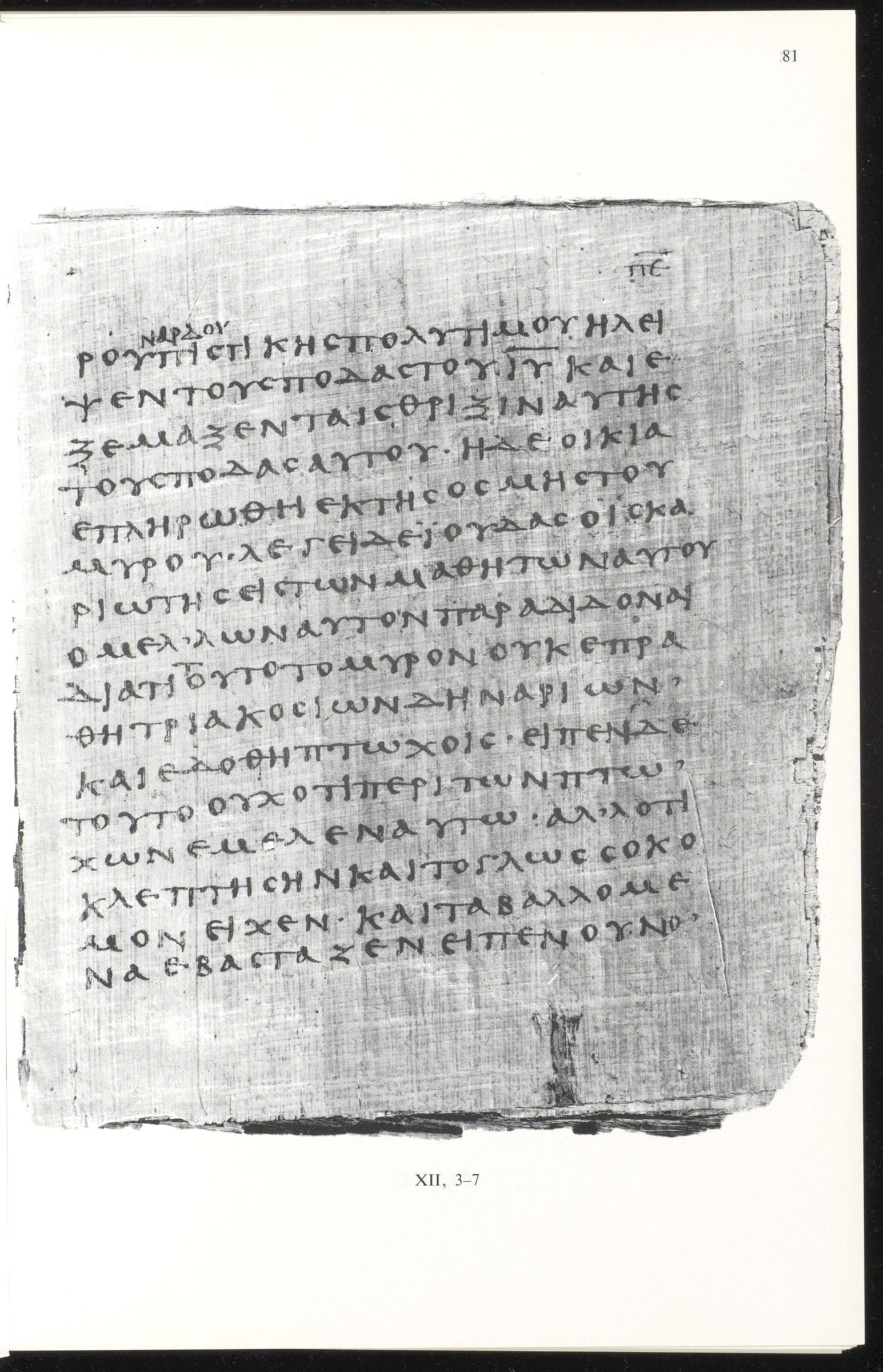
Fondation Martin Bodmer, Papyrus Bodmer II, Bodmer Lab image 1072205287_089 (https://bodmerlab.unige.ch/fr/constellations/papyri/mirador/1072205287), photographic plate of the 1962 Martin-Barns edition, shown whole. NTVMR page 810 (page 85) is linked to this image in NTVMR's page index. 12:3 begins on the previous page; 12:7 continues on the next page. Checked on the image: the printed caption reads ‹XII, 3-7›.
12:3 ρου πιστικης πολυτιμου ηλει
ψεν τους ποδας του ι̅υ̅ και ε
ξεμαξεν ταις θριξιν αυτης
τους ποδας αυτου· η δε οικια
επληρο̣υ̣τ̣ο̣ εκ της οσμης του
μυρου· 4 λεγει δε ιουδας ο ισκα
ριωτης εις των μαθητων αυτου
ο μελλων αυτον παραδιδοναι
5 δια τι ουτο το μυρον ουκ επρα
θη τριακοσιων δηναριων
και εδοθη πτωχοις· 6 ειπεν δε
τουτο ουχ οτι περι των πτω
χων εμελεν αυτω· αλλ οτι
κλεπτης ην και το γλωσσοκο
μον ειχεν· και τα βαλλομε
να εβασταζεν 7 ειπεν ουν ο
12:3Then took Mary a pound of ointment of spikenard, very costly, and anointed the feet of Jesus, and wiped his feet with her hair: and the house was filled with the odour of the ointment. 4Then saith one of his disciples, Judas Iscariot, Simon’s son, which should betray him, 5Why was not this ointment sold for three hundred pence, and given to the poor? 6This he said, not that he cared for the poor; but because he was a thief, and had the bag, and bare what was put therein. 7Then said Jesus, Let her alone: against the day of my burying hath she kept this.
Where on the image
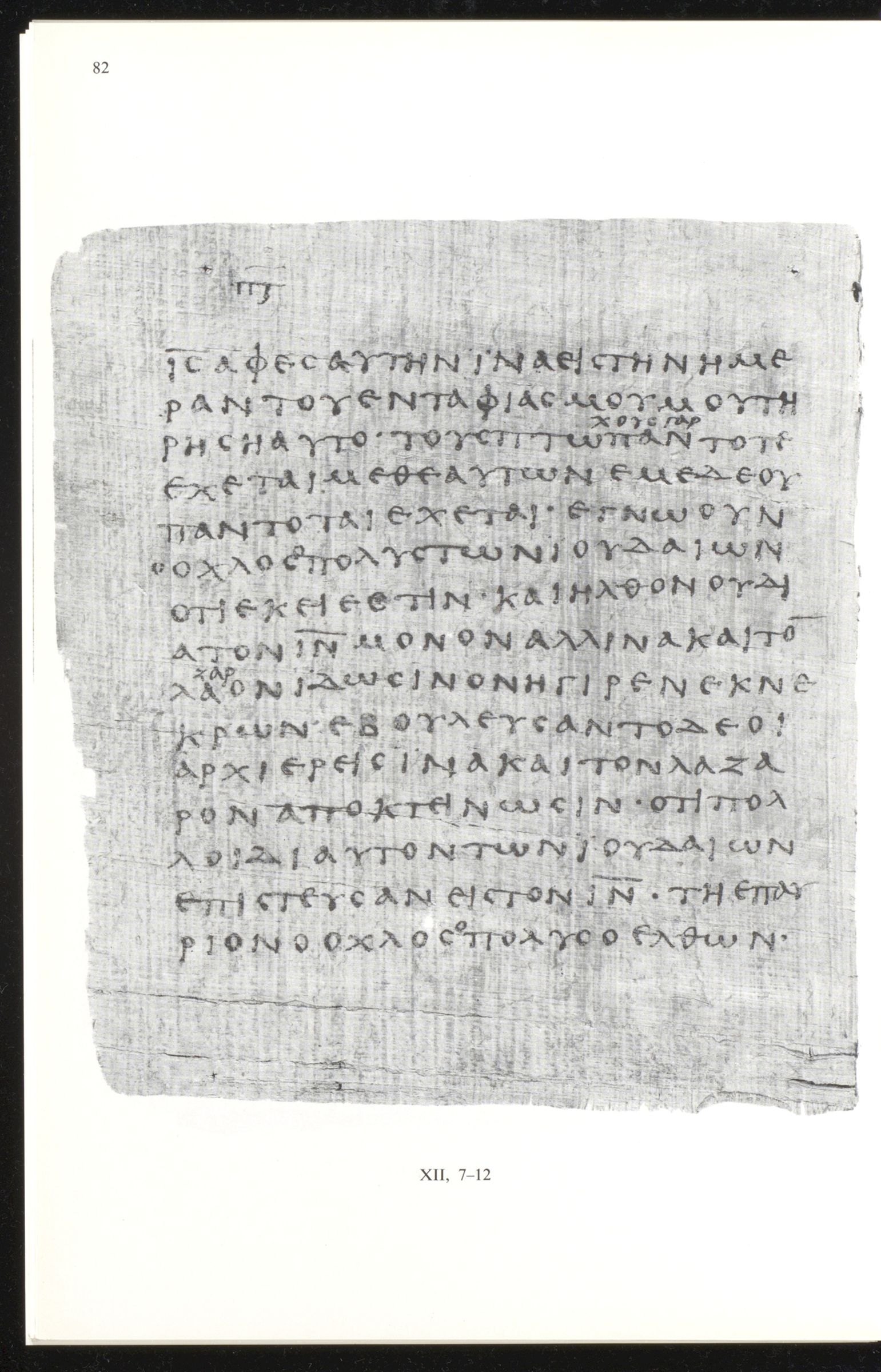
Fondation Martin Bodmer, Papyrus Bodmer II, Bodmer Lab image 1072205287_090 (https://bodmerlab.unige.ch/fr/constellations/papyri/mirador/1072205287), photographic plate of the 1962 Martin-Barns edition, shown whole. NTVMR page 820 (page 86) is linked to this image in NTVMR's page index. 12:7 begins on the previous page; 12:12 continues on the next page. Checked on the image: the printed caption reads ‹XII, 7-12›.
12:7 ι̅ς̅ αφες αυτην ινα εις την ημε
ραν του ενταφιασμου μου τη
ρηση αυτο· 8 τους πτω παντοτε
εχεται μεθ εαυτων εμε δε ου
παντοται εχεται· 9 εγνω ουν
οχλος πολυς των ιουδαιων
οτι εκει εστιν· και ηλθον ου δι
α τον ι̅ν̅ μονον αλλ ινα και τον
λαον ιδωσιν ον ηγιρεν εκ νε
κρων· 10 εβουλευσαντο δε οι
αρχιερεις ινα και τον λαζα
ρον αποκτεινωσιν· 11 οτι πολ
λοι δι αυτον των ιουδαιων
επιστευσαν εις τον ι̅ν̅· 12 τη επαυ
ριον ο οχλος πολυς ο ελθων·
12:7Then said Jesus, Let her alone: against the day of my burying hath she kept this. 8For the poor always ye have with you; but me ye have not always. 9Much people of the Jews therefore knew that he was there: and they came not for Jesus’ sake only, but that they might see Lazarus also, whom he had raised from the dead. 10¶ But the chief priests consulted that they might put Lazarus also to death; 11Because that by reason of him many of the Jews went away, and believed on Jesus. 12¶ On the next day much people that were come to the feast, when they heard that Jesus was coming to Jerusalem,
Where on the image
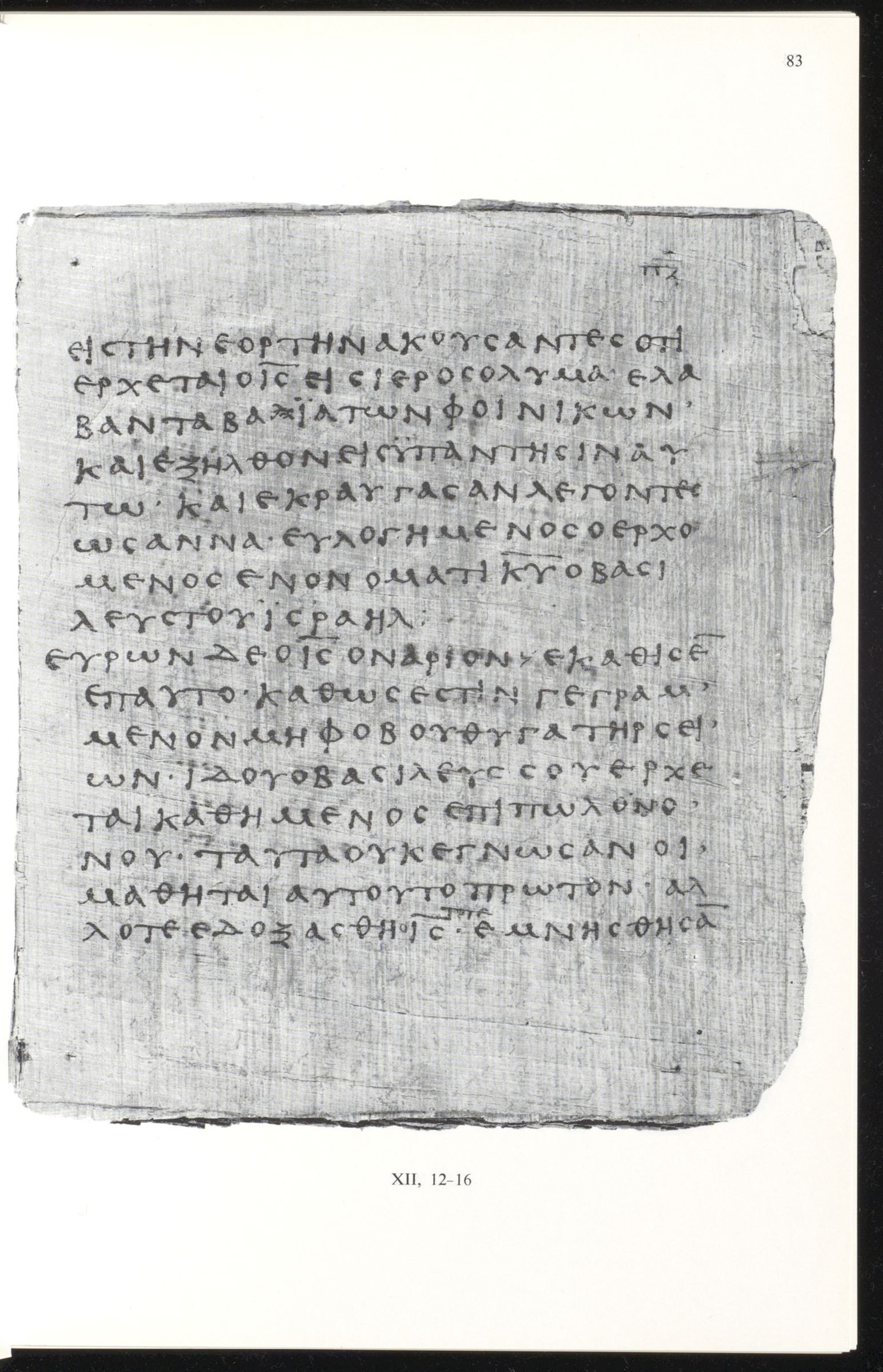
Fondation Martin Bodmer, Papyrus Bodmer II, Bodmer Lab image 1072205287_091 (https://bodmerlab.unige.ch/fr/constellations/papyri/mirador/1072205287), photographic plate of the 1962 Martin-Barns edition, shown whole. NTVMR page 830 (page 87) is linked to this image in NTVMR's page index. 12:12 begins on the previous page; 12:16 continues on the next page. Checked on the image: the printed caption reads ‹XII, 12-16›.
12:12 εις την εορτην ακουσαντες οτι
ερχεται ο ι̅ς̅ εις ιεροσολυμα 13 ελα
βαν τα βαλια των φοινικων
και εξηλθον εις υπαντησιν αυ
τω· και εκραυγασαν λεγοντες
ωσαννα· ευλογημενος ο ερχο
μενος εν ονοματι κ̅υ̅ ο βασι
λευς του ισραηλ·
14 ευρων δε ο ι̅ς̅ οναριον εκαθισεν
επ αυτο· καθως εστιν γεγραμ
μενον 15 μη φοβου θυγατηρ σει
ων· ιδου ο βασιλευς σου ερχε
ται καθημενος επι πωλου ο
νου· 16 ταυτα ουκ εγνωσαν οι
μαθηται αυτου το πρωτον· αλ
λ οτε εδοξασθη ι̅ς̅· εμνησθησαν
12:12¶ On the next day much people that were come to the feast, when they heard that Jesus was coming to Jerusalem, 13Took branches of palm trees, and went forth to meet him, and cried, Hosanna: Blessed is the King of Israel that cometh in the name of the Lord. 14And Jesus, when he had found a young ass, sat thereon; as it is written, 15Fear not, daughter of Sion: behold, thy King cometh, sitting on an ass’s colt. 16These things understood not his disciples at the first: but when Jesus was glorified, then remembered they that these things were written of him, and that they had done these things unto him.
Where on the image
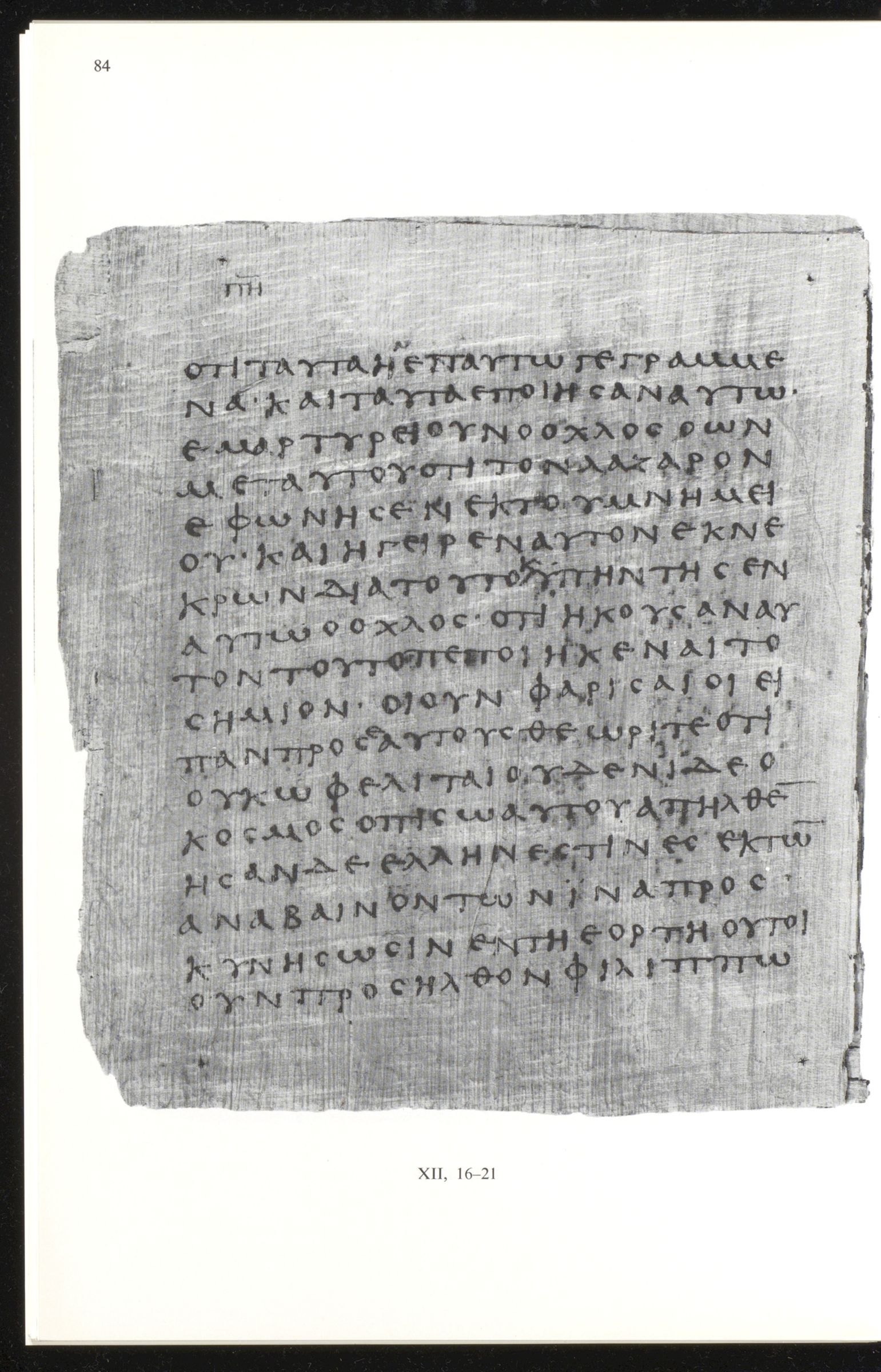
Fondation Martin Bodmer, Papyrus Bodmer II, Bodmer Lab image 1072205287_092 (https://bodmerlab.unige.ch/fr/constellations/papyri/mirador/1072205287), photographic plate of the 1962 Martin-Barns edition, shown whole. NTVMR page 840 (page 88) is linked to this image in NTVMR's page index. 12:16 begins on the previous page; 12:21 continues on the next page. Checked on the image: the printed caption reads ‹XII, 16-21›; the last line of writing, ‹ουν προσηλθον φιλιππω› (line 17 of the transcription), is legible at the foot of the page.
12:16 οτι ταυτα η εν αυτω γεγραμμε
να· και ταυτα εποιησαν αυτω·
17 εμαρτυρει ουν ο οχλος ο ων
μετ αυτου οτι τον λαζαρον
εφωνησεν εκ του μνημει
ου· και ηγειρεν αυτον εκ νε
κρων 18 δια τουτο υπηντησεν
αυτω ο οχλος· οτι ηκουσαν αυ
τον τουτο πεποιηκεναι το
σημιον· 19 οι ουν φαρισαιοι ει
παν προς αυτους θεωριτε οτι
ουκ ωφελιται ουδεν ιδε ο
κοσμος οπισω αυτου απηλθεν
20 ησαν δε ελληνες τινες εκ των
αναβαινοντων ινα προσ
κυνησωσιν εν τη εορτη 21 ουτοι
ουν προσηλθον φιλιππω
12:16These things understood not his disciples at the first: but when Jesus was glorified, then remembered they that these things were written of him, and that they had done these things unto him. 17The people therefore that was with him when he called Lazarus out of his grave, and raised him from the dead, bare record. 18For this cause the people also met him, for that they heard that he had done this miracle. 19The Pharisees therefore said among themselves, Perceive ye how ye prevail nothing? behold, the world is gone after him. 20¶ And there were certain Greeks among them that came up to worship at the feast: 21The same came therefore to Philip, which was of Bethsaida of Galilee, and desired him, saying, Sir, we would see Jesus.
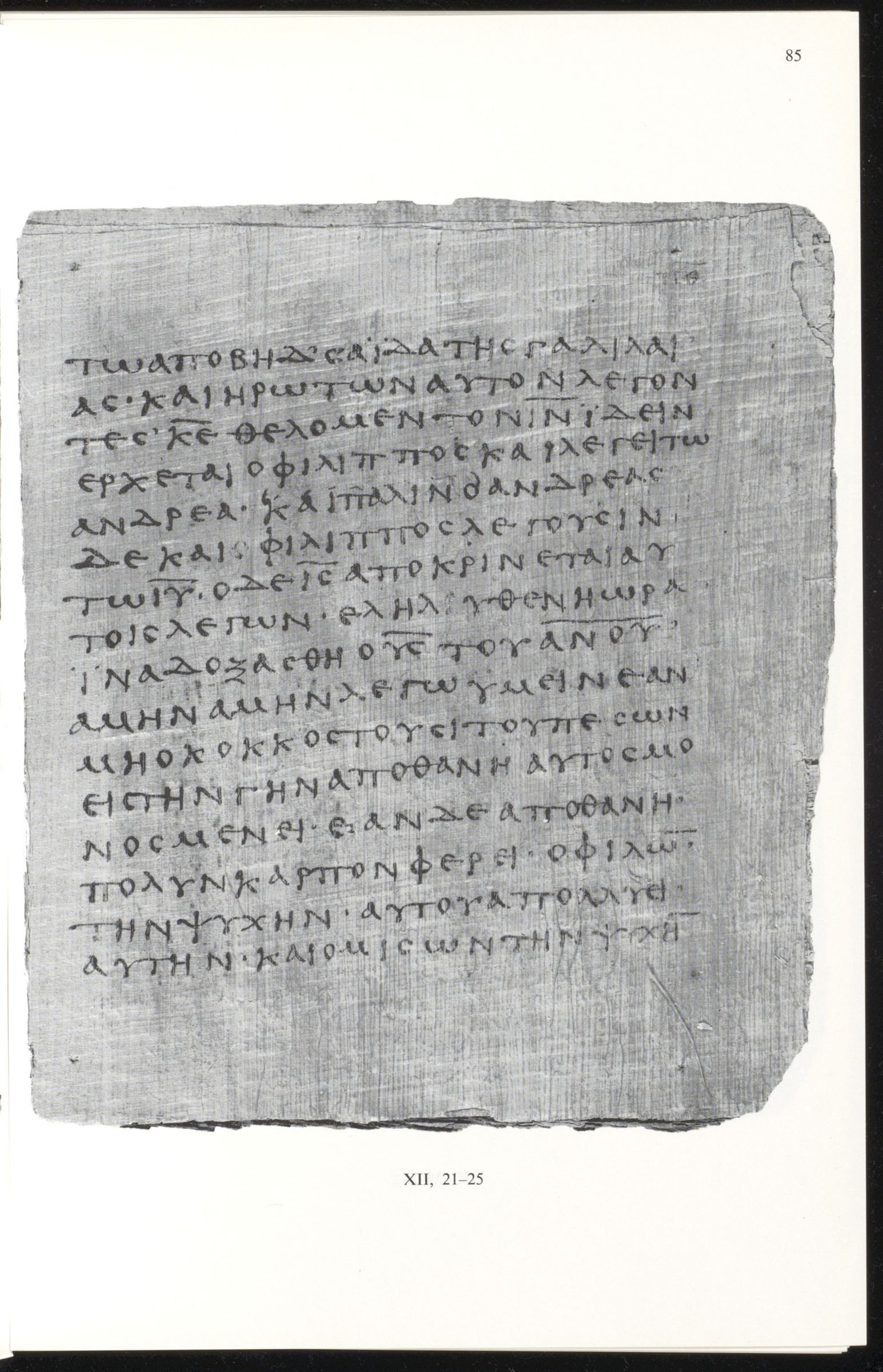
Where on the image
Fondation Martin Bodmer, Papyrus Bodmer II, Bodmer Lab image 1072205287_093 (https://bodmerlab.unige.ch/fr/constellations/papyri/mirador/1072205287), photographic plate of the 1962 Martin-Barns edition, shown whole. NTVMR page 850 (page 89) is linked to this image in NTVMR's page index. 12:21 begins on the previous page; 12:25 continues on the next page. Checked on the image: the printed caption reads ‹XII, 21-25›.
12:21 τω απο βηδσαιδα της γαλιλαι
ας· και ηρωτων αυτον λεγον
τες κ̅ε̅ θελομεν τον ι̅ν̅ ιδειν
22 ερχεται ο φιλιππος και λεγει τω
ανδρεα· και παλιν ο ανδρεας
δε και ο φιλιππος λεγουσιν
τω ι̅υ̅· 23 ο δε ι̅ς̅ αποκρινεται αυ
τοις λεγων· εληλι̣υθεν η ωρα
ινα δοξασθη ο υ̅ς̅ του α̅ν̅ο̅υ̅
24 αμην αμην λεγω υμειν εαν
μη ο κοκκος του σιτου πεσων
εις την γην αποθανη αυτος μο
νος μενει· εαν δε αποθανη
πολυν καρπον φερει· 25 ο φιλων
την ψυχην αυτου απολλυει
αυτην· και ο μισων την ψυχην
12:21The same came therefore to Philip, which was of Bethsaida of Galilee, and desired him, saying, Sir, we would see Jesus. 22Philip cometh and telleth Andrew: and again Andrew and Philip tell Jesus. 23¶ And Jesus answered them, saying, The hour is come, that the Son of man should be glorified. 24Verily, verily, I say unto you, Except a corn of wheat fall into the ground and die, it abideth alone: but if it die, it bringeth forth much fruit. 25He that loveth his life shall lose it; and he that hateth his life in this world shall keep it unto life eternal.
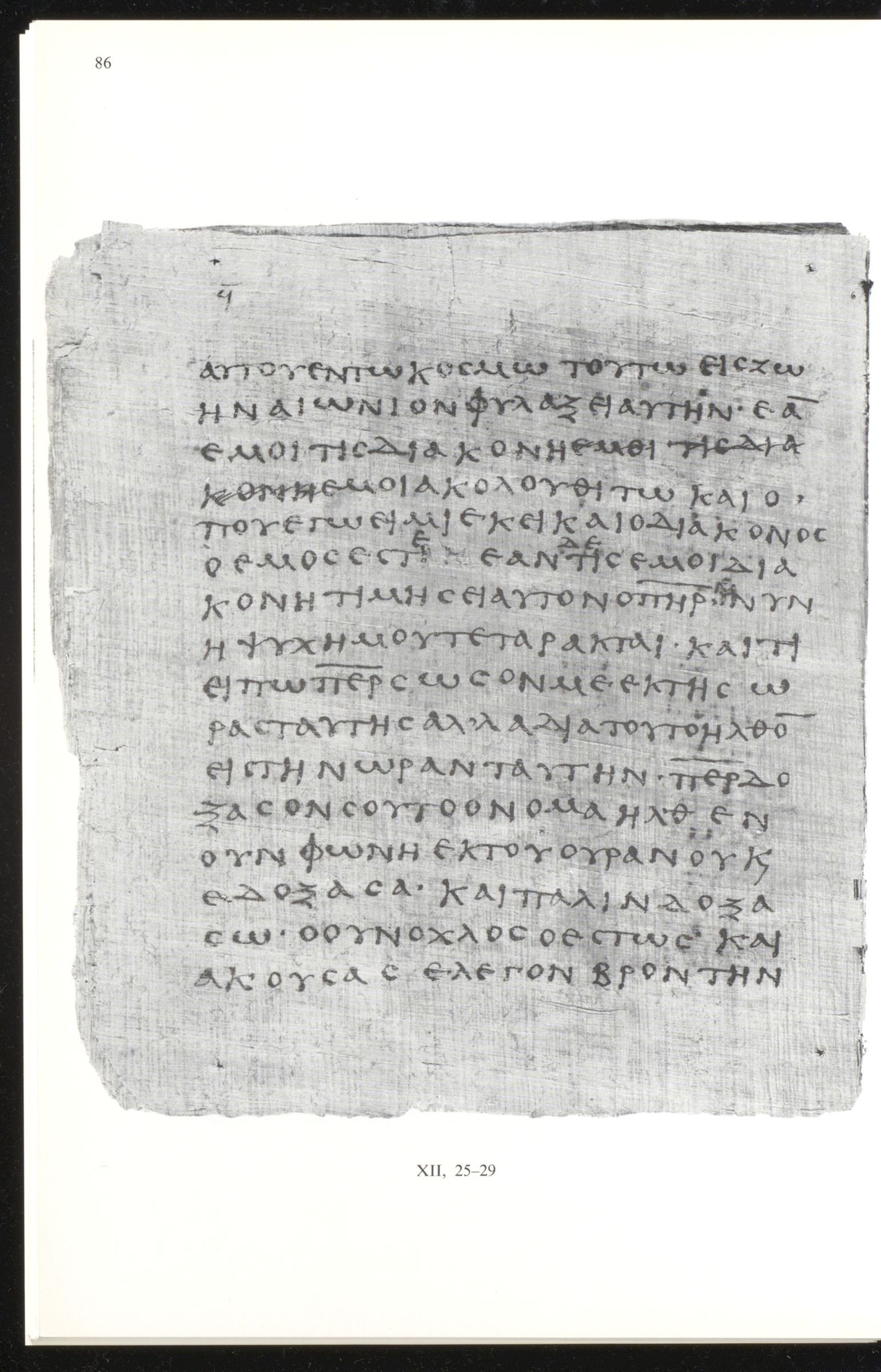
Where on the image
Fondation Martin Bodmer, Papyrus Bodmer II, Bodmer Lab image 1072205287_094 (https://bodmerlab.unige.ch/fr/constellations/papyri/mirador/1072205287), photographic plate of the 1962 Martin-Barns edition, shown whole. NTVMR page 860 (page 90) is linked to this image in NTVMR's page index. 12:25 begins on the previous page; 12:29 continues on the next page. Checked on the image: the printed caption reads ‹XII, 25-29›; the line ‹σω· ο ουν οχλος ο εστως· και› (line 15 of the transcription) is legible near the foot of the page.
12:25 αυτου εν τω κοσμω τουτω εις ζω
ην αιωνιον φυλαξει αυτην· 26 εαν
εμοι τις διακονη εμοι τις δια
κονη εμοι ακολουθιτω και ο
που εγω ειμι εκει και ο διακονος
ο εμος εστιν εαν τις εμοι δια
κονη τιμησει αυτον ο π̅η̅ρ̅ 27 νυν
η ψυχη μου τεταρακται· και τι
ειπω π̅ε̅ρ̅ σωσον με εκ της ω
ρας ταυτης αλλα δια τουτο ηλθον
εις την ωραν ταυτην· 28 π̅ε̅ρ̅ δο
ξασον σου το ονομα ηλθεν
ουν φωνη εκ του ουρανου και
εδοξασα· και παλιν δοξα
σω· 29 ο ουν οχλος ο εστως· και
ακουσας ελεγον βροντην
12:25He that loveth his life shall lose it; and he that hateth his life in this world shall keep it unto life eternal. 26If any man serve me, let him follow me; and where I am, there shall also my servant be: if any man serve me, him will my Father honour. 27Now is my soul troubled; and what shall I say? Father, save me from this hour: but for this cause came I unto this hour. 28Father, glorify thy name. Then came there a voice from heaven, saying, I have both glorified it, and will glorify it again. 29The people therefore, that stood by, and heard it, said that it thundered: others said, An angel spake to him.
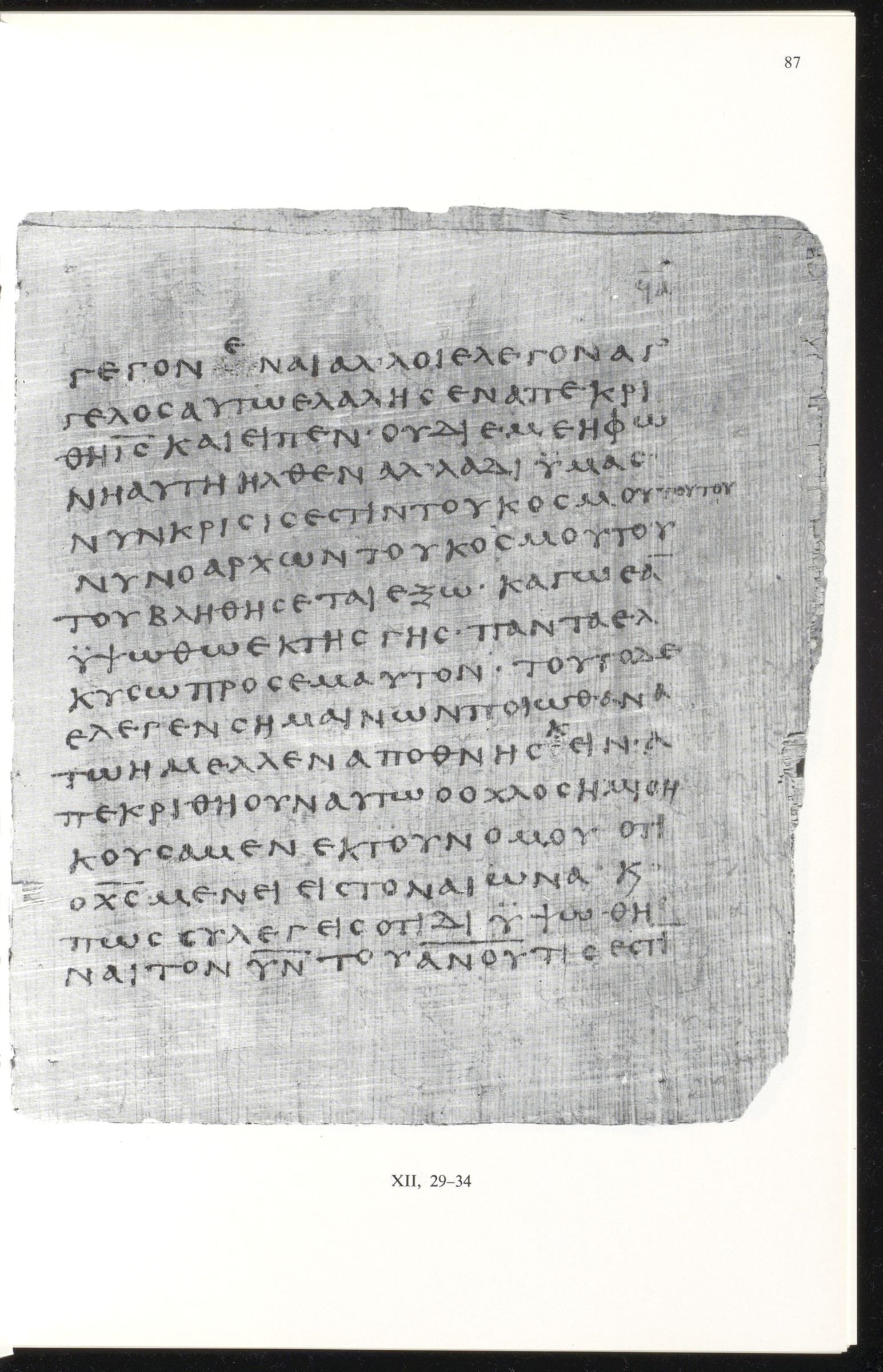
Where on the image
Fondation Martin Bodmer, Papyrus Bodmer II, Bodmer Lab image 1072205287_095 (https://bodmerlab.unige.ch/fr/constellations/papyri/mirador/1072205287), photographic plate of the 1962 Martin-Barns edition, shown whole. NTVMR page 870 (page 91) is linked to this image in NTVMR's page index. 12:29 begins on the previous page; 12:34 continues on the next page. Checked on the image: the printed caption reads ‹XII, 29-34›.
12:29 γεγοναι̣ναι αλλοι ελεγον αγ
γελος αυτω ελαλησεν 30 απεκρι
θη ι̅ς̅ και ειπεν· ου δι εμε η φω
νη αυτη ηλθεν αλλα δι υμας
31 νυν κρισις εστιν του κοσμου
νυν ο αρχων του κοσμου του
του βληθησεται εξω· 32 καγω εαν
υψωθω εκ της γης· παντα ελ
κυσω προς εμαυτον· 33 τουτο δε
ελεγεν σημαινων ποιω θανα
τω ημελλεν αποθνησθ̣ειν· 34 α
πεκριθη ουν αυτω ο οχλος ημις η
κουσαμεν εκ του νομου οτι
ο χ̅ς̅ μενει εις τον αιωνα· και
πως συ λεγεις οτι δι υψωθη
ναι τον υ̅ν̅ του α̅ν̅ο̅υ̅ τις εστιν
12:29The people therefore, that stood by, and heard it, said that it thundered: others said, An angel spake to him. 30Jesus answered and said, This voice came not because of me, but for your sakes. 31Now is the judgment of this world: now shall the prince of this world be cast out. 32And I, if I be lifted up from the earth, will draw all men unto me. 33This he said, signifying what death he should die. 34The people answered him, We have heard out of the law that Christ abideth for ever: and how sayest thou, The Son of man must be lifted up? who is this Son of man?
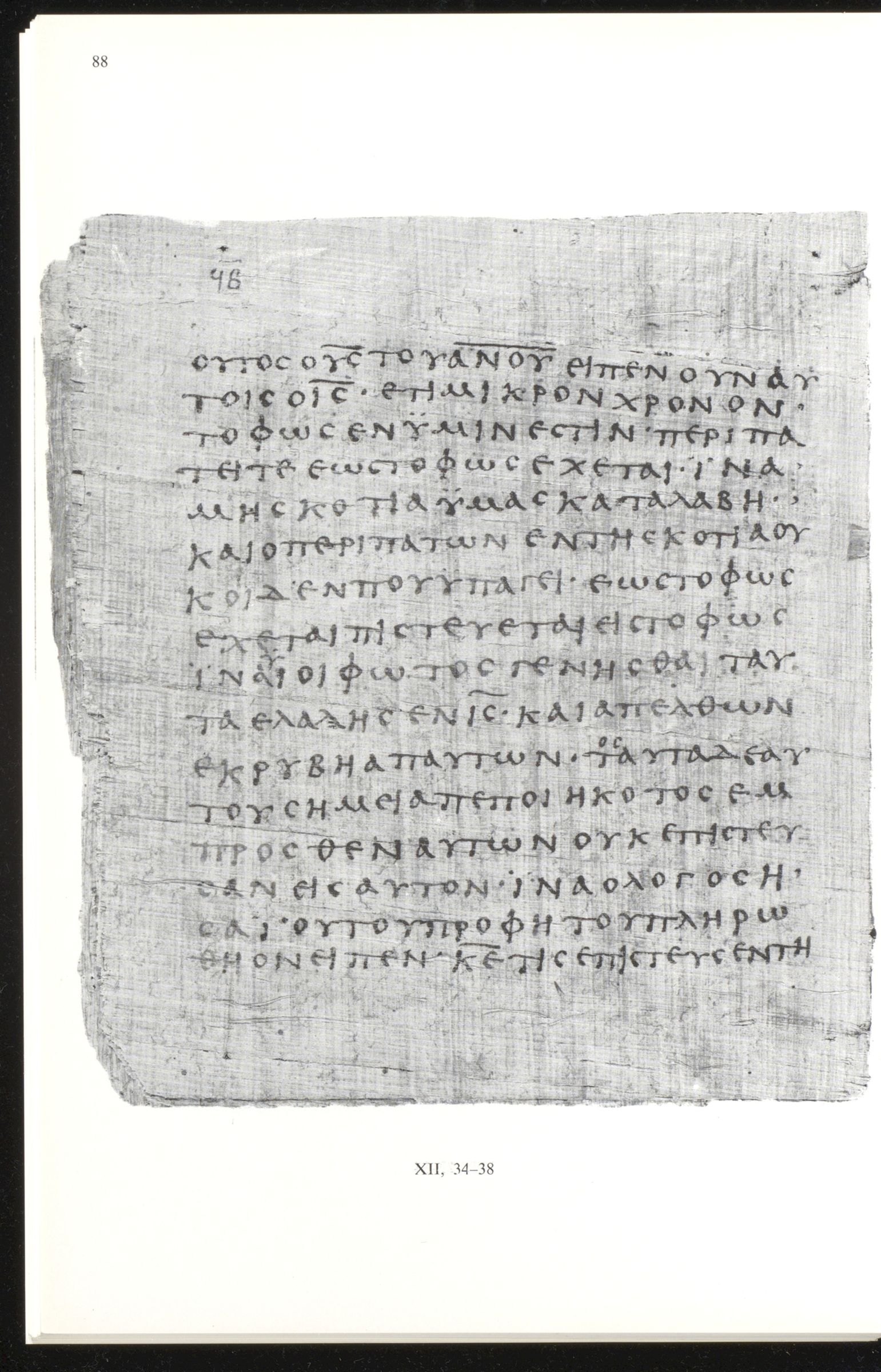
Where on the image
Fondation Martin Bodmer, Papyrus Bodmer II, Bodmer Lab image 1072205287_096 (https://bodmerlab.unige.ch/fr/constellations/papyri/mirador/1072205287), photographic plate of the 1962 Martin-Barns edition, shown whole. NTVMR page 880 (page 92) is linked to this image in NTVMR's page index. 12:34 begins on the previous page; 12:38 continues on the next page. Checked on the image: the printed caption reads ‹XII, 34-38›; the last line of writing, ‹θη ον ειπεν· κ̅ε̅ τις επιστευσεν τη› (line 16 of the transcription), is legible at the foot of the page.
12:34 ουτος ο υ̅ς̅ του α̅ν̅ο̅υ̅ 35 ειπεν ουν ου
τοις ο ι̅ς̅· ετι μικρον χρονον
το φως εν υμιν εστιν· περιπα
τειτε εως το φως εχεται· ινα
μη σκοτια υμας καταλαβη·
και ο περιπατων εν τη σκοτια ου
κ οιδεν που υπαγει· 36 εως το φως
εχεται πιστευεται εις το φως
ινα ιοι φωτος γενησθαι ταυ
τα ελαλησεν ι̅ς̅· και απελθων
εκρυβη απ αυτων· 37 ταυτα δε αυ
του σημεια πεποιηκοτος εμ
προσθεν αυτων ουκ επιστευ
σαν εις αυτον· 38 ινα ο λογος η
σαιου του προφητου πληρω
θη ον ειπεν· κ̅ε̅ τις επιστευσεν τη
12:34The people answered him, We have heard out of the law that Christ abideth for ever: and how sayest thou, The Son of man must be lifted up? who is this Son of man? 35Then Jesus said unto them, Yet a little while is the light with you. Walk while ye have the light, lest darkness come upon you: for he that walketh in darkness knoweth not whither he goeth. 36While ye have light, believe in the light, that ye may be the children of light. These things spake Jesus, and departed, and did hide himself from them. 37¶ But though he had done so many miracles before them, yet they believed not on him: 38That the saying of Esaias the prophet might be fulfilled, which he spake, Lord, who hath believed our report? and to whom hath the arm of the Lord been revealed?
Where on the image
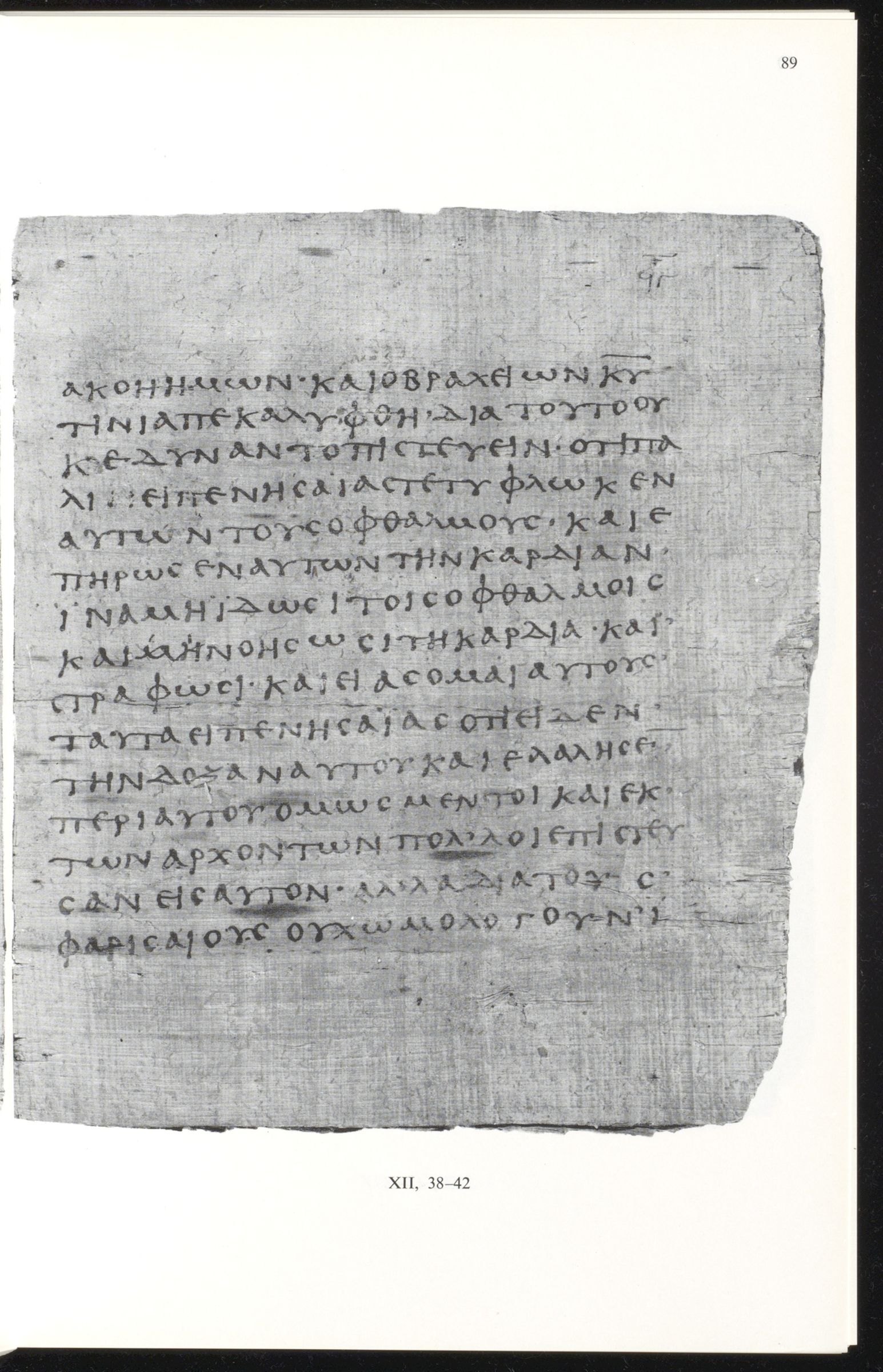
Fondation Martin Bodmer, Papyrus Bodmer II, Bodmer Lab image 1072205287_097 (https://bodmerlab.unige.ch/fr/constellations/papyri/mirador/1072205287), photographic plate of the 1962 Martin-Barns edition, shown whole. NTVMR page 890 (page 93) is linked to this image in NTVMR's page index. 12:38 begins on the previous page; 12:42 continues on the next page. Checked on the image: the printed caption reads ‹XII, 38-42›.
12:38 ακοη ημων· και ο βραχειων κ̅υ̅
τινι απεκαλυφθη 39 δια τουτο ουκ
υ εδυναντο πιστευειν· οτι πα
λιν̣ ειπεν ησαιας 40 τετυφλωκεν
αυτων τους οφθαλμους· και ε
πηρωσεν αυτων την καρδιαν
ινα μη ιδωσι τοις οφθαλμοις
και μη νοησωσι τη καρδια· και
στραφωσι· και ειασομαι αυτους
41 ταυτα ειπεν ησαιας οτι ειδεν
την δοξαν αυτου και ελαλησεν
περι αυτου 42 ομως μεντοι και εκ
των αρχοντων πολλοι επιστευ
σαν εις αυτον· αλλα δια τους
φαρισαιους ουχ ωμολογουν ι
12:38That the saying of Esaias the prophet might be fulfilled, which he spake, Lord, who hath believed our report? and to whom hath the arm of the Lord been revealed? 39Therefore they could not believe, because that Esaias said again, 40He hath blinded their eyes, and hardened their heart; that they should not see with their eyes, nor understand with their heart, and be converted, and I should heal them. 41These things said Esaias, when he saw his glory, and spake of him. 42¶ Nevertheless among the chief rulers also many believed on him; but because of the Pharisees they did not confess him, lest they should be put out of the synagogue:
Where on the image
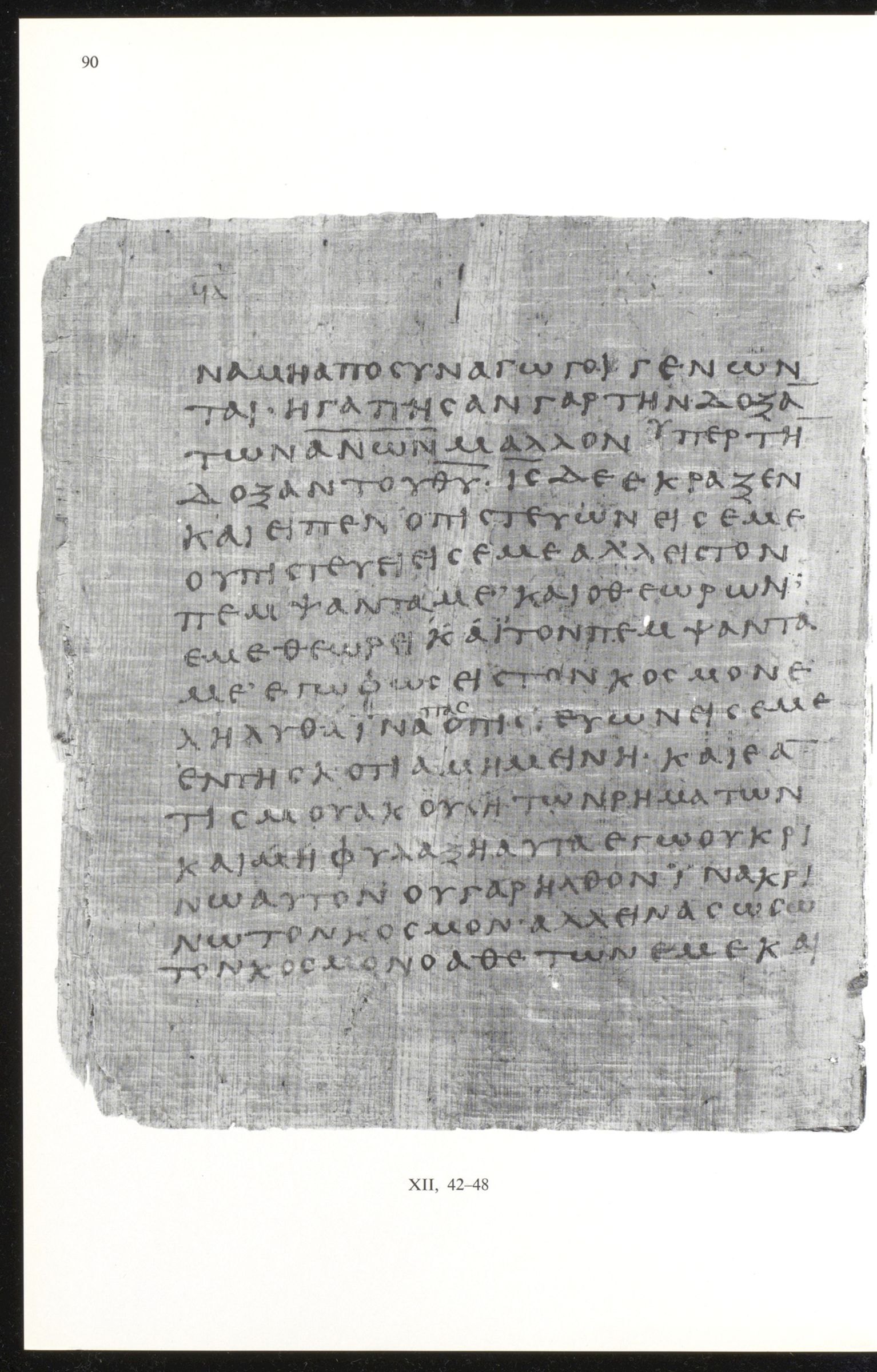
Fondation Martin Bodmer, Papyrus Bodmer II, Bodmer Lab image 1072205287_098 (https://bodmerlab.unige.ch/fr/constellations/papyri/mirador/1072205287), photographic plate of the 1962 Martin-Barns edition, shown whole. NTVMR page 900 (page 94) is linked to this image in NTVMR's page index. 12:42 begins on the previous page; 12:48 continues on the next page. Checked on the image: the printed caption reads ‹XII, 42-48›.
12:42 να μη αποσυναγωγω̣ γενων
ται· 43 ηγαπησαν γαρ την δοξαν
των α̅ν̅ω̅ν̅ μαλλον ηπερ την
δοξαν του θ̅υ̅· 44 ι̅ς̅ δε εκραξεν
και ειπεν ο πιστευων εις εμε
ου πιστευει εις εμε αλλ εις τον
πεμψαντα με 45 και ο θεωρων
εμε θεωρει και τον πεμψαντα
με 46 εγω φως εις τον κοσμον ε
ληλυθα ινα ο πιστευων εις εμε
εν τη σκοτια μη μεινη· 47 και εαν
τις μου ακουση των ρηματων
και μη φυλαξη αυτα εγω ου κρι
νω αυτον ου γαρ ηλθον· ινα κρι
νω τον κοσμον· αλλ εινα σωσω
τον κοσμον 48 ο αθετων εμε και
12:42¶ Nevertheless among the chief rulers also many believed on him; but because of the Pharisees they did not confess him, lest they should be put out of the synagogue: 43For they loved the praise of men more than the praise of God. 44¶ Jesus cried and said, He that believeth on me, believeth not on me, but on him that sent me. 45And he that seeth me seeth him that sent me. 46I am come a light into the world, that whosoever believeth on me should not abide in darkness. 47And if any man hear my words, and believe not, I judge him not: for I came not to judge the world, but to save the world. 48He that rejecteth me, and receiveth not my words, hath one that judgeth him: the word that I have spoken, the same shall judge him in the last day.
Where on the image
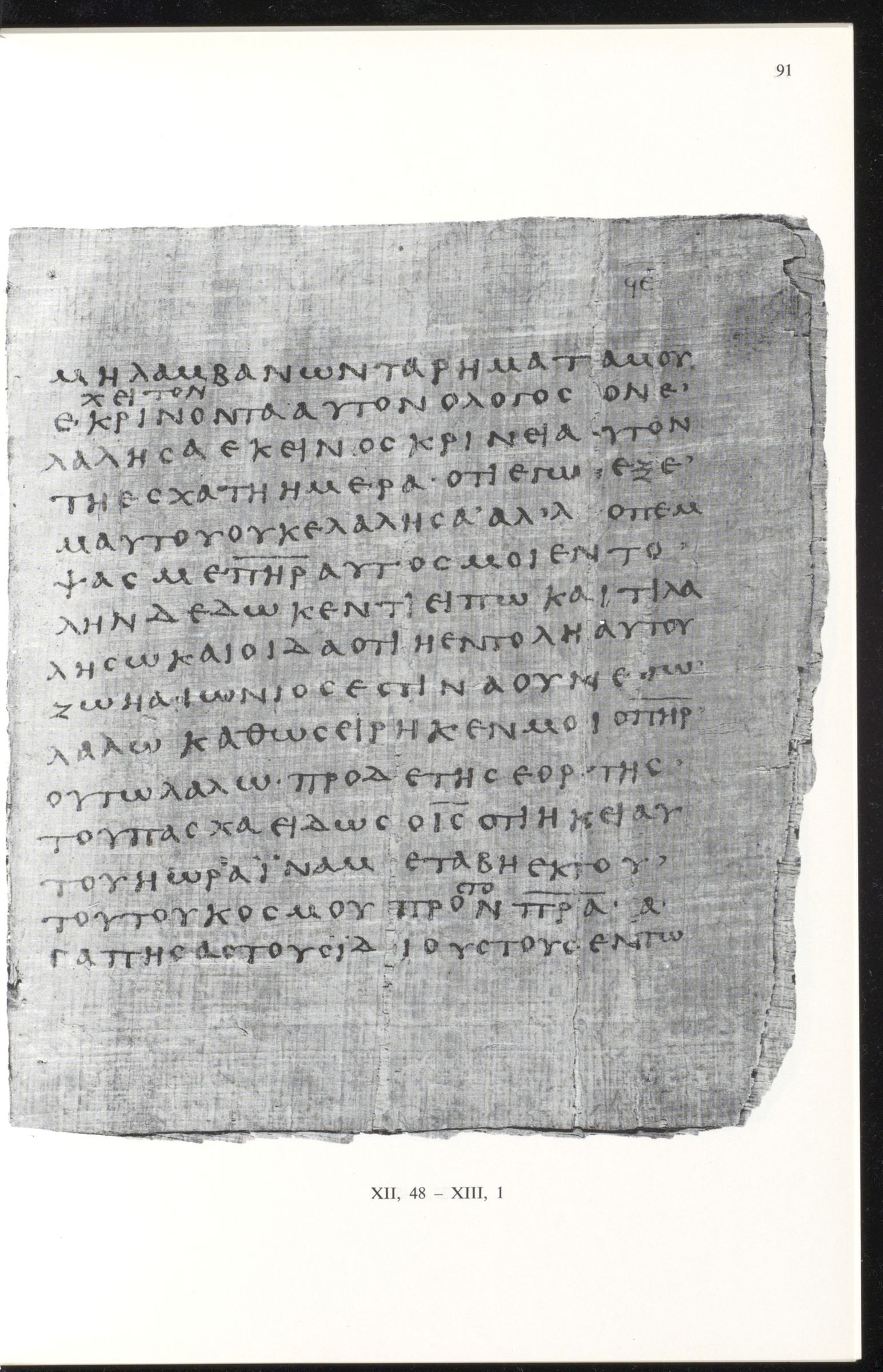
Fondation Martin Bodmer, Papyrus Bodmer II, Bodmer Lab image 1072205287_099 (https://bodmerlab.unige.ch/fr/constellations/papyri/mirador/1072205287), photographic plate of the 1962 Martin-Barns edition, shown whole. NTVMR page 910 (page 95) is linked to this image in NTVMR's page index. 12:48 begins on the previous page; 13:1 continues on the next page. Checked on the image: the printed caption reads ‹XII, 48 - XIII, 1›.
12:48 μη λαμβανων τα ρηματα μου
εκρινοντα αυτον ο λογος ον ε
λαλησα εκεινος κρινει αυτον
τη εσχατη ημερα· 49 οτι εγω εξ ε
μαυτου ουκ ελαλησα αλλ ο πεμ
ψας με π̅η̅ρ̅ αυτος μοι εντο
λην δεδωκεν τι ειπω και τι λα
λησω 50 και οιδα οτι η εντολη αυτου
ζωη αιωνιος εστιν α ουν εγω
λαλω καθως ειρηκεν μοι ο π̅η̅ρ̅
ουτω λαλω· 13:1 προ δε της εορτης
του πασχα ειδως ο ι̅ς̅ οτι ηκει αυ
του η ωρα ινα μεταβη εκ του
του του κοσμου προν π̅ρ̅α̅· α
γαπησας τους ιδιους τους εν τω
12:48He that rejecteth me, and receiveth not my words, hath one that judgeth him: the word that I have spoken, the same shall judge him in the last day. 49For I have not spoken of myself; but the Father which sent me, he gave me a commandment, what I should say, and what I should speak. 50And I know that his commandment is life everlasting: whatsoever I speak therefore, even as the Father said unto me, so I speak. 13:1Now before the feast of the passover, when Jesus knew that his hour was come that he should depart out of this world unto the Father, having loved his own which were in the world, he loved them unto the end.
Notes
- Greek: the NTVMR diplomatic transcription, line by line as on the papyrus. Square brackets enclose letters that are lost or illegible and were supplied by the transcribers; a dot under a letter marks it as uncertain; [...] marks a gap. Nomina sacra and numerals keep the scribe's overline. Spelling is the scribe's (no accents or breathings). Words broken at a line end stay broken as on the papyrus. Corrections are not shown: the text is the first hand.
- English: the King James Version (1611), whole verses, for every verse that has text on the page. A verse that begins on one page and ends on the next is given in full on both. The KJV translates a later form of the Greek text, so its wording does not always match the papyrus; material differences (such as verses the papyrus does not have) are noted in the section.
Cite
Sources
- Source: Papyrus Bodmer II (P66), Fondation Martin Bodmer: images from the Bodmer Lab, University of Geneva; Greek from the INTF NTVMR transcription of P66; English from the King James Version (holding institution)
- Critical edition: INTF NTVMR diplomatic transcription (CC BY 4.0)
← previous · → next · v cycle view · l back to library