P66 (Papyrus Bodmer II): John 15:2-16:4 (pages 110-115)
Introduction
P66 is a papyrus codex of the Gospel of John copied in Egypt around 200, the most complete early copy of John. Most of it is Papyrus Bodmer II in the Fondation Martin Bodmer, Cologny (Geneva); small pieces are in the Chester Beatty Library, Dublin, and the Institut für Altertumskunde, Cologne. The first five quires (John 1:1-14:26) survive as a bound book of numbered pages; later leaves, from John 14:29 to 21:9, are damaged and kept between glass. The scribe made many corrections, some of them his own; only the first hand is shown here.
Each section below is one page: the photograph, the NTVMR diplomatic transcription line by line, and the King James Version of every verse on the page. Pages of the bound book are shown on the photographic plates published by Victor Martin and J. W. B. Barns in 1962 (scanned by the Bodmer Lab), the glass-mounted leaves on colour photographs. Lost: John 6:12-34 (pages 35-38) and parts of chapters 14-21; the transcription ends at 21:9. Where P66 lacks a verse that the KJV has (John 5:4, the account of the adulteress at 7:53-8:11, 16:15), the section says so.
This entry covers pages 110-115 (John 15:2-16:4).
How was this verified? (Provenance)
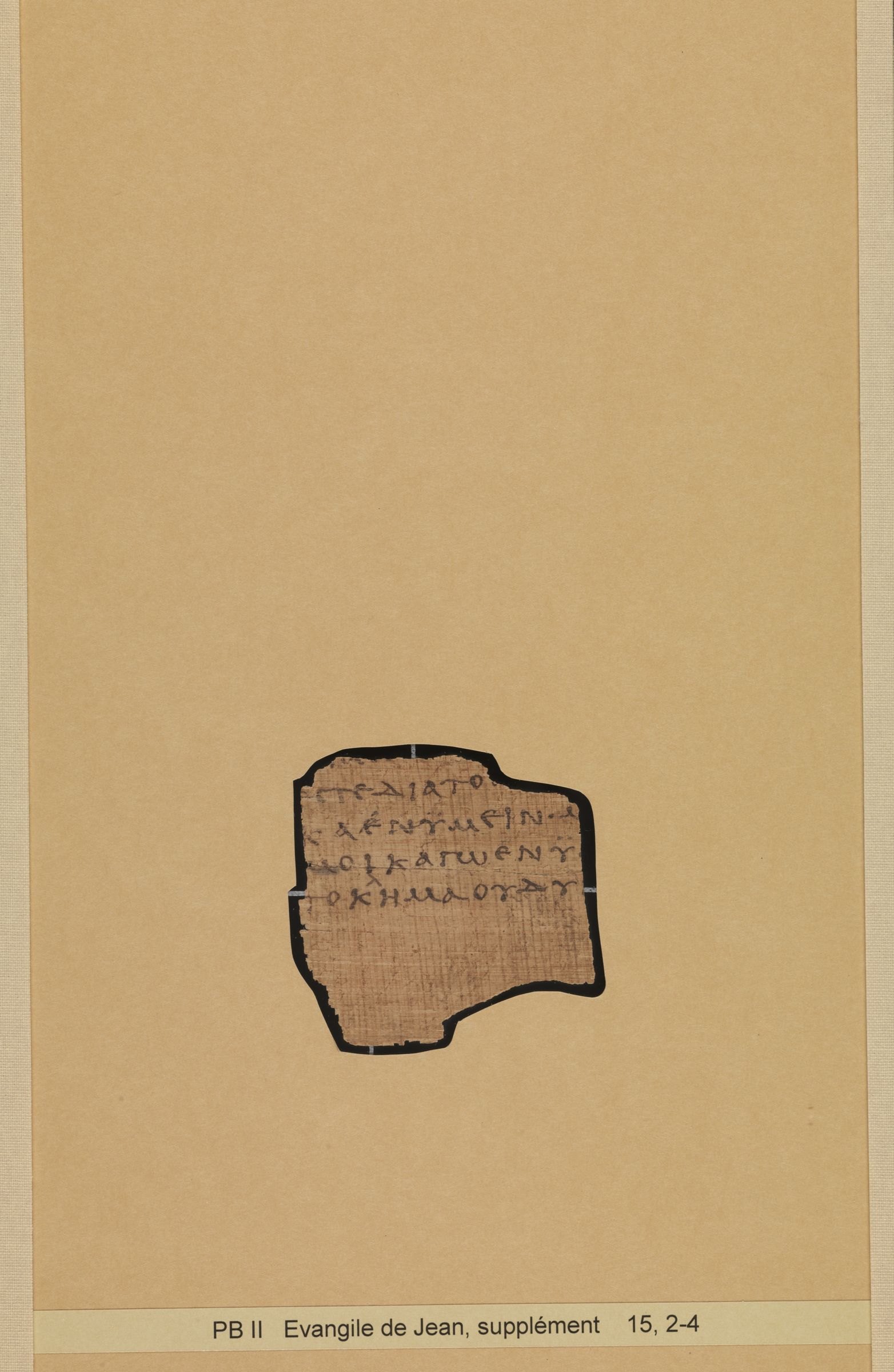
Where on the image
Fondation Martin Bodmer, Papyrus Bodmer II, Bodmer Lab image 1072205287_114 (https://bodmerlab.unige.ch/fr/constellations/papyri/mirador/1072205287), colour photograph of the glass-mounted leaf, shown whole. NTVMR page 1060 (page 110) is linked to this image in NTVMR's page index. 15:2 begins on the previous page; 15:4 continues on the next page. Checked on the image: the printed caption reads ‹PB II Evangile de Jean, supplément 15, 2-4›.
15:2 [πλειο]ν̣α̣ [φερη] 3 [ηδη υμεις κα]
[θαροι] εστε δια τον̣ [λογον ον λε]
[λαλη]κα εν υμειν· 4 μ̣[εινα]
[τε εν ε]μοι καγω εν υμ̣[ειν]
[καθως] το κημα ου δυν̣[αται καρπον]
15:2Every branch in me that beareth not fruit he taketh away: and every branch that beareth fruit, he purgeth it, that it may bring forth more fruit. 3Now ye are clean through the word which I have spoken unto you. 4Abide in me, and I in you. As the branch cannot bear fruit of itself, except it abide in the vine; no more can ye, except ye abide in me.
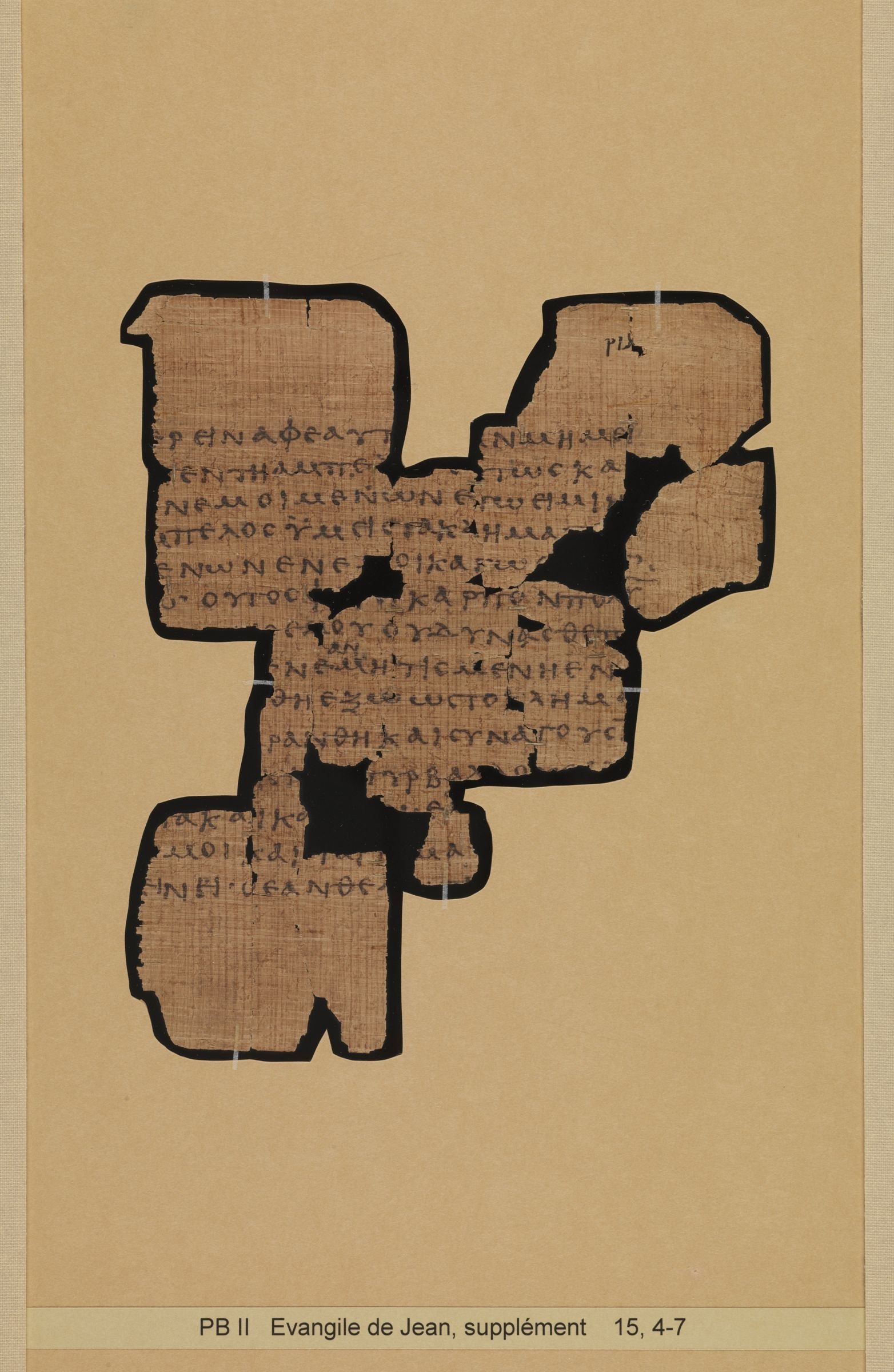
Where on the image
Fondation Martin Bodmer, Papyrus Bodmer II, Bodmer Lab image 1072205287_115 (https://bodmerlab.unige.ch/fr/constellations/papyri/mirador/1072205287), colour photograph of the glass-mounted leaf, shown whole. NTVMR page 1070 (page 111) is linked to this image in NTVMR's page index. 15:4 begins on the previous page; 15:7 continues on the next page. Checked on the image: the printed caption reads ‹PB II Evangile de Jean, supplément 15, 4-7›.
15:4 [φ]ερειν αφ εαυτ[ου ε]α̣ν μη μει
[ν]η̣ εν τη αμπελ̣[ω] ο̣υ̣τως κα[ι]
[ο] ε̣ν εμοι μενων 5 εγω ειμι η̣
[α]μ̣πελος υμεις τα κληματ̣[α ο]
[μ]ενων εν εμ̣οι καγω ε̣[ν α]υ̣
[τ]ω̣ ουτος φ̣[ερ]ε̣ι̣ καρπον πολ̣υν
[οτι χωρ]ι̣ς̣ εμου ου δυνασθε π[οι]
[ειν ουδ]ε̣ν 6 εμη τις μενη εν [ε]
[μοι εβλη]θη εξω ως το κ̣λημα̣
[και εξη]ρανθη και συναγουσιν
[αυτα κα]ι̣ ει[ς το] π̣υρ βαλλ̣ου̣σ̣ι̣ν̣
[αυ]τ̣α και κα̣[ιετ]α̣ι̣· 7 εα̣[ν μεινητε]
[εν] ε̣μοι και τ̣α̣ ρ̣η̣μα[τα μου εν υμειν]
[μ]εινει· ο εαν θελ̣[η]τ̣α̣[ι αιτησα]
15:4Abide in me, and I in you. As the branch cannot bear fruit of itself, except it abide in the vine; no more can ye, except ye abide in me. 5I am the vine, ye are the branches: He that abideth in me, and I in him, the same bringeth forth much fruit: for without me ye can do nothing. 6If a man abide not in me, he is cast forth as a branch, and is withered; and men gather them, and cast them into the fire, and they are burned. 7If ye abide in me, and my words abide in you, ye shall ask what ye will, and it shall be done unto you.
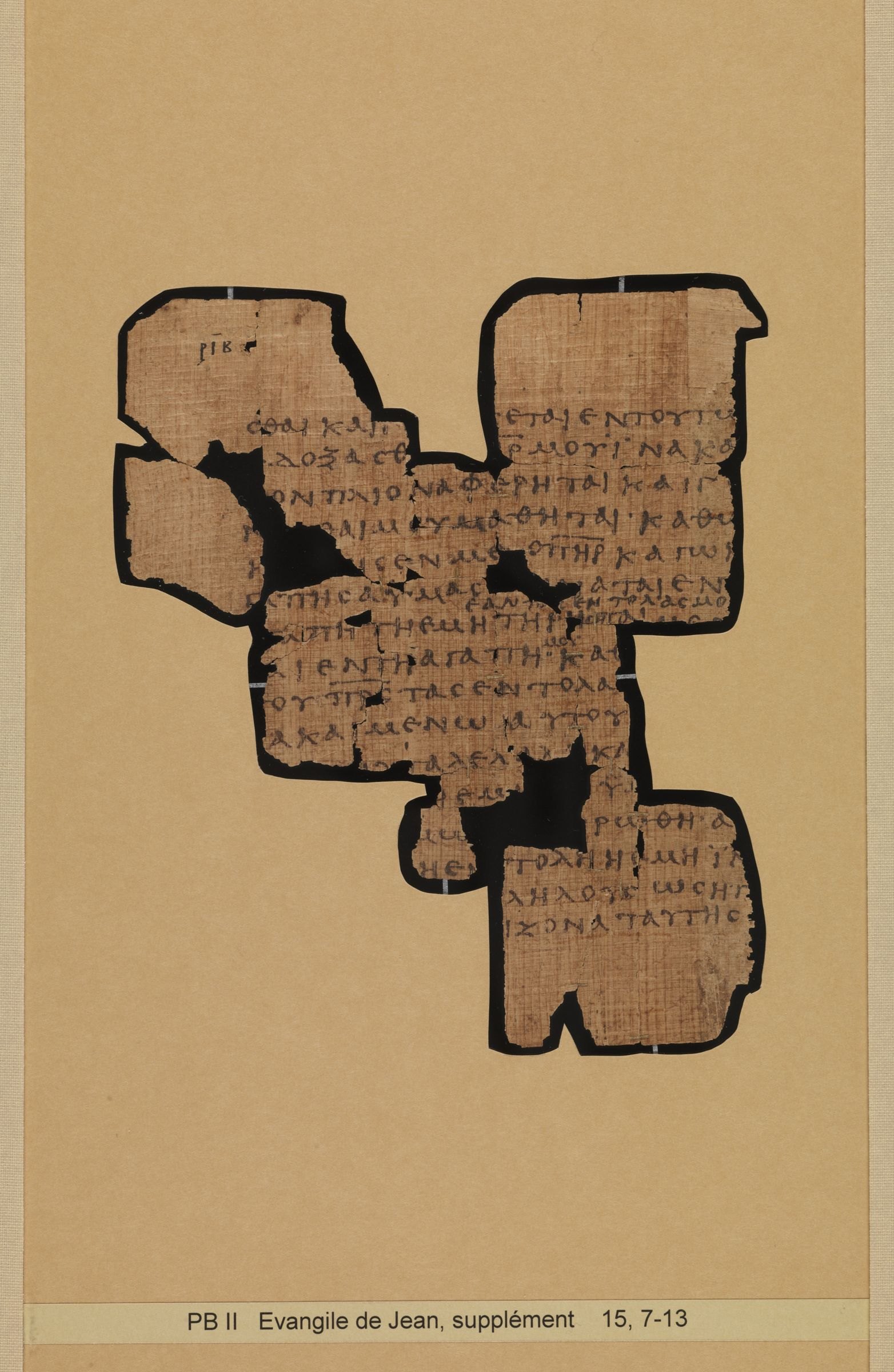
Where on the image
Fondation Martin Bodmer, Papyrus Bodmer II, Bodmer Lab image 1072205287_116 (https://bodmerlab.unige.ch/fr/constellations/papyri/mirador/1072205287), colour photograph of the glass-mounted leaf, shown whole. NTVMR page 1080 (page 112) is linked to this image in NTVMR's page index. 15:7 begins on the previous page; 15:13 continues on the next page. Checked on the image: the printed caption reads ‹PB II Evangile de Jean, supplément 15, 7-13›.
15:7 σθαι και γ̣[ενη]σ̣εται 8 εν τουτω̣
ε̣δοξασθ[η ο π̅]η̣̣̅ρ̅ μου ινα κα[ρ]
[π]ον πλιονα φερηται και γε̣
ν̣[ησ]θαι μου μαθηται· 9 καθω̣[ς]
η̣[γαπ]η̣σεν με ο π̅η̅ρ̅ καγω η̣
γα̣πησα υμας [με]ι̣ν̣αται εν [τη]
[α]γ̣απη τη εμη· 10 τηρη̣ται μ̣ε̣ν̣[ει]
[τ]αι εν τη αγαπη · καθ̣[ως εγω]
τ̣ου π̅ρ̅ς̅ τας εντολα[ς τετηρη]
[κ]α και μενω μ̣ αυτου [εν τη]
[αγαπη] 11 [τ]α̣υ̣τ̣α λελα̣λ̣η̣κα [υμιν]
[ινα η χαρα] η̣ εμη̣ [εν] υμ̣[ιν η]
[και η χαρα υ]μ̣ω[ν πλη]ρωθη· 12 α[υ]
[τη εστιν] η εν̣τολη η εμη ιν̣[α]
[αγαπατε αλ]ληλους ως ηγ[α]
[πησα υμας] 13 [με]ιζονα ταυτης [α]
15:7If ye abide in me, and my words abide in you, ye shall ask what ye will, and it shall be done unto you. 8Herein is my Father glorified, that ye bear much fruit; so shall ye be my disciples. 9As the Father hath loved me, so have I loved you: continue ye in my love. 10If ye keep my commandments, ye shall abide in my love; even as I have kept my Father’s commandments, and abide in his love. 11These things have I spoken unto you, that my joy might remain in you, and that your joy might be full. 12This is my commandment, That ye love one another, as I have loved you. 13Greater love hath no man than this, that a man lay down his life for his friends.
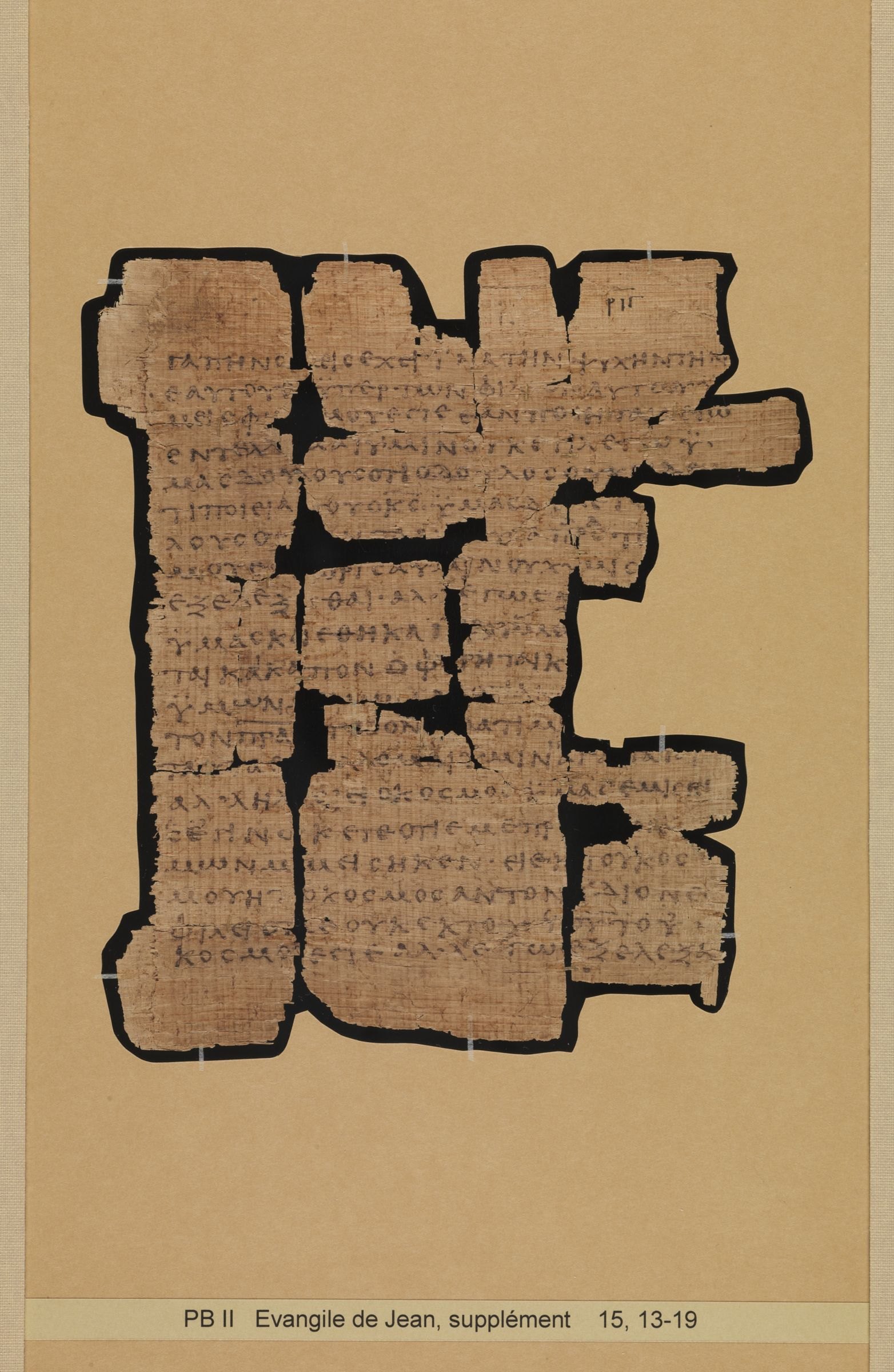
Where on the image
Fondation Martin Bodmer, Papyrus Bodmer II, Bodmer Lab image 1072205287_117 (https://bodmerlab.unige.ch/fr/constellations/papyri/mirador/1072205287), colour photograph of the glass-mounted leaf, shown whole. NTVMR page 1090 (page 113) is linked to this image in NTVMR's page index. 15:13 begins on the previous page; 15:19 continues on the next page. Checked on the image: the printed caption reads ‹PB II Evangile de Jean, supplément 15, 13-19›.
15:13 γαπην ο[υ]δ̣εις εχει· ινα την ψυχην την
εαυτου θ[η] υπερ των φιλω̣ν αυτω 14 υ̣
μεις φιλ̣[οι] μ̣ου εστε εαν ποιηται α εγω
εντελλ[ο]μ̣αι υμιν 15 ουκετι λεγω υ
μας δουλους οτι ο δουλος ουκ ο̣ι̣δεν̣
τι ποιει α[υ]τ̣ου ο κ̅ς̅. υμας δε̣ λ̣ε̣γ̣ω̣ [φι]
λους οτ[ι πα]ντ̣α̣ α̣ η̣[κο]υσ̣α προ το[υ π̅ρ̅ς̅]
μου εγ̣[ν]ω̣ρισα υμιν 16 ουχ υ̣μις [με]
εξελεξ[α]σ̣θαι· αλλ̣ εγω εξ[ελεξαμην]
υμας κα̣ι εθηκα ι[ν]α̣ υμα̣[ς υπαγη]
ται κα κα[ρ]πον ο φε̣ρηται κ[αι ο καρπος]
υμων μ̣[ει]ν̣η̣ ι̣ν̣α̣ ο τι αν̣ α̣[ιτησητε]
τον π̅ρ̅α̅ [εν] τω̣ ον[ο]μ̣ατι μο̣[υ δω υμιν]
17 ταυτ̣α ε[ντ]ε̣λλομαι υμιν αγαπ̣ατ̣α̣ι̣
αλληλ[ου]ς 18 ει ο κοσμος υμας εμιση̣
σε γινω̣[σ]κετε οτι εμε πρ[ωτ]ο̣ν [υ]
μων μ[ε]μεισηκεν· 19 ει εκ του κοσ
μου ητ[ε] ο κοσμος αν τον ιδιον ε
φιλει οτ[ι] δ̣ε ουκ εκ τουτου του
κοσμου̣ εστε αλλ εγω εξελεξα
15:13Greater love hath no man than this, that a man lay down his life for his friends. 14Ye are my friends, if ye do whatsoever I command you. 15Henceforth I call you not servants; for the servant knoweth not what his lord doeth: but I have called you friends; for all things that I have heard of my Father I have made known unto you. 16Ye have not chosen me, but I have chosen you, and ordained you, that ye should go and bring forth fruit, and that your fruit should remain: that whatsoever ye shall ask of the Father in my name, he may give it you. 17These things I command you, that ye love one another. 18If the world hate you, ye know that it hated me before it hated you. 19If ye were of the world, the world would love his own: but because ye are not of the world, but I have chosen you out of the world, therefore the world hateth you.
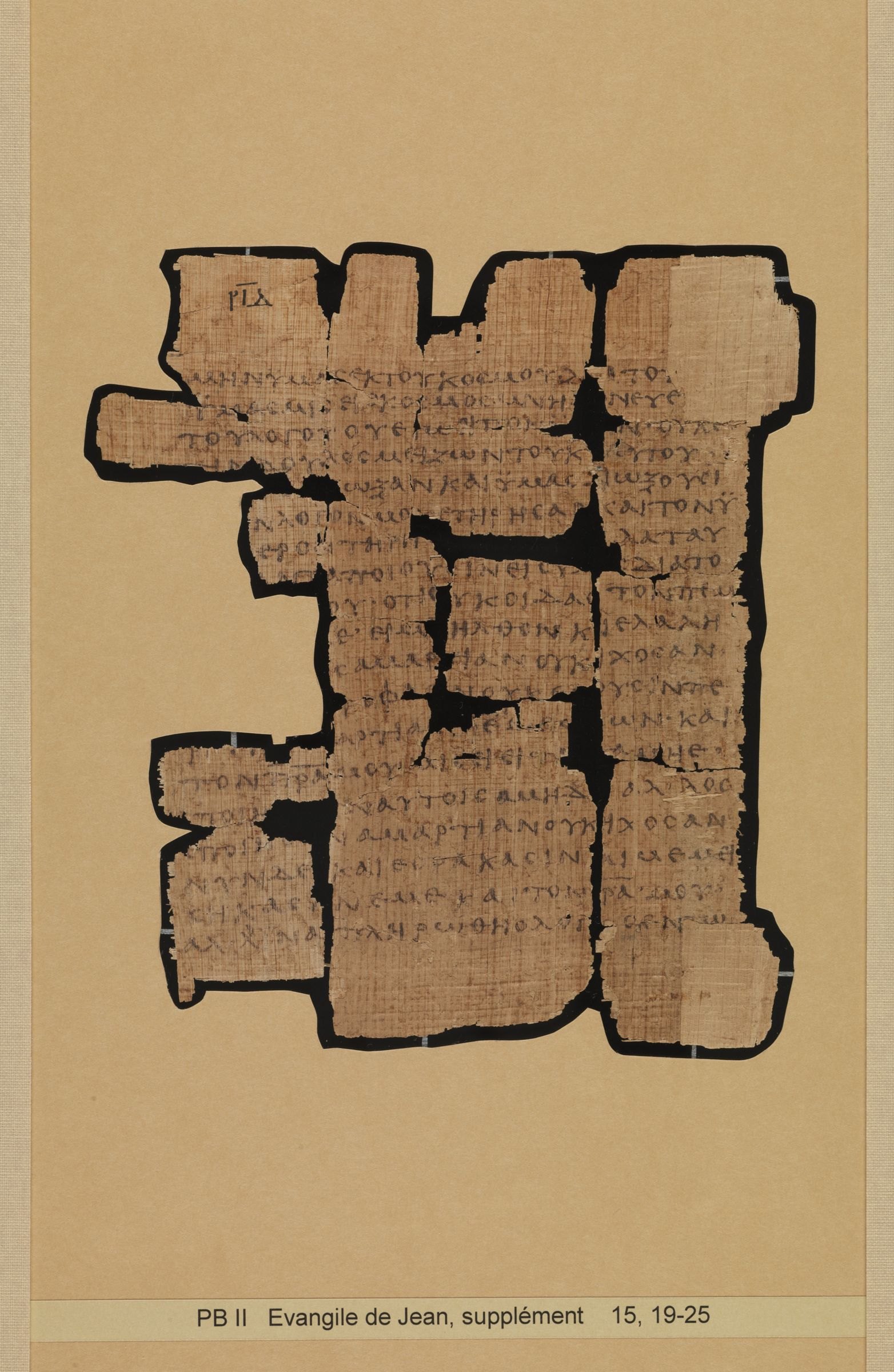
Where on the image
Fondation Martin Bodmer, Papyrus Bodmer II, Bodmer Lab image 1072205287_118 (https://bodmerlab.unige.ch/fr/constellations/papyri/mirador/1072205287), colour photograph of the glass-mounted leaf, shown whole. NTVMR page 1100 (page 114) is linked to this image in NTVMR's page index. 15:19 begins on the previous page; 15:25 continues on the next page. Checked on the image: the printed caption reads ‹PB II Evangile de Jean, supplément 15, 19-25›.
15:19 μην υμας εκ του κοσμου. δ[ι]α̣ του[το]
υμας μισει ο̣ κοσμος 20 μνη[μο]νευε[τε]
του λογου ου εγω ειπον υ̣[μει]ν· ουκ εσ̣
τ̣ι̣ν̣ δουλος μειζων του κ̅υ̣̣̅ α̣υτου
[ει εμε εδι]ωξαν και υμας δ̣ιωξουσιν
[ει το]ν λογον μου̣ ετηρησαν̣ και τον υ
[μετ]ερον τηρη[σουσιν] 21 [αλ]λα ταυ
[τα πα]ντα ποιουσ̣ιν εις υ̣μ̣[α]ς̣ δια το
[ονομα μ]ου· οτι ο̣υκ οιδασ̣[ι] τον πεμ
[ψαντα] μ̣ε 22 ει μη̣ ηλθον κ[α]ι ελαλη
[σα αυτοι]ς αμαρτ̣ιαν ουκ [ε]ιχοσαν
[νυν δε π]ροφα̣σ̣[ι]ν̣ ουκ ε̣χ̣ο̣υσιν πε
ρ̣ι̣ τ̣η̣[ς αμ]αρτιας̣ 23 [ο] εμ̣ε μ̣[ισ]ων· και
τον π̅ρ̅α̅ μου μισει 24 ει τα̣ [ερ]γ̣α μ̣η ε
ποιη̣[σα ε]ν αυτοις α μηδ[ις] αλλος
εποιη̣σ̣[ε]ν̣ αμαρτιαν ουκ ε̣ιχοσαν
νυν δε και εορακασιν [κ]αι μεμει
σηκασιν εμε και τον [π̅]ρ̅α̅ μου
25 αλλ ι̣να πληρωθη ο λογ[ο]ς̣ ο εν τ̣ω
15:19If ye were of the world, the world would love his own: but because ye are not of the world, but I have chosen you out of the world, therefore the world hateth you. 20Remember the word that I said unto you, The servant is not greater than his lord. If they have persecuted me, they will also persecute you; if they have kept my saying, they will keep yours also. 21But all these things will they do unto you for my name’s sake, because they know not him that sent me. 22If I had not come and spoken unto them, they had not had sin: but now they have no cloke for their sin. 23He that hateth me hateth my Father also. 24If I had not done among them the works which none other man did, they had not had sin: but now have they both seen and hated both me and my Father. 25But this cometh to pass, that the word might be fulfilled that is written in their law, They hated me without a cause.
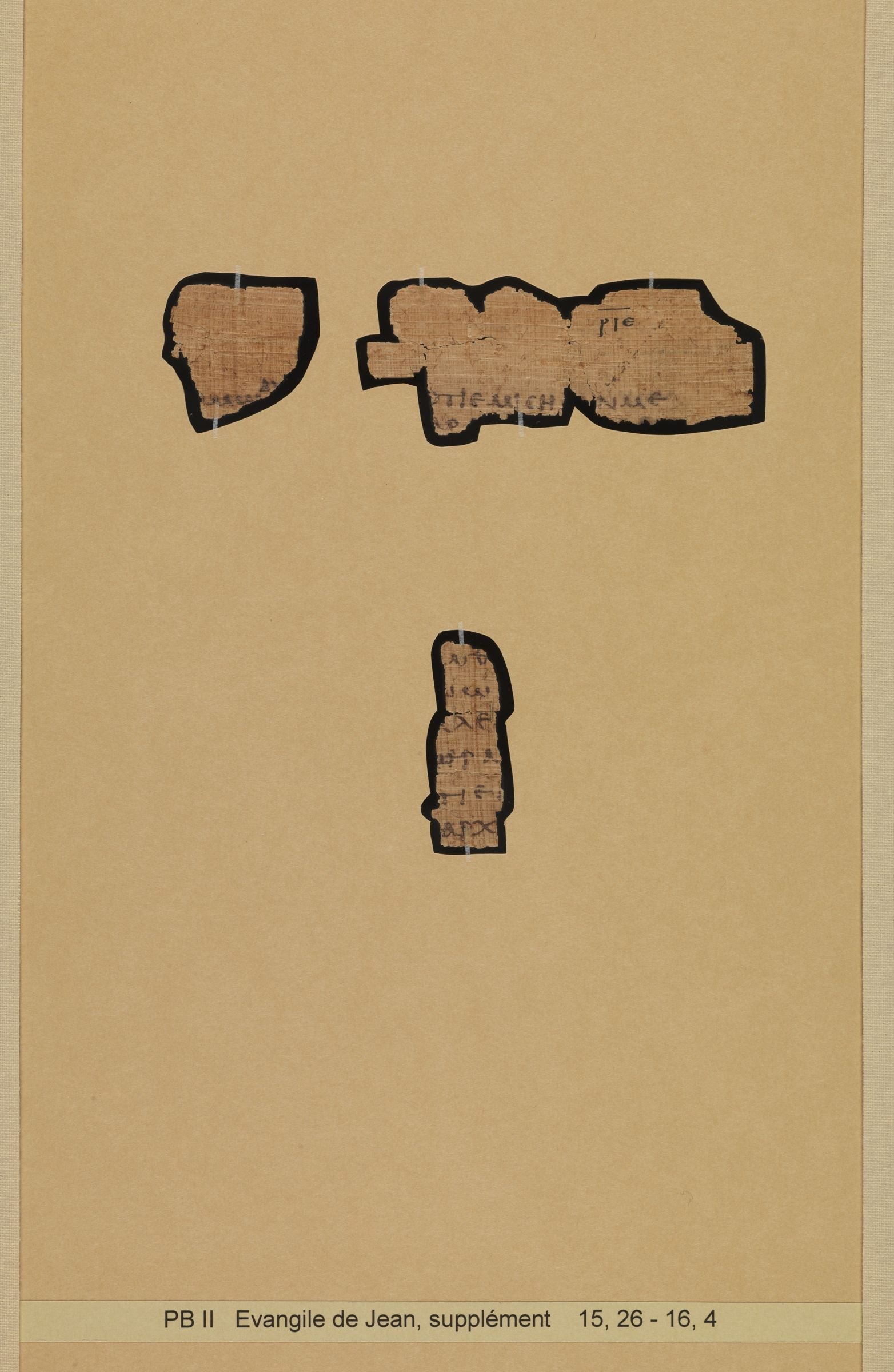
Where on the image
Fondation Martin Bodmer, Papyrus Bodmer II, Bodmer Lab image 1072205287_119 (https://bodmerlab.unige.ch/fr/constellations/papyri/mirador/1072205287), colour photograph of the glass-mounted leaf, shown whole. NTVMR page 1110 (page 115) is linked to this image in NTVMR's page index. 15:25 begins on the previous page; 16:4 continues on the next page. John 15:27-16:1 fall in the damaged part of the page (lines lost or unreadable), so the English skips them. Checked on the image: the printed caption reads ‹PB II Evangile de Jean, supplément 15, 26 - 16, 4›.
15:25 [ν]ο̣μω [γεγραμμενος] ο̣τι εμιση[σα]ν με
[δωρεαν] 26 [οταν ελθη ο π]α̣ρα̣[κλητος ον]
[...]
16:2 [προσφερειν τ]ω θ̅[ω̅] 3 [και ταυτα ποιησου]
[σιν οτι ουκ εγ]ν̣ω[σαν τον π̅ρ̅α̅ ουδε]
[εμε] 4 [αλλα ταυτ]α̣ λελ̣[αληκα υμιν ινα]
[οταν ελθη η] ω̣ρα [αυτων μνημονευη]
[τε αυτων ο]τι εγ̣[ω ειπον υμιν ταυ]
[τα δε υμιν εξ] αρχ[ης ουκ ειπον οτι]
15:25But this cometh to pass, that the word might be fulfilled that is written in their law, They hated me without a cause. 26But when the Comforter is come, whom I will send unto you from the Father, even the Spirit of truth, which proceedeth from the Father, he shall testify of me: 16:2They shall put you out of the synagogues: yea, the time cometh, that whosoever killeth you will think that he doeth God service. 3And these things will they do unto you, because they have not known the Father, nor me. 4But these things have I told you, that when the time shall come, ye may remember that I told you of them. And these things I said not unto you at the beginning, because I was with you.
Notes
- Greek: the NTVMR diplomatic transcription, line by line as on the papyrus. Square brackets enclose letters that are lost or illegible and were supplied by the transcribers; a dot under a letter marks it as uncertain; [...] marks a gap. Nomina sacra and numerals keep the scribe's overline. Spelling is the scribe's (no accents or breathings). Words broken at a line end stay broken as on the papyrus. Corrections are not shown: the text is the first hand.
- English: the King James Version (1611), whole verses, for every verse that has text on the page. A verse that begins on one page and ends on the next is given in full on both. The KJV translates a later form of the Greek text, so its wording does not always match the papyrus; material differences (such as verses the papyrus does not have) are noted in the section.
Cite
Sources
- Source: Papyrus Bodmer II (P66), Fondation Martin Bodmer: images from the Bodmer Lab, University of Geneva; Greek from the INTF NTVMR transcription of P66; English from the King James Version (holding institution)
- Critical edition: INTF NTVMR diplomatic transcription (CC BY 4.0)
← previous · → next · v cycle view · l back to library