P66 (Papyrus Bodmer II): John 16:5-17:1 (pages 116-120)
Introduction
P66 is a papyrus codex of the Gospel of John copied in Egypt around 200, the most complete early copy of John. Most of it is Papyrus Bodmer II in the Fondation Martin Bodmer, Cologny (Geneva); small pieces are in the Chester Beatty Library, Dublin, and the Institut für Altertumskunde, Cologne. The first five quires (John 1:1-14:26) survive as a bound book of numbered pages; later leaves, from John 14:29 to 21:9, are damaged and kept between glass. The scribe made many corrections, some of them his own; only the first hand is shown here.
Each section below is one page: the photograph, the NTVMR diplomatic transcription line by line, and the King James Version of every verse on the page. Pages of the bound book are shown on the photographic plates published by Victor Martin and J. W. B. Barns in 1962 (scanned by the Bodmer Lab), the glass-mounted leaves on colour photographs. Lost: John 6:12-34 (pages 35-38) and parts of chapters 14-21; the transcription ends at 21:9. Where P66 lacks a verse that the KJV has (John 5:4, the account of the adulteress at 7:53-8:11, 16:15), the section says so.
This entry covers pages 116-120 (John 16:5-17:1).
How was this verified? (Provenance)
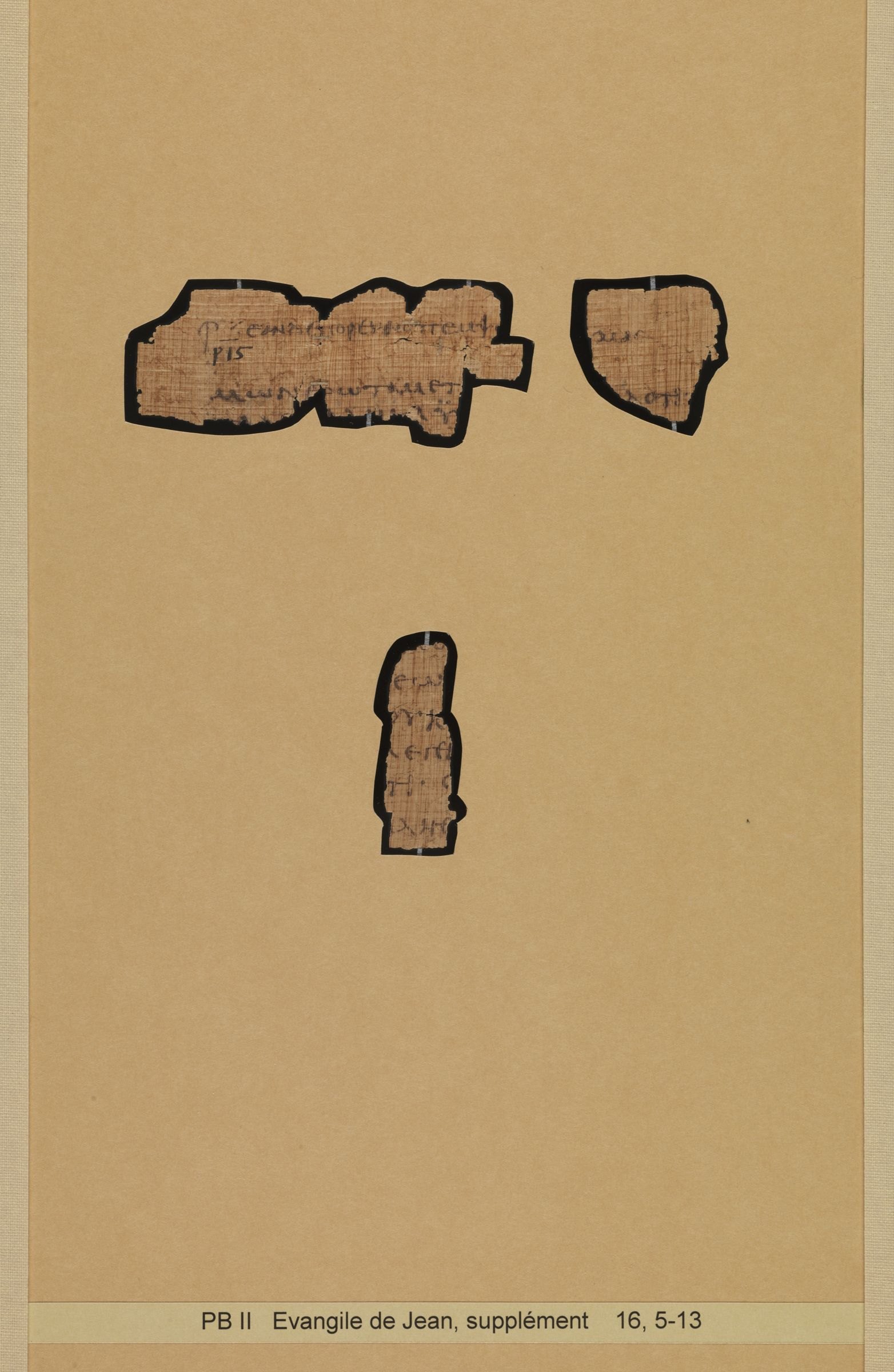
Where on the image
Fondation Martin Bodmer, Papyrus Bodmer II, Bodmer Lab image 1072205287_120 (https://bodmerlab.unige.ch/fr/constellations/papyri/mirador/1072205287), colour photograph of the glass-mounted leaf, shown whole. NTVMR page 1120 (page 116) is linked to this image in NTVMR's page index. 16:5 begins on the previous page; 16:13 continues on the next page. John 16:8-9 fall in the damaged part of the page (lines lost or unreadable), so the English skips them. Checked on the image: the printed caption reads ‹PB II Evangile de Jean, supplément 16, 5-13›.
16:5 μων ε̣ρ̣ωτα με π̣[ου υπαγεις] 6 [αλ]λ οτι τ̣[αυ]
τ̣α̣ λ̣ε̣[λ]α̣λ̣η̣κ̣α̣ υ[μιν η λυπη πεπληρω]
[κεν]
7 [...]
10 [προς τον π̅ρ̅α̅ υπα]γ̣ω [και ουκετι θεωρει]
[τε με] 11 [περι δε κρισ]εω[ς οτι ο αρχων]
[του κοσμου τουτ]ο̣υ κ[εκριται] 12 [ετι]
[πολλα εχω υμιν] λ̣εγει[ν αλλ ου δυνασ]
[θε βασταζειν αρ]τι· 13 ο̣[ταν δε ελθη εκει]
[νος το π̅ν̅α̅ της] α̣ληθ̣[ειας οδηγησει]
16:5But now I go my way to him that sent me; and none of you asketh me, Whither goest thou? 6But because I have said these things unto you, sorrow hath filled your heart. 7Nevertheless I tell you the truth; It is expedient for you that I go away: for if I go not away, the Comforter will not come unto you; but if I depart, I will send him unto you. 10Of righteousness, because I go to my Father, and ye see me no more; 11Of judgment, because the prince of this world is judged. 12I have yet many things to say unto you, but ye cannot bear them now. 13Howbeit when he, the Spirit of truth, is come, he will guide you into all truth: for he shall not speak of himself; but whatsoever he shall hear, that shall he speak: and he will shew you things to come.
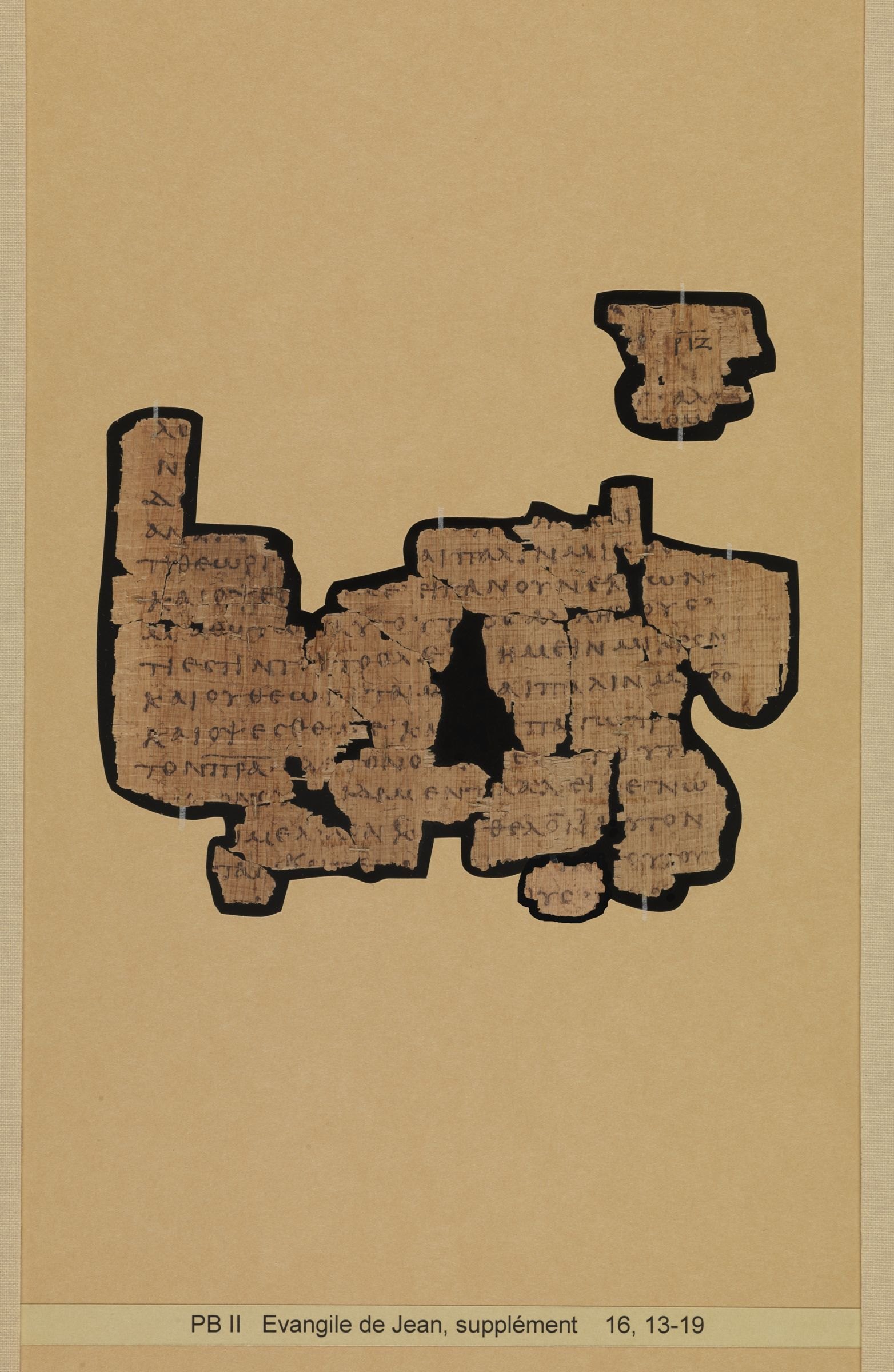
Where on the image
Fondation Martin Bodmer, Papyrus Bodmer II, Bodmer Lab image 1072205287_121 (https://bodmerlab.unige.ch/fr/constellations/papyri/mirador/1072205287), colour photograph of the glass-mounted leaf, shown whole. NTVMR page 1130 (page 117) is linked to this image in NTVMR's page index. 16:13 begins on the previous page; 16:19 continues on the next page. Not written in this papyrus: John 16:15. The NTVMR transcription marks this verse as empty at this point of the text, so the English leaves it out. Checked on the image: the printed caption reads ‹PB II Evangile de Jean, supplément 16, 13-19›.
16:13 [παση ου γαρ λαλησει αφ εαυτο]υ̣· αλ
λ ο[σα ακουσει λαλησει και τα ερ]χ̣ομε̣
ν[α αναγγελει υμιν] 14 [εκεινος εμε]
δο̣[ξασει οτι εκ του εμου λημψεται και]
ανα̣γ̣γ̣[ελει υμιν] 16 μ̣ι̣κ̣[ρ]ο̣ν κ̣αι [ουκε]
τι θεωριτ̣[αι με κ]αι παλιν μικ̣ρο̣[ν]
και οψεσ[θαι] μ̣ε· 17 ειπαν ουν εκ [τ]ων
μαθητων̣ αυτου π̣[ρ]ος αλληλους
τι εστιν τουτο ο λε[γει] ημειν μικρο̣ν
και ου θεωρ̣ι̣ται μ[ε κ]αι παλιν μ[ικ]ρον
και οψεσθε μ̣ε κα[ι οτι υ]παγω προ̣[ς]
τον π̅ρ̅α̅ 18 ε̣λεγον ο[υ]ν̣ [τι] εσ̣[τι] τουτο̣
μ̣ι̣κ̣[ρ]ο̣ν ου[κ ο]ιδαμεν τι λαλει 19 εγνω
[ι̅ς̅ οτι] η̣μελλον κ[αι η]θελον αυτον
[ερω]ταν̣ ε̣ι̣π̣ε̣ν̣ α̣[υτ]ο̣ι̣ς̣ [περι] τ̣ουτου
[ζητει]τ̣α̣[ι προς αλληλ]ο̣υς [οτι] ε̣[ιπον]
16:13Howbeit when he, the Spirit of truth, is come, he will guide you into all truth: for he shall not speak of himself; but whatsoever he shall hear, that shall he speak: and he will shew you things to come. 14He shall glorify me: for he shall receive of mine, and shall shew it unto you. 16A little while, and ye shall not see me: and again, a little while, and ye shall see me, because I go to the Father. 17Then said some of his disciples among themselves, What is this that he saith unto us, A little while, and ye shall not see me: and again, a little while, and ye shall see me: and, Because I go to the Father? 18They said therefore, What is this that he saith, A little while? we cannot tell what he saith. 19Now Jesus knew that they were desirous to ask him, and said unto them, Do ye enquire among yourselves of that I said, A little while, and ye shall not see me: and again, a little while, and ye shall see me?
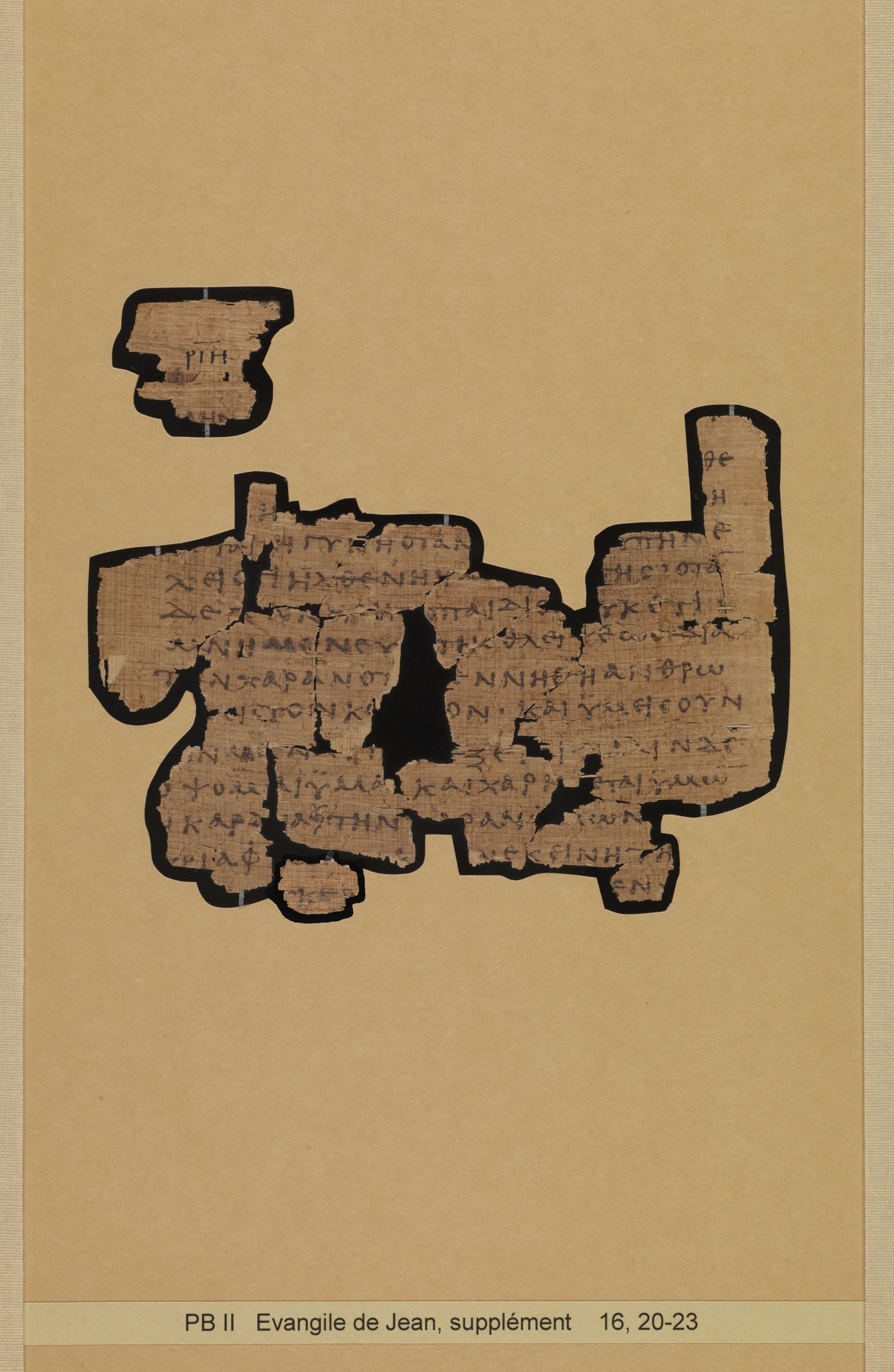
Where on the image
Fondation Martin Bodmer, Papyrus Bodmer II, Bodmer Lab image 1072205287_122 (https://bodmerlab.unige.ch/fr/constellations/papyri/mirador/1072205287), colour photograph of the glass-mounted leaf, shown whole. NTVMR page 1140 (page 118) is linked to this image in NTVMR's page index. 16:20 begins on the previous page; 16:23 continues on the next page. Checked on the image: the printed caption reads ‹PB II Evangile de Jean, supplément 16, 20-23›.
16:20 μ̣ην [λεγω υμιν οτι κλαυσετε]
[...]
[χαρησεται υμεις λυπηθησεσ]θε
[αλλ] η [λυπη υμων εις χαραν γεν]η
σ̣ε̣ται 21 η γυνη οταν [τικτη λ]υπην ε
χει οτ̣ι ηλθεν η ημ̣[ερα αυ]της οταν
δε γε̣ννηση τ̣ο παιδιον̣ [ο]υκετι
μνημονευ[ει] της θλειψεως δια
τη̣ν χαραν οτ̣[ι εγ]εννηθη ανθρω
[πο]ς̣ ε̣ις τον κο̣[σμ]ον· 22 και υμεις ουν
[ν]υ̣ν με̣ν λ̣υ̣π̣[η]ν̣ εξετ̣α̣ι· π̣αλιν δε
οψομαι υμας̣ και χαρη[σ]εται υμων
η̣ καρδιαν̣ την [χ]α̣ραν υ̣μ̣ων [ουδεις]
ε̣ρι αφ υ̣[μ]ω̣[ν] 23 κ̣[αι ε]ν εκεινη τη [η]
[μερα εμε ο]υ̣κ ερ̣[ωτησετε ουδ]εν
16:20Verily, verily, I say unto you, That ye shall weep and lament, but the world shall rejoice: and ye shall be sorrowful, but your sorrow shall be turned into joy. 21A woman when she is in travail hath sorrow, because her hour is come: but as soon as she is delivered of the child, she remembereth no more the anguish, for joy that a man is born into the world. 22And ye now therefore have sorrow: but I will see you again, and your heart shall rejoice, and your joy no man taketh from you. 23And in that day ye shall ask me nothing. Verily, verily, I say unto you, Whatsoever ye shall ask the Father in my name, he will give it you.
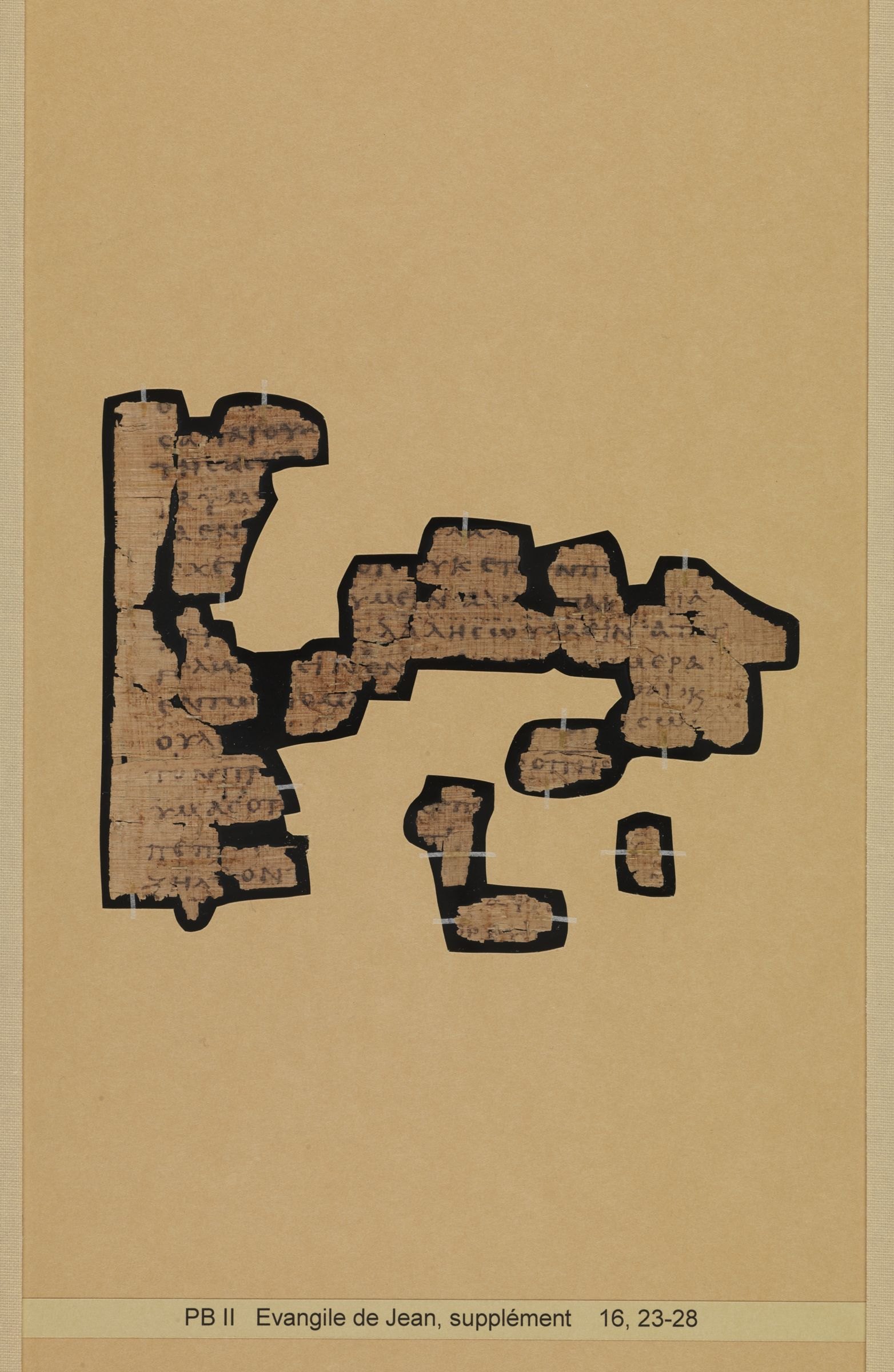
Where on the image
Fondation Martin Bodmer, Papyrus Bodmer II, Bodmer Lab image 1072205287_123 (https://bodmerlab.unige.ch/fr/constellations/papyri/mirador/1072205287), colour photograph of the glass-mounted leaf, shown whole. NTVMR page 1150 (page 119) is linked to this image in NTVMR's page index. 16:23 begins on the previous page; 16:28 continues on the next page. Checked on the image: the printed caption reads ‹PB II Evangile de Jean, supplément 16, 23-28›.
16:23 ο[...] 24 [εως αρτι ουκ ητη]
σαται ουδ̣[εν εν τω ονοματι μου αι]
τησασθ̣α̣ι̣ [και λημψεσθε ινα η χα]
ρ̣α υμω̣[ν η πεπληρωμενη] 25 [ταυ]
τ̣α εν π̣[αροιμιαις λ]ε̣λαλ̣[ηκα υμιν]
[ε]ρ̣χετ̣[αι ωρα] ο̣τ̣ε̣ ο̣υκετι̣ [ε]ν πα̣[ροιμι]
[αις λαλησω] υμειν· αλλ̣[α] π̣αρ[ρη]σ̣ια
π̣ερ̣[ι του π̅ρ̅]ς̣̣̅· λαλησω υμειν· απαγ
γελω [υ]μ̣ε̣ιν 26 εν [εκεινη τη] η̣μ̣ερα
εν τω [ο]ν̣ομα̣[τι μου αιτησεσ]θαι και
ου λε̣[γω] υ̣μ̣[ιν οτι εγω ε]ρ̣ω̣τ̣η̣σω
τον π̅ρ̅[α̅] 27 [αυτος γα]ρ̣ ο π̅η̅ρ̣̣̅ [φιλει]
υμας οτι̣ [υμεις ε]μ̣ε πε̣[φιληκατε και]
πεπι̣σ̣τ̣[ευκατε] ο̣τι̣ [εγω παρα του θ̅]υ̅ ε̣
ξηλθ̣ον 28 [εξηλθον παρα του π̅ρ̅ς̅ και] ε̣
[ληλυθα εις τον κοσμον παλιν] αφι̣η̣[μι]
[τον κοσμον και] [... π]ορευο̣[μαι]
16:23And in that day ye shall ask me nothing. Verily, verily, I say unto you, Whatsoever ye shall ask the Father in my name, he will give it you. 24Hitherto have ye asked nothing in my name: ask, and ye shall receive, that your joy may be full. 25These things have I spoken unto you in proverbs: but the time cometh, when I shall no more speak unto you in proverbs, but I shall shew you plainly of the Father. 26At that day ye shall ask in my name: and I say not unto you, that I will pray the Father for you: 27For the Father himself loveth you, because ye have loved me, and have believed that I came out from God. 28I came forth from the Father, and am come into the world: again, I leave the world, and go to the Father.
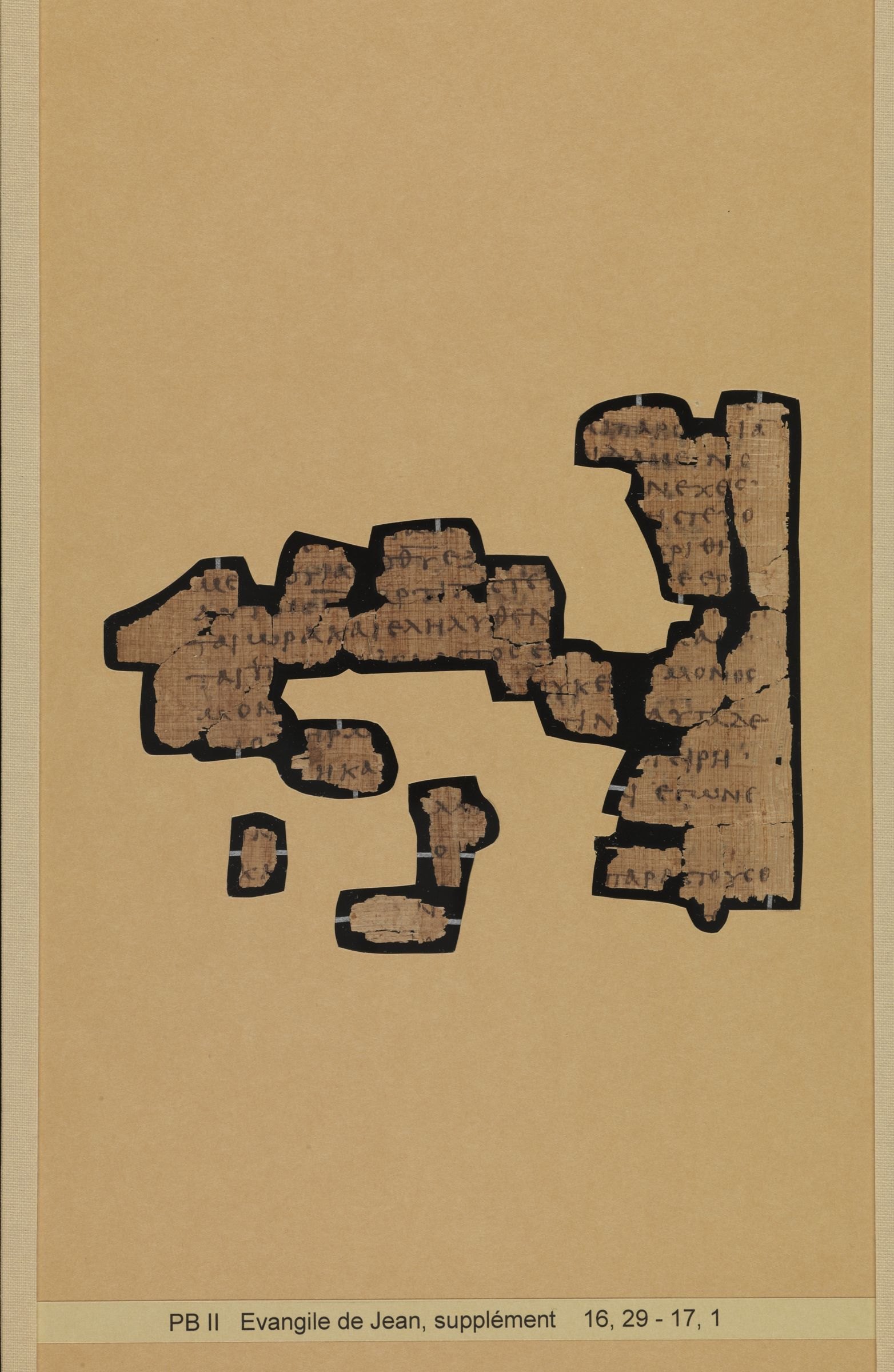
Where on the image
Fondation Martin Bodmer, Papyrus Bodmer II, Bodmer Lab image 1072205287_124 (https://bodmerlab.unige.ch/fr/constellations/papyri/mirador/1072205287), colour photograph of the glass-mounted leaf, shown whole. NTVMR page 1160 (page 120) is linked to this image in NTVMR's page index. 16:29 begins on the previous page; 17:1 continues on the next page. Checked on the image: the printed caption reads ‹PB II Evangile de Jean, supplément 16, 29 - 17, 1›. The NTVMR file for this page is defective at John 16:29: some letters were typed into the verse identifier ("B04K16V[νυν") instead of the text, so the transcription jumps from ι]δ̣ε̣ at the end of line 1 to α̣ι παρο̣[ιμ]ιαν; the Greek shown follows the file.
16:29 [λεγουσιν οι μαθηται αυτου ι]δ̣ε̣
α̣ι παρο̣[ιμ]ιαν
[ουδεμιαν λεγεις] 30 [νυν] ο̣ιδαμεν ο
[τι οιδας παντα και ου χρεια]ν εχεις
[ινα τις σ]ε̣ ε̣[ρω]τ̣α̣ [εν τουτω] π̣ιστευο
με[ν] οτι απ̣ο θ̅υ̅ εξ[ηλθες] 31 [απε]κ̣ριθη
αυτο̣ις ι̅ς̣̣̅ α̣ρτι πι̣στευ̣[ετε] 32 [ι]δ̣ε ερ[χε]
ται ωρα και εληλυθεν [ινα σκορπισθ]η̣
ται π[αντ]ε̣[ς] ε̣κ̣α̣στος ει[ς τα ιδια] κ̣αμ̣ε̣
μον[ον αφητε και] ο̣υκ ει̣[μ]ι̣ μονος
[ο]τ̣ι̣ ο π̣̣̅η̅ρ̅ μ[ετ εμου εσ]τιν 33 τ̣αυτα δε
[λελαλ]ηκα [υμιν ινα εν εμ]ο̣ι̣ ε̣ιρη
[ν]η̣ν [εχητε α]λλα̣ [θαρσειτ]α̣ι εγω νε
[νι]κη̣[κα τον κ]ο[σμον] 17:1 [ταυτα]
[ελαλησε]ν [ι̅ς̅ και ε]παρας τους ο
[φθαλμο]υ̣[ς εις τον ουρανον] ε̣ι̣[πεν]
16:29His disciples said unto him, Lo, now speakest thou plainly, and speakest no proverb. 30Now are we sure that thou knowest all things, and needest not that any man should ask thee: by this we believe that thou camest forth from God. 31Jesus answered them, Do ye now believe? 32Behold, the hour cometh, yea, is now come, that ye shall be scattered, every man to his own, and shall leave me alone: and yet I am not alone, because the Father is with me. 33These things I have spoken unto you, that in me ye might have peace. In the world ye shall have tribulation: but be of good cheer; I have overcome the world. 17:1These words spake Jesus, and lifted up his eyes to heaven, and said, Father, the hour is come; glorify thy Son, that thy Son also may glorify thee:
Notes
- Greek: the NTVMR diplomatic transcription, line by line as on the papyrus. Square brackets enclose letters that are lost or illegible and were supplied by the transcribers; a dot under a letter marks it as uncertain; [...] marks a gap. Nomina sacra and numerals keep the scribe's overline. Spelling is the scribe's (no accents or breathings). Words broken at a line end stay broken as on the papyrus. Corrections are not shown: the text is the first hand.
- English: the King James Version (1611), whole verses, for every verse that has text on the page. A verse that begins on one page and ends on the next is given in full on both. The KJV translates a later form of the Greek text, so its wording does not always match the papyrus; material differences (such as verses the papyrus does not have) are noted in the section.
Cite
Sources
- Source: Papyrus Bodmer II (P66), Fondation Martin Bodmer: images from the Bodmer Lab, University of Geneva; Greek from the INTF NTVMR transcription of P66; English from the King James Version (holding institution)
- Critical edition: INTF NTVMR diplomatic transcription (CC BY 4.0)
← previous · → next · v cycle view · l back to library