P66 (Papyrus Bodmer II): John 17:1-18:3 (pages 121-125)
Introduction
P66 is a papyrus codex of the Gospel of John copied in Egypt around 200, the most complete early copy of John. Most of it is Papyrus Bodmer II in the Fondation Martin Bodmer, Cologny (Geneva); small pieces are in the Chester Beatty Library, Dublin, and the Institut für Altertumskunde, Cologne. The first five quires (John 1:1-14:26) survive as a bound book of numbered pages; later leaves, from John 14:29 to 21:9, are damaged and kept between glass. The scribe made many corrections, some of them his own; only the first hand is shown here.
Each section below is one page: the photograph, the NTVMR diplomatic transcription line by line, and the King James Version of every verse on the page. Pages of the bound book are shown on the photographic plates published by Victor Martin and J. W. B. Barns in 1962 (scanned by the Bodmer Lab), the glass-mounted leaves on colour photographs. Lost: John 6:12-34 (pages 35-38) and parts of chapters 14-21; the transcription ends at 21:9. Where P66 lacks a verse that the KJV has (John 5:4, the account of the adulteress at 7:53-8:11, 16:15), the section says so.
This entry covers pages 121-125 (John 17:1-18:3).
How was this verified? (Provenance)
Where on the image
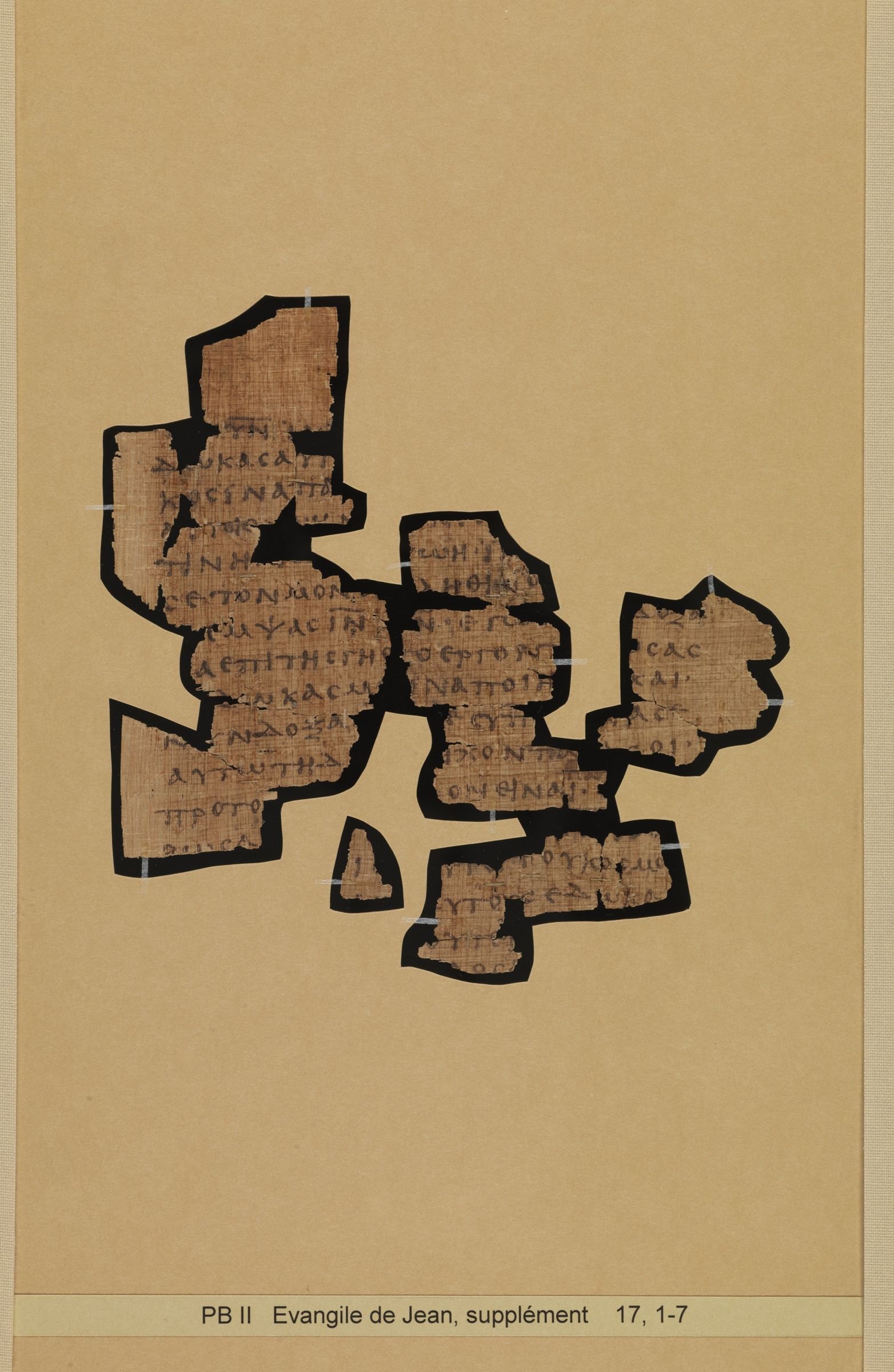
Fondation Martin Bodmer, Papyrus Bodmer II, Bodmer Lab image 1072205287_125 (https://bodmerlab.unige.ch/fr/constellations/papyri/mirador/1072205287), colour photograph of the glass-mounted leaf, shown whole. NTVMR page 1170 (page 121) is linked to this image in NTVMR's page index. 17:1 begins on the previous page; 17:7 continues on the next page. Checked on the image: the printed caption reads ‹PB II Evangile de Jean, supplément 17, 1-7›.
17:1 τ̣[ο]ν̣ υ̅ν̅ ιν̣α̣ [ο υ̅ς̅ δοξαση σε] 2 [καθως ε]
δωκας αυ̣τ̣[ω εξουσιαν πασης σαρ]
κος ινα πα[ν ο δεδωκας αυτω δωση]
αυ̣τοις ζ̣ω̣η̣ν̣ [αιω]ν̣ι̣ο̣[ν] 3 [αυτη δε εσ]
τιν η α̣ι̣ω̣[νιος] ζ̣ωη· ιν̣[α γινωσκωσιν]
σε τον μονο̣[ν α]ληθινο[ν θ̅ν̅ και ον απ]
[επ]εμψας ι̅ν̅ [χ̅]ν̅· 4 εγω̣ [σε ε]δοξα
[σ]α επι της γης̣ τ̣ο εργον τ̣[ελει]ω̣σας
[ο ε]δωκας μο̣[ι] ινα ποιη[σω] 5 και
νυ̣ν δοξασ̣[ον μ]ε συ π̅[ρ̅ π]α̣ρ̣α σε
αυτω τη δ[οξη η] ε̣ιχον πα[ρ]α̣ σ̣οι
προ το[υ τον κοσμ]ον ειναι· 6 ε̣[φανε]
ρ̣ωσα [σου το ονομα τοις α̅ν̅ο̅ι̅ς̅]
[ους εδωκας μο]ι ε̣[κ το]υτο̣υ̣ του κοσμο[υ]
[σοι ησαν καμοι] α̣υτου̣ς εδωκα[ς]
[και τον λογον σ]ου τερ̣[ηκαν] 7 [νυν]
[εγνωκαν οτι παντ]α̣ οσα̣ [δεδωκας]
17:1These words spake Jesus, and lifted up his eyes to heaven, and said, Father, the hour is come; glorify thy Son, that thy Son also may glorify thee: 2As thou hast given him power over all flesh, that he should give eternal life to as many as thou hast given him. 3And this is life eternal, that they might know thee the only true God, and Jesus Christ, whom thou hast sent. 4I have glorified thee on the earth: I have finished the work which thou gavest me to do. 5And now, O Father, glorify thou me with thine own self with the glory which I had with thee before the world was. 6I have manifested thy name unto the men which thou gavest me out of the world: thine they were, and thou gavest them me; and they have kept thy word. 7Now they have known that all things whatsoever thou hast given me are of thee.
Where on the image
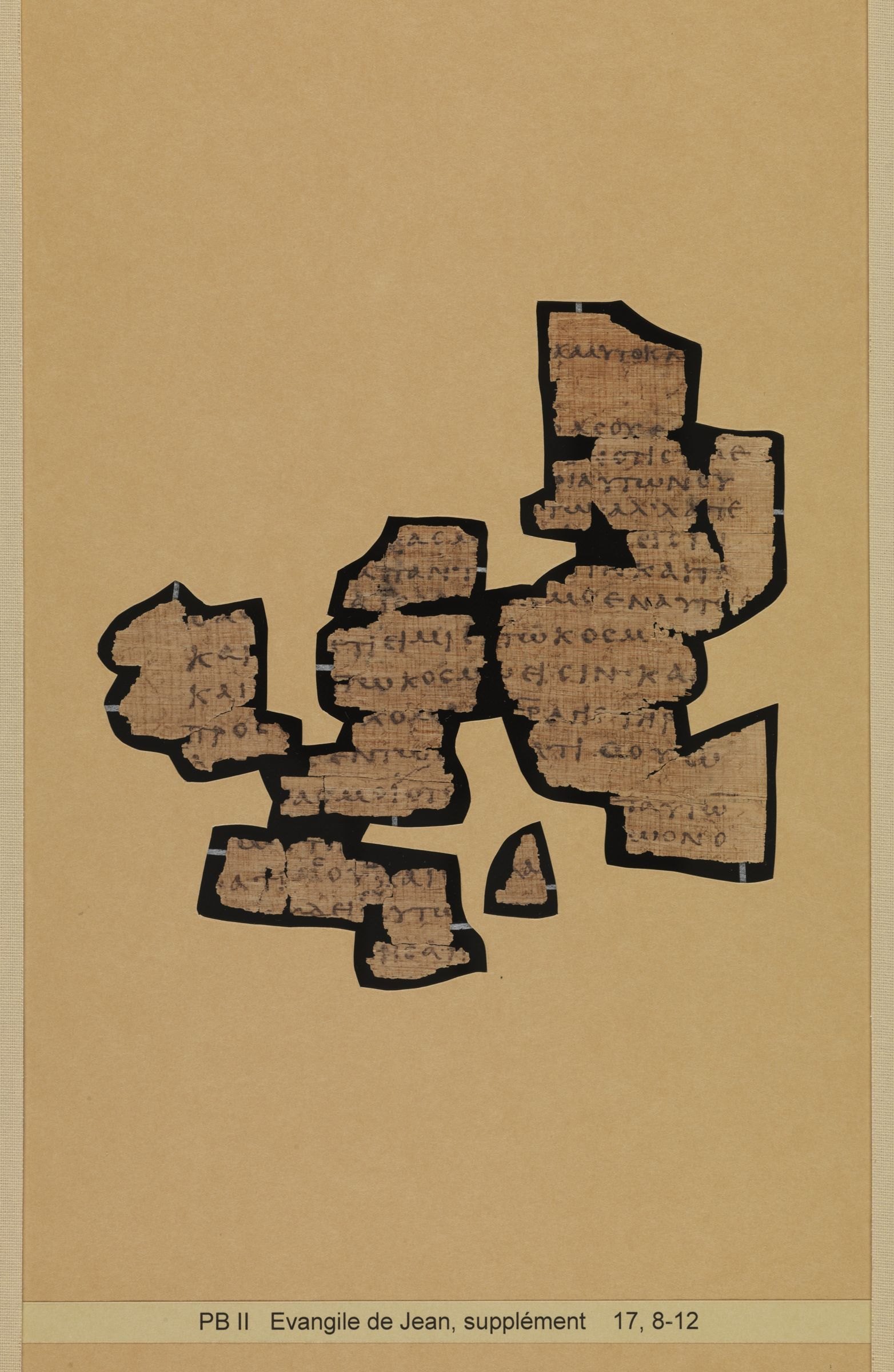
Fondation Martin Bodmer, Papyrus Bodmer II, Bodmer Lab image 1072205287_126 (https://bodmerlab.unige.ch/fr/constellations/papyri/mirador/1072205287), colour photograph of the glass-mounted leaf, shown whole. NTVMR page 1180 (page 122) is linked to this image in NTVMR's page index. 17:8 begins on the previous page; 17:12 continues on the next page. Checked on the image: the printed caption reads ‹PB II Evangile de Jean, supplément 17, 8-12›.
17:8
[εγνωσαν αληθως οτι πα]ρ̣α σου εξ̣[η]λ̣
[θον και επιστευσ]α̣ν̣ οτι συ̣ μ̣ε
[απεστειλας] 9 [εγω πε]ρι αυτων ου
[περι του κοσμου ερ]ω̣τω· αλλα πε
[ρι ων δεδω]κ̣ας μ[οι οτι σοι] εισιν̣
10 [και τα εμ]α παντ[α σα εσ]τ̣ι̣ν̣ και τα
σ̣α̣ ε̣[μα κ]αι εδ̣ο̣ξ̣α̣σ̣με εν αυτο̣ι̣ς
11 και [ουκ]ετι ειμι ε̣[ν] τω κοσμ[ω]
και [εν] τω κοσμω̣ εισιν· και̣ [εγω]
προς̣ σ̣[ε ερ]χομα̣[ι π̅]ε̣̣̅ρ̅ αγιε τηρ[ησον]
α̣υ̣[του]ς̣ εν τω ο̣[νομ]α̣τι μου ω
[εδω]κ̣ας μοι 12 οτε̣ [ημην μ]ε̣τ αυτων
[εγ]ω ε̣τη̣[ρουν αυτους εν τ]ω ονο
μ̣ατι μου· κ̣αι ε̣[φυ]λ̣αξ̣[α]
[και ο]υ̣δεις̣ α̣υτω[ν απωλετο]
[ει μη ο υιος] τ̣ης απ[ωλειας ινα η]
17:8For I have given unto them the words which thou gavest me; and they have received them, and have known surely that I came out from thee, and they have believed that thou didst send me. 9I pray for them: I pray not for the world, but for them which thou hast given me; for they are thine. 10And all mine are thine, and thine are mine; and I am glorified in them. 11And now I am no more in the world, but these are in the world, and I come to thee. Holy Father, keep through thine own name those whom thou hast given me, that they may be one, as we are. 12While I was with them in the world, I kept them in thy name: those that thou gavest me I have kept, and none of them is lost, but the son of perdition; that the scripture might be fulfilled.
Where on the image
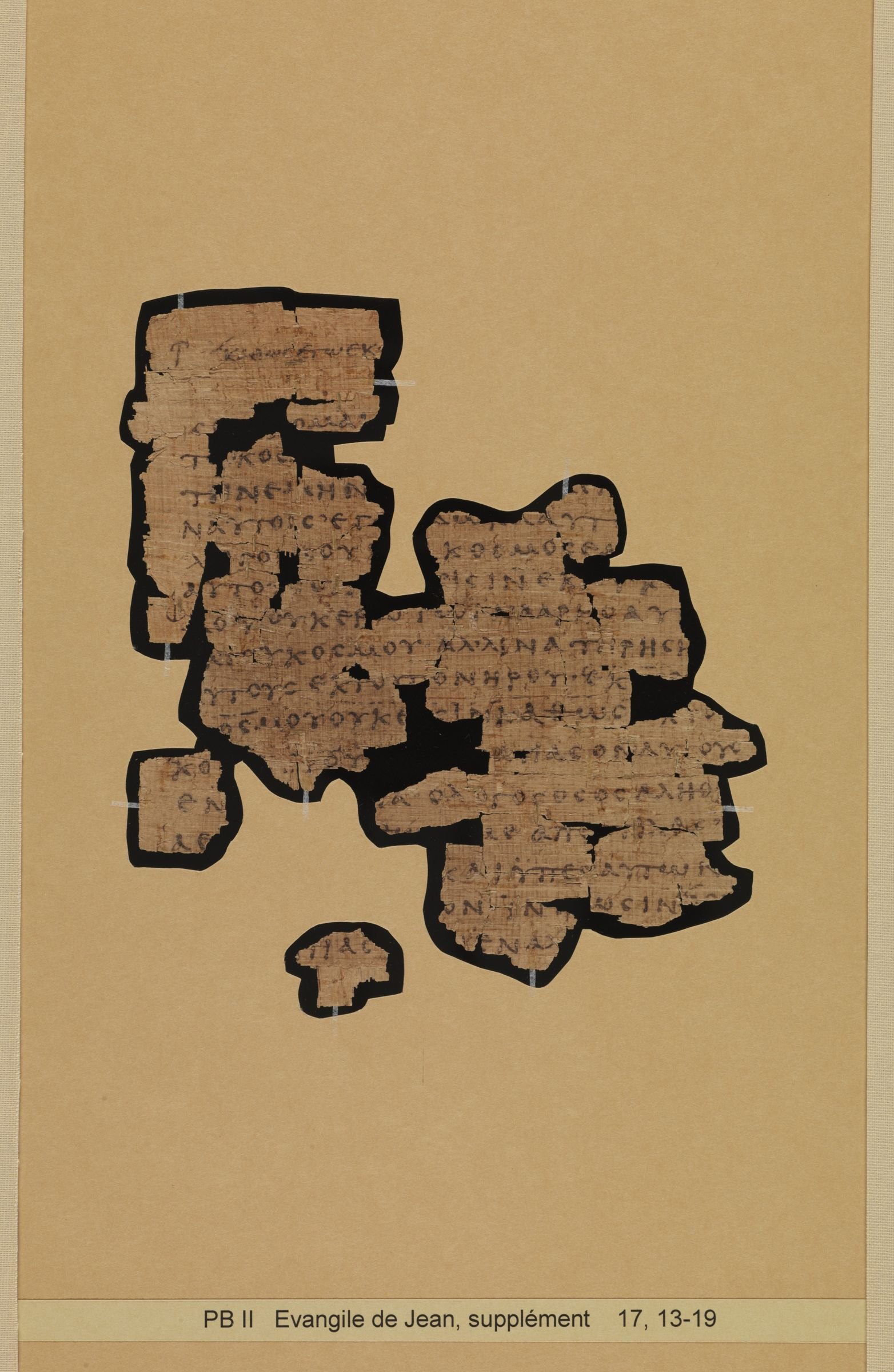
Fondation Martin Bodmer, Papyrus Bodmer II, Bodmer Lab image 1072205287_127 (https://bodmerlab.unige.ch/fr/constellations/papyri/mirador/1072205287), colour photograph of the glass-mounted leaf, shown whole. NTVMR page 1190 (page 123) is linked to this image in NTVMR's page index. 17:13 begins on the previous page. Checked on the image: the printed caption reads ‹PB II Evangile de Jean, supplément 17, 13-19›.
17:13 σε̣ [ερ]χ̣ομαι̣ [και ταυτα λαλω εν]
τω̣ κοσμ̣[ω ινα εχωσιν την χαραν]
τη̣ν εμην [πεπληρω]μ̣ε̣ν̣[ην ε]
ν αυτοις 14 εγω̣ [δε]δωκ̣α̣ αυτο̣[ις τον]
λο̣γον̣ σου κ̣[αι ο] κοσμος εμ̣[ισησεν]
αυτου̣ς̣ οτ̣ι̣ [ουκ] εισιν εκ τ̣ο̣υ̣ κ̣[οσ]
μ̣ου 15 ουκ ερω̣τ̣ω ινα αρης αυτ̣[ους]
[ε]κ του κοσμου· αλλ ινα τηρηση[ς]
α̣υτους εκ του πονηρου· 16 εκ [το]υ̣
[κ]οσμου ουκ ε[ι]σ̣ιν καθως [ε]κ̣ το[υ]
κο[σ]μ̣ο̣υ̣ ου[κ ειμι] 17 αγ̣ιασον αυτους
εν [τη αληθε]ι̣α· ο λογος ο σος αληθ[ει]
α ε[στιν] 18 [κα]θ̣ω̣[ς ε]μ̣ε απε̣σ̣τιλας
[εις τον κοσμον] 19 και υπερ αυτων
[αγιαζω εμαυτ]ον ινα̣ ωσιν α̣υ̣
[τοι η]γιασ[μενο]ι̣ εν αλ[ηθεια]
17:13And now come I to thee; and these things I speak in the world, that they might have my joy fulfilled in themselves. 14I have given them thy word; and the world hath hated them, because they are not of the world, even as I am not of the world. 15I pray not that thou shouldest take them out of the world, but that thou shouldest keep them from the evil. 16They are not of the world, even as I am not of the world. 17Sanctify them through thy truth: thy word is truth. 18As thou hast sent me into the world, even so have I also sent them into the world. 19And for their sakes I sanctify myself, that they also might be sanctified through the truth.
Where on the image
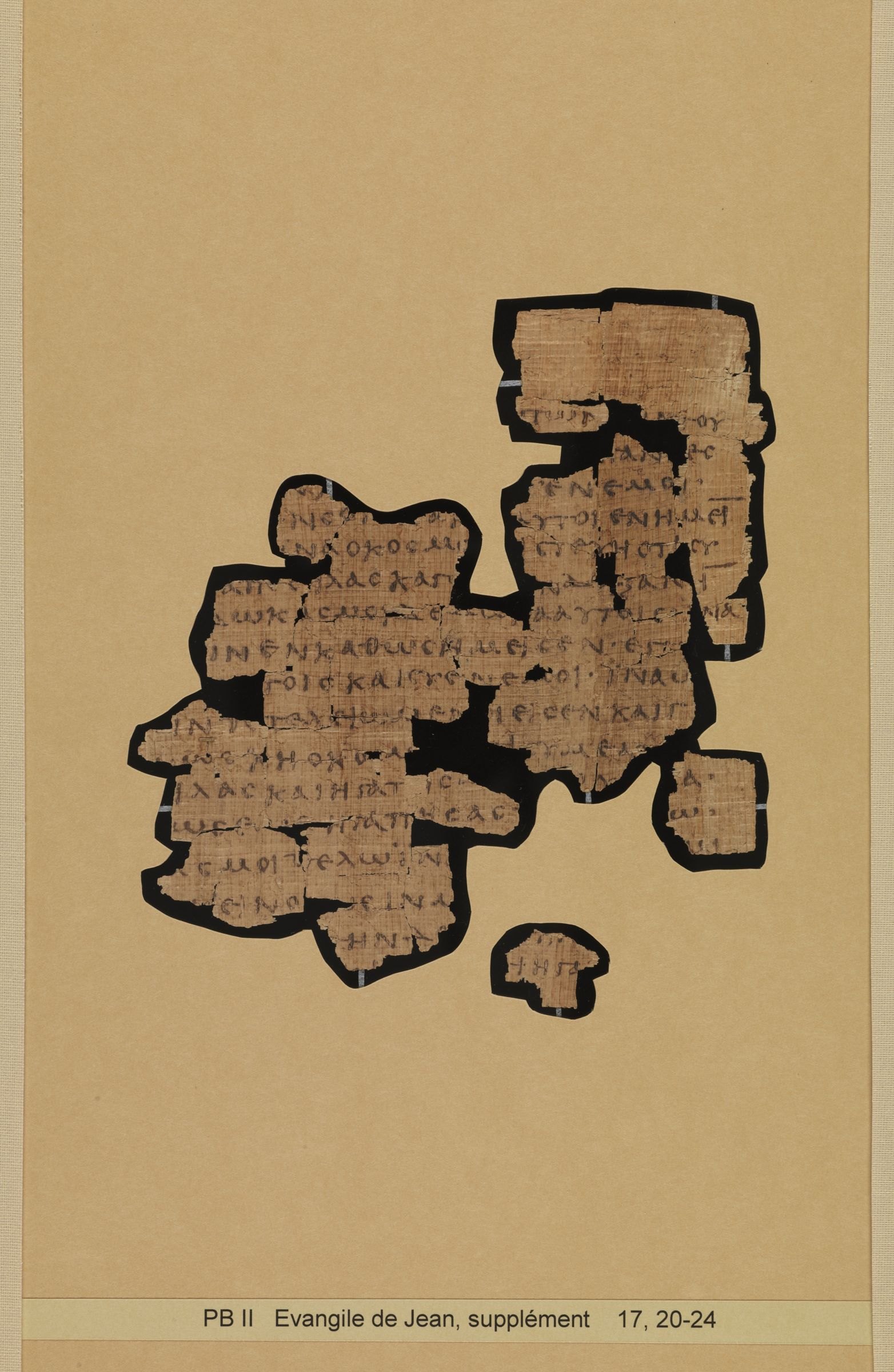
Fondation Martin Bodmer, Papyrus Bodmer II, Bodmer Lab image 1072205287_128 (https://bodmerlab.unige.ch/fr/constellations/papyri/mirador/1072205287), colour photograph of the glass-mounted leaf, shown whole. NTVMR page 1200 (page 124) is linked to this image in NTVMR's page index. 17:20 begins on the previous page; 17:24 continues on the next page. Checked on the image: the printed caption reads ‹PB II Evangile de Jean, supplément 17, 20-24›.
17:20 [περι των πιστευο]ν̣των̣ [δ]ι̣α̣ του
[λογου αυτων εις εμε] 21 [ινα] π̣αν[τ]ες
[εν ωσι]ν̣ κ̣[αθως συ π̅ε̅ρ̅] εν εμοι
[καγω] ε̣ν σοι [ιν]α κ̣[αι] α̣υτοι εν ημειν
[ωσιν] ι̣να ο κοσμο̣[ς π]ιστευη οτι συ
[με] απε̣σ̣τ̣ιλας 22 καγω̣ [τη]ν δο̣ξαν η̣ν
[δε]δωκας μοι δεδ̣ω̣κ̣α αυτοις ι̣να
[ωσ]ιν εν καθως ημεις εν· 23 εγω̣
[εν αυ]τοις και συ εν εμ̣οι· ινα ω
[σ]ιν τε̣τελειωμεν̣ο̣ι εις εν και γ[ι]
ν̣ωσκη ο κοσ̣μ[ος ο]τ̣ι̣ συ με απ̣[ε]
[στ]ιλας και ηγαπ̣η̣σα̣[ς αυτ]ο̣υ̣[ς κ]α
[θ]ως εμ̣ε̣ ηγαπησας 24 π̣̣̅[ε̅ρ̅ ο δεδ]ω
[κ]α̣ς μοι θελω ινα̣ [οπου εγω ει]μι
[κα]κ̣εινο[ι] ω̣σιν μ̣[ετ εμου ινα]
[θεωρωσιν] τ̣ην δο̣[ξαν] τ̣η̣ν̣ [εμην]
[ην δεδω]κ̣α̣[ς μοι ο]τ̣ι ηγα[πησας]
17:20Neither pray I for these alone, but for them also which shall believe on me through their word; 21That they all may be one; as thou, Father, art in me, and I in thee, that they also may be one in us: that the world may believe that thou hast sent me. 22And the glory which thou gavest me I have given them; that they may be one, even as we are one: 23I in them, and thou in me, that they may be made perfect in one; and that the world may know that thou hast sent me, and hast loved them, as thou hast loved me. 24Father, I will that they also, whom thou hast given me, be with me where I am; that they may behold my glory, which thou hast given me: for thou lovedst me before the foundation of the world.
Where on the image
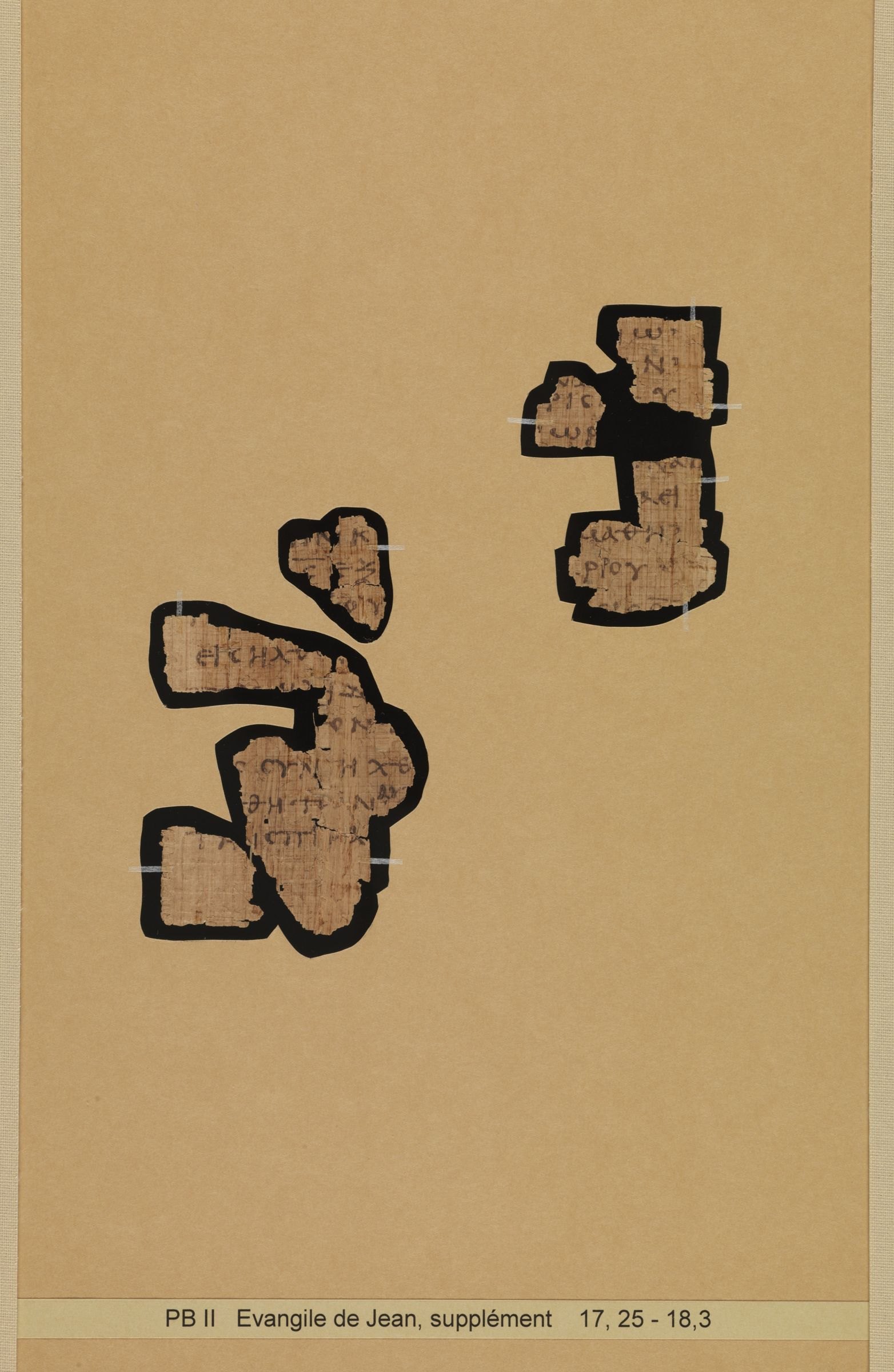
Fondation Martin Bodmer, Papyrus Bodmer II, Bodmer Lab image 1072205287_129 (https://bodmerlab.unige.ch/fr/constellations/papyri/mirador/1072205287), colour photograph of the glass-mounted leaf, shown whole. NTVMR page 1210 (page 125) is linked to this image in NTVMR's page index. 17:25 begins on the previous page; 18:3 continues on the next page. Checked on the image: the printed caption reads ‹PB II Evangile de Jean, supplément 17, 25 - 18,3›.
17:25 [δικαιε και ο κοσμος σε ουκ εγ]ν̣ω
[εγω δε σε εγνων και ουτοι εγ]ν̣ω̣[σα]ν
[οτι συ με απεστειλας] 26 [και εγνω]ρισα̣ α̣υ
[τοις το ονομα σου και γ]ν̣ωρ[ισω]
[ινα η αγαπη ην ηγαπησας με] ε̣ν αυ̣
[τοις] ην κ[αγω εν αυτοις] 18:1 [ταυ]τ̣α ει
[πων ι̅]ς̅ εξ[ηλθεν συν τοις] μαθη
[ταις αυτ]ου [περαν του χειμ]α̣ρου
τ̣[ου κεδρων οπου ην κηπος] ε̣ι̣ς̣ ο̣ν
εισηλθ̣ε̣ν̣ [αυτος και οι μαθηται αυ]
τ̣ο̣υ̣ 2 η̣δ̣ε̣ι δ[ε και ιουδας ο παραδι]
[δους αυ]τ̣ον τ̣[ον τοπον οτι πολλα]
[κι]ς συνηχθ[η ι̅ς̅ εκει μετα των]
[μα]θητω̣ν · 3 ο̣ [ουν ιουδας λαβων]
την̣ σπιρα[ν και εκ των αρχιερεων]
17:25O righteous Father, the world hath not known thee: but I have known thee, and these have known that thou hast sent me. 26And I have declared unto them thy name, and will declare it: that the love wherewith thou hast loved me may be in them, and I in them. 18:1When Jesus had spoken these words, he went forth with his disciples over the brook Cedron, where was a garden, into the which he entered, and his disciples. 2And Judas also, which betrayed him, knew the place: for Jesus ofttimes resorted thither with his disciples. 3Judas then, having received a band of men and officers from the chief priests and Pharisees, cometh thither with lanterns and torches and weapons.
Notes
- Greek: the NTVMR diplomatic transcription, line by line as on the papyrus. Square brackets enclose letters that are lost or illegible and were supplied by the transcribers; a dot under a letter marks it as uncertain; [...] marks a gap. Nomina sacra and numerals keep the scribe's overline. Spelling is the scribe's (no accents or breathings). Words broken at a line end stay broken as on the papyrus. Corrections are not shown: the text is the first hand.
- English: the King James Version (1611), whole verses, for every verse that has text on the page. A verse that begins on one page and ends on the next is given in full on both. The KJV translates a later form of the Greek text, so its wording does not always match the papyrus; material differences (such as verses the papyrus does not have) are noted in the section.
Cite
Sources
- Source: Papyrus Bodmer II (P66), Fondation Martin Bodmer: images from the Bodmer Lab, University of Geneva; Greek from the INTF NTVMR transcription of P66; English from the King James Version (holding institution)
- Critical edition: INTF NTVMR diplomatic transcription (CC BY 4.0)
← previous · → next · v cycle view · l back to library