P66 (Papyrus Bodmer II): John 2:3-3:2 (pages 8-11)
Introduction
P66 is a papyrus codex of the Gospel of John copied in Egypt around 200, the most complete early copy of John. Most of it is Papyrus Bodmer II in the Fondation Martin Bodmer, Cologny (Geneva); small pieces are in the Chester Beatty Library, Dublin, and the Institut für Altertumskunde, Cologne. The first five quires (John 1:1-14:26) survive as a bound book of numbered pages; later leaves, from John 14:29 to 21:9, are damaged and kept between glass. The scribe made many corrections, some of them his own; only the first hand is shown here.
Each section below is one page: the photograph, the NTVMR diplomatic transcription line by line, and the King James Version of every verse on the page. Pages of the bound book are shown on the photographic plates published by Victor Martin and J. W. B. Barns in 1962 (scanned by the Bodmer Lab), the glass-mounted leaves on colour photographs. Lost: John 6:12-34 (pages 35-38) and parts of chapters 14-21; the transcription ends at 21:9. Where P66 lacks a verse that the KJV has (John 5:4, the account of the adulteress at 7:53-8:11, 16:15), the section says so.
This entry covers pages 8-11 (John 2:3-3:2).
How was this verified? (Provenance)
Where on the image
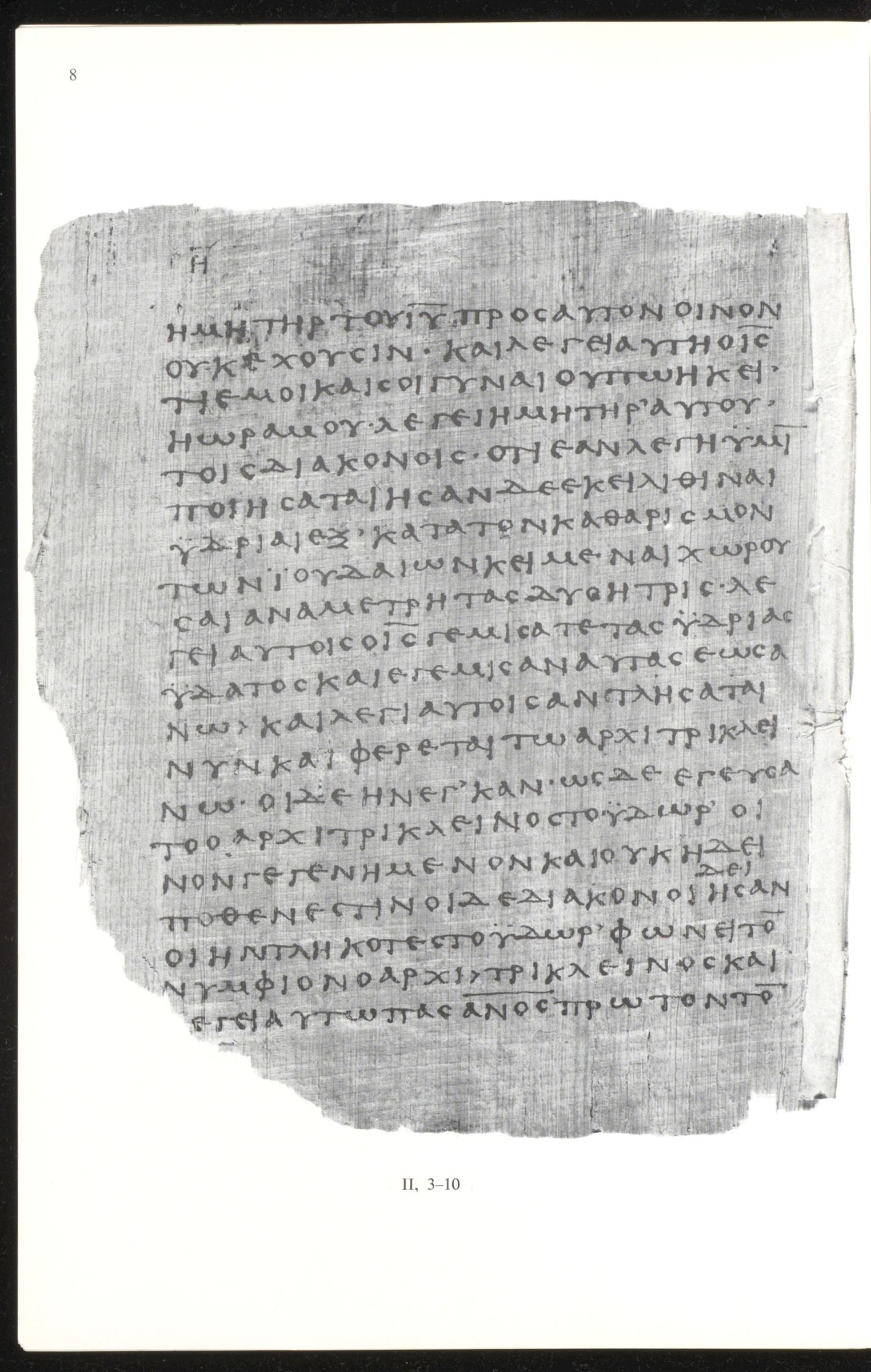
Fondation Martin Bodmer, Papyrus Bodmer II, Bodmer Lab image 1072205287_016 (https://bodmerlab.unige.ch/fr/constellations/papyri/mirador/1072205287), photographic plate of the 1962 Martin-Barns edition, shown whole. NTVMR page 80 (page 8) is linked to this image in NTVMR's page index. 2:3 begins on the previous page; 2:10 continues on the next page. Checked on the image: the printed caption reads ‹II, 3-10›; the last line of writing, ‹εγει αυτω πας α̅ν̅ο̅ς̅ πρωτον τον› (line 20 of the transcription), is legible at the foot of the page.
2:3 η μητηρ τω ι̅υ̅ προς αυτον οινον
ουκ εχουσιν· 4 και λεγει αυτη ο ι̅ς̅
τι εμοι και σοι γυναι ουπω ηκει
η ωρα μου· 5 λεγει η μητηρ αυτου
τοις διακονοις· ο τι εαν λεγη υμιν
ποσησαται 6 ησαν δε εκει λιθιναι
υδριαι εξ κατα τον καθαρισμον
των ιουδαιων κειμεναι χωρου
σαι ανα μετρητας δυο η τρις· 7 λε
γει αυτοις ο ι̅ς̅ γεμισατε τας υδριας
υδατος και εγεμισαν αυτας εως α
νω 8 και λεγι αυτοις αντλησαται
νυν και φερεται τω αρχιτρικλει
νω· οι δε ηνεγκαν· 9 ως δε εγευσα
το ο αρχιτρικλεινος το υδωρ οι
νον γεγενημενον και ουκ ηδει
ποθεν εστιν οι δε διακονοι ησαν
οι ηντληκοτες το υδωρ φωνει τον
νυμφιον ο αρχιτρικλεινος 10 και
[λ]εγει αυτω πας α̅ν̅ο̅ς̅ πρωτον τον
2:3And when they wanted wine, the mother of Jesus saith unto him, They have no wine. 4Jesus saith unto her, Woman, what have I to do with thee? mine hour is not yet come. 5His mother saith unto the servants, Whatsoever he saith unto you, do it. 6And there were set there six waterpots of stone, after the manner of the purifying of the Jews, containing two or three firkins apiece. 7Jesus saith unto them, Fill the waterpots with water. And they filled them up to the brim. 8And he saith unto them, Draw out now, and bear unto the governor of the feast. And they bare it. 9When the ruler of the feast had tasted the water that was made wine, and knew not whence it was: (but the servants which drew the water knew;) the governor of the feast called the bridegroom, 10And saith unto him, Every man at the beginning doth set forth good wine; and when men have well drunk, then that which is worse: but thou hast kept the good wine until now.
Where on the image
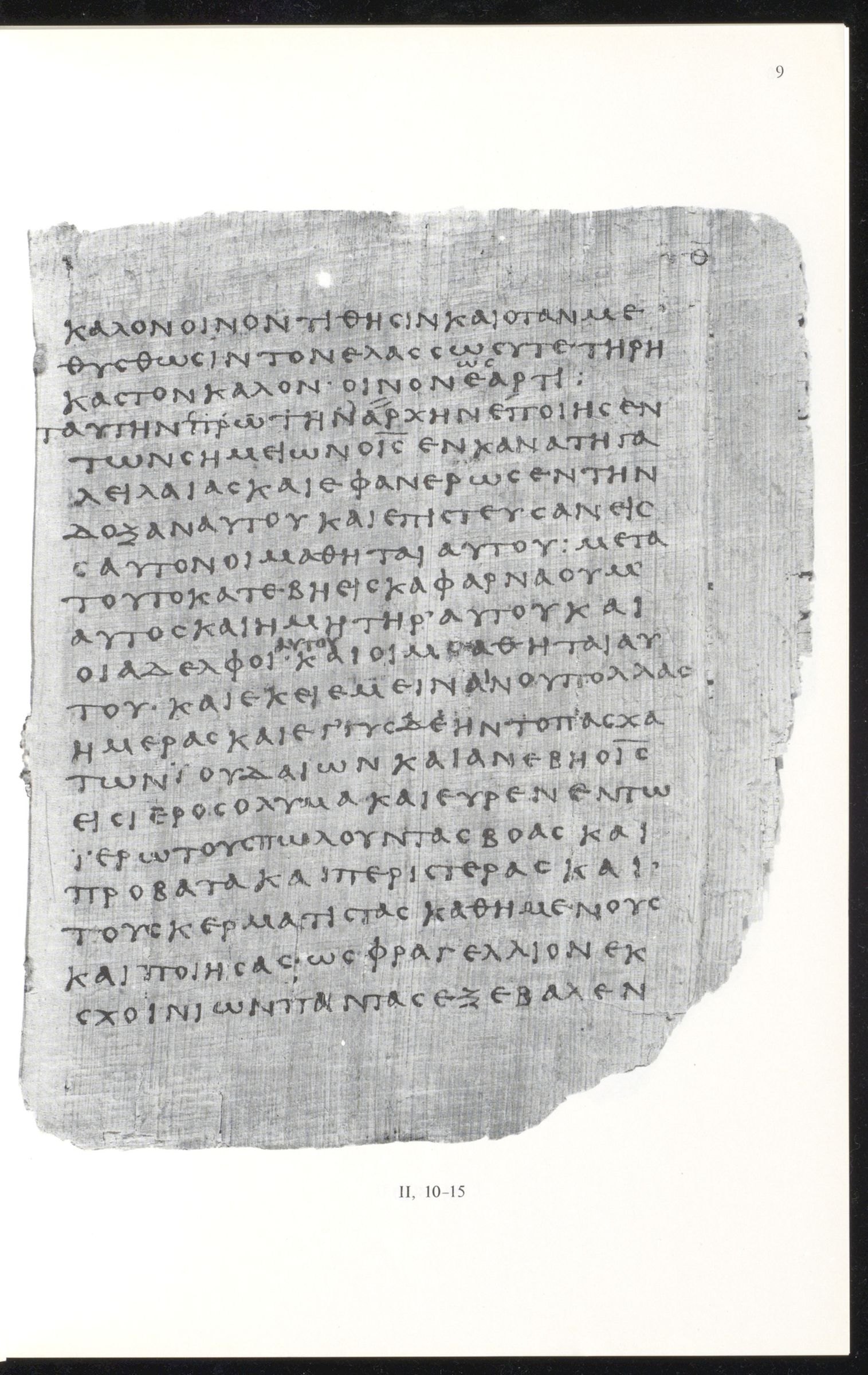
Fondation Martin Bodmer, Papyrus Bodmer II, Bodmer Lab image 1072205287_017 (https://bodmerlab.unige.ch/fr/constellations/papyri/mirador/1072205287), photographic plate of the 1962 Martin-Barns edition, shown whole. NTVMR page 90 (page 9) is linked to this image in NTVMR's page index. 2:10 begins on the previous page; 2:15 continues on the next page. Checked on the image: the printed caption reads ‹II, 10-15›; the last line of writing, ‹σχοινιων παντας εξεβαλεν› (line 20 of the transcription), is legible at the foot of the page.
2:10 καλον οινον τιθησιν και οταν με
θυσθωσιν τον ελασσω συ τετηρη
κας τον καλον· οινον ε αρτι·
11 ταυτην πρωτην αρχην εποιησεν
των σημειων ο ι̅ς̅ εν κανα τη γα
λειλαιας και εφανερωσεν την
δοξαν αυτου και επιστευσαν εις
σαυτον οι μαθηται αυτου· 12 μετα
τουτο κατεβη εις καφαρναουμ
αυτος και η μητηρ αυτου και
οι αδελφοι· και οι με̣αθηται αυ
του· και εκει εμεινι̣ν ου πολλας
ημερας 13 και εγγυς δε ην το πασχα
των ιουδαιων και ανεβη ο ι̅ς̅
εις ιεροσολυμα 14 και ευρεν εν τω
ιερω τους πωλουντας βοας και
προβατα και περιστερας και
τους κερματιστας καθημενους
15 και ποιησας· ως φραγελλιον εκ
σχοινιων παντας εξεβαλεν
2:10And saith unto him, Every man at the beginning doth set forth good wine; and when men have well drunk, then that which is worse: but thou hast kept the good wine until now. 11This beginning of miracles did Jesus in Cana of Galilee, and manifested forth his glory; and his disciples believed on him. 12¶ After this he went down to Capernaum, he, and his mother, and his brethren, and his disciples: and they continued there not many days. 13¶ And the Jews’ passover was at hand, and Jesus went up to Jerusalem, 14And found in the temple those that sold oxen and sheep and doves, and the changers of money sitting: 15And when he had made a scourge of small cords, he drove them all out of the temple, and the sheep, and the oxen; and poured out the changers’ money, and overthrew the tables;
Where on the image
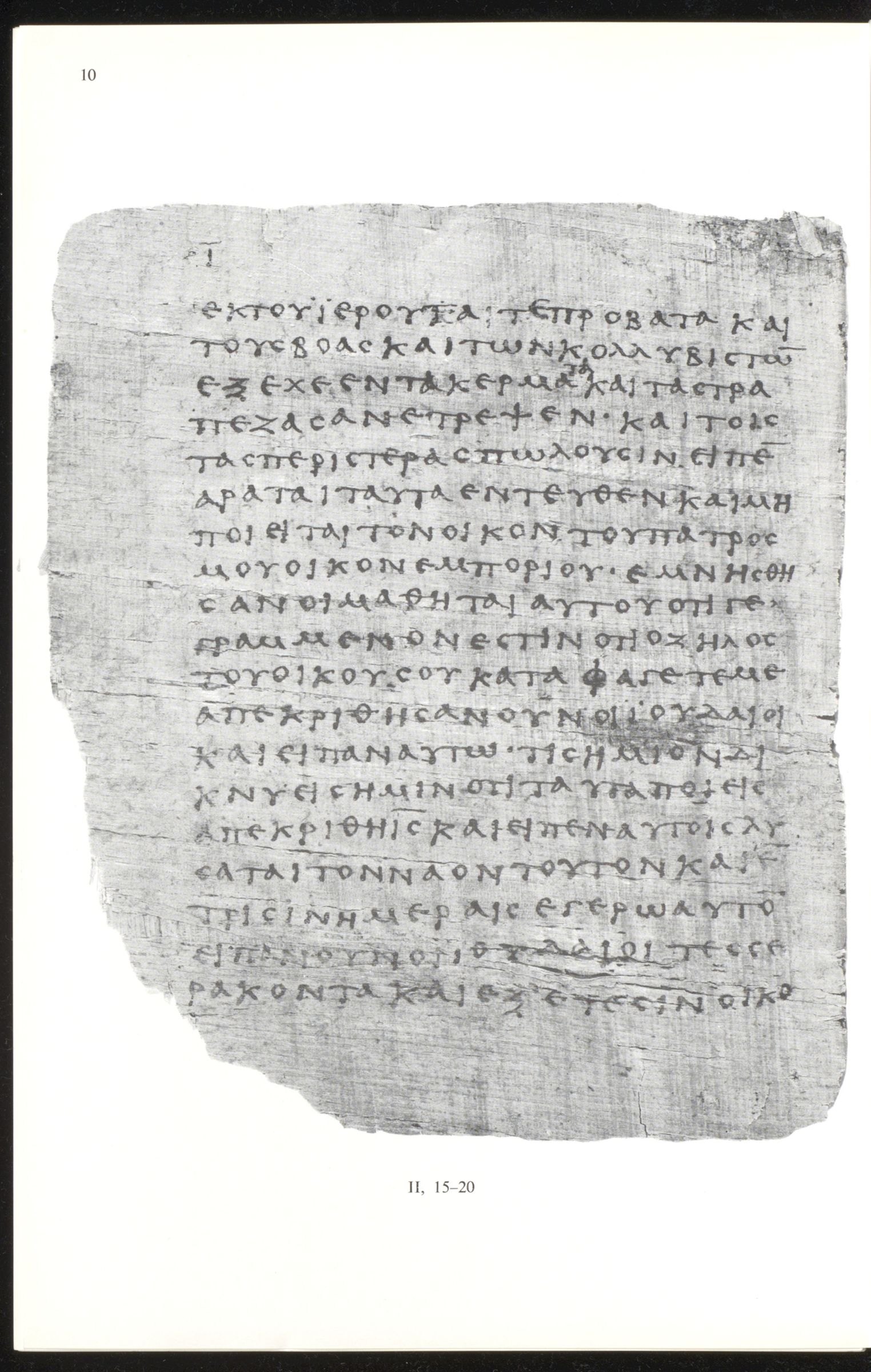
Fondation Martin Bodmer, Papyrus Bodmer II, Bodmer Lab image 1072205287_018 (https://bodmerlab.unige.ch/fr/constellations/papyri/mirador/1072205287), photographic plate of the 1962 Martin-Barns edition, shown whole. NTVMR page 100 (page 10) is linked to this image in NTVMR's page index. 2:15 begins on the previous page; 2:20 continues on the next page. Checked on the image: the printed caption reads ‹II, 15-20›; the last line of writing, ‹ρακοντα και εξ ετεσιν οικο› (line 19 of the transcription), is legible at the foot of the page.
2:15 εκ του ιερου και τα̣ προβατα και
τους βοας και των κολλυβιστων
εξεχεεν το κερμα και τας τρα
πεζας ανετρεψεν· 16 και τοις
τας περιστερας πωλουσιν. ειπεν
αραται ταυτα εντευθεν και μη
ποιειται τον οικον του πατρος
μου οικον εμποριου· 17 εμνησθη
σαν οι μαθηται αυτου οτι γε
γραμμενον εστιν οτι ο ζηλος
του οικου σου καταφαγετε με
18 απεκριθησαν ουν οι ιουδαιοι
και ειπαν αυτω· τι σημιον δι
κνυεις ημιν οτι ταυτα ποιεις
19 απεκριθη ι̅ς̅ και ειπεν αυτοις λυ
σαται τον ναον τουτον και εν
τρισιν ημεραις εγερω αυτον
20 ειπαν ουν οι ιουδαιοι τεσσε
ρακοντα και εξ ετεσιν οικο
2:15And when he had made a scourge of small cords, he drove them all out of the temple, and the sheep, and the oxen; and poured out the changers’ money, and overthrew the tables; 16And said unto them that sold doves, Take these things hence; make not my Father’s house an house of merchandise. 17And his disciples remembered that it was written, The zeal of thine house hath eaten me up. 18¶ Then answered the Jews and said unto him, What sign shewest thou unto us, seeing that thou doest these things? 19Jesus answered and said unto them, Destroy this temple, and in three days I will raise it up. 20Then said the Jews, Forty and six years was this temple in building, and wilt thou rear it up in three days?
Where on the image
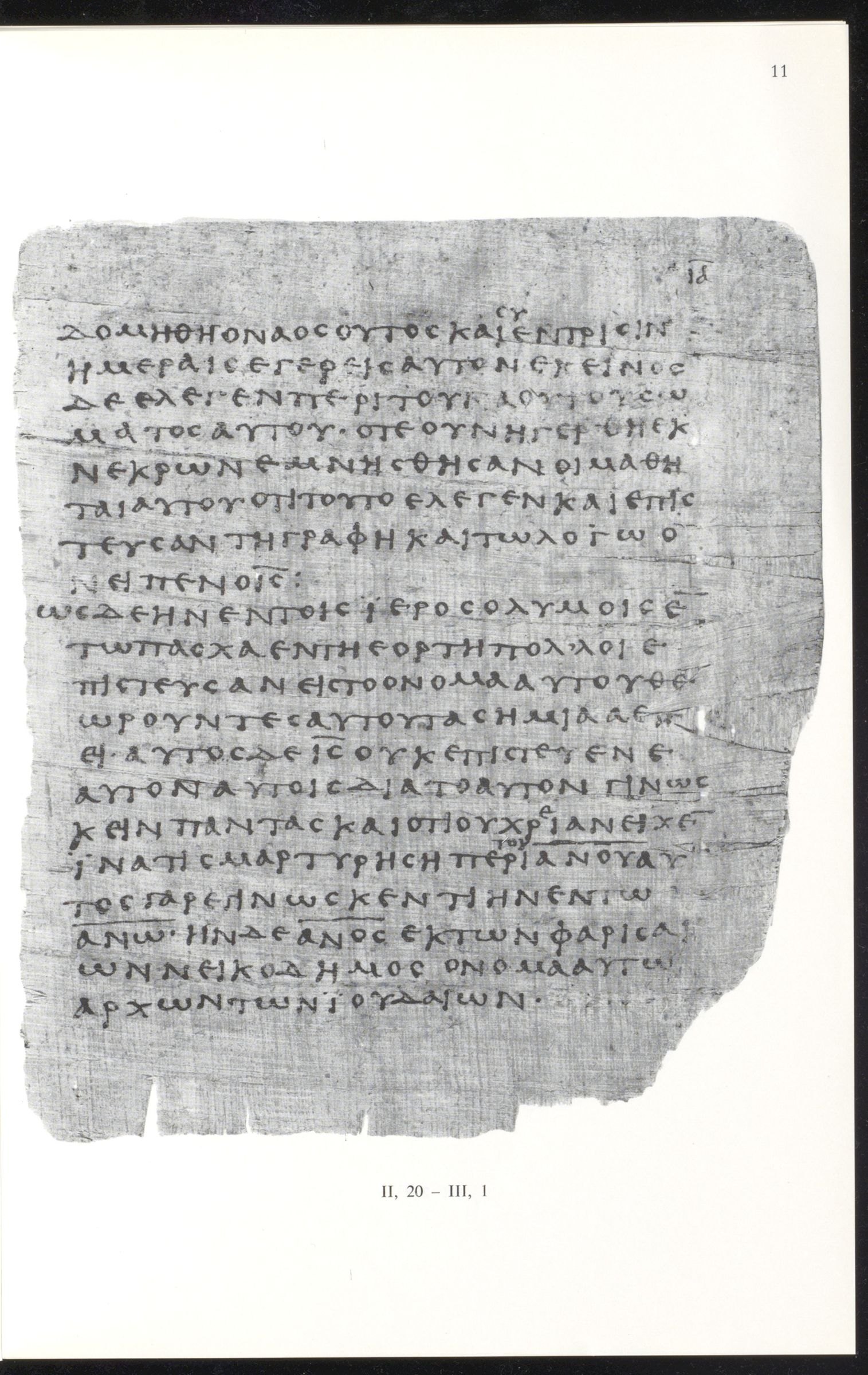
Fondation Martin Bodmer, Papyrus Bodmer II, Bodmer Lab image 1072205287_019 (https://bodmerlab.unige.ch/fr/constellations/papyri/mirador/1072205287), photographic plate of the 1962 Martin-Barns edition, shown whole. NTVMR page 110 (page 11) is linked to this image in NTVMR's page index. 2:20 begins on the previous page; 3:2 continues on the next page. Checked on the image: the printed caption reads ‹II, 20 - III, 1›; the last line of writing, ‹αρχων των ιουδαιων· ουτος› (line 20 of the transcription), is legible at the foot of the page.
2:20 δομηθη ο ναος ουτος και εν τρισιν
ημεραις εγερεις αυτον 21 εκεινος
δε ελεγεν περι του ναου του σω
ματος αυτου· 22 οτε ουν ηγερθη εκ
νεκρων εμνησθησαν οι μαθη
ται αυτου οτι τουτο ελεγεν και επισ
τευσαν τη γραφη και τω λογω ο
ν ειπεν ο ι̅ς̅·
23 ως δε ην εν τοις ιεροσολυμοις εν
τω πασχα εν τη εορτη πολλοι ε
πιστευσαν εις το ονομα αυτου θε
ωρουντες αυτου τα σημια α επ[οι]
ει· 24 αυτος δε ι̅ς̅ ουκ επιστευεν ε
αυτον αυτοις δια το αυτον γινωσ
κειν παντας 25 και οτι ου χριαν ειχεν
ινα τις μαρτυρηση περι α̅ν̅ο̅υ̅ αυ
τος γαρ εγινωσκεν τι ην εν τω
α̅ν̅ω̅· 3:1 ην δε α̅ν̅ο̅ς̅ εκ των φαρισαι
ων νεικοδημος ονομα αυτω
αρχων των ιουδαιων· 2 ουτος
2:20Then said the Jews, Forty and six years was this temple in building, and wilt thou rear it up in three days? 21But he spake of the temple of his body. 22When therefore he was risen from the dead, his disciples remembered that he had said this unto them; and they believed the scripture, and the word which Jesus had said. 23¶ Now when he was in Jerusalem at the passover, in the feast day, many believed in his name, when they saw the miracles which he did. 24But Jesus did not commit himself unto them, because he knew all men, 25And needed not that any should testify of man: for he knew what was in man. 3:1There was a man of the Pharisees, named Nicodemus, a ruler of the Jews: 2The same came to Jesus by night, and said unto him, Rabbi, we know that thou art a teacher come from God: for no man can do these miracles that thou doest, except God be with him.
Notes
- Greek: the NTVMR diplomatic transcription, line by line as on the papyrus. Square brackets enclose letters that are lost or illegible and were supplied by the transcribers; a dot under a letter marks it as uncertain; [...] marks a gap. Nomina sacra and numerals keep the scribe's overline. Spelling is the scribe's (no accents or breathings). Words broken at a line end stay broken as on the papyrus. Corrections are not shown: the text is the first hand.
- English: the King James Version (1611), whole verses, for every verse that has text on the page. A verse that begins on one page and ends on the next is given in full on both. The KJV translates a later form of the Greek text, so its wording does not always match the papyrus; material differences (such as verses the papyrus does not have) are noted in the section.
Cite
Sources
- Source: Papyrus Bodmer II (P66), Fondation Martin Bodmer: images from the Bodmer Lab, University of Geneva; Greek from the INTF NTVMR transcription of P66; English from the King James Version (holding institution)
- Critical edition: INTF NTVMR diplomatic transcription (CC BY 4.0)
← previous · → next · v cycle view · l back to library