P75 (Papyrus Hanna 1): John 12:3-13:10 (fols. 61r-62v)
Introduction
P75 is a papyrus codex of Luke and John copied in Egypt around 175-225, the oldest known copy of Luke and one of the oldest of John. It was bought by Martin Bodmer in the 1950s and published as Papyrus Bodmer XIV-XV; in 2006 it was given to the Vatican Library, where it is kept as Papyrus Hanna 1 (Mater Verbi). Its text is very close to that of Codex Vaticanus, written some 150 years later. Where Luke ends and John begins (folio 44r) both titles stand on the same page.
About 51 leaves survive, many damaged at the top and edges, especially in Luke 3-7. Lost: Luke 1:1-3:17, most of 3:23-4:33, 5:11-36, 6:5-10, 7:33-34 and 7:44-45 (and parts of 7:36-49), 17:16-19, 18:19-22:3; John 11:46-47, 12:1-2, 13:11-14:7 and everything after 15:10 except small fragments. Each section below is one page: the photograph, the NTVMR diplomatic transcription line by line, and the King James Version of every verse on the page. Where P75 lacks a verse or words that the KJV has (for example John 5:4 or the account of the adulteress, John 7:53-8:11), the section says so. Six damaged pages (folios 7v, 11r, 39v, 58r, 58v and 64v) are left out because their text could not be matched to the photographs with certainty.
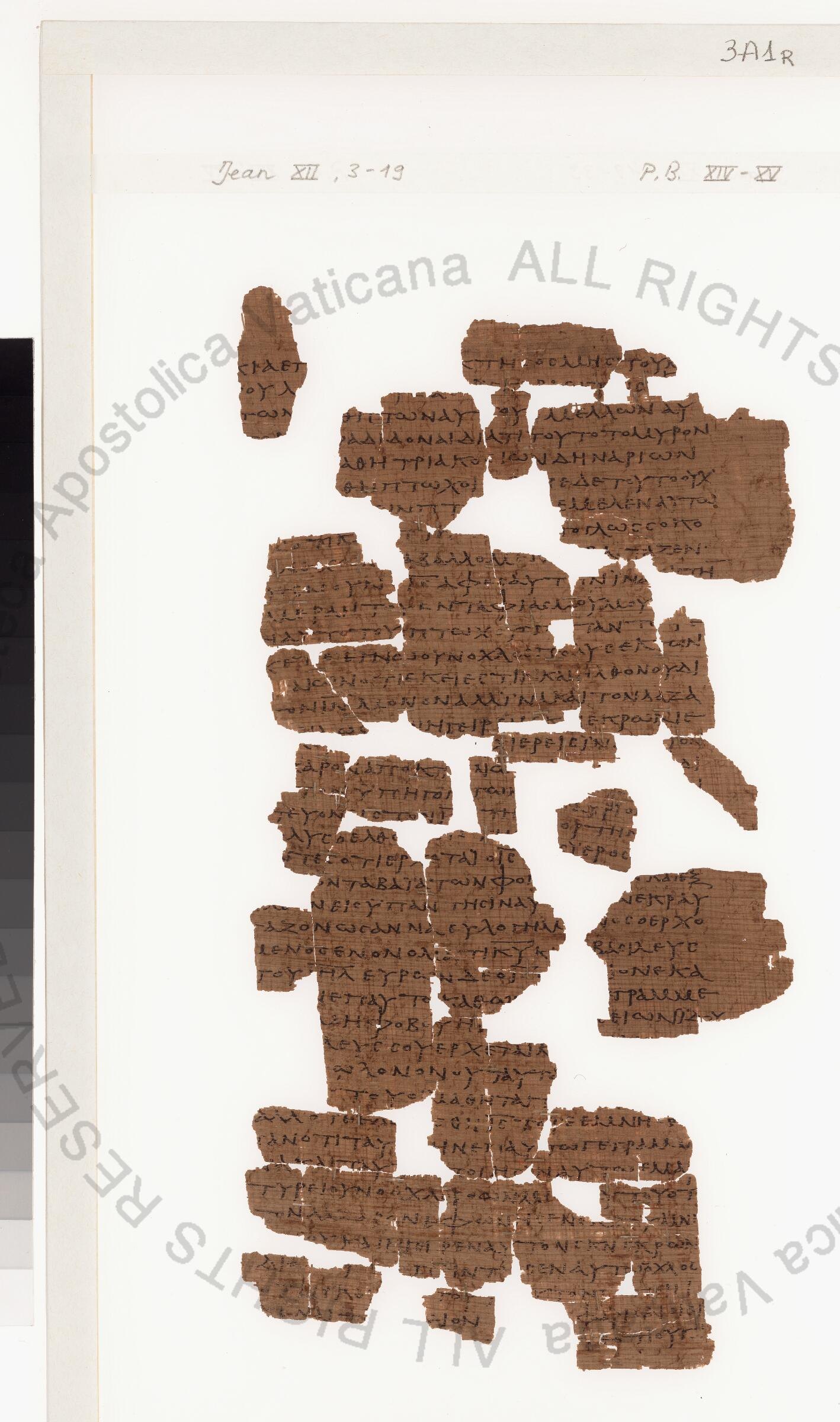
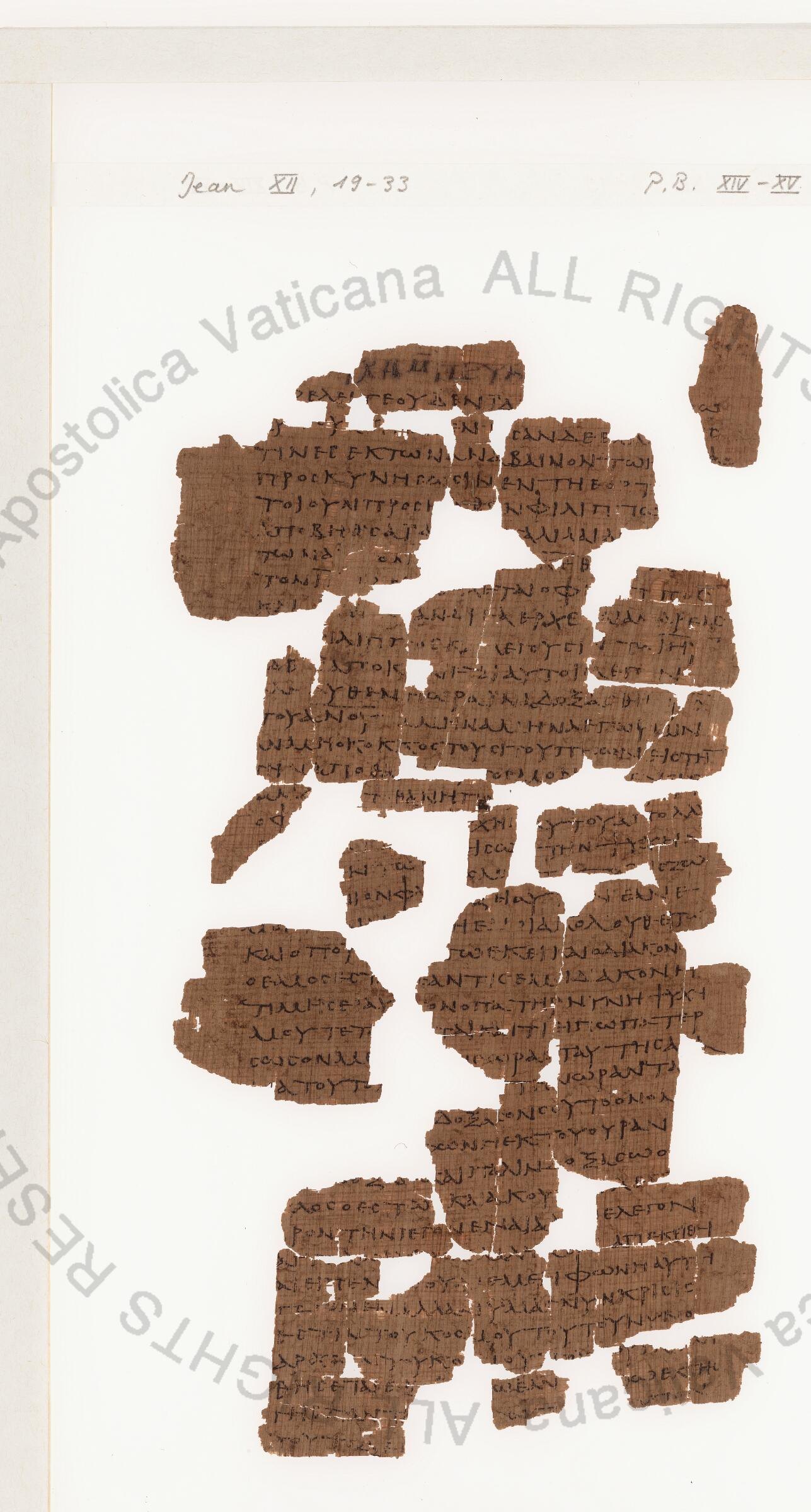
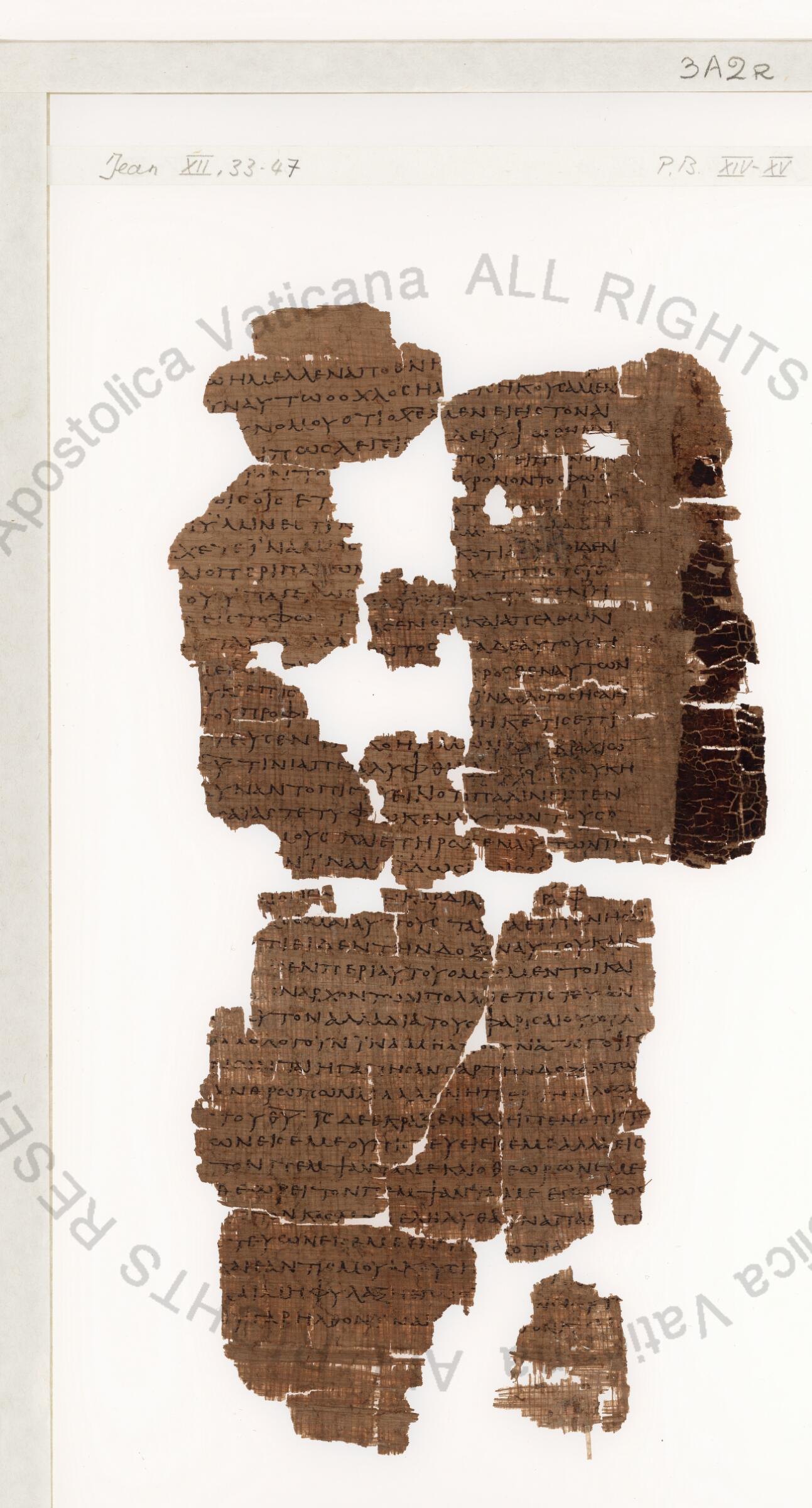
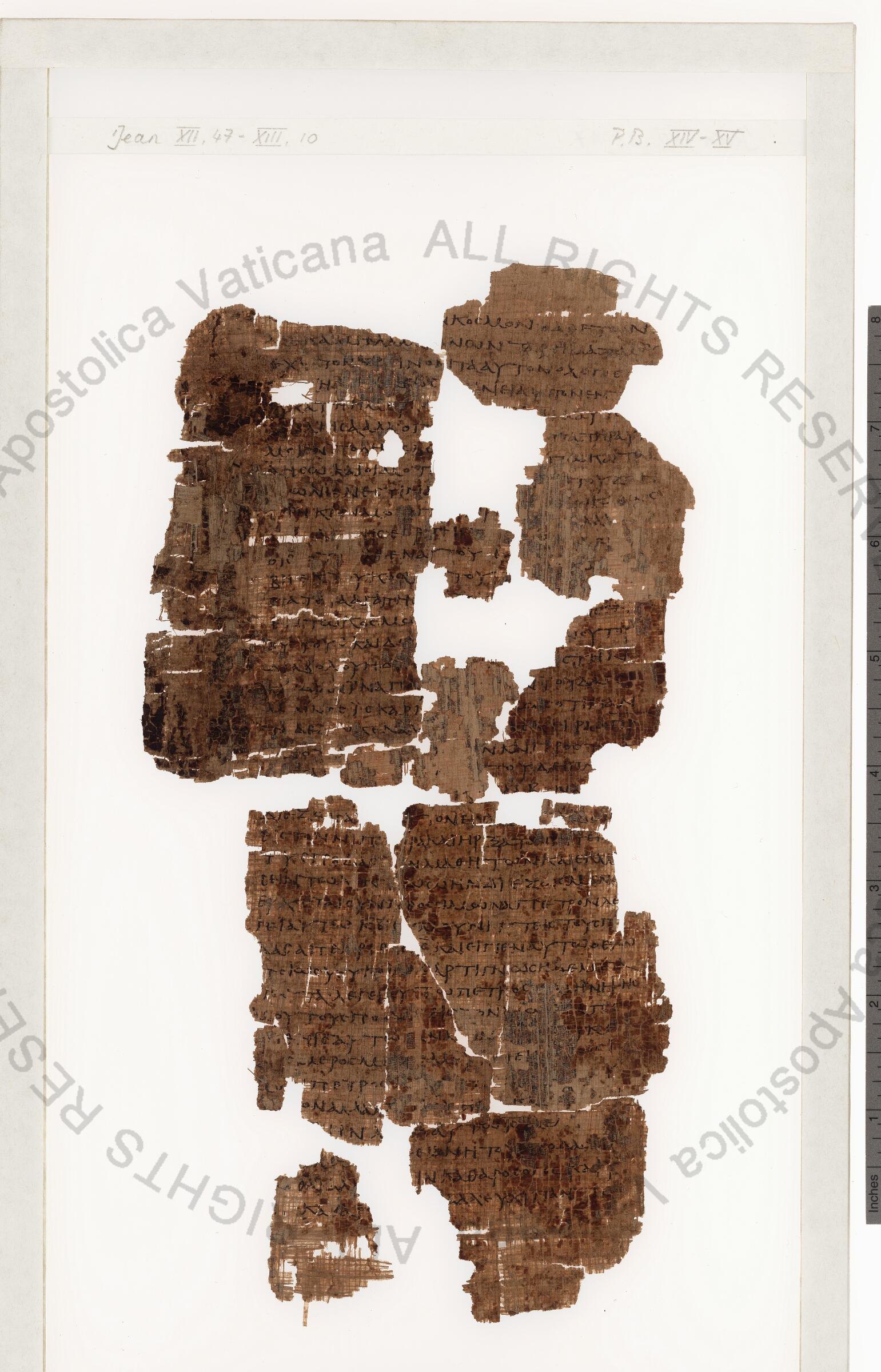
This entry covers fols. 61r-62v (John 12:3-13:10), shown on the Vatican Library's photographs (frames 3A.1r to 3A.2v).
How was this verified? (Provenance)
Where on the image
Vatican Library, Pap. Hanna 1 (Mater Verbi), DigiVatLib image 97, frame 3A.1r (https://digi.vatlib.it/view/MSS_Pap.Hanna.1(Mater.Verbi)/0097), cropped to the frame. NTVMR page 970 (folio 61r). 12:3 begins on the previous page; 12:19 continues on the next page. Checked on the image: near the top της οσμης του μυρου ... ο μελλων αυτον παραδιδοναι ... τουτο το μυρον (12:3-5), near the foot ωσαννα ευλογημενος ο ερχομενος (12:13), matching the transcription of this page.
12:3 κ̣ια επ̣[ληρωθη ε]κ̣ της οσμης του μ̣[υ]
ρ̣ου 4 λ[εγει δε ιο]υ̣δ̣ας̣ [ο] ι̣σ̣κα̣ρ̣ι̣ω̣τη̣ς [εις]
των̣ [μα]θη̣των αυτ̣ου ο̣ μελλων αυ
τ̣ο̣ν̣ [πα]ρ̣αδιδοναι 5 δια τι τουτο το μυρον
[ουκ επρ]αθη τριακοσ̣ιων δηναριων
[και εδο]θη πτωχοι[ς] 6 ε̣[ι]π̣ε δε τουτο ουχ
[οτι περι τ]ω̣ν πτ[ωχων] εμελεν αυτω
[αλ]λ̣ οτι κλ̣[ε]π̣τη̣[ς ην και] τ̣ο γλωσσοκο
[μ]ο̣ν̣ εχω̣ν̣ [τ]α βαλλομε̣ν̣[α ε]β̣ασταζεν·
7 [ει]πεν ουν [ο] ι̅ς̅ αφες αυτη̣ν ινα̣ ε̣ι̣ς̣ την
[η]μεραν του ενταφιασμου μου [τηρη]
[σ]η̣ αυ̣το 8 τους̣ πτωχους γα̣[ρ] π̣αντο̣τ̣ε̣
[ε]χ̣ετε· 9 εγνω ουν οχλος πολυς εκ τ̣ων
[ιουδ]αιων οτι εκει εστιν και ηλθον ου δι
[α] τ̣ον ι̅ν̅ μονον αλλ ινα και τον λαζα
[ρον] ι̣δ̣ωσ[ιν ο]ν̣ ηγειρε̣ν̣ ε̣κ ν̣εκρων 10 ε
[βου]λ̣ε̣υ̣[σαντο δε οι αρ]χιερεις ινα̣ [και] τ̣ον
[λα]ζ̣αρον αποκτ̣[ει]νω[σιν] 11 [οτι πολλοι] δι
[αυ]τον υπηγον̣ των̣ [ιουδαιων και επ]ι
[σ]τευον ε̣ι̣ς τον̣ ι̅ν̣̣̅ 12 τη [ε]π̣αυριον̣ [ο οχλος]
[πο]λυς ο ελθω̣[ν] ε̣ι̣ς̣ τ̣η̣[ν ε]ορτην̣ [ακου]
[σα]ν̣τες οτι ερχ̣εται ο ι̅ς̅ [ει]ς̣ ιεροσ[ολυμα]
13 [ελαβ]ο̣ν τα βαια των φοι[νικω]ν̣ και εξ
η̣λ̣θ̣[ο]ν εις υπαντησιν αυ[τω κ]α̣ι εκραυ
γ̣αζον ωσαννα ευλογημ[ε]ν̣ος ο ερχο
μ̣ενος εν ονοματι κ̅υ̅ κα̣[ι ο] βασιλευς
του ι̣̣̅η̅λ̅ 14 ευρων δε ο ι̅ς̣̣̅ ο̣[ναρ]ιον εκα
[θισε]ν̣ επ αυτο καθως̣ [εστιν γ]ε̣γραμμε
[νον] 15 μη φοβου η θ̣[υγατηρ] σ̣ειων ιδου
[ο βασι]λευς σου ερχεται κ[αθημενος]
[επι] π̣ωλον ονου 16 ταυτα̣ [ουκ εγνω]
[σαν α]υ̣του οι̣ μαθηται τ[ο πρωτον]
αλλ οτ̣ε εδ̣ο̣[ξα]σθη ι̅ς̅ τοτε εμνησ̣θ̣[η]
σαν οτι ταυ[τα] ην επ αυτω γεγραμμ̣[ε]
ν̣α και ταυτ̣[α ε]π̣οιησα̣ν αυτω 17 εμαρ̣
τυρει ουν ο οχλος ο ων με̣[τ] α̣υτου οτ[ε]
τον λαζαρον εφωνησεν ε̣κ̣ τ̣ο̣υ μνη̣
[μει]ου και ηγειρεν αυτον ε̣κ νεκρων
18 δια̣ τ̣[ο]υ̣τ̣[ο] υ̣πηντη̣σεν αυτω οχλος
οτι ηκου̣[σαν] τουτ̣[ο α]υ̣τον π̣[ε]ποιη
κ̣ε̣ναι το̣ [σημ]ειον 19 [οι ουν] φαρισαιοι ει
[παν προς εαυτους θεωρει]τ̣ε̣ ο̣τι ουκ
12:3Then took Mary a pound of ointment of spikenard, very costly, and anointed the feet of Jesus, and wiped his feet with her hair: and the house was filled with the odour of the ointment. 4Then saith one of his disciples, Judas Iscariot, Simon’s son, which should betray him, 5Why was not this ointment sold for three hundred pence, and given to the poor? 6This he said, not that he cared for the poor; but because he was a thief, and had the bag, and bare what was put therein. 7Then said Jesus, Let her alone: against the day of my burying hath she kept this. 8For the poor always ye have with you; but me ye have not always. 9Much people of the Jews therefore knew that he was there: and they came not for Jesus’ sake only, but that they might see Lazarus also, whom he had raised from the dead. 10¶ But the chief priests consulted that they might put Lazarus also to death; 11Because that by reason of him many of the Jews went away, and believed on Jesus. 12¶ On the next day much people that were come to the feast, when they heard that Jesus was coming to Jerusalem, 13Took branches of palm trees, and went forth to meet him, and cried, Hosanna: Blessed is the King of Israel that cometh in the name of the Lord. 14And Jesus, when he had found a young ass, sat thereon; as it is written, 15Fear not, daughter of Sion: behold, thy King cometh, sitting on an ass’s colt. 16These things understood not his disciples at the first: but when Jesus was glorified, then remembered they that these things were written of him, and that they had done these things unto him. 17The people therefore that was with him when he called Lazarus out of his grave, and raised him from the dead, bare record. 18For this cause the people also met him, for that they heard that he had done this miracle. 19The Pharisees therefore said among themselves, Perceive ye how ye prevail nothing? behold, the world is gone after him.
Where on the image
Vatican Library, Pap. Hanna 1 (Mater Verbi), DigiVatLib image 98, frame 3A.1v (https://digi.vatlib.it/view/MSS_Pap.Hanna.1(Mater.Verbi)/0098), cropped to the frame. NTVMR page 980 (folio 61v). 12:19 begins on the previous page; 12:33 continues on the next page. Checked on the image: near the top τινες εκ των (12:20), near the foot τιμησει αυτον ο πατηρ νυν η ψυχη μου τεταρακται (12:26-27), matching the transcription of this page.
12:19 [ω]φ̣ελειτε ουδεν ιδ[ε ο κοσμος οπι]σ̣ω
α̣υ[τ]ο̣υ α̣π̣η̣[λθ]εν· 20 η̣σαν δε ελ̣λ̣[ην]ε̣ς
τινες εκ των α̣ναβαινοντων̣ [ιν]α
προσκυνησωσιν εν τη εορ̣τ[η] 21 [ου]
τοι ουν προση̣λ̣θο̣ν φιλιππω [τω]
απο βηθ̣σαιδ̣[α της] γ̣αλιλαιας̣ [και ηρω]
των αυ̣τ̣ον [λεγοντες] κ̅ε̅ θ[ελο]μ̣[ε]ν̣
τον ι̅ν̣̣̅ ι̣δ̣ε̣ι̣[ν] 22 ε̣[ρ]χ̣εται ο φι̣[λι]π̣πος
και λ̣ε̣γ̣ε̣ι̣ [τ]ω̣ ανδρ̣ε̣α ερχε[τ]αι αν̣δρεας
[και] φ̣ιλιππος κα̣ι̣ λ̣εγουσιν̣ τω ι̅η̅υ̣̣̅·
23 [ο] δε [ι̅]ς̣̣̅ αποκ[ρι]νεται αυτοις̣ λεγω̣ν·
ε̣λη̣λ̣υθεν η̣ ωρα ινα δοξασθη [ο] υ̣̣̅ς̅
του α̅ν̅ο̅υ̅· 24 α̣μην αμην λεγω υμιν
[ε]α̣ν μη ο κοκκος του σιτου πε̣σ̣ων εις την
γην α̣ποθα[νη α]υ̣τ̣ος μον[ος μ]ε̣ν̣ε̣ι̣ ε̣
α̣ν δ̣[ε α]π̣ο̣θανη πο̣[λ]υ̣[ν καρπον] φ̣[ε]ρ̣[ε]ι̣
25 ο φ[ιλων την ψ]υ̣χην̣ α̣υτου απολλυ̣
ε̣[ι αυτη]ν̣ κ̣α̣[ι ο μ]ε̣ισω[ν] την ψυχην̣
[αυτου] ε̣ν τω κ̣[ο]σμω̣ τ̣[ο]υ̣τ̣ω̣ [ε]ις ζω
[ην αιω]ν̣ιον φυ̣[λα]ξ̣ει αυτ̣[η]ν· 26 εαν ε
μοι̣ τ̣[ις] δ̣ι̣α̣κ̣[ον]η εμοι ακ̣ολουθειτω
και οπου̣ [ειμι ε]γω εκει και ο διακονο̣[ς]
ο εμος εστα̣[ι] ε̣αν τις εμο̣ι δι̣ακονη
τιμησει αυτ̣ον ο πατηρ 27 νυν η ψυχη
μου τετα̣[ρακ]ται και τι ειπω πατερ
σωσον με̣ [εκ τ]η̣ς ωρας ταυτης α[...]α̣
δ̣ι̣α τουτο̣ η̣[λθον εις] την̣ ωραν τα[υ]
[την] 28 [πατερ] δοξασον σου το ονομ̣[α]
[ηλθεν ουν] φ̣ωνη εκ του ουραν[ου]
[και ε]δ̣ο̣ξ̣α̣σ̣α̣ κ̣αι παλιν δ̣οξασω 29 ο [ουν]
[ο]χ̣λος ο εστω[ς] και ακου[σας] ε̣λεγε̣[ν]
[β]ροντην γεγονεναι αλ̣[λο]ι̣ ελεγον
αγγ̣ε̣λος α̣υ̣τ̣ω λ̣ε̣λαληκ̣ε̣ν̣· 30 απεκριθη
[κ]αι ειπεν [ι̅]ς̣̣̅ ου δ̣ι̣ εμε η φωνη αυτη
γεγ̣ο̣νεν αλλα δ̣ι υμας 31 νυν κρισις
εστιν του κοσμου τουτου νυν ο
αρχω̣ν του κο[σ]μ̣ου τ̣ου̣[τ]ου ε̣κ̣β̣λ̣η̣
θησεται εξ̣ω̣ 32 [καγ]ω εαν [υψω]θ̣ω εκ της
γης παντα̣[ς ελκυ]σ̣ω π̣[ρος εμα]υ̣τον
33 τουτο δε ε̣[λεγεν σημαινων ποιω θα]
12:19The Pharisees therefore said among themselves, Perceive ye how ye prevail nothing? behold, the world is gone after him. 20¶ And there were certain Greeks among them that came up to worship at the feast: 21The same came therefore to Philip, which was of Bethsaida of Galilee, and desired him, saying, Sir, we would see Jesus. 22Philip cometh and telleth Andrew: and again Andrew and Philip tell Jesus. 23¶ And Jesus answered them, saying, The hour is come, that the Son of man should be glorified. 24Verily, verily, I say unto you, Except a corn of wheat fall into the ground and die, it abideth alone: but if it die, it bringeth forth much fruit. 25He that loveth his life shall lose it; and he that hateth his life in this world shall keep it unto life eternal. 26If any man serve me, let him follow me; and where I am, there shall also my servant be: if any man serve me, him will my Father honour. 27Now is my soul troubled; and what shall I say? Father, save me from this hour: but for this cause came I unto this hour. 28Father, glorify thy name. Then came there a voice from heaven, saying, I have both glorified it, and will glorify it again. 29The people therefore, that stood by, and heard it, said that it thundered: others said, An angel spake to him. 30Jesus answered and said, This voice came not because of me, but for your sakes. 31Now is the judgment of this world: now shall the prince of this world be cast out. 32And I, if I be lifted up from the earth, will draw all men unto me. 33This he said, signifying what death he should die.
Where on the image
Vatican Library, Pap. Hanna 1 (Mater Verbi), DigiVatLib image 99, frame 3A.2r (https://digi.vatlib.it/view/MSS_Pap.Hanna.1(Mater.Verbi)/0099), cropped to the frame. NTVMR page 990 (folio 62r). 12:33 begins on the previous page; 12:47 continues on the next page. Checked on the image: near the top ημεις ηκουσαμεν εκ του νομου οτι ο χ̅ς̅ μενει εις τον αιωνα (12:34), near the foot εγω φως εις τον κοσμον εληλυθα (12:46), matching the transcription of this page.
12:33 [νατ]ω ημελλεν αποθνη̣[σκειν] 34 [απεκ]ρ̣ι̣
[θη ο]υν αυτω ο οχλος ημ̣ε̣ι̣ς ηκουσαμεν
[εκ το]υ̣ νομου οτι ο χ̅ς̅ μενει εις τον αι
[ωνα κ]α̣ι πως λεγεις [σ]υ̣ δει υψωθηναι
[τον υ]ιον του̣ α̣[νθρω]που· 35 ειπεν ουν
[αυτ]οις ο ι̅ς̅ ετι μει[κρο]ν̣ χρονον το φως
[ε]ν̣ υμιν εστιν̣ [περιπ]ατ[ειτ]ε̣ ω̣ς το φως
ε̣χετε ινα μη σ[κοτια υ]μας̣ κ̣α̣τ̣α̣λ̣αβη
κ̣αι ο περιπατων̣ [εν τη σ]κοτια [ο]υ̣[κ] ο̣ιδεν
[π]ου υπαγει̣ 36 ως τ̣ο φ̣[ως] εχετε̣ πιστευε
[τ]ε εις το φως̣ ινα υιοι φωτος γενη
[σ]θ̣ε̣ ταυτ̣α̣ ε̣λαλ̣η̣σεν ο ι̅ς̅ και απελθων
[εκ]ρ̣υβ[η α]π̣ α̣[υτ]ω̣ν 37 τοσ[αυ]τα δε αυτου ση
μ̣εια π̣[εποιηκοτος εμ]π̣ροσθεν αυτων
[ο]υκ επιστ̣[...] 38 ινα ο λογος ησαιου
του προφη̣[του πληρω]θη κ̅ε̅ τις επι
σ̣τευσεν τη̣ [α]κ̣οη η̣μων κ̣α̣ι̣ ο βραχιων
κ̣̣̅υ̅ τινι απεκ̣αλυφθη̣ 39 δια του̣το ουκ η
δ̣υναντο πιστ[ε]υειν οτι παλιν ειπεν
[η]σαιας 40 τετυφλ̣ωκεν αυτων τους ο
[φθαλ]μ̣ους και επηρωσ̣εν αυτων την
[καρδια]ν ινα μ[η] ιδωσι[ν] τ̣ο̣ις̣ οφ̣[θαλμοις]
[και] νοησω̣[σιν τ]η καρδια [και σ]τ̣ραφω̣[σ]ι̣[ν]
[και] ι̣ασομαι αυτους 41 ταυ̣τ̣α ειπεν ησαι
[ας] οτι ειδεν την δοξαν αυτου και ε
[λαλη]σ̣εν περι αυτου 42 ομω̣ς μεντοι και
[εκ τ]ω̣ν αρχοντων πολλο̣ι επιστευσ̣αν
ε̣[ις] α̣υτον αλλα δια τους φαρισαιους ουχ
ω̣μολογουν ινα μη απ̣οσυναγω̣γοι γε
νωνται 43 ηγαπησαν γαρ την δοξαν τω[ν]
α̣νθρωπων μαλλον ηπερ την δ̣οξα̣[ν]
του θ̅υ̅· 44 ι̅ς̅ δε εκραξεν και ειπεν ο πιστε[υ]
ων εις εμε ου πιστ̣ευει εις εμε αλλα εις
τον πεμψαντα με 45 και ο θεωρων εμε
θεωρει τον πεμψαντα με 46 εγω φως
ε̣[ι]ς τον κοσμο̣ν̣ εληλυθα ινα πας ο π̣ι
στευων εις εμε εν τη [σ]κ̣οτια μ̣[η μεινη]
47 και εαν τις μου ακουση [των ρ]η̣μ̣[ατων]
και μη φυλαξη εγω ου̣ [κρι]νω α̣υ̣το̣ν̣
ου γαρ ηλθον ινα κ̣[ρινω] τ̣ον κο̣σ̣μο̣ν̣
12:33This he said, signifying what death he should die. 34The people answered him, We have heard out of the law that Christ abideth for ever: and how sayest thou, The Son of man must be lifted up? who is this Son of man? 35Then Jesus said unto them, Yet a little while is the light with you. Walk while ye have the light, lest darkness come upon you: for he that walketh in darkness knoweth not whither he goeth. 36While ye have light, believe in the light, that ye may be the children of light. These things spake Jesus, and departed, and did hide himself from them. 37¶ But though he had done so many miracles before them, yet they believed not on him: 38That the saying of Esaias the prophet might be fulfilled, which he spake, Lord, who hath believed our report? and to whom hath the arm of the Lord been revealed? 39Therefore they could not believe, because that Esaias said again, 40He hath blinded their eyes, and hardened their heart; that they should not see with their eyes, nor understand with their heart, and be converted, and I should heal them. 41These things said Esaias, when he saw his glory, and spake of him. 42¶ Nevertheless among the chief rulers also many believed on him; but because of the Pharisees they did not confess him, lest they should be put out of the synagogue: 43For they loved the praise of men more than the praise of God. 44¶ Jesus cried and said, He that believeth on me, believeth not on me, but on him that sent me. 45And he that seeth me seeth him that sent me. 46I am come a light into the world, that whosoever believeth on me should not abide in darkness. 47And if any man hear my words, and believe not, I judge him not: for I came not to judge the world, but to save the world.
Where on the image
Vatican Library, Pap. Hanna 1 (Mater Verbi), DigiVatLib image 100, frame 3A.2v (https://digi.vatlib.it/view/MSS_Pap.Hanna.1(Mater.Verbi)/0100), cropped to the frame. NTVMR page 1000 (folio 62v). 12:47 begins on the previous page. Checked on the image: near the top ο αθετων εμε και μη λαμβανων τα ρηματα μου (12:48), matching the transcription of this page.
12:47 α̣[λλ ινα σωσω το]ν̣ κοσμον· 48 ο αθετων ε̣
με και μη λαμβ̣α̣νων τα ρημ̣ατα μου
εχε̣[ι] τον κ̣ρεινοντα αυτον ο λογος ο̣[ν]
ε̣[λα]λ̣ησ̣[α] εκε̣ι̣ν̣ος [κρ]ι̣νει αυ̣τον εν τ̣[η]
[εσ]χατη ημε̣ρα̣ 49 ο̣[τι εγω] ε̣ξ̣ ε̣μ̣αυτ̣ο̣[υ ουκ]
[ε]λ̣αλησα αλλ ο π[εμψας με] πατηρ αυτ̣[ος]
μοι εντολη[ν] εδω̣[κεν τι ει]πω και τι λα
λησω 50 και οιδα οτι̣ [η εντολ]η̣ [αυ]του ζω̣η
[αι]ωνιον εστιν α [ουν εγω λα]λ̣ω κα̣θως
ε̣ι̣ρηκε̣ν μοι ο π[ατ]η̣ρ̣ ο̣[υ]τ̣ω̣ς̣ λαλω̣
13:1 [προ] δε [τ]ης εορτης τ̣[ο]υ̣ π̣α̣[σ]χ̣α̣ ει[δως]
ο ι̅ς̅ οτι̣ [η]λθεν αυτου η̣ ω̣ρ̣α ι̣[ν]α̣ μ̣[ετα]
βη εκ το̣υ κοσμ̣[ου] τουτ̣[ου] π̣ρ̣ο[ς τον]
πατερα αγαπησ̣[α]ς̣ τ̣[ο]υ̣[ς ιδιους τους]
εν̣ τω κοσμω̣ [εις τελος ηγαπ]η̣σεν
αυτους 2 και δε̣ι̣[πνου γινομε]νου του
διαβολου ηδη̣ [βεβλ]η̣κ̣[οτος ε]ι̣ς την
καρ̣δια̣ν ινα παρ̣[αδοι αυτο]ν̣ ιουδας σι
μω̣νο̣ς ικσαρι[ωτου] 3 [ει]δ̣ως οτι παν
τα δεδ̣ω̣κεν αυ[τω εις τ]ας χειρας ο π̅ρ̅
[κ]α̣ι οτ̣[ι] α̣[πο θ̅υ̅ εξηλθε]ν και προς το̣ν̣ θ̣̣̅ν̣̣̅
[υ]π̣α̣γ̣[ει] 4 [εγειρεται εκ] του δειπν̣[ου και]
[τιθησιν τα ιματια] κ̣[α]ι̣ λ̣α̣βων λ[εντιον]
διεζωσατ̣[ο ε]α̣υ̣τ̣ον 5 ειτα β̣α̣[λλει] υ̣δω[ρ]
ει̣ς τον νιπτ̣η̣ρα και ηρξατο νιπτειν̣
τ[ο]υς ποδας τ̣[ω]ν μαθητων και εκμα̣[σ]
σειν τω λεντ̣[ι]ω ω ην διεζωσμενο̣[ς]
6 ερχεται ουν π̣ρος σιμωνα πετρον λε
γει αυτω κ̅ε̅· σ̣υ̣ μου νιπτεις τους π[ο]
δας 7 απεκ̣ριθη̣ ι̣̣̅ς̅ και ειπεν αυτω ο εγ̣ω
π̣οιω συ ουκ οιδ̣ας αρτι γνωση δε μετα
τ̣α̣υ̣τα· 8 λεγει α̣υτω πετρος ο̣[υ] μη νιψης
μου τους ποδας̣ εις τ̣ον α̣ιων̣α απε
[κ]ρ̣ι̣θη̣ ι̅ς̅ αυτω εα̣ν μ̣η̣ ν̣[ι]ψ̣ω̣ σ̣ε̣ ουκ ε
χ̣[ε]ι̣ς μ̣ερος με̣τ̣ ε̣μο̣υ̣ 9 λ̣ε̣γ̣ει αυ̣τ̣ω σι
μ̣ω̣ν̣ πετρος κ̅[ε̅] μ̣η̣ το̣[υ]ς̣ ποδας μ̣[ο]υ
μ̣ο̣[ν]ον αλλα κ̣α̣ι̣ τ̣α̣ς̣ χ̣ειρα̣[ς] και̣ τ̣η̣[ν]
[κεφα]λ̣ην 10 λ[εγ]ει̣ αυτω ι̅ς̅ ο̣ λ̣ελ̣ο̣υ̣[μ]ε
[νος ου]κ εχ̣[ει χ]ρ̣ειαν η τους ποδας νι
[ψ]α̣σ̣θαι αλλ̣ [εστ]ιν καθαρος ολ̣ος και υ
[μ]ε̣ι̣ς̣ καθ̣αρο̣[ι εστε] αλλ ουχι παντε̣ς̣
12:47And if any man hear my words, and believe not, I judge him not: for I came not to judge the world, but to save the world. 48He that rejecteth me, and receiveth not my words, hath one that judgeth him: the word that I have spoken, the same shall judge him in the last day. 49For I have not spoken of myself; but the Father which sent me, he gave me a commandment, what I should say, and what I should speak. 50And I know that his commandment is life everlasting: whatsoever I speak therefore, even as the Father said unto me, so I speak. 13:1Now before the feast of the passover, when Jesus knew that his hour was come that he should depart out of this world unto the Father, having loved his own which were in the world, he loved them unto the end. 2And supper being ended, the devil having now put into the heart of Judas Iscariot, Simon’s son, to betray him; 3Jesus knowing that the Father had given all things into his hands, and that he was come from God, and went to God; 4He riseth from supper, and laid aside his garments; and took a towel, and girded himself. 5After that he poureth water into a bason, and began to wash the disciples’ feet, and to wipe them with the towel wherewith he was girded. 6Then cometh he to Simon Peter: and Peter saith unto him, Lord, dost thou wash my feet? 7Jesus answered and said unto him, What I do thou knowest not now; but thou shalt know hereafter. 8Peter saith unto him, Thou shalt never wash my feet. Jesus answered him, If I wash thee not, thou hast no part with me. 9Simon Peter saith unto him, Lord, not my feet only, but also my hands and my head. 10Jesus saith to him, He that is washed needeth not save to wash his feet, but is clean every whit: and ye are clean, but not all.
Notes
- Greek: the NTVMR diplomatic transcription, line by line as on the papyrus. Square brackets enclose letters that are lost or illegible and were supplied by the transcribers; a dot under a letter marks it as uncertain; [...] marks a gap. Nomina sacra and numerals keep the scribe's overline. Spelling is the scribe's (no accents or breathings). Words broken at a line end stay broken as on the papyrus. Corrections are not shown: the text is the first hand.
- English: the King James Version (1611), whole verses, for every verse that has text on the page. A verse that begins on one page and ends on the next is given in full on both. The KJV translates a later form of the Greek text, so its wording does not always match the papyrus; material differences (such as verses the papyrus does not have) are noted in the section.
Cite
Sources
- Source: Papyrus Hanna 1 (Mater Verbi), Vatican Library: photographs from DigiVatLib; Greek from the INTF NTVMR transcription of P75; English from the King James Version (holding institution)
- Critical edition: INTF NTVMR diplomatic transcription (CC BY 4.0)
← previous · → next · v cycle view · l back to library